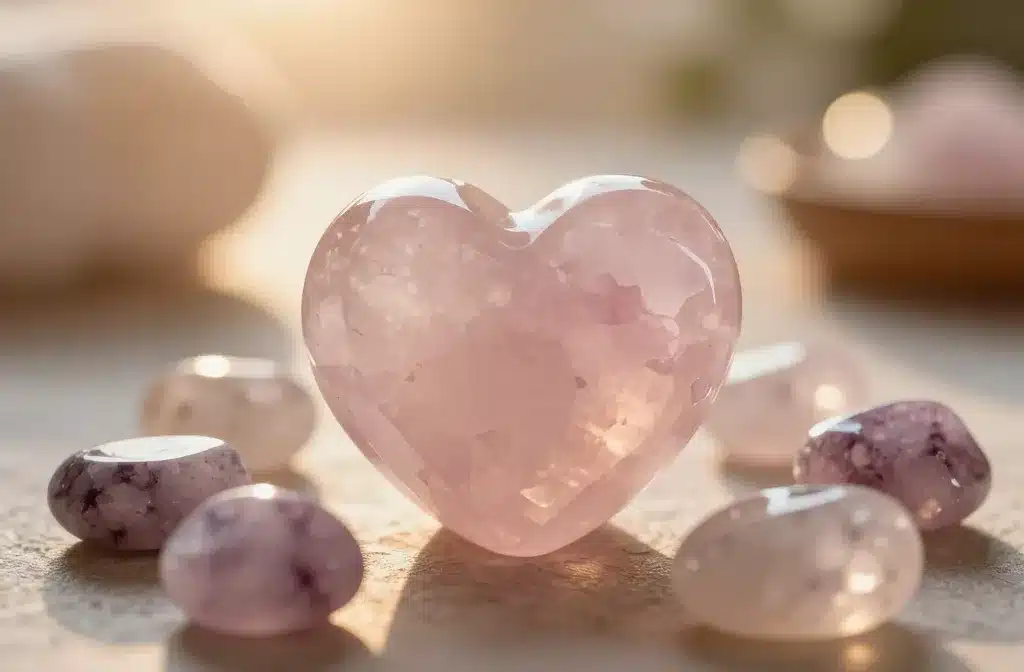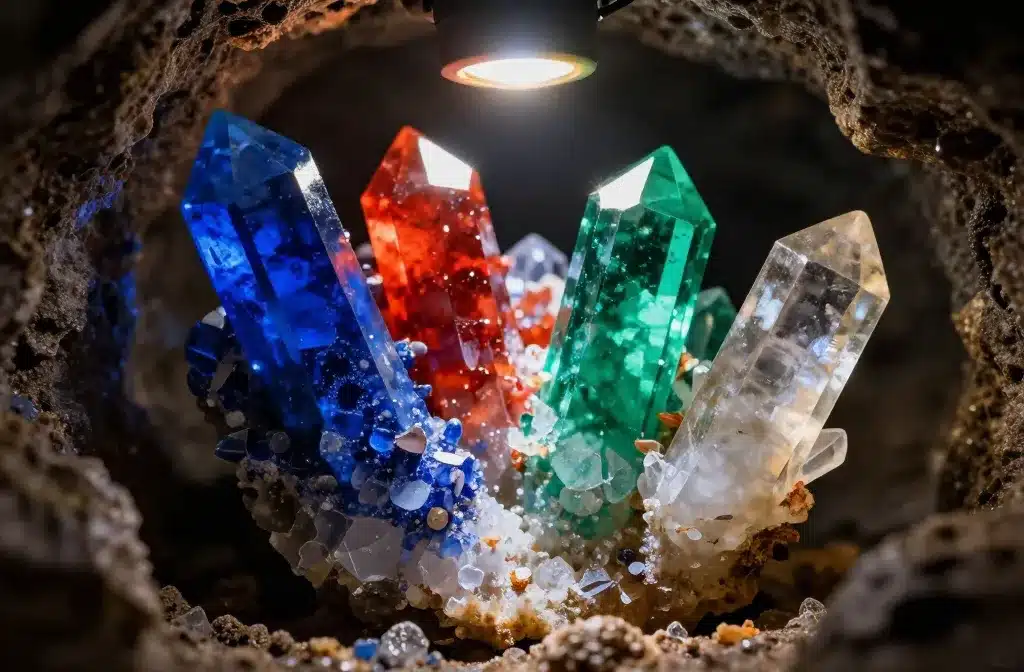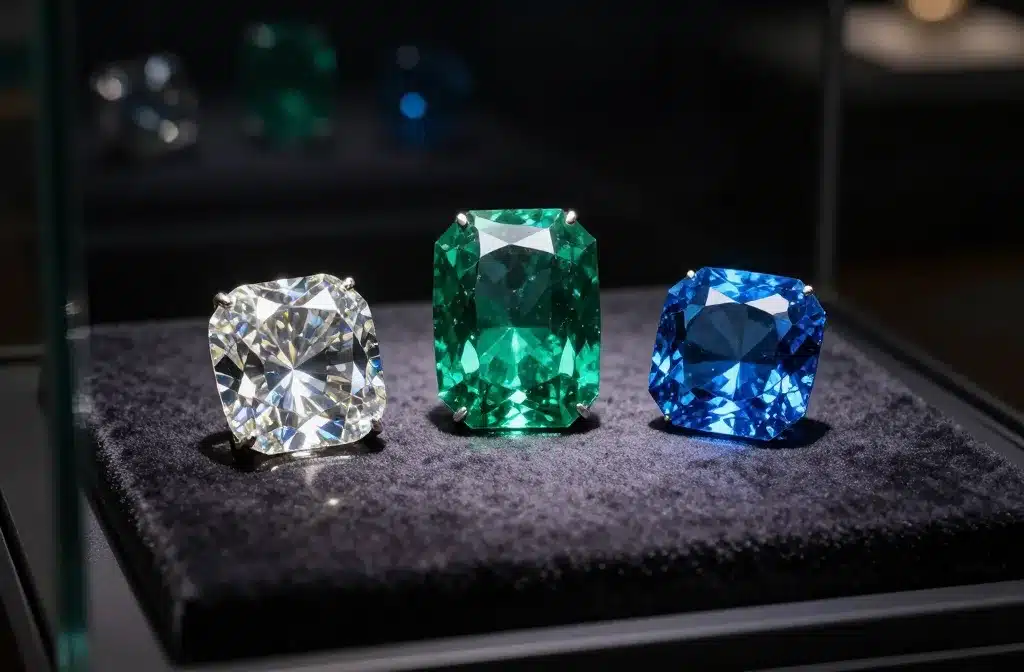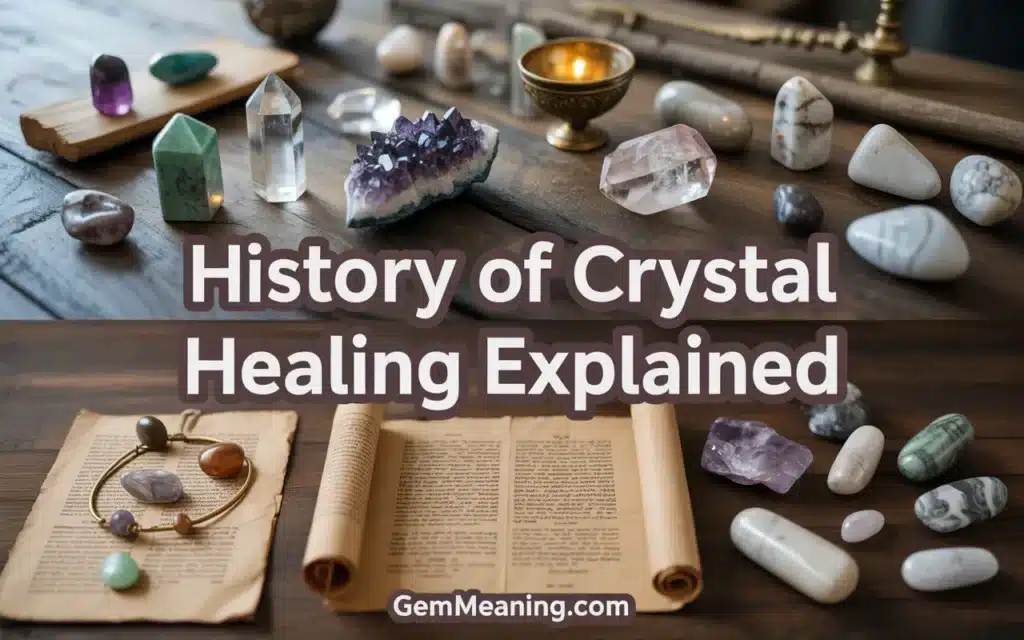
When you see a vibrant Amethyst geode or a smooth Rose Quartz palm stone, it can feel like a very modern wellness trend. Crystals are everywhere these days, from yoga studios to home decor shops. But the truth is, our connection to these earthly treasures is not new. In fact, it is one of the oldest spiritual practices in human history.
The use of stones and gems for healing, protection, and spiritual connection is a thread woven through nearly every ancient culture across the globe. Understanding the history of crystal healing helps us appreciate that this is not a passing fad, but a deep, instinctual human practice. It provides a rich context for the rituals we use today.
In this guide, we will journey back in time to uncover the origins of this fascinating practice. We will explore how ancient civilizations from Egypt to Greece used crystals and how that wisdom has evolved into the modern healing modalities we know today. Let’s dig into the past to better understand the present.
Ancient Roots: Where It All Began
The history of crystal healing is not a straight line but a beautiful tapestry woven from the threads of many cultures. The earliest evidence of humans using crystals dates back tens of thousands of years.
Our ancestors were deeply connected to the earth. They recognized that certain stones held unique properties. They were not just rocks; they were tools, talismans, and conduits of power.
Prehistoric and Neolithic Use
Some of the earliest uses were purely practical. Sharp-edged stones like flint and obsidian were fashioned into tools and weapons. However, archaeologists have also found talismans made from amber and jet in Stone Age burial sites, suggesting these stones were worn for protection or spiritual significance even then.
These early humans understood that the earth provided not just sustenance, but also magic. They saw these glittering objects as gifts from the gods or spirits of the land, imbued with special powers.
The Egyptian Obsession with Crystals
No exploration of the history of crystal healing would be complete without a deep dive into ancient Egypt. The Egyptians had a profound and sophisticated relationship with gems and minerals, integrating them into every aspect of life, death, and magic.
For the Egyptians, crystals were not just for adornment; they were essential for spiritual survival and well-being.
Crystals in Daily Life and Magic
The Egyptians used a wide variety of stones, each with a specific purpose.
- Lapis Lazuli: This deep blue stone, often flecked with golden pyrite, was prized above almost all others. It was associated with the heavens and the gods. Pharaohs and priests wore it to stimulate spiritual insight and communicate with deities.
- Carnelian: This vibrant orange stone was linked to life force and vitality. It was worn to boost courage, provide energy, and stimulate passion.
- Turquoise: Revered as a stone of protection and good fortune, turquoise was worn by everyone from rulers to commoners to ward off the “evil eye.”
- Malachite: The vibrant green of malachite was associated with fertility, new life, and the underworld god, Osiris. It was ground into powder and used as eyeshadow, believed to offer protection and enhance psychic vision.
Funerary Practices
The Egyptians believed the journey to the afterlife was perilous. They placed specific crystals on the deceased to protect the soul on its journey. Heart scarabs, often carved from green stones, were placed over the heart to ensure it would not testify against the deceased during the final judgment. The iconic golden death mask of Tutankhamun is famously inlaid with Lapis Lazuli and other precious stones, meant to grant him divine power in the next world.
Wisdom from Ancient Greece and Rome
The Greeks and Romans built upon the knowledge of the Egyptians, but they approached crystals with a more philosophical and scientific mindset. In fact, the very word “crystal” comes from the Greek word krystallos, meaning “ice.” The ancient Greeks believed that Clear Quartz was a form of water that had been frozen so deeply it would never melt.
Naming and Classification
Many of the crystal names we use today have Greek origins.
- Amethyst: From the Greek amethystos, meaning “not drunk.” The Greeks believed Amethyst could prevent intoxication and wore it as an amulet against hangovers and addiction.
- Hematite: From the Greek haima, meaning “blood.” When ground into a powder, this iron-rich stone turns red. Greek soldiers would rub it on their bodies before battle, believing it would make them invincible.
Medical and Protective Uses
The Roman naturalist Pliny the Elder wrote extensively about the properties of different gems in his encyclopedic work, Natural History. While some of his claims were fantastical, he documented many beliefs that persist today. Roman soldiers carried Tiger’s Eye for courage, and amulets were commonly worn to protect against disease and curses.
This period marks a shift where the study of crystals started to move from purely spiritual to include categorizations and properties that hinted at early scientific thought.
Crystal Traditions Across the Globe
The fascination with crystals was a global phenomenon. Independent of one another, cultures from Asia to the Americas developed their own unique history of crystal healing.
Traditional Chinese Medicine
Jade holds a place of supreme importance in Chinese culture, much like Lapis Lazuli did for the Egyptians. For thousands of years, Jade has been associated with purity, wisdom, longevity, and good health.
- Healing: In Traditional Chinese Medicine, Jade is believed to balance qi (life force energy). It is considered a cooling stone, used to reduce fevers and calm the nervous system.
- Spiritual: Jade was also seen as a bridge between heaven and earth, protecting the wearer from harm and attracting good fortune.
The Vedic Traditions of India
In India, the use of gemstones is deeply intertwined with Ayurveda and astrology. The ancient Hindu Vedic texts detail the properties of various gems and their connection to the planets.
- The Navaratna: This refers to the “nine gems,” each corresponding to a celestial body in Vedic astrology (e.g., Ruby for the Sun, Pearl for the Moon, Red Coral for Mars).
- Chakra System: The concept of the seven chakras, or energy centers in the body, originated in India. The practice of placing specific colored stones on the corresponding chakras to balance them is a cornerstone of modern crystal healing that comes directly from this tradition.
The Decline and Rebirth of Crystal Healing
With the rise of the Roman Catholic Church in Europe during the Middle Ages, many nature-based spiritual practices were suppressed. The use of crystals for healing or magic was often labeled as paganism or witchcraft. While nobility still wore gems as symbols of wealth and power, the folk-magic traditions went underground.
For several centuries, the history of crystal healing was largely forgotten by the mainstream Western world, kept alive only by alchemists, occultists, and folk healers.
The Renaissance and Scientific Revolution
The Renaissance sparked a renewed interest in classical knowledge, including the writings of Pliny. However, the subsequent Scientific Revolution shifted the focus entirely to what could be measured and proven by empirical evidence. The subtle, energetic properties of crystals were dismissed as superstition.
The Modern Revival: From New Age to Mainstream
The modern crystal healing movement as we know it began to re-emerge in the 20th century, propelled by a renewed interest in Eastern spirituality and alternative wellness.
The New Age Movement of the 1970s and 80s
The counter-culture of the 1960s opened the door for people to explore non-traditional paths to spirituality. During the New Age boom, practices like yoga, meditation, and Reiki became popular in the West. Crystal healing was a natural fit.
Books began to be published that synthesized ancient knowledge from various cultures, blending the chakra system of India with the protective amulets of Egypt and the intuitive practices of folk magic. This is where the modern “crystal bible” style of guidebooks was born.
The Discovery of Scientific Principles
In this modern era, practitioners began to connect ancient beliefs with scientific concepts to explain how crystal healing might work.
- Piezoelectric Effect: The discovery that quartz crystals emit an electric charge when squeezed gave scientific credibility to the idea that crystals can conduct and transform energy.
- Vibrational Theory: The understanding that all matter vibrates at a molecular level provided a framework. The theory is that the stable vibration of a crystal can help to organize the chaotic vibration of a stressed human body through the principle of entrainment.
Crystals in the 21st Century
In the last two decades, crystal healing has exploded from a niche “New Age” interest into a mainstream wellness phenomenon. Several factors contributed to this:
- The Wellness Boom: A collective desire for self-care and stress relief has made people more open to alternative modalities.
- Social Media: Platforms like Instagram and Pinterest have made crystals visually appealing and highly shareable. A beautiful flat lay of stones is more accessible than a complex spiritual text.
- Celebrity Endorsement: When high-profile celebrities talk about carrying crystals, it normalizes the practice for a massive audience.
Today, you can find Rose Quartz facial rollers at major beauty retailers and Amethyst geodes at home furnishing stores. The practice has become both accessible and widely accepted as a tool for personal well-being.
The Enduring Power of Crystal Healing
Looking back at the long and varied history of crystal healing, it becomes clear why this practice has such staying power. It is not tied to one single religion or belief system. It is a universal human impulse to seek beauty, meaning, and healing from the natural world around us.
From an Egyptian priest placing Lapis Lazuli on a pharaoh’s third eye to a modern office worker placing Smoky Quartz on their desk to absorb stress, the core intention is the same: to use a gift from the earth to bring our lives into a state of greater harmony.
The methods have evolved, and our understanding has deepened, but the fundamental connection between humans and stones remains unbroken. It is a relationship written in the rock of time itself.
Final Thoughts: Becoming Part of the History
When you pick up a crystal today, you are participating in a tradition that is tens of thousands of years old. You are holding a tool that has been revered for its beauty and power by shamans, priests, queens, and soldiers throughout human history.
Understanding this rich past adds a layer of reverence to your own practice. You are not just following a trend; you are tapping into a deep well of ancient wisdom.
So the next time you hold a crystal, take a moment to feel its weight and its history. Acknowledge the journey it has taken, from deep within the earth to the palm of your hand. By working with it, you become the next link in a long, glittering chain of healers, dreamers, and seekers. You are now part of the history of crystal healing.

Christian Grey is the creator of GemMeaning, where he shares simple insights about crystals, gemstone meanings, and spiritual guidance. His focus is on making complex ideas easy to understand and practical for everyday life.