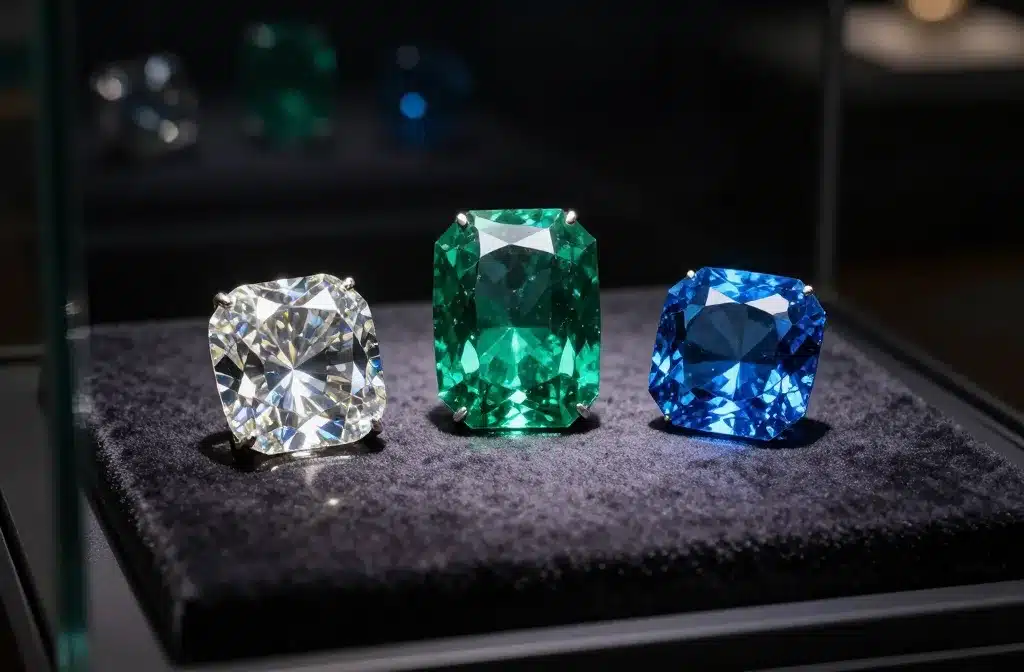
Have you ever pictured a diamond and imagined a sparkling, perfectly round gem like the one in an engagement ring? It’s a common image, but that isn’t how it comes out of the ground. In reality, nature is a bit wilder and less polished than the jewelry counter might suggest. The difference between what we see in stores and what earth provides is often drastic, surprising, and incredibly beautiful in its own right.
For anyone starting their journey into the world of minerals, understanding the true appearance of raw crystals is a game-changer. It helps you spot authentic stones, appreciate their natural history, and connect more deeply with the earth. Unpolished stones have a rugged charm and a unique energy that many collectors prefer over their tumbled counterparts.
This guide is your window into the authentic, untouched world of geology. We will explore exactly what raw crystals look like when they are first discovered, how to identify them, and why their natural imperfections make them so special. You don’t need a degree in science to appreciate this; just a little curiosity about what lies beneath the surface.
Let’s strip away the polish and the faceting to discover the raw, organic beauty of crystals exactly as nature intended them to be.
Defining the “Raw” Look
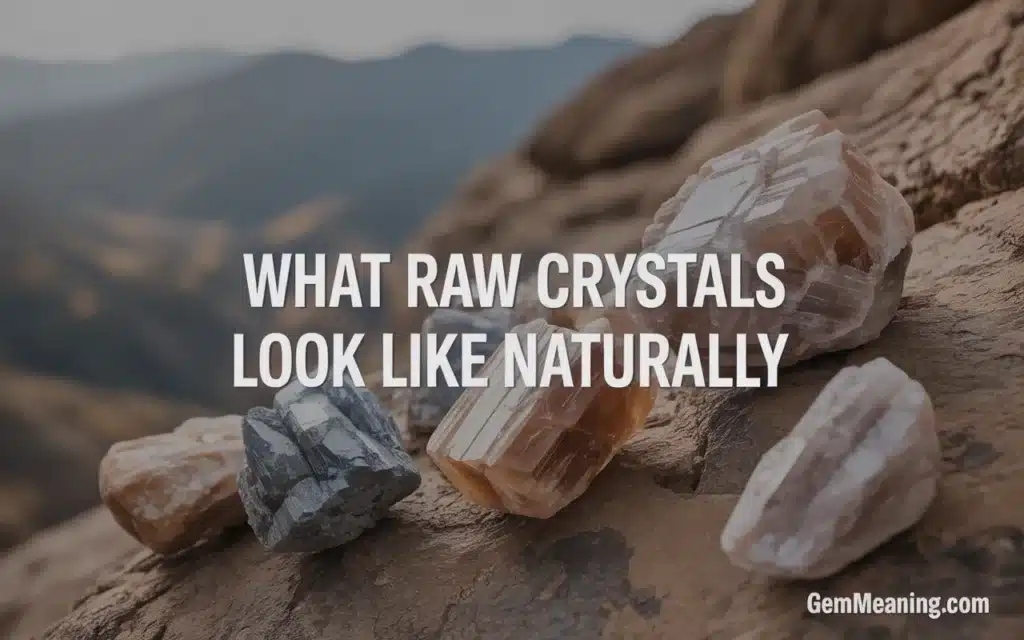
When we talk about raw crystals, we are referring to stones that are unpolished, uncut, and untreated. They are in the exact state they were in when they were pulled from the earth, minus perhaps a little dirt and clay. This natural state is often called “rough” in the gem trade.
To the untrained eye, a raw crystal might just look like an interesting rock. It doesn’t always have the high-gloss shine or the smooth texture of a tumbled stone. Instead, it feels earthy. It might have sharp edges, a matte finish, or a texture that feels like sandpaper or broken glass.
The beauty of raw stones lies in their unpredictability. A tumbled stone is uniform and smooth, but a raw one tells a story. You can see where it was attached to the rock wall, where other minerals grew alongside it, and exactly how its internal structure dictated its shape.
Texture and Feel
One of the first things you’ll notice is the texture. Raw crystals can be:
- Chalky or Matte: Many stones, like Sodalite or Amazonite, have a dry, matte texture before they are polished.
- Waxy or Greasy: Some raw stones, like Calcite, can feel almost waxy to the touch.
- Glassy but Sharp: Quartz often breaks with sharp, curved edges that look and feel like broken glass (a fracture known as conchoidal).
Understanding these textures helps you identify what is real. If a “raw” stone feels perfectly smooth and plastic-like, it might be a fake. Real raw crystals have grit and character.
Common Features of Natural, Unpolished Stones
While every mineral species is different, there are some visual clues that act like a signature for raw crystals. These features are the fingerprints of nature, proving that the stone wasn’t manufactured in a lab or smoothed by a machine.
1. The Matrix
Many raw specimens are still attached to their “matrix.” The matrix is the host rock in or on which the crystal grew.
- Imagine a beautiful cluster of purple Amethyst points growing out of a grey, rocky base. That grey rock is the matrix.
- Sometimes the crystal is embedded inside the matrix, like a garnet sticking out of a silvery, mica-rich rock.
- Seeing the matrix is a great sign of authenticity. It shows the geological context of the specimen.
2. Natural Terminations
A “termination” is simply the natural point or end of a crystal.
- If a crystal has room to grow, it will form a distinct shape based on its atomic structure.
- Quartz naturally forms a six-sided prism with a pointy tip.
- In a raw stone, this tip might be slightly chipped or uneven, unlike a cut and polished generator point which is perfectly sharp.
- Collectors prize these natural terminations because they show the stone’s true growth habit.
3. Etching and Striations
If you run your fingernail along the side of a raw Quartz or Tourmaline crystal, you might feel tiny ridges. These are called striations.
- They look like parallel lines etched into the surface of the stone.
- This is a natural growth mark, similar to the rings on a tree.
- Glass imitations rarely have these subtle, intricate texture details.
- Etching can also look like interesting geometric patterns or “keys” imprinted on the face of the crystal.
4. Inclusions and Imperfections
Polished gemstones are often valued for being flawless, but raw crystals celebrate their flaws.
- You might see “inclusions,” which are other materials trapped inside the crystal.
- This could look like black specks of carbon, bubbles of water, or even other tiny crystals growing inside the larger one.
- Cracks, veils, and cloudy spots are standard. These aren’t broken parts; they are internal stress lines from the immense pressure the stone was under during formation.
What Popular Raw Crystals Look Like
To really understand what raw crystals look like, it helps to look at specific examples. The difference between the raw version and the polished version of popular stones can be shocking. Here is what you can expect to see when shopping for rough specimens.
Raw Quartz (Clear, Rose, Amethyst, Citrine)
The Quartz family is the most common crystal group you will encounter.
- Clear Quartz: In its raw form, it often looks like shards of cloudy ice. It usually grows in six-sided columns. The sides often have those horizontal striations we mentioned earlier. It’s rarely perfectly clear; it usually has misty or cloudy areas near the base.
- Rose Quartz: This is almost never found in crystal points naturally. Raw Rose Quartz usually looks like a massive, jagged chunk of pink rock. It has a glassy shine but rough, uneven edges. It looks more like frozen pink sorbet than a gem.
- Amethyst: You will typically find this as a cluster of small purple pyramids growing on a grey or brownish rock base. The points are often short and stubby compared to polished points.
- Citrine: Natural raw Citrine is surprisingly subtle. It looks like pale, champagne-colored or smoky yellow quartz. The bright orange, “burnt” looking clusters often sold as Citrine are actually heat-treated Amethyst. Real raw Citrine has a consistent, gentle color.
Raw Fluorite
Polished Fluorite is famous for its smooth, colorful stripes. But raw Fluorite is geometric magic.
- It naturally grows in cubes or octahedrons (two pyramids base-to-base).
- A raw piece might look like a stack of purple or green sugar cubes fused together.
- The surface can be dull or matte, not shiny, until it is wet or polished.
- It is a softer stone, so raw pieces often have chipped corners or white scratch marks along the edges.
Raw Malachite
This is one of the most dramatic transformations.
- Polished Malachite is known for its swirling green bullseyes and stripes.
- Raw Malachite, however, often looks like a bubbly, mossy green carpet. This formation is called “botryoidal,” which means it looks like a bunch of grapes.
- It has a velvet-like texture. If you break it open, the inside is fibrous and silky, composed of thousands of tiny needles.
- Note: Raw Malachite dust can be toxic, so it’s one of the few raw crystals you should handle with care and not breathe in.
Raw Pyrite (Fool’s Gold)
Pyrite is one of the few minerals that looks polished even when it’s 100% raw.
- It forms in perfect, shiny metallic cubes or distinct, faceted clusters.
- The faces of the cubes are naturally reflective, like a gold mirror.
- However, you will often see rusty patches or chalky areas where the iron in the stone has oxidized.
- Raw Pyrite “suns” are flat disks of radiating crystals that look like a golden sand dollar.
Raw Lapis Lazuli
In jewelry, Lapis is a deep, celestial blue. In the wild, it looks like a dusty blue rock.
- Raw Lapis is usually a matte, denim-blue stone with streaks of white Calcite and sparkles of gold Pyrite.
- It looks very much like a regular rock you’d find in a driveway, just strangely blue.
- It doesn’t shine until it is polished. The gold flecks of Pyrite are the best giveaway that you are holding real, raw Lapis.
Identifying Fakes: Raw vs. Treated
When shopping for raw crystals, you have an advantage. It is generally much harder to fake a convincing raw crystal than a polished one. The complex textures, striations, and matrix rocks are difficult to replicate in a factory. However, there are still some tricks to watch out for.
The “Aura” Coating
You might see “raw crystals” that shimmer with iridescent rainbows of bright neon pink, blue, or gold.
- These are real quartz crystals that have been bonded with metal vapors in a vacuum chamber.
- While they are pretty, they are not “natural” in the strict sense. This is a human enhancement called “Aura Quartz.”
- Nature does not produce neon metallic coatings. If a raw stone looks like a holograph, it has been treated.
Dyed Stones
Sometimes a stone is raw, but the color is fake.
- Dyed Agate geodes are very common. If you see a raw geode slice that is bright hot pink, teal, or purple, look at the cracks.
- If the color is concentrated in the cracks or rubs off on your finger, it has been dyed.
- Natural raw stones usually have earthier, more subtle colors.
Slag Glass
“Andara Crystals” or generic “colored obsidian” are often just pieces of industrial glass called slag.
- Raw glass breaks with sharp, shell-like fractures just like Quartz.
- However, glass will often have round air bubbles inside. Natural quartz rarely has round bubbles.
- If a raw stone is a uniform, incredibly bright color (like clear cherry red or electric blue) and has swirls inside, it is likely glass.
Why Choose Raw Crystals?
With all these chips, cracks, and dusty surfaces, why would someone choose a raw stone over a shiny, perfect tumbled one? There is a growing movement in the crystal community that prefers the rugged look of raw crystals for several reasons.
1. Connection to Origins
Holding a raw crystal feels like shaking hands with the earth. There is a sense of awe in knowing that the geometric shape in your hand wasn’t cut by a saw, but formed by atoms locking together millions of years ago. It reminds us of the power of nature.
2. Potent Energy
Many practitioners believe that raw crystals hold a more potent or “wild” energy.
- Because they haven’t been processed, tumbled, or handled by as many machines, they are thought to retain their original energetic frequency.
- They are seen as unfiltered and direct.
- Whether you believe in the metaphysical properties or not, there is undeniably a different “vibe” to a raw stone. It feels ancient and grounded.
3. Unique Aesthetics
From a decor perspective, raw crystals are stunning. They add an organic, architectural element to a room.
- A jagged cluster of Celestialite looks like a piece of the sky on your shelf.
- A large, raw chunk of Black Tourmaline adds a dramatic, modern texture to a desk.
- They catch the light in unpredictable ways, sparkling from different internal angles rather than just reflecting off a smooth surface.
4. Cost-Effective
Surprisingly, raw crystals can sometimes be more affordable than polished ones.
- Polishing requires labor, equipment, and time.
- With raw stones, you aren’t paying for that extra processing.
- You can often get a much larger specimen for your money if you buy it raw. A fist-sized chunk of raw Rose Quartz might cost the same as a tiny polished heart.
Caring for Your Raw Collection
Owning raw crystals requires slightly different care than owning tumbled stones. Because they have exposed edges and natural crevices, they can be a little more fragile and harder to clean.
Handling with Care
Raw stones can be sharp!
- Always be careful when picking up a raw cluster. The edges of Quartz or Calcite can actually cut skin if you grab them too tightly.
- They can also be brittle. A raw stone is more likely to chip if you drop it because it has thin, exposed points.
- Keep them out of reach of children, as the small shards that can flake off are sharp.
Cleaning the Nooks and Crannies
Dust loves raw crystals. It settles into the tiny gaps between points and into the rough texture of the matrix.
- Air Duster: A can of compressed air (like you use for computer keyboards) is the best friend of a raw crystal collector. It blasts dust out of crevices without damaging the stone.
- Soft Brush: A clean, soft makeup brush or paintbrush is great for dusting delicate surfaces.
- Water (With Caution): You can rinse hard stones like Quartz in water. However, be careful with soft raw stones or those with a fragile matrix. Water can dissolve minerals like Selenite or turn a clay matrix into mud.
Sunlight Sensitivity
Just like polished stones, some raw crystals can fade in the sun.
- Amethyst, Citrine, Fluorite, and Rose Quartz are all prone to fading.
- Because raw stones often have more surface area exposed to light, they can lose color over time if left on a sunny windowsill.
- It is best to display your colorful raw specimens in a place with indirect light to preserve their vibrancy.
Embracing the Imperfect Beauty
The world of raw crystals is an invitation to appreciate beauty without perfection. It challenges our desire for symmetry and smoothness, asking us to find value in the jagged, the cloudy, and the complex.
When you look at a raw crystal, you are looking at a survivor. You are seeing a mineral that endured immense heat, crushing pressure, and millions of years of shifting earth to arrive in your hands. Its cracks are its history; its shape is its identity.
We hope this guide has helped you visualize what raw crystals look like and why they are such a treasured part of any collection. The next time you are browsing a rock shop or walking in nature, keep an eye out for these unpolished gems. Pick one up, feel its rough texture, and appreciate the incredible, unaltered artwork of our planet.
There is a raw stone out there waiting to speak to you. It might not be shiny, and it might not be perfect, but it will be uniquely, unapologetically real. We encourage you to start your own raw collection and discover the earthy magic for yourself.

Christian Grey is the creator of GemMeaning, where he shares simple insights about crystals, gemstone meanings, and spiritual guidance. His focus is on making complex ideas easy to understand and practical for everyday life.