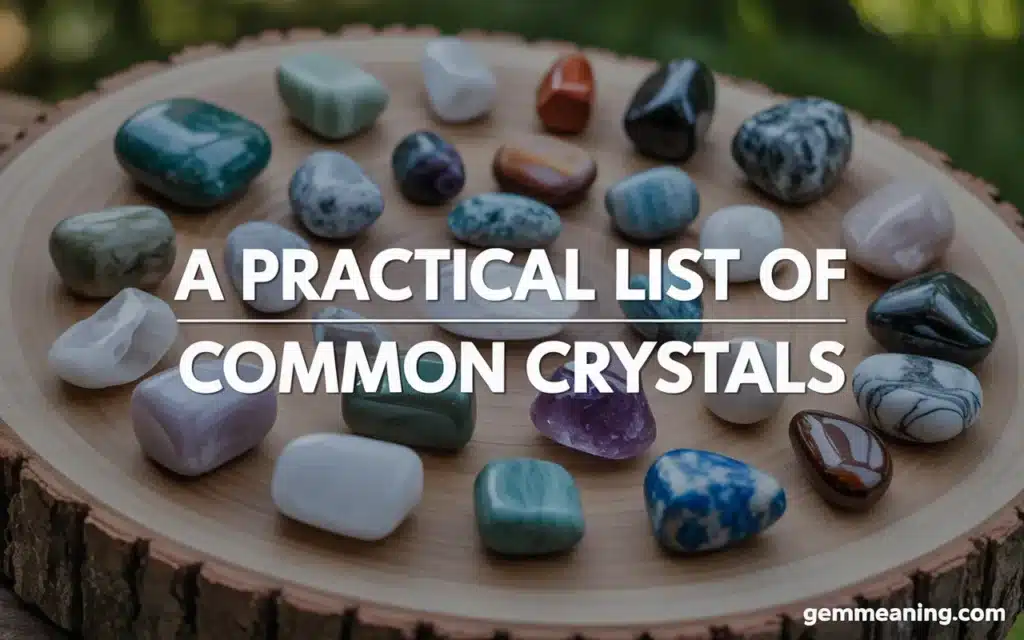
Walking into a crystal shop for the first time can feel a bit like walking into a candy store where you don’t know the flavors. There are hundreds of bins, countless colors, and confusing names everywhere you look. You might find yourself wondering, “Which ones do I actually need?” or “What do these even do?” It’s easy to feel overwhelmed when you just want a simple starting point.
Building a collection doesn’t have to be complicated. In fact, most collectors, whether they are beginners or seasoned experts, tend to circle back to the same reliable favorites. Having a curated reference guide can save you time, money, and confusion as you start exploring the mineral kingdom.
This guide is designed to be your go-to resource. We have compiled a practical, easy-to-navigate list of crystals that covers the absolute essentials. We will break down what they look like, why people love them, and how they are commonly used. Think of this as your starter kit for navigating the sparkling world of geology.
Let’s dive in and explore the must-have stones that form the foundation of almost every great collection.
The Essential Quartz Family
If you only ever learn about one group of stones, make it the Quartz family. These are the workhorses of the crystal world. They are durable, accessible, and come in a stunning variety of colors. Any good list of crystals has to start here because these are likely the first stones you will encounter.
Clear Quartz
Often called the “Master Healer,” Clear Quartz is the most iconic crystal of them all.
- Appearance: Transparent to translucent, ranging from icy clear to slightly cloudy. It often forms in six-sided prisms with pointed tips.
- Why it’s popular: It is loved for its versatility. In the crystal community, it is believed to amplify energy and intentions. It acts like a blank canvas, ready for whatever purpose you assign to it.
- Best for: Beginners who want one stone that does it all. It’s also great for placing near other crystals to reportedly boost their energy.
Amethyst
This is the purple variety of quartz and arguably the most famous colored gemstone in the world.
- Appearance: Ranges from a pale, barely-there lilac to a deep, dark royal purple. It is often found in geodes or clusters of small points.
- Why it’s popular: Amethyst is the ultimate stone of relaxation. It is associated with peaceful sleep, stress relief, and spiritual awareness. Historically, it was worn to prevent intoxication.
- Best for: Keeping on your nightstand or in a space where you want to unwind after a long day.
Rose Quartz
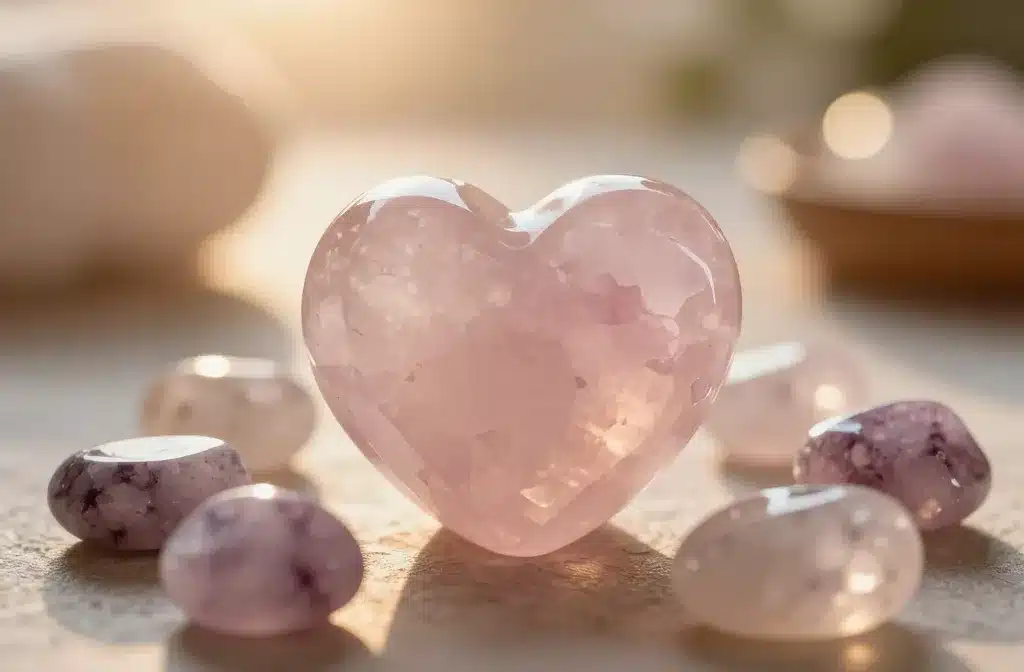
Known as the “Stone of Unconditional Love,” Rose Quartz is the gentle heart of the crystal family.
- Appearance: A soft, milky pink color. Unlike clear quartz, it rarely forms points and is usually found as raw chunks or polished shapes like hearts and spheres.
- Why it’s popular: Its energy is described as soft, nurturing, and comforting. It is the go-to stone for anything related to love—whether that’s romance, friendship, or learning to love yourself.
- Best for: Anyone going through a breakup or needing a little extra self-care and compassion.
Citrine
Citrine is the sunny, yellow cousin in the quartz family.
- Appearance: Natural Citrine is a pale, smoky yellow. Most Citrine on the market is heat-treated Amethyst, which looks bright orange or amber-colored. Both are chemically quartz.
- Why it’s popular: It is known as the “Merchant’s Stone” or the stone of abundance. It is associated with joy, positivity, and prosperity.
- Best for: Placing on your desk or in your workspace to invite creativity and success.
Smoky Quartz
This is the grounding force of the group.
- Appearance: Transparent to translucent with a brownish-grey to nearly black color. It looks like smoke captured in glass.
- Why it’s popular: While Amethyst calms the mind, Smoky Quartz grounds the body. It is used to anchor energy and provide stability during chaotic times.
- Best for: Holding when you feel overwhelmed, anxious, or “spacey.”
The Protective Stones
The next category on our list of crystals focuses on protection. These stones are visually heavier and darker. They are often used by people who want to create a sense of safety or shield their space from negativity.
Black Tourmaline
If you ask any collector for a protective stone, this is the first one they will recommend.
- Appearance: Jet black and often raw. It has a unique striated texture, looking like long needles packed together. It can be brittle and flake easily.
- Why it’s popular: It is considered an energetic bodyguard. People place it near front doors or carry it in pockets to repel negative vibes and heavy energy.
- Best for: Creating a protective boundary around your home or office.
Hematite
Hematite is heavy, grounding, and feels solid in your hand.
- Appearance: A metallic, silver-grey stone with a mirror-like shine when polished. If you scratch it, it leaves a red streak.
- Why it’s popular: It is the ultimate grounding stone. Because it contains a lot of iron, it is associated with blood and vitality. It is said to help with focus and organizing your thoughts.
- Best for: Wearing as jewelry or carrying in your pocket when you need to feel centered and strong.
Obsidian
Obsidian isn’t technically a mineral; it’s volcanic glass.
- Appearance: Deep, glossy black. Because it is glass, it breaks with incredibly sharp edges (conchoidal fracture). It is shiny and smooth.
- Why it’s popular: It acts like a spiritual mirror, helping you see the truth about yourself, even the parts you might hide. It is intense and fast-acting.
- Best for: Deep emotional work or “cutting cords” with past situations that no longer serve you.
Tiger’s Eye
This stone combines protection with confidence.
- Appearance: Bands of gold, yellow, and brown with a silky luster. When you turn it in the light, the bands seem to move (an effect called chatoyancy).
- Why it’s popular: It has a very masculine, earthy energy. It is associated with courage, willpower, and taking action. It helps you stay grounded while you pursue your goals.
- Best for: Job interviews, big presentations, or any time you need a boost of confidence.
The Calming and Communicative Stones
Sometimes you don’t need energy or protection; you just need peace. This section of our list of crystals features stones that are typically blue or green, colors associated with water, sky, and tranquility.
Blue Lace Agate
This is one of the most soothing stones you can find.
- Appearance: Light blue with delicate bands of white, looking like lace or waves of water.
- Why it’s popular: It is connected to the throat chakra and communication. It is said to help you speak your truth calmly and clearly without getting angry.
- Best for: Public speakers, writers, or anyone who struggles to find the right words in difficult situations.
Sodalite
Sodalite is often confused with Lapis Lazuli, but it is much more affordable and accessible.
- Appearance: A rich royal blue, often with white veins or patches of calcite running through it. It looks like denim.
- Why it’s popular: It is the stone of logic and rationality. It helps calm panic attacks and brings order to a confused mind. It encourages rational thought and objectivity.
- Best for: Students studying for exams or anyone working on a complex project requiring focus.
Celestite
The name comes from “celestial,” meaning heavenly, and it fits perfectly.
- Appearance: A soft, pale sky blue. It is very fragile and usually found as a cluster of crystals inside a geode.
- Why it’s popular: Its energy is described as angelic and uplifting. It is a stone for high-vibration meditation and peace. It brings a sense of serenity to a room immediately.
- Best for: Placing in a bedroom or meditation space (but keep it out of direct sunlight, as it can fade!).
Amazonite
This stone is as refreshing as a cool stream.
- Appearance: Bright turquoise-green, often with white streaks. It has a matte to slightly shiny finish.
- Why it’s popular: It is known as the “Stone of Courage and Truth.” It is believed to filter out stress and help you flow with the changes of life rather than fighting them.
- Best for: soothing anxiety and bringing a sense of playfulness to your day.
The Stones of Intuition and Spirit
For those looking to deepen their meditation practice or tap into their intuition, this part of the list of crystals offers stones that are often associated with the “third eye” and higher consciousness.
Labradorite
Labradorite is often called the stone of magic.
- Appearance: A grey-green stone that looks dull until light hits it. Then, it flashes with brilliant iridescent peacocks blues, golds, and sometimes purples (an effect called labradorescence).
- Why it’s popular: It is the stone of transformation. It is said to protect your aura and help you navigate through changes in life. It sparks imagination and new ideas.
- Best for: Artists, creatives, and anyone going through a major life transition.
Fluorite
Fluorite is one of the most organized and structured crystals in the mineral kingdom.
- Appearance: It can be purple, green, clear, or yellow—often all in the same stone! It forms in beautiful bands or cubes.
- Why it’s popular: It is known as the “Genius Stone.” It is excellent for mental clarity, decision-making, and absorbing new information.
- Best for: Keeping on your desk to help you organize your thoughts and stay productive.
Lapis Lazuli
This stone has been treasured by royalty since ancient Egypt.
- Appearance: Deep, intense blue with sparkles of gold pyrite flecks. Unlike Sodalite, it rarely has white streaks.
- Why it’s popular: It is the stone of wisdom and truth. It encourages self-awareness and taking charge of your own life. It feels regal and powerful.
- Best for: Seeking wisdom, leadership roles, and deep journaling.
Selenite
Selenite acts like a spiritual vacuum cleaner.
- Appearance: Translucent white with a fibrous, pearly sheen. It looks like a stick of frozen light. It is very soft and can be scratched by a fingernail.
- Why it’s popular: It is believed to cleanse energy. Unlike other stones that need “charging,” Selenite is said to clear negative energy from other crystals and the environment constantly.
- Best for: Placing on windowsills or using as a “charging plate” for your other stones.
The Colorful Agates and Jaspers
No list of crystals is complete without mentioning the vast family of Agates and Jaspers. These are forms of Chalcedony (microcrystalline quartz). They are generally more affordable, very durable, and come in every pattern imaginable.
Carnelian
Carnelian is the caffeine of the crystal world.
- Appearance: Translucent orange to deep red-brown. It glows warmly when held up to the light.
- Why it’s popular: It is associated with creativity, motivation, and vitality. It is used to banish sluggishness and stimulate the appetite for life.
- Best for: Kickstarting a creative project or getting motivated to exercise.
Green Aventurine
This is often called the “Stone of Opportunity.”
- Appearance: A light to dark green stone with tiny glittering specks of mica inside. It looks sparkly and fresh.
- Why it’s popular: It is thought to be the luckiest of all crystals. It is associated with prosperity, winning, and good fortune.
- Best for: Taking to a job interview, buying a lottery ticket, or starting a new business venture.
Red Jasper
Red Jasper is the steady, reliable friend.
- Appearance: Solid, opaque brick red. It sometimes has black or grey veins.
- Why it’s popular: It is a stone of endurance. It is gentle but strong, helping you keep going during difficult times. It is very grounding and nurturing.
- Best for: Long-term projects that require stamina and patience.
Moss Agate
Despite the name, there is no actual moss inside this stone.
- Appearance: Clear or milky white stone with green, fern-like inclusions that look like tiny plants trapped inside.
- Why it’s popular: It is the stone of gardeners and nature lovers. It is associated with new beginnings, growth, and connection to the earth.
- Best for: Putting in your potted plants or garden to encourage growth (and yourself!).
How to Choose from the List
With such a practical list of crystals in front of you, how do you decide which one to buy first? Here are three simple methods that work for almost everyone.
1. The Attraction Method
Go to a shop (or look at photos online) and see which stone your eye goes to first. Don’t read the cards or the meanings. Just look. Usually, the stone you are visually attracted to is the one you need. If you keep staring at the Blue Lace Agate, you might be craving some peace and quiet.
2. The Need-Based Method
Think about what is lacking in your life right now.
- Stressed? Try Amethyst.
- Tired? Try Carnelian.
- Fearful? Try Tiger’s Eye.
- Heartbroken? Try Rose Quartz.
Match the stone to the problem you want to solve.
3. The Starter Kit Method
If you just want a solid foundation, you can’t go wrong with the “Golden Triangle.” This usually includes Amethyst (for relaxation), Rose Quartz (for love), and Clear Quartz (for clarity). Add a piece of Black Tourmaline for protection, and you have a perfectly balanced beginner collection.
Caring for Your New Collection
Once you bring your crystals home, there are a few simple things you should know to keep them looking their best.
Sunlight Warning:
Some crystals on this list will fade if left in direct sunlight for too long. Amethyst, Rose Quartz, Citrine, Fluorite, and Celestite are all prone to bleaching. It is best to keep these out of bright window sills.
Water Warning:
Most of the Quartz family is safe in water, but softer stones are not. Selenite, for example, is a form of gypsum and can dissolve or lose its sheen if soaked in water. A good rule of thumb: if the stone ends in “-ite” (Selenite, Fluorite, Calcite), keep it dry.
Cleaning:
Physically cleaning your stones is easy. For hard stones like Quartz and Agate, warm soapy water and a soft brush work wonders to remove dust. For softer or raw stones, a can of compressed air or a soft makeup brush is safer.
Building Your Personal Collection
This list of crystals is just the beginning. The mineral kingdom is vast, with thousands of different species and varieties waiting to be discovered. However, these common stones are popular for a reason. They are accessible, affordable, and cover a wide range of needs, from grounding and protection to love and clarity.
Don’t feel pressured to buy everything at once. The joy of collecting comes from finding pieces that speak to you over time. Maybe you find a piece of Jasper on a beach vacation, or a friend gifts you a piece of Amethyst. Each stone carries a memory.
We encourage you to start small. Pick one or two stones from this list that resonated with you as you read. Hold them, put them in your pocket, or place them on your desk, and see how you like having them around. You might just find that these sparkling pieces of the earth add a little bit of extra magic to your daily life. Happy collecting!

Christian Grey is the creator of GemMeaning, where he shares simple insights about crystals, gemstone meanings, and spiritual guidance. His focus is on making complex ideas easy to understand and practical for everyday life.