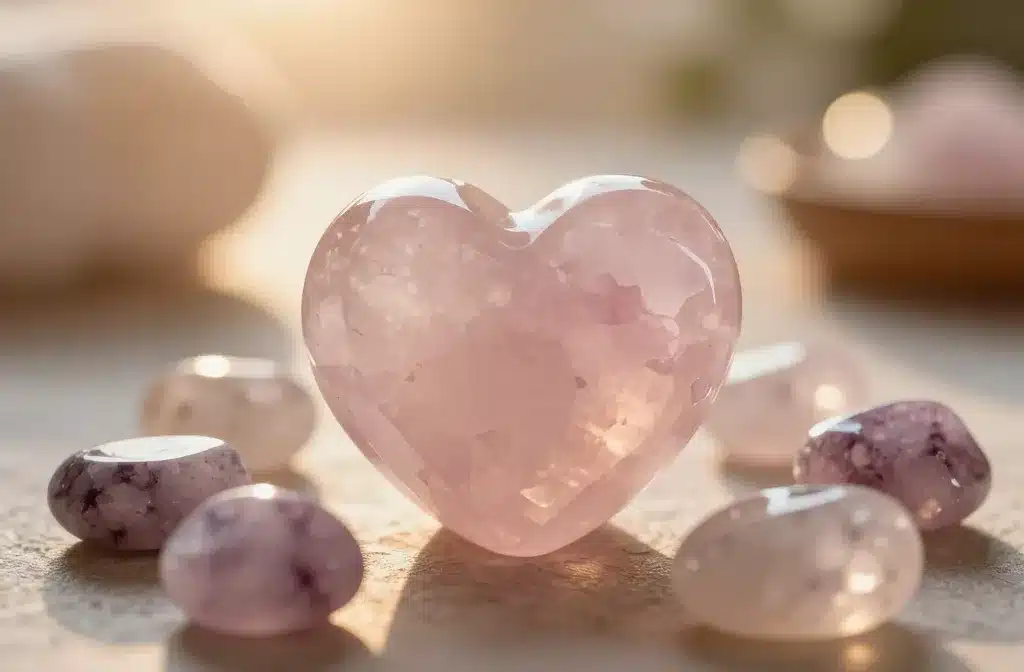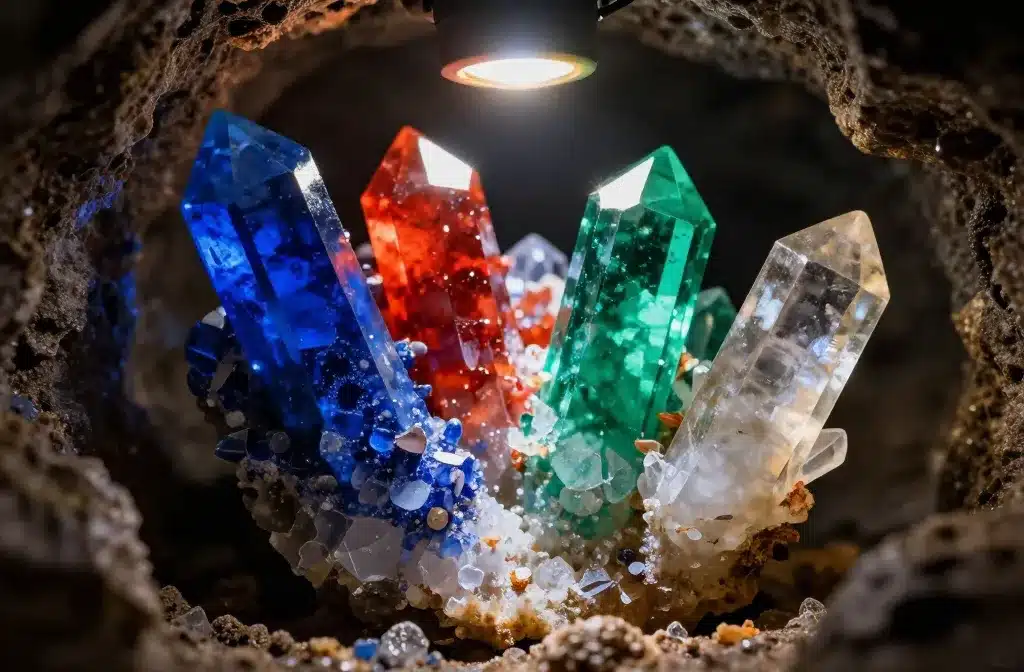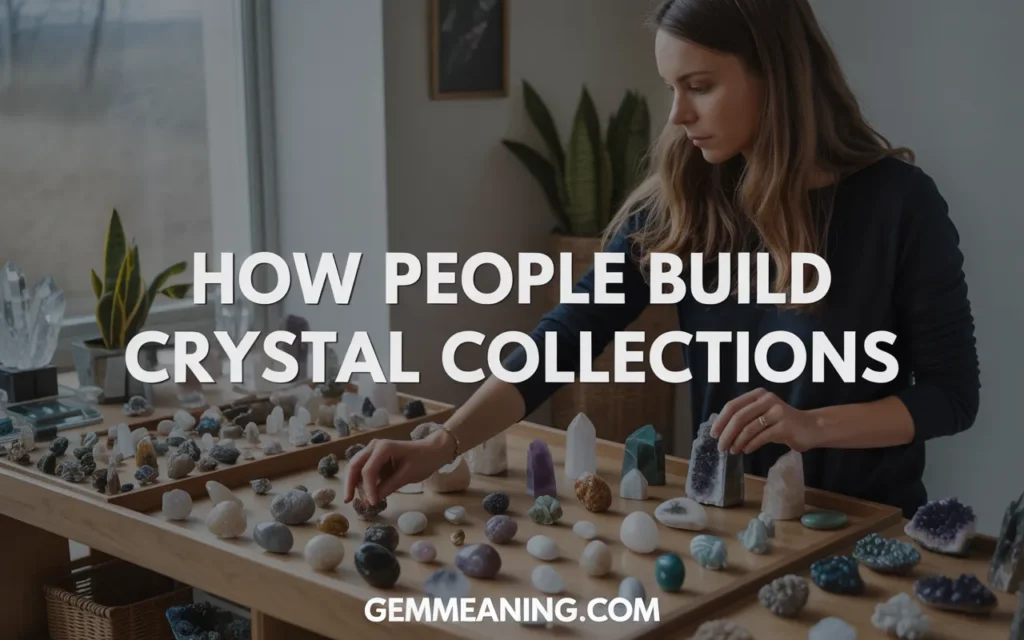
It usually starts with just one. Maybe you picked up a smooth, tumbled stone at a gift shop because it felt good in your hand. Perhaps a friend gifted you a sparkling piece of Amethyst for your birthday. Or maybe you saw a photo online of a shelf lined with glittering geodes and thought, “I want that kind of magic in my home.” Before you know it, that single stone has turned into three, then ten, and suddenly you are looking for new ways to display your growing treasures.
Building a crystals collection is a deeply personal journey. Unlike collecting stamps or coins, where there is often a specific checklist to complete, collecting minerals is an open-ended adventure. There is no “right” way to do it. Some people collect for the geological science, others for the metaphysical properties, and many simply for the sheer beauty of nature’s artwork.
Whatever your motivation, the path from owning a pebble to curating a museum-worthy display is full of excitement and discovery. It is a hobby that connects you to the earth and brings a sense of wonder into your daily life.
In this guide, we will explore the many ways people start and grow their crystal hoards. We will look at different collecting styles, practical tips for beginners, and how to curate a collection that truly reflects who you are. Whether you have one stone or one hundred, let’s discover how to turn a passing interest into a lifelong passion.
finding Your “Why”: Different Collecting Styles
One of the first things you will notice when you start building a crystals collection is that everyone does it differently. Understanding your own motivation can help you focus your efforts and stop you from buying everything in sight (though that is tempting!). Most collectors fall into one of a few broad categories.
The Aesthetic Collector
For these collectors, it is all about the look. They view crystals as natural sculptures and home decor.
- Focus: Color, shape, and visual impact.
- Common Buys: Large geodes, tall generator points, colorful agate slices, and statement pieces that look great on a coffee table.
- Goal: To create a beautiful, visually harmonious space. They might organize their shelves by color (a rainbow shelf) or stick to a specific palette, like all white and grey stones for a modern look.
The Metaphysical Collector
This is perhaps the most common type of collector today. These individuals buy stones based on their perceived energetic properties.
- Focus: Healing energy, chakra balancing, and intention setting.
- Common Buys: Rose Quartz for love, Black Tourmaline for protection, and Citrine for abundance. They often prefer tumbled stones they can carry or specific shapes like spheres and pyramids.
- Goal: To build a “toolkit” of energy. They want to have the right stone on hand for any emotional or spiritual need, whether that’s soothing anxiety or boosting creativity.
The Scientific or “Systematic” Collector
These are the rockhounds who love the geology. They care about chemistry, crystal systems, and localities.
- Focus: Mineral species, rarity, and geological accuracy.
- Common Buys: Raw specimens, rare minerals, and stones from specific famous mines. They prioritize undamaged natural crystals over polished or treated ones.
- Goal: To learn about the earth. They often label their specimens with detailed tags listing the chemical formula and the exact mine where it was found.
The “Magpie” Collector
Most of us start here! The Magpie collector simply buys what sparks joy.
- Focus: Instinct and attraction.
- Common Buys: Anything that catches their eye—a shiny piece of Pyrite, a smooth river rock, or a glittery Druzy.
- Goal: Pure enjoyment. There are no rules; if they like it, it comes home.
Starting Small: The Foundation Stones
If you are just beginning your crystals collection, the sheer variety of options can be overwhelming. Do you need the expensive blue one? What about the spiky black one? Most experienced collectors recommend starting with the “basics.” These are stones that are affordable, easy to find, and cover a wide range of colors and uses.
The “Must-Haves” for Beginners
You will find these staples in almost every collection, from the novice to the expert:
- Clear Quartz: The ultimate neutral stone. It is beautiful, affordable, and goes with everything.
- Amethyst: The purple classic. It is easy to find in both raw clusters and polished points.
- Rose Quartz: The pink stone of love. It adds a softness to any group of stones.
- Selenite: A white, fibrous stone that looks like frozen light. It is great for display because it reflects light beautifully.
- Iron Pyrite: Also known as Fool’s Gold. Its metallic shine contrasts perfectly with the softer colors of quartz.
Starting with these five gives you a solid foundation. They are durable (mostly), distinct from one another, and usually very budget-friendly. This allows you to get a feel for what you like without spending a fortune.
Sourcing Your Stones: Where the Hunt Happens
Half the fun of a crystals collection is the thrill of the hunt. Finding the perfect piece is a rush. But where do people actually find these things?
Local Rock Shops and Metaphysical Stores
This is the best place to start. Being able to hold a stone in your hand, feel its weight, and see its true color is invaluable.
- Pros: Instant gratification, no shipping fees, and you can pick the exact piece that “calls” to you.
- Cons: Selection might be limited compared to online.
Gem and Mineral Shows
These are the holy grail for collectors. These events happen all over the USA, from huge international shows in Tucson and Denver to small local club meetups.
- Pros: You buy directly from miners or wholesalers, often at much better prices. The selection is mind-blowing.
- Cons: It can be overwhelming, and it is very easy to blow your entire budget in the first hour!
Online Sellers and Social Media
Instagram and TikTok have revolutionized how people buy crystals. “Live sales,” where a seller holds up items on camera and people claim them in the comments, are incredibly popular.
- Pros: You can access rare stones from all over the world without leaving your couch. You can find very specific items.
- Cons: You can’t touch the stone or see it in natural light. It is harder to judge size and quality through a screen.
Self-Collecting (Rockhounding)
For the adventurous, the best way to get a crystal is to find it yourself. There are public dig sites all over the country where you can dig for quartz, dig for diamonds (yes, really, in Arkansas!), or hunt for geodes.
- Pros: It is free (or cheap), and the sentimental value is unmatched. You will never love a crystal more than the one you pulled out of the dirt yourself.
- Cons: It requires travel, tools, and a lot of physical effort.
Evolution of a Collection: From Tumbles to Statements
Most people’s crystals collection follows a similar growth pattern. It usually starts with “tumbles”—small, polished stones that cost a few dollars each. They are colorful, easy to store in a bowl, and fun to hold.
The “Tumble Phase”
At this stage, quantity often rules. You want one of everything. You might have a bowl full of Tiger’s Eye, Red Jasper, Sodalite, and Aventurine. It is a time of learning names and identifying different minerals.
The “Raw and Cluster Phase”
As you get more into it, you start to appreciate the natural geometry of the stones. You might buy your first Amethyst cluster (a piece of rock with many crystals growing on it) or a raw chunk of Black Tourmaline. You start to move away from the smooth, processed stones and look for things that feel more “wild.”
The “Statement Piece Phase”
This is the danger zone for your wallet! Eventually, you might decide you want one truly spectacular piece rather than twenty small ones. This is when collectors start saving up for a large Geode cathedral, a tall polished tower, or a massive sphere. These pieces become the focal point of a room.
The “Specialist Phase”
After years of collecting, many people narrow their focus. They might decide they only want to collect Fluorite from different mines, or they only want stones that form perfect cubes. This curation elevates a collection from a random assortment to a thoughtful gallery.
Curating and Organizing: Making It Look Good
As your crystals collection grows, you run into a practical problem: where do you put them all? A pile of rocks on a desk can quickly look messy. Successful collectors put a lot of thought into display and organization.
Shelving and Lighting
Crystals need light to shine (literally). Glass shelves are popular because they let light pass through to the lower levels. Many collectors add LED strip lights to their shelves to make the crystals sparkle.
- Tip: Be careful with sunlight! Direct sun can fade the color of Amethyst, Rose Quartz, Citrine, and Fluorite. It is best to display these in a shady corner or under artificial light.
Grouping Strategies
How you arrange your stones changes the vibe of the collection.
- By Color: Creating a rainbow gradient is incredibly satisfying visually.
- By Shape: Grouping all your spheres together or lining up your towers by height creates a sense of order.
- By Type: Keeping all the Quartzes together and all the Calcites together appeals to the scientific mind.
Creative Displays
People get very creative with their crystals collection.
- Specimen Boxes: Small, fragile, or rare crystals often look best in little acrylic boxes or “perky boxes.” This protects them and makes them look like museum exhibits.
- Bowls and Dishes: Tumbled stones look great piled in wooden dough bowls, ceramic dishes, or even vintage ashtrays.
- Natural Elements: Mixing crystals with plants, driftwood, or terrariums creates a beautiful, earthy aesthetic.
The Budget Reality: Collecting Smart
Let’s be honest: crystals can be expensive. Building a dream crystals collection doesn’t happen overnight unless you have unlimited funds. Most people build their hoard slowly, piece by piece, over years.
Quality Over Quantity
It is a common rookie mistake to buy lots of cheap, low-quality crystals. Over time, many collectors regret these purchases. It is often more satisfying to save up for one beautiful, high-quality piece that you truly love than to buy ten mediocre ones just to get a “fix.”
Understanding Value
Learning what makes a stone expensive helps you shop smarter.
- Weight: Most rough material is sold by the kilogram or pound. Heavier usually means pricier.
- Rarity: A stone found in only one mine (like Larimar) will always cost more than something found everywhere (like Clear Quartz).
- Clarity and Color: For gemmy minerals, the clearer and more vibrant the stone, the higher the price.
- Damage: A crystal point with a chipped tip is often sold at a discount. If you don’t mind a little “character,” this is a great way to get big pieces for cheap.
Avoiding Fakes
As your collection grows, you need to become savvy about fakes. Dyed agate, heat-treated amethyst sold as citrine, and man-made glass sold as “Obsidian” are rampant. Learning to spot these tricks ensures your money goes toward genuine minerals.
The Emotional Connection: Why We Keep Them
Why do we do it? Why do we fill our homes with heavy rocks that we have to dust? For most people, a crystals collection is more than just stuff. It is a tangible connection to the history of the earth.
Holding a crystal is a grounding experience. It reminds us of geologic time—of the millions of years of pressure, heat, and water it took to form that perfect geometric shape. In a fast-paced, digital world, crystals are solid, permanent, and real.
For those who believe in the metaphysical, the collection is a source of support. It is a physical representation of their intentions. Looking at a piece of Rose Quartz is a visual reminder to be kind to oneself. Holding a piece of Hematite is a physical cue to calm down and breathe. The stones act as touchstones for our emotional well-being.
And for many, it is simply about beauty. Nature is the ultimate artist. The fact that the earth can produce a stone that looks like a landscape painting (Picture Jasper) or a stone that flashes with neon blue fire (Labradorite) is a constant source of awe. Living surrounded by that beauty brings daily joy.
Community and Sharing
Building a crystals collection often opens the door to a vibrant community. Whether it is chatting with vendors at a show, joining Facebook groups to identify mystery stones, or posting photos of your “shelfie” on Instagram, collecting connects you with like-minded people.
Sharing knowledge is a huge part of the hobby. Experienced collectors love helping beginners identify their finds or teaching them about different mineral localities. It is a hobby where curiosity is rewarded and enthusiasm is contagious.
There is also a tradition of “crystal gifting.” Many collectors believe that crystals find their way to the person who needs them. Gifting a stone from your collection to a friend going through a hard time is a meaningful gesture that extends the joy of the hobby beyond your own shelves.
Summary: Your Journey Awaits
Building a crystals collection is a journey of exploration. It allows you to play with color, learn about geology, and create a sanctuary of beauty in your home. It doesn’t matter if your collection fits in a small velvet pouch or takes up an entire room; what matters is the joy it brings you.
Key Takeaways:
- Start with the basics: Quartz, Amethyst, and Selenite are affordable foundation pieces.
- Know your style: Decide if you are collecting for aesthetics, energy, or science to guide your purchases.
- Shop smart: Visit local shows for deals and learn to spot fakes.
- Curate with care: Display your stones away from direct sunlight to preserve their color.
- Enjoy the process: There is no rush. Let your collection grow organically over time.
So, the next time you see a stone that catches your eye, don’t be afraid to pick it up. That single stone might just be the seed that grows into a lifelong passion. We encourage you to start small, stay curious, and let the magic of the mineral kingdom unfold on your shelves. Happy collecting!

Christian Grey is the creator of GemMeaning, where he shares simple insights about crystals, gemstone meanings, and spiritual guidance. His focus is on making complex ideas easy to understand and practical for everyday life.