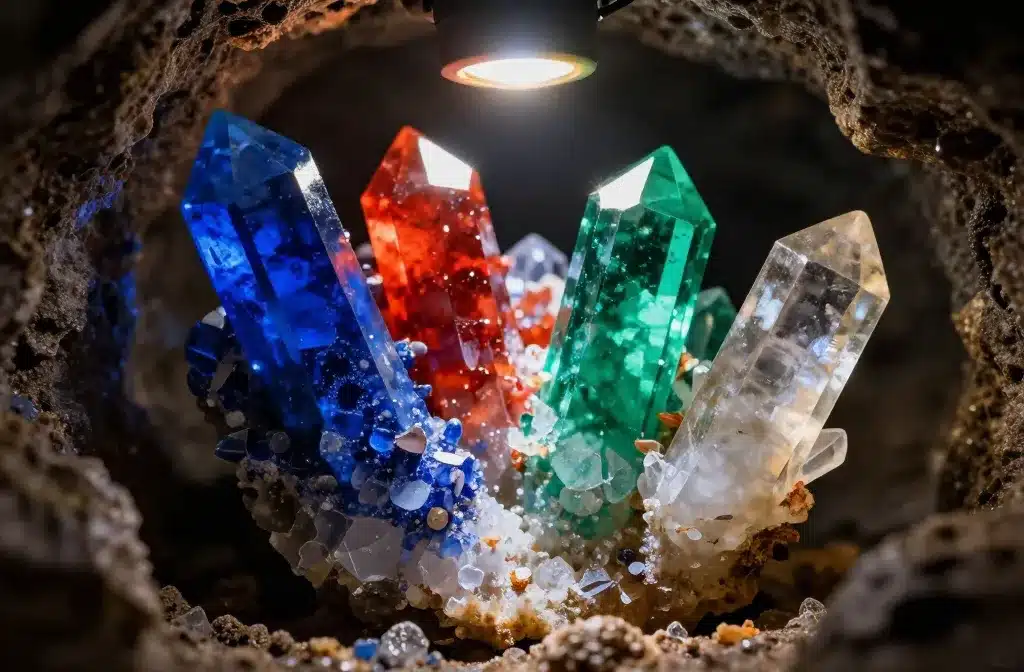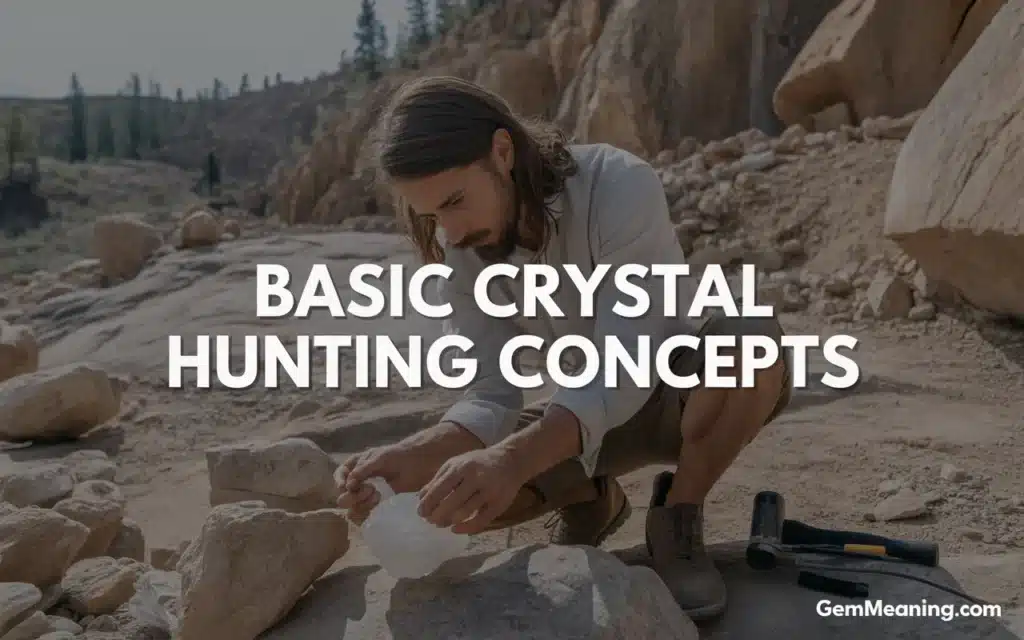
There’s a unique thrill that comes from finding something beautiful in the wild. It’s the feeling of spotting a perfectly shaped seashell on the beach or a four-leaf clover in a field. For a growing number of people, that thrill comes from unearthing a sparkling crystal that has been hiding in the dirt for millions of years. This adventurous hobby, known as rockhounding or crystal hunting, bridges the gap between a nature hike and a treasure hunt.
The idea of finding your own gems might seem like something reserved for professional geologists or miners with heavy equipment. But the truth is, anyone with a bit of knowledge and a good pair of walking shoes can participate. The United States is incredibly rich in mineral deposits, and many of them are accessible to the public.
This guide will introduce you to the fundamental ideas you need to get started. We will cover the essential concepts of crystals hunting, from understanding basic geology to knowing what tools to bring and how to look for clues in the landscape. We will strip away the complex science and give you a practical, friendly foundation for your first adventure.
Get ready to see the world around you in a whole new way. Let’s learn how to read the earth’s story and find the treasures it has tucked away.
Understanding the “Where”: Basic Geology for Beginners
Before you can find crystals, you need to know where they live. Crystals don’t just grow anywhere; they form under specific geological conditions. Thinking like a geologist is the first and most important step in successful crystals hunting. Don’t worry, you don’t need a degree—just a few core concepts.
Igneous Rocks: The Fire-Born Crystals
Igneous rocks are formed from cooled magma or lava. These are the birthplace of many popular crystals. When molten rock cools, atoms arrange themselves into orderly structures. Slow cooling creates large crystals, while fast cooling creates small ones.
- Look for: Granite, basalt, and rhyolite formations. These are common in mountainous regions, ancient volcanic fields, and areas with large granite domes like those in the Sierra Nevada or parts of New England.
- What you might find: Quartz, Feldspar, Tourmaline, Topaz, and Beryl (Aquamarine).
Sedimentary Rocks: The Water-Made Treasures
These rocks are formed from layers of sand, mud, and organic debris that have been compacted over millions of years. Water flowing through these layers can deposit minerals in cavities, creating geodes and other treasures.
- Look for: Limestone cliffs, sandstone canyons, and dried-up lake or sea beds. The American Midwest is famous for its vast limestone deposits.
- What you might find: Geodes (filled with Quartz or Calcite), Agate, Jasper, Selenite, and fossils.
Metamorphic Rocks: The Pressure-Cooked Gems
Metamorphic rocks are existing rocks that have been transformed by intense heat and pressure, usually from tectonic plate collisions. This “pressure cooking” rearranges atoms to form new, often denser, minerals.
- Look for: Schist and gneiss, which often have a wavy or banded appearance. These are common in the cores of major mountain ranges like the Appalachians and the Rockies.
- What you might find: Garnet, Kyanite, Staurolite, and Jade.
A quick online search for a “geological map of [your state]” can be an eye-opening first step. It will show you what types of rock are right in your backyard.
Reading the Clues: What to Look for on the Ground
Once you are in a promising geological area, your crystals hunting adventure becomes about spotting specific clues. Experienced rockhounds learn to read the landscape like a book.
Look for “Float”
Crystals are often harder than the rock they grow in (the “host rock”). As the host rock erodes away over time, the crystals are freed and wash downhill. These loose pieces are called “float.” Finding float is a huge clue. If you find small, loose pieces of a mineral, try walking uphill from that spot. The higher you go, the closer you are getting to the original source vein.
Follow the Quartz Veins
Quartz is one of the most common minerals on Earth. You will often see veins of white “bull quartz” cutting through darker rock. While this massive quartz isn’t usually valuable, it’s a major indicator of hydrothermal activity. Pockets within or alongside these veins can contain beautifully formed quartz crystals or even other minerals like gold.
Identify Contact Zones
A “contact zone” is where two different types of rock meet. The heat and chemical reactions at these boundaries can create unique and interesting minerals. If you see a place where, for example, a dark igneous rock butts up against a light-colored sedimentary rock, it is always worth a closer look.
The Importance of a Spray Bottle
This is the simplest yet most effective trick in crystals hunting. A dusty, dirty rock looks like any other rock. A quick spritz of water washes away the dirt and reveals the stone’s true color, texture, and potential transparency. A seemingly dull rock might suddenly glow with the deep purple of amethyst or the waxy sheen of agate once it’s wet.
Essential Gear: Your Beginner’s Toolkit
You don’t need a truck full of expensive equipment to get started. A basic kit will get you through most beginner rockhounding trips.
The Absolute Must-Haves:
- Safety Glasses: This is non-negotiable. Hitting a rock with a hammer can send sharp shards flying in any direction. Protect your eyes at all times.
- Rock Hammer or Crack Hammer: A geologist’s pick has a pointed end for prying and a flat end for breaking. A small sledgehammer (crack hammer) is better for breaking open larger rocks. Do not use a claw hammer; it is not hardened for striking stone and can shatter.
- Sturdy Backpack: To carry your tools, water, and, hopefully, your finds.
- Water and Snacks: You will be hiking and digging, which uses more energy than you think. Stay hydrated.
Highly Recommended Additions:
- Gloves: To protect your hands from sharp rocks and blisters.
- Chisels: A set of cold chisels is invaluable for splitting rocks along existing cracks.
- Bucket: A 5-gallon bucket is the classic rockhound carry-all. It’s sturdy and can hold a lot of weight.
- Wrapping Material: Newspaper or paper towels are essential for wrapping your fragile finds so they don’t bang against each other in your pack.
Where to Go: Finding Legal and Fruitful Locations
This is the number one question for anyone new to crystals hunting: “Where can I actually go?” The answer depends on understanding land ownership and doing a little research.
Public Lands (BLM and National Forests)
Much of the western USA is managed by the Bureau of Land Management (BLM) or the US Forest Service (USFS). On most of these lands, you are allowed to collect small, reasonable quantities of common rocks and minerals for personal use. You cannot use power tools or collect for commercial purposes. Always check the specific regulations for the forest or district you are visiting.
Fee-Dig Mines
This is the best option for guaranteed success. Fee-dig sites are privately owned mines that charge a daily fee to let you dig through their material. They are perfect for beginners and families because you are almost certain to find something.
- Examples: You can dig for “Herkimer Diamonds” in New York, emeralds in North Carolina, or opals in Nevada at well-known fee-dig sites.
Old Mine Dumps
When commercial mines operate, they create huge piles of “waste rock,” or tailings. These dumps can be a treasure trove for collectors, as they often contain minerals that were not the mine’s primary target.
- Permission is crucial: Many of these are on private land. You must get permission from the landowner before searching.
Never Collect In:
- National Parks: It is strictly illegal to remove any natural material, including rocks, from a National Park.
- Private Property: Never go onto someone’s land without explicit permission. That is trespassing.
Ethical and Safe Crystal Hunting Practices
Being a responsible rockhound ensures that these natural areas can be enjoyed for generations to come. It also keeps you safe.
Leave No Trace:
- Fill in Your Holes: If you dig a hole, fill it back in before you leave. Open pits are a hazard to other people and animals.
- Pack It In, Pack It Out: Carry out all of your trash. Leave the area cleaner than you found it.
- Respect Wildlife: You are a guest in their home. Observe from a distance and do not disturb habitats.
Safety First:
- Never Hunt Alone: Go with a buddy. If you get injured or lost, having a partner is critical.
- Know Your Limits: Don’t attempt to climb steep, unstable slopes or lift rocks that are too heavy.
- Beware of Old Mines: Never, ever enter an abandoned mine shaft or tunnel. They are extremely unstable and can contain bad air or hidden vertical shafts. Stick to surface collecting.
The Moment of Discovery: What to Do With Your Finds
Congratulations, you’ve found something! The excitement of crystals hunting peaks when you pull a keeper from the ground. Now what?
Field Identification
Try to identify your find on the spot. Is it glassy like quartz? Does it break in flat sheets like mica? Is it unusually heavy for its size? Your field guide can help you narrow it down. Knowing what you have helps you decide if you want to look for more of it.
Wrapping and Transporting
Fragile crystals with sharp points or delicate structures need to be wrapped carefully. Roll each specimen in newspaper or paper towels to cushion it for the journey home. The worst feeling is getting home and finding your prize specimen shattered at the bottom of your bucket.
Cleaning Your Crystals
Most crystals come out of the ground covered in dirt and clay. Cleaning them is a rewarding process that reveals their true beauty.
- Basic Wash: For hard, durable crystals like quartz and agate, a soak in warm, soapy water followed by a gentle scrub with a toothbrush is often all you need.
- Advanced Cleaning: Some staining (like iron oxide) requires special chemical soaks (like oxalic acid). This is a more advanced technique that you can learn as you get deeper into the hobby.
- Water-Sensitive Minerals: Be aware that some minerals, like Selenite and Halite (salt), will dissolve in water. Always identify your stone before you soak it.
Labeling and Display
The final step is giving your new treasure a home. A good collector keeps a label with each specimen noting the mineral name, where it was found, and the date. This turns a simple rock into a scientific specimen with a story.
Final Encouragement: It’s About the Journey
The world of crystals hunting is vast and rewarding. It teaches you about geology, encourages you to explore the outdoors, and fills you with a sense of childlike wonder. You might not find a museum-quality gem on your first trip, but that is hardly the point.
The goal is to slow down, pay attention to the world beneath your feet, and appreciate the story the rocks have to tell. Every find, whether it’s a perfect crystal point or just a cool-looking rock, is a memory of a day spent in nature.
So, do some research on a promising local spot, pack your safety glasses, and go get your hands dirty. The thrill of the hunt is waiting for you, and you never know what you might unearth.
Christian Grey is the creator of GemMeaning, where he shares simple insights about crystals, gemstone meanings, and spiritual guidance. His focus is on making complex ideas easy to understand and practical for everyday life.