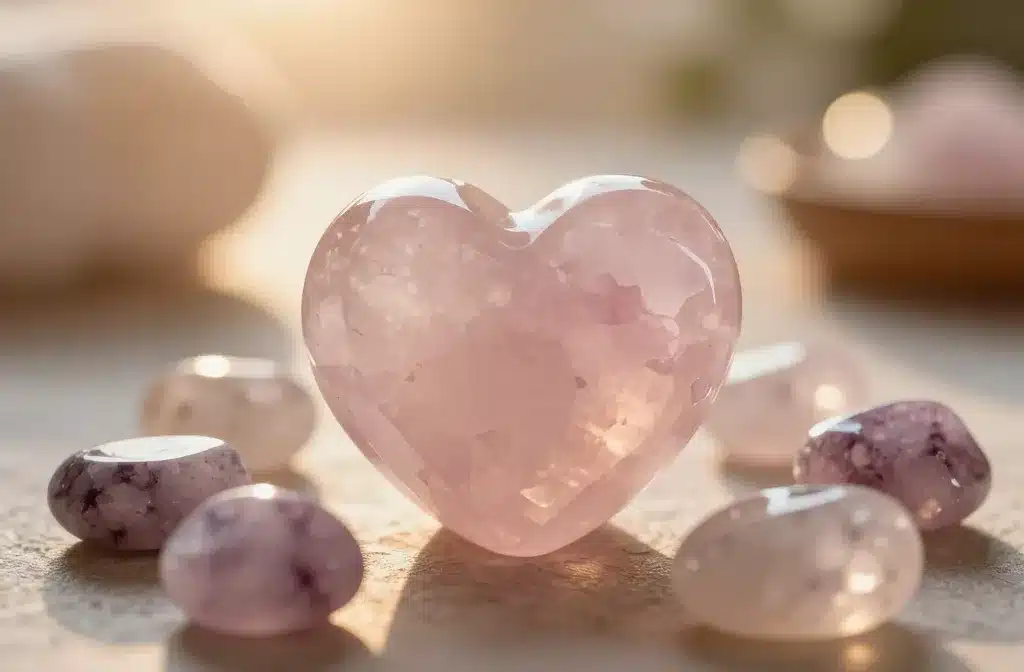
We’ve all been there: you bring home a stunning new crystal, perhaps a dusty piece of Rose Quartz or a gleaming Amethyst cluster, and your first instinct is to give it a good wash. It feels natural, right? Just run it under the tap to clear away the dust and maybe even “cleanse” its energy. It’s a rock, after all—surely a little water can’t hurt it.
But then you hop online or chat with a fellow collector, and suddenly you’re hearing horror stories. Tales of favorite stones turning to mush, rusting into a brown mess, or cracking right down the middle. It turns out that not all stones are created equal when it comes to moisture. The question of crystals that can go in water is one of the most common—and confusing—topics for beginners.
You don’t want to ruin your precious collection, but you also want to keep it clean. It’s a tricky balance. The good news is that you don’t need a geology degree to figure it out. There are simple, reliable rules to help you decide which gems can take a dip and which ones need to stay high and dry.
This guide is your definitive resource for navigating the wet and wild world of crystal care. We will break down the science of why some stones react to water, give you a clear, safe list of water-friendly crystals, and teach you the best ways to clean your collection without fear. Let’s dive in!
The Science of Water Safety: Why It Matters
Before we start listing specific stones, it is crucial to understand why water is dangerous for some minerals and harmless to others. It isn’t random; it comes down to chemistry and physics. When you are determining crystals that can go in water, you are essentially looking at two main factors: hardness and composition.
The Mohs Hardness Scale
The most reliable tool in a collector’s arsenal is the Mohs Scale of Mineral Hardness. Developed over 200 years ago, this scale ranks minerals from 1 (very soft) to 10 (very hard).
- The Rule of Thumb: Generally, crystals with a hardness of 6 or higher are safe to rinse. They are dense and tough enough to withstand water without dissolving or cracking.
- The Danger Zone: Crystals with a hardness of 5 or lower are often too soft. Water acts as a solvent and can slowly erode these stones, causing them to lose their polish or even dissolve completely.
Chemical Composition
The second factor is what the crystal is actually made of.
- Rust Risk: Many crystals contain iron. When you mix iron, water, and oxygen, you get rust (iron oxide). A shiny metallic stone can quickly turn dull and orange if it gets wet.
- Salt Minerals: Some crystals are technically salts. Just like table salt disappears in a pot of boiling water, these mineral specimens will degrade if submerged.
Understanding these basics empowers you to make smart decisions, even if you encounter a rare stone that isn’t on our list.
The “Green Light” List: Crystals That Can Go in Water
Now for the fun part! There are many beautiful, durable stones that are perfectly happy with a bath. These are the workhorses of the crystal world—tough, resilient, and easy to care for. If you are looking for crystals that can go in water for cleaning or for making indirect elixirs, these are your safest bets.
The Quartz Family
Quartz is the most abundant mineral on Earth’s surface, and for good reason—it is incredibly durable. With a Mohs hardness of 7, almost all members of the quartz family are water-safe.
- Clear Quartz: The ultimate healer. It loves water and cleans up beautifully.
- Amethyst: This purple gem is tough and water-resistant.
- Rose Quartz: Safe to rinse, though prolonged soaking is rarely needed.
- Citrine: Whether natural or heat-treated, it handles water well.
- Smoky Quartz: Its dark color is stable and won’t be harmed by a wash.
- Aventurine: Known for its shimmer, it is still a hard quartz variety.
The Agate and Jasper Group
These stones are technically forms of “chalcedony,” which is a microcrystalline quartz. Because their crystal structure is so tight and dense, they are excellent candidates for water cleansing.
- Blue Lace Agate: Safe for a gentle rinse.
- Moss Agate: This garden-like stone is very durable.
- Red Jasper: Tough, dense, and water-safe.
- Carnelian: This fiery stone is hard enough to withstand moisture without rusting.
- Onyx: A solid, durable stone that tolerates water well.
Other Durable Hard Stones
Beyond quartz, there are several other common crystals that are hard enough (generally above a 6 on the Mohs scale) to be considered safe.
- Tiger’s Eye: This chatoyant stone is robust and won’t be damaged by a quick wash.
- Obsidian: As a natural volcanic glass, it is non-porous and water simply slides right off it.
- Moonstone: Generally safe for a quick cleanse, though it is slightly softer than quartz.
- Labradorite: This flashy stone is usually safe for a quick rinse, but avoid long soaks as it has a layered structure.
The “Red Light” List: Keep These Crystals Dry!
This is perhaps the most important section of this guide. Confusing these stones with crystals that can go in water can lead to heartbreak. If you own any of these, keep them away from the sink, the rain, and high humidity.
1. Soft and Soluble Minerals
These stones are soft (low Mohs hardness) or are prone to dissolving.
- Selenite / Satin Spar: This is the most famous “no water” crystal. It is a form of gypsum and will degrade, lose its sheen, and eventually dissolve if left in water.
- Halite: This is literally rock salt. It will disappear in water.
- Calcite: All colors of calcite are relatively soft and can be damaged by water, especially if the water is acidic.
- Lepidolite: A lithium-rich mica that is flaky and soft. Water can cause it to fall apart.
- Desert Rose: A delicate formation of gypsum and sand that will turn to mush in water.
2. The Rust Risks
These stones contain metals that react poorly to moisture.
- Pyrite (Fool’s Gold): Contains iron sulfide. Water causes it to rust and can even produce sulfuric acid.
- Hematite: An iron oxide stone. While polished hematite is somewhat resistant, raw hematite will rust quickly.
- Galena: A lead ore that tarnishes and degrades in water. It is also toxic, so handle with care.
- Magnetite: A magnetic iron ore that should be kept bone dry to prevent rust.
3. Porous or Toxic Stones
Some stones act like sponges or release harmful elements when wet.
- Malachite: This copper-rich stone is toxic to ingest and can be damaged by water. Never use it for direct gem elixirs.
- Turquoise: A phosphate mineral that is porous. Water can discolor it or damage the matrix.
- Angelite: This stone (Anhydrite) literally turns into Gypsum when water is added, destroying the original crystal.
Safe Cleansing Methods for Water-Sensitive Stones
So, what do you do if your favorite piece of Selenite is dusty, or your Pyrite cube has fingerprints on it? Just because they aren’t crystals that can go in water doesn’t mean you can’t clean them. You just need to use different methods.
1. The Dry Brush Method
This is the safest way to physically clean almost any crystal. Use a soft, clean makeup brush (like a blush brush) or a soft paintbrush. Gently whisk away dust and debris. This works wonders for delicate clusters or fibrous stones that would trap water.
2. Compressed Air
For intricate specimens with lots of nooks and crannies (like a complex Calcite cluster), a can of compressed air—the kind used to clean computer keyboards—is a lifesaver. Short, controlled bursts can blow out dust without you ever touching the delicate crystal faces.
3. A Soft Cloth
For polished stones like spheres, palm stones, or wands, a simple buffing with a dry microfiber cloth is usually all you need to restore their shine. You can breathe gently on the stone (like cleaning glasses) to add just enough moisture to wipe away smudges without soaking it.
Energetic Cleansing Without Water
Many people look for crystals that can go in water not just to clean off dirt, but to energetically “cleanse” the stone. If you have a sensitive crystal, don’t worry—there are plenty of dry ways to reset its energy.
- Smoke Cleansing: Pass your crystals through the smoke of sage, palo santo, or incense. This is safe for every type of stone.
- Sound: Use a singing bowl, a tuning fork, or even a bell. The sound waves vibrationally “shake” the energy of the crystal without physically touching it.
- Moonlight: Placing your crystals on a windowsill during a full moon is a classic, safe, and effective way to recharge them.
- Selenite: Ironically, the stone that hates water is great for cleaning other stones. Place your smaller crystals on a Selenite charging plate to clear their energy.
Can I Put Crystals in My Drinking Water?
This is a massive trend right now: crystal-infused water bottles or “gem elixirs.” While the idea of drinking water charged with positive energy is appealing, it comes with serious safety warnings.
The Dangers of Direct Infusion
Placing a stone directly into your water bottle is risky. Even if it is one of the crystals that can go in water, there are hidden dangers:
- Toxins: Stones like Malachite, Tiger’s Eye, and Bumblebee Jasper can leach toxic elements like copper, asbestos, or arsenic into the water.
- Polishing Agents: Even “safe” stones like Rose Quartz are often tumbled using industrial polishing grits and sealants that you definitely don’t want to drink.
- Bacteria: Rough stones have tiny cracks where bacteria can grow. It is very difficult to keep a raw crystal sterile.
The Solution: The Indirect Method
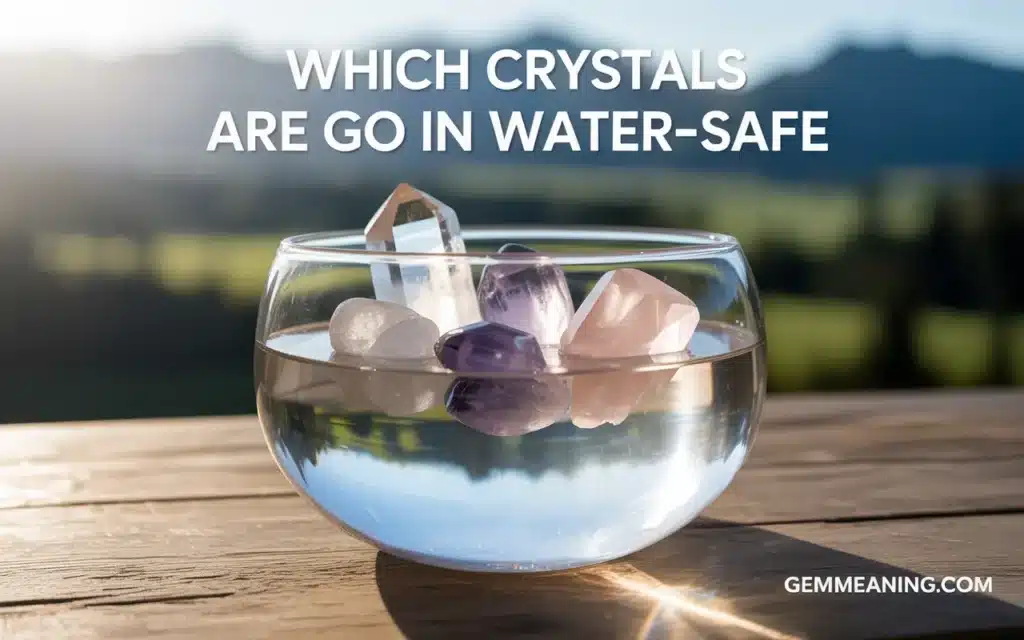
If you want to make a gem elixir, always use the indirect method. This gives you 100% of the energetic benefits with 0% of the risk.
- Place your crystals inside a clean glass jar.
- Seal the jar tightly.
- Place that jar into a larger pitcher of water.
- Let it sit. The water surrounds the crystal jar but never touches the stone itself.
This method allows you to use any crystal you want, even toxic or water-soluble ones, because the barrier of glass keeps you safe.
How to Wash Your Water-Safe Crystals Properly
If you have confirmed that you have crystals that can go in water, there is still a right way and a wrong way to wash them. Even hard stones can be damaged by thermal shock or harsh chemicals.
Step-by-Step Washing Guide
- Check the Temperature: Use lukewarm water. Never use boiling hot or freezing cold water. Extreme temperature changes can cause internal fractures to expand, shattering the stone.
- Be Gentle: Hold the crystal securely. Wet stones are slippery! It’s a good idea to place a folded towel in the bottom of your sink. If you drop the crystal, it will hit the towel instead of the hard porcelain.
- Use Mild Soap: If the stone is physically dirty, use a tiny drop of mild, natural dish soap. Avoid harsh chemical cleaners, bleach, or vinegar, as these can etch the surface of polished stones.
- Use a Soft Brush: If dirt is stuck in crevices, use a soft toothbrush to gently scrub. Do not use wire brushes or abrasive scouring pads.
- Rinse Thoroughly: Make sure all soap residue is gone.
- Dry Immediately: Pat the stone dry with a soft cloth. Don’t let it air dry, as this can leave behind stubborn water spots (calcium deposits) that dull the shine.
Special Cases: What About Salt Water?
Ocean water or homemade salt water baths are traditional methods for energetic cleansing. However, salt is abrasive and corrosive. It is much harsher than fresh tap water.
Even crystals that can go in water might struggle in salt water.
- Salt can get trapped in microscopic cracks. When it dries and crystallizes, it expands, which can wedge the cracks open further.
- Salt accelerates rusting. Even a tiny trace of iron in a quartz crystal could turn yellow or brown after a salt bath.
- Salt can damage the finish of polished stones, leaving them looking frosted or dull.
Our Recommendation: Skip the salt water. If you want the energy of the ocean, bring a jar of seawater home and place your crystals next to it, not in it. It’s safer for your collection in the long run.
A Note on Opals and Pearls
Some “water stones” are confusing exceptions.
- Opals: Solid Australian opals contain water in their structure, but submerging them can be risky depending on the type. However, “Hydrophane” opals (like many Ethiopian opals) absorb water like a sponge. If they get wet, they lose their color and turn clear. They usually gain the color back when they dry, but repeated wetting can cause cracking (crazing). It is best to keep expensive opals dry.
- Pearls: Pearls are organic gems born in water, so you might think they love it. But pearls are held together by a silk thread in jewelry. Water weakens the silk and can rot the glue used in settings. Never soak pearl jewelry. A quick wipe with a damp cloth is all they need.
Summary: Confident Crystal Care
Navigating the rules of crystal care doesn’t have to be scary. By understanding the basic properties of your stones, you can keep them sparkling and structurally sound for a lifetime.
Remember, the default answer should always be caution. If you are unsure if you have crystals that can go in water, assume the answer is “no” until you verify it. It is much easier to dust a crystal with a brush than it is to fix a dissolved pile of mush.
Key Takeaways:
- Hardness is Key: Stones with a Mohs hardness of 6 or higher (like Quartz, Agate, Jasper) are generally water-safe.
- Avoid Soft Stones: Selenite, Calcite, Halite, and other soft minerals will dissolve or degrade.
- Watch for Iron: Pyrite, Hematite, and other metallic stones will rust.
- Indirect is Best: For gem elixirs, always place the crystal outside the water container to avoid toxins.
- No Salt: Avoid salt water baths, as they are corrosive and abrasive.
- Lukewarm Only: Prevent thermal shock by avoiding extreme water temperatures.
We encourage you to take a look at your collection today. Separate the water-lovers from the dry-dwellers. Knowing exactly which of your gems are crystals that can go in water will give you the confidence to care for them properly, ensuring their beauty and energy remain vibrant for years to come.

Christian Grey is the creator of GemMeaning, where he shares simple insights about crystals, gemstone meanings, and spiritual guidance. His focus is on making complex ideas easy to understand and practical for everyday life.