It’s a beautiful, sunny day, and the light streaming through your window makes everything sparkle. You glance at your crystal collection and have a brilliant idea: why not line them up on the windowsill? It seems like the perfect spot to display their natural beauty and let them soak up some powerful solar energy.
Many crystal enthusiasts believe that sunlight is a fantastic way to cleanse and charge their stones. It feels intuitive—crystals come from the earth, so they must love the sun, right? While this is true for some, for others, a sunbath can be disastrous. That warm, golden light can cause vibrant colors to fade, create internal fractures, and in some rare cases, even pose a fire risk.
Understanding how sunlight affects crystals is one of the most important lessons for any collector. It helps you protect your precious stones from irreversible damage and ensures their beauty lasts a lifetime. This guide will walk you through the science of sun exposure, provide a clear list of sun-loving and sun-shy crystals, and offer safe alternatives for cleansing and charging.
Let’s shed some light on this crucial topic and keep your collection safe and sparkling.
The Science: Why Sunlight Can Be Harmful
To grasp how sunlight affects crystals, it is helpful to know what sunlight is made of. It is more than just visible light and warmth; it is also a powerful stream of ultraviolet (UV) radiation. These high-energy UV rays are the primary culprits behind sun damage in many minerals.
UV Rays and Color Fading
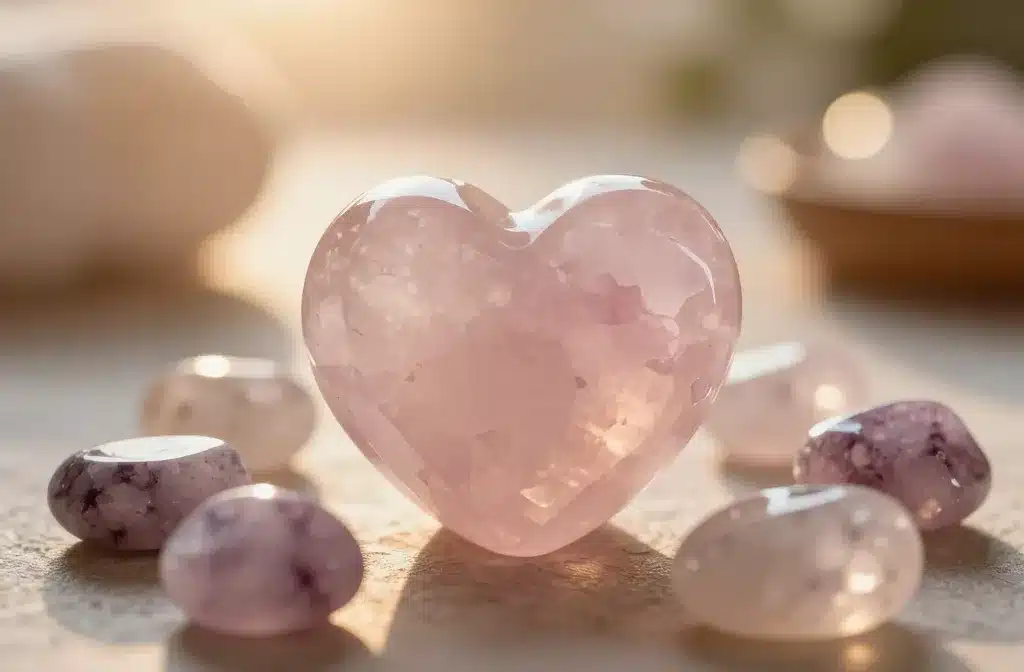
The stunning colors in many crystals, like the deep purple of Amethyst or the soft pink of Rose Quartz, come from “color centers.” These are tiny imperfections or trace elements within the crystal’s atomic structure that have been altered by natural radiation over millions of years.
When UV rays from the sun penetrate a crystal, they bombard these delicate color centers with energy. This can disrupt the atomic balance that creates the color, essentially “bleaching” it. Over time, a vibrant hue can fade into a pale, washed-out version of its former self. Unfortunately, this process is often permanent.
The Problem with Heat
Sunlight also generates heat, which can be equally damaging.
- Thermal Shock: When a crystal heats up too quickly, especially under the magnifying effect of a window, it can expand. If the stone has any pre-existing internal fractures or microscopic water inclusions, this expansion can cause it to crack or even shatter.
- Dehydration: Some minerals, most notably Opals, have a significant water content as part of their chemical structure. Intense heat can dry out this internal water, causing the stone to become brittle and develop a network of fine cracks known as “crazing,” which can destroy its beautiful play-of-color.
Sun Worshippers: A List of Sun-Safe Crystals
Let’s start with the good news! A great number of crystals are perfectly safe to place in the sun. These stones are typically stable, non-fading, and their color is derived from durable compounds. These are the ideal crystals to place on a sunny windowsill or use for solar charging.
- Clear Quartz: As it lacks color centers, Clear Quartz will not fade. It sparkles brilliantly in the sun and is a fantastic tool for absorbing solar energy. (Just be mindful of the fire risk with spheres, which we’ll cover later!)
- Black Tourmaline: This protective powerhouse is incredibly durable. Its deep black color is stable and will not be altered by UV rays.
- Sunstone: As its name suggests, this crystal adores the sun. Its glittery appearance comes from stable copper or hematite inclusions that are completely unaffected by light.
- Carnelian: This fiery stone’s red and orange hues come from iron oxide inclusions. This is a very stable coloring agent, meaning Carnelian will not fade in the sun.
- Labradorite: The magical flash of Labradorite (labradorescence) is a structural effect caused by light refracting within layers of the stone, not by pigments. Sunlight will not damage this effect and actually makes it more beautiful.
- Moonstone: Similar to Labradorite, Moonstone’s ethereal glow is structural. While its energy is tied to the moon, a little sun exposure will do it no harm.
- Most Jaspers: Opaque stones like Red Jasper, Polychrome Jasper, and Mookaite get their rich, earthy tones from stable mineral inclusions and are generally safe in sunlight.
- Black Obsidian: This volcanic glass is non-crystalline, and its deep black color is inherent to the material. It can get very hot, but it will not fade.
The Shade-Dwellers: Crystals to Keep Out of the Sun
This is the most critical list for any collector to learn. Exposing these crystals to direct sunlight, even for short periods, can cause their beautiful colors to fade away forever. Think of these as the “vampires” of the mineral world—they thrive in the shade.
- Amethyst: This is the most famous example of a fading crystal. Its purple color, caused by iron impurities, is notoriously unstable under UV light. A deep purple geode can bleach to a pale greyish color in a matter of months.
- Rose Quartz: The delicate, gentle pink of Rose Quartz is very susceptible to fading. It can turn into a washed-out, milky white stone with too much sun.
- Citrine: Whether it is natural or heat-treated Amethyst, Citrine’s sunny yellow color can fade to clear or pale yellow with prolonged exposure.
- Smoky Quartz: While it seems dark and stable, the “smoky” color is created by natural radiation in the earth. Sunlight can reverse this process, causing the stone to become lighter over time.
- Fluorite: A very soft and sensitive mineral. Its vibrant greens, purples, and blues will bleach out in the sun. It is also prone to cracking from the heat.
- Celestite: Known for its heavenly blue color, this fragile crystal can fade to white with sun exposure. Its structure is also quite brittle and can be damaged by heat.
- Kunzite: Sometimes called the “evening stone,” Kunzite is extremely photosensitive. Its lovely lilac-pink color can fade noticeably after just a few hours in direct sunlight.
- Aquamarine: This beautiful blue beryl can lose its saturation and become pale with too much sun.
- Opal: Opals need to retain their internal water content to display their famous fire. The heat from sunlight will dry them out, causing permanent crazing and damage.
A Serious Warning: The Magnifying Glass Fire Risk
Beyond the risk of fading, there is a much more immediate danger to consider when learning how sunlight affects crystals. Clear, spherical, or highly polished rounded stones—especially Clear Quartz—can act as powerful magnifying glasses.
When direct sunlight passes through a crystal sphere, it is focused into a single, concentrated point of intense heat. This focal point can easily become hot enough to:
- Ignite paper, curtains, or upholstery.
- Scorch wood furniture.
- Melt plastic.
This is a genuine fire hazard. It is crucial to never leave a crystal ball, sphere, or even a large, smooth palm stone made of clear material in a spot where direct sunlight can hit it.
Safety First: If you display a spherical crystal, place it in a room with indirect light or ensure it is covered with a cloth when you are not home.
Safe and Effective Sun Charging
If you wish to use solar energy for cleansing and charging, it is important to do so in a way that is safe for your crystals. You do not need to leave them baking for hours to reap the benefits.
The Gentle Morning Sun
The light just after sunrise is far less intense than the harsh midday sun. Its UV index is lower, and it carries a gentle, energizing quality. Placing your sun-safe stones out for an hour during this time is a wonderful way to charge them without overwhelming them.
Indirect Sunlight
A crystal does not need to be in a direct sunbeam to absorb solar energy. Simply placing it in a bright, well-lit room is enough. This method is safe for most crystals, including some of the more moderately sensitive ones, as it avoids the direct impact of harsh UV rays and heat.
Use a Proxy Crystal
If you want to charge a sun-shy crystal like Amethyst with solar power, you can use a “battery” stone. Place a sun-safe crystal, like a piece of Clear Quartz or Carnelian, in the sun for about an hour. Then, bring it inside and place it directly touching the Amethyst. The energy will transfer from the charged stone to the sensitive one.
Safe Cleansing Alternatives to Sunlight
If you discover that most of your collection is on the “no-sun” list, do not worry. There are many other excellent methods for energetically cleansing your stones that are safe for every single type of crystal.
- Moonlight: The light of the full moon is the universal cleanser. It is a reflection of sunlight but is cool, gentle, and carries a different energetic frequency. It is completely safe for all crystals and will not cause fading.
- Sound Cleansing: The vibrations from a singing bowl, tingsha bells, or a tuning fork can effectively clear stagnant energy. The sound waves pass through the crystal’s structure, resetting its vibration without any physical risk.
- Smoke Cleansing: Wafting the smoke of dried herbs like sage, cedar, or palo santo over your crystals is a traditional and effective cleansing method that is safe for all minerals.
- Selenite: This crystal has the unique property of being self-cleansing while also cleansing other stones. Placing your crystals on a Selenite charging plate or slab overnight is an easy, passive way to clear their energy.
Conclusion: Practice Mindful Crystal Care
The way sunlight affects crystals is a perfect lesson in mindful collecting. It reminds us that these beautiful objects are not inert; they are complex geological formations that react to their environment. Knowing which stones can bask in the light and which need the protective cool of the shade is essential for preserving their beauty and energy.
Before you place a crystal on a windowsill, take a moment to consider its properties. Is it a colored quartz? Is it known to be soft or fragile? When in doubt, always err on the side of caution. A crystal displayed in a shadier spot is far better than a faded one you regret leaving in the sun.
Key Takeaways:
- UV rays in sunlight cause the color in many crystals (like Amethyst and Rose Quartz) to fade permanently.
- Heat from the sun can cause stones to crack or dehydrate.
- Clear crystal spheres can act as magnifying glasses and pose a serious fire risk.
- Sun-safe crystals include Clear Quartz, Carnelian, Black Tourmaline, and Labradorite.
- Safe alternatives for cleansing include moonlight, sound, smoke, and Selenite.
Take some time to assess your collection. Identify your sun-lovers and your shade-dwellers. By giving each stone the care it needs, you act as a true custodian, honoring its long journey from the earth and ensuring it remains a source of beauty and wonder for years to come.

Christian Grey is the creator of GemMeaning, where he shares simple insights about crystals, gemstone meanings, and spiritual guidance. His focus is on making complex ideas easy to understand and practical for everyday life.