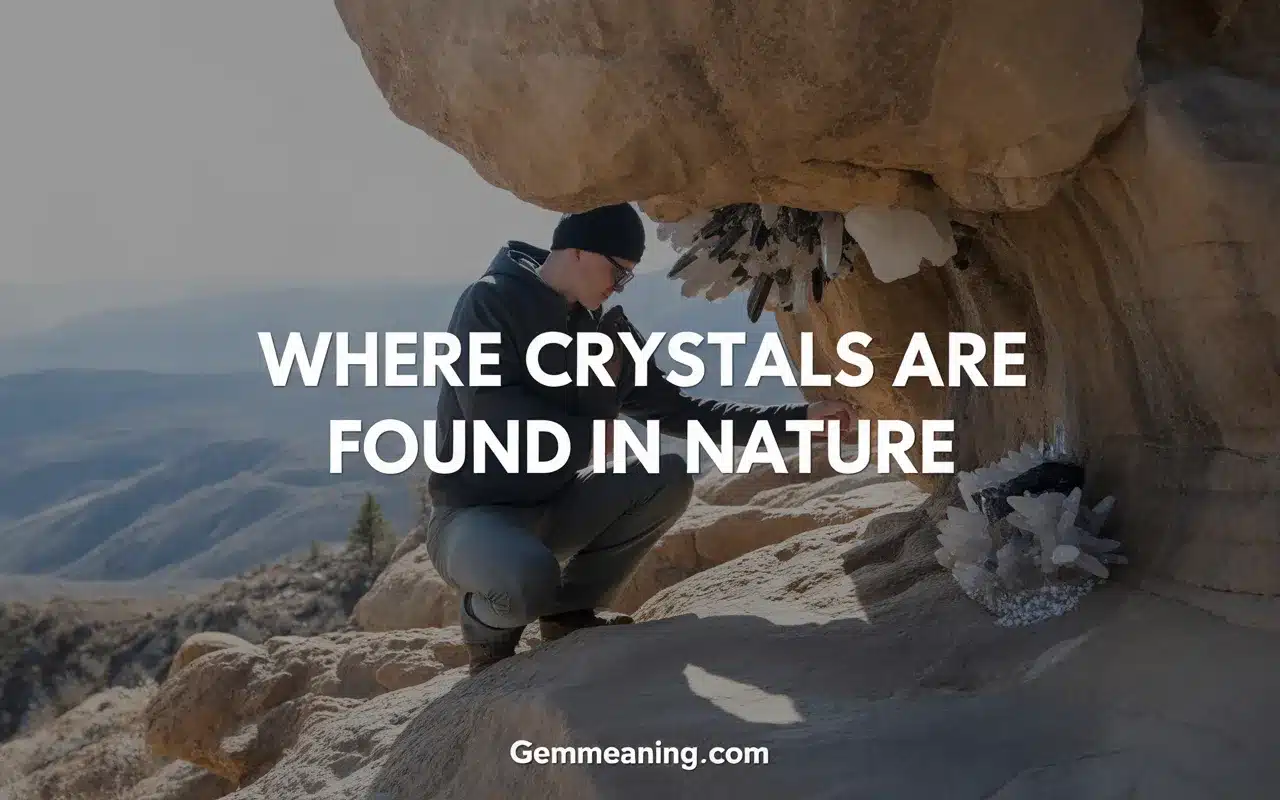
There is something universally thrilling about the idea of buried treasure. As children, many of us dug holes in the backyard hoping to strike gold or finding a shiny rock and convinced ourselves it was a diamond. As adults, that sense of wonder doesn’t have to disappear. The truth is, the earth beneath our feet is filled with real, tangible treasures waiting to be discovered.
If you have ever stared at a sparkling amethyst in a shop and wondered, “Where on earth did this come from?” you are asking a question that geologists have studied for centuries. Crystals don’t just appear randomly; they are the result of specific geological recipes cooking over millions of years. Understanding where to look turns the entire landscape into a potential treasure map.
Whether you are an aspiring rockhound wanting to go on your first dig or simply curious about the journey your favorite stone took to get to your shelf, this guide is for you. We will explore the diverse environments where crystals grow, from volcanic veins to riverbeds. We will uncover the secrets of how to find crystals in the wild and explain the science behind their hiding spots.
Let’s grab our metaphorical pickaxes and explore the natural habitats of the mineral kingdom.
The Three Great Kitchens of the Earth
To understand where to look for crystals, you first need to understand how they are made. Geologists classify rocks into three main families based on how they formed: Igneous, Sedimentary, and Metamorphic. Think of these as three different kitchens, each cooking up different types of crystal treats.
Knowing which “kitchen” you are standing in is the first step in learning how to find crystals in your area.
1. Igneous Environments (Fire Rocks)
This is where the heat happens. Igneous rocks form from cooling magma (underground) or lava (above ground).
- What forms here: As the molten rock cools, atoms slow down and lock into crystal structures. This is the birthplace of Quartz, Feldspar, Mica, and many gemstones like Topaz and Tourmaline.
- Where to look: Volcanic mountain ranges, hardened lava flows, and areas with granite bedrock.
2. Sedimentary Environments (Water and Layering)
Sedimentary rocks are made from bits of other rocks that have been ground down by wind and water, then glued back together over time.
- What forms here: Water flowing through these porous rocks can deposit minerals in cracks and holes. This is where you find Geodes, Calcite, Gypsum, and Halite (salt crystals).
- Where to look: Limestone cliffs, dried lake beds, river banks, and sandstone canyons.
3. Metamorphic Environments (Pressure Cookers)
When existing rocks are squeezed by immense tectonic pressure and heated (but not melted), they transform.
- What forms here: The atoms rearrange themselves into new, denser minerals. This is the home of Garnet, Kyanite, and Staurolite.
- Where to look: Mountain ranges where tectonic plates have collided (like the Appalachians or Rockies) and areas with exposed bedrock that looks folded or wavy.
Volcanic Vugs and Gas Bubbles
One of the most prolific sources of high-quality crystals is ancient volcanic activity. When lava flows, it is often full of gas. As the lava cools and hardens into rock (like basalt), those gas bubbles get trapped, creating hollow pockets inside the rock. These pockets are called “vugs” or “vesicles.”
Over millions of years, mineral-rich groundwater seeps through the porous volcanic rock and enters these empty rooms. As the water evaporates or cools, it leaves behind crystals lining the walls of the cavity.
The Home of Geodes
This process is exactly how most geodes are formed. If you are researching how to find crystals like Amethyst or Agate, you are essentially looking for these ancient gas bubbles.
- Brazil and Uruguay: These countries are famous for massive Amethyst geodes found in ancient basalt flows.
- Western USA: In places like Utah and Oregon, volcanic rhyolite beds are prime hunting grounds for “thundereggs,” which are solid nodules of agate and jasper formed in similar volcanic pockets.
Pegmatites: The Giant Crystal Factories
Sometimes, magma cools very, very slowly deep underground. When this happens, the crystals have a long time to grow, becoming absolutely massive. These formations are called “pegmatites.”
Pegmatites are the holy grail for gem hunters. They are veins of coarse-grained granite where you can find giant crystals of Tourmaline, Aquamarine, Kunzite, and Lepidolite. If you see a miner pulling a crystal the size of a baseball bat out of a wall, they are likely working a pegmatite vein.
Riverbeds and Alluvial Deposits
If climbing volcanoes sounds too intense, you might prefer looking down at your feet next to a stream. Water is nature’s great excavator. Rivers cut through rock layers, freeing crystals from their stone prisons and washing them downstream.
This type of deposit is called an “alluvial deposit.” The heavy crystals sink to the bottom of the riverbed or get trapped in gravel bars, while the lighter sand washes away.
Why River Hunting is Great for Beginners
Learning how to find crystals in rivers is easier because the water has done the hard work of digging for you. Plus, the tumbling action of the water often cleans the mud off the stones, making them easier to spot.
What to Look For:
- Gravel Bars: Look for bends in the river where piles of rocks accumulate. The heavy gemstones get trapped here.
- Color Flashes: Wet stones show their colors better than dry ones. Look for the glint of red (Garnet), the shine of clear glass (Quartz), or the yellow of Topaz.
- Panning: Just like gold panning, you can sift through river gravel to find smaller crystals like Sapphires and Rubies. This is popular in places like Montana and North Carolina.
Mining Dumps and Tailings
Believe it or not, one of the best places to find crystals is in the trash pile of an old mine. When commercial mines operate, they are usually looking for one specific thing—maybe copper, gold, or mica for industry.
In the process of digging for that one commodity, they dig up tons of “waste rock.” Often, this waste rock contains beautiful mineral specimens that weren’t valuable to the industrial miner but are precious to a collector. These piles of discarded rock are called “tailings” or “dumps.”
Treasures in the Trash
For example, in many old mica mines in New England, miners would toss aside beautiful Beryl (Aquamarine) and Garnet crystals because they were just in the way of the mica sheets they were trying to extract.
Safety First:
- Never enter an abandoned mine shaft or tunnel. They are incredibly dangerous.
- However, searching the surface piles outside the mine (with permission!) is a classic way to learn how to find crystals.
- Many “fee dig” sites in the USA are essentially old mine dumps where you pay a small fee to sift through the tailings.
Exposed Rock Cuts and Construction Sites
Geology is everywhere, not just in national parks. Sometimes, human activity reveals hidden treasures by accident. Whenever we cut into the earth to build something, we expose fresh rock layers that haven’t seen the sun in millions of years.
Road Cuts
Have you ever driven down a highway that was blasted through a hill, leaving steep rock walls on either side? Those are road cuts. They offer a cross-section view of the local geology.
While it is usually illegal (and dangerous) to stop on a busy highway to chip at rocks, smaller back roads can be excellent places to scout. You might see veins of white quartz running through the rock or pockets of sparkling calcite.
Construction Zones
New housing developments or shopping centers often require deep digging for foundations. This excavation can bring up deep earth minerals to the surface.
- Permission is Key: You absolutely must get permission from the site foreman or property owner. Never trespass on an active construction site.
- But if you ask nicely, sometimes they will let you poke around the dirt piles after hours. Many amazing specimens have been rescued from the path of a bulldozer!
Caves and Karst Landscapes
Caves are the underground cathedrals of the mineral world. They are formed primarily in limestone landscapes (known as Karst topography) where acidic groundwater dissolves the rock, creating vast cavern systems.
While most people think of stalactites and stalagmites (which are made of Calcite or Aragonite), caves can host other minerals too.
The Problem with Caves
While caves are full of crystals, they are generally not a place for collecting. Cave formations take thousands of years to grow an inch. Breaking a stalactite destroys a natural wonder that cannot be replaced.
- Ethical Rule: In the caving community, the motto is “Take nothing but pictures, leave nothing but footprints, kill nothing but time.”
- However, understanding how cave crystals form helps you understand how to find crystals in similar limestone environments on the surface, where collecting might be permitted (like finding calcite nodules in a limestone quarry).
Deserts and Dry Lake Beds
The desert might look barren, but it is often a geological playground. The lack of vegetation makes it much easier to see the rocks on the ground. Plus, the dry climate helps preserve certain types of minerals that would dissolve in a wet forest.
Evaporite Minerals
In ancient times, many deserts were covered by salty seas. As the climate warmed and the water evaporated, the minerals that were dissolved in the water were left behind.
This process creates “evaporites.”
- Gypsum Roses: In places like Oklahoma and the Sahara, sand grains get trapped in growing gypsum crystals, creating beautiful flower-like shapes called “Desert Roses.”
- Halite: Salt crystals often form vast crusts on dry lake beds.
- Borates: Minerals like Colemanite and Ulexite (“TV Rock”) are found in the deserts of California and Nevada.
Surface Collecting
In the desert, wind erosion constantly scours the surface. This can expose harder stones like Agate, Jasper, and Petrified Wood. Learning how to find crystals here often involves slowly walking with the sun at your back, looking for the tell-tale glisten of “desert varnish” on a polished agate nodule.
Specific Locations in the USA
The United States is incredibly rich in gem and mineral deposits. Depending on where you live, you might be just a short drive from a prime hunting ground. Here are a few famous regions to illustrate the variety of nature’s hiding spots.
1. The Herkimer Diamond Mines (New York)
Located in upstate New York, this area is famous for “Herkimer Diamonds.” These aren’t real diamonds, but incredibly clear, double-terminated quartz crystals.
- The Geology: These crystals grow in pockets (vugs) within hard dolostone rock. You find them by cracking open the tough rock with a heavy hammer and chisel to reveal the sparkling gem inside.
2. The Crater of Diamonds (Arkansas)
This is the only place in the world where the public can dig for real diamonds in their original volcanic source.
- The Geology: It is an eroded volcanic pipe (lamproite). The diamonds were brought up from the mantle by a violent eruption millions of years ago. You find them by sifting through the plowed dirt of the volcanic field.
3. Virgin Valley (Nevada)
Famous for its precious Black Fire Opal.
- The Geology: This area was once an ancient lake surrounded by forests and volcanoes. Ash buried the wood, and silica-rich water turned the rotting wood into opal. You are essentially digging for opalized fossils!
4. Jade Cove (California)
Located in Big Sur, this is a beachcombing paradise.
- The Geology: Tectonic forces pushed nephrite jade up from the seafloor. Erosion knocks chunks loose, and the ocean tumbles them onto the beach. You find them by looking for specific waxy, green stones in the surf or at low tide.
Tools of the Trade
If you are inspired to go out and look, you don’t need expensive gear. Learning how to find crystals starts with simple observation, but a few tools help.
Basic Kit:
- Rock Hammer: A specific geological hammer (not a carpenter’s hammer!) that is hardened to strike rock without shattering.
- Safety Glasses: Essential. Rock chips fly faster than you think.
- Spray Bottle: A simple bottle of water helps you wet a dusty rock to see its true color and potential transparency.
- Chisel: For prying open cracks.
- Sturdy Boots: You will be walking on uneven, sharp terrain.
- Field Guide: A local book on rocks and minerals for your specific state is invaluable for identification.
The Ethics of Crystal Hunting
The most important part of learning how to find crystals is learning how to do it responsibly. The earth is generous, but it is also fragile.
1. Know the Land Ownership
Never dig on private property without permission. It is stealing.
On public land (like BLM land or National Forests), rules vary. Generally, you can collect small amounts for personal use, but you cannot use power tools or explosives. In National Parks, collecting is strictly forbidden. Always check the rules before you dig.
2. Fill Your Holes
If you dig a pit to look for a crystal pocket, fill it back in before you leave. Open holes are dangerous for wildlife, hikers, and livestock.
3. Respect Nature
Don’t destroy vegetation or disturb wildlife habitats in your quest for a rock. The goal is to enjoy nature, not conquer it.
Reading the Landscape: Clues to Look For
So, you are standing in a likely spot. How do you narrow it down? Experienced rockhounds look for “indicator minerals” or geological signs.
Quartz Veins:
White streaks of quartz running through solid rock are often a good sign. While the massive white quartz itself might not be valuable, pockets within the vein can contain clear crystals or gold.
Pegmatite Signs:
If you see large chunks of mica or feldspar on the ground, look up. You might be near a pegmatite vein that could contain Tourmaline or Beryl.
Differing Rock Types:
Look for “contact zones”—areas where two different types of rock meet (like granite meeting limestone). The heat and chemical reactions at these borders often create interesting minerals like Garnet.
Summary: The Treasure Hunt Awaits
Learning how to find crystals in nature changes the way you see the world. A hike is no longer just a walk in the woods; it’s an investigation. A river isn’t just water; it’s a conveyor belt of potential gems.
The crystals you see in shops didn’t just appear there. They were cooked in volcanic fire, squeezed by moving mountains, or slowly grown in the quiet dark of a cave. They were washed down rivers and buried in deserts.
You don’t have to be a professional geologist to find something beautiful. You just need curiosity, patience, and a willingness to get a little dirt under your fingernails. Whether you find a perfect clear quartz point or just a really cool-looking river rock, the connection to the earth is the real prize.
Key Takeaways:
- Know the Geology: Igneous, sedimentary, and metamorphic rocks produce different crystals.
- Follow the Water: Riverbeds and gravel bars are great places for beginners to find durable gemstones.
- Check the “Trash”: Old mine tailings often hold specimens that were overlooked by industrial miners.
- Use the Right Tools: A spray bottle and safety glasses are your best friends.
- Stay Legal and Ethical: Always check land ownership and follow “Leave No Trace” principles.
We encourage you to look up a local rockhounding club or a “fee dig” site near you this weekend. Pack a lunch, grab a bucket, and go see what treasures nature has hidden in your own backyard. Happy hunting!