Have you ever walked through a crystal shop, mesmerized by the rows of sparkling stones, but felt completely lost when looking at the labels? It is a common experience. You see words like “Lepidolite” or “Chrysocolla” and wonder what on earth they mean.
The world of crystals is vast and beautiful, but the terminology can sometimes feel like a barrier. With so many different stones, it is easy to get overwhelmed by the sheer volume of names and properties. You might find yourself asking, “Which one is for anxiety?” or “Does the name actually tell me anything about what it does?”
This guide is here to bridge that gap. We are going to explore crystal names and their meanings in a way that is simple, approachable, and easy to digest. You don’t need a geology degree to understand these natural wonders. By the end of this article, you will feel confident navigating the crystal aisle, understanding the stories behind the names, and choosing the perfect stone for your needs.
Why Understanding Crystal Names and Their Meanings Matters
When we dive into the topic of crystals names and their meanings, we aren’t just memorizing a list. We are learning a language of energy. The name of a crystal often gives us clues about its history, its appearance, or its energetic purpose.
For example, “Aquamarine” comes from the Latin for “water of the sea,” instantly hinting at its soothing, fluid energy. “Hematite” comes from the Greek word for blood, pointing to its high iron content and grounding properties. Knowing these connections deepens your relationship with the stone.
Understanding these meanings transforms a pretty rock into a powerful tool for your daily life. It helps you set clear intentions. Instead of just grabbing a blue stone because it looks nice, you will know that Blue Lace Agate is specifically named and known for its calming, communicative properties. It empowers you to make choices that support your emotional and spiritual well-being.
The Connection Between Name and Energy
Is there really a link between a name and a vibration? In many cases, yes. The ancients who named these stones were deeply connected to the natural world. They observed the stone’s effects and appearance before assigning a title.
When you learn crystal names and their meanings, you are tapping into centuries of observation and wisdom. You begin to see patterns. Stones ending in “ite” are often minerals, while names referencing gods or natural elements usually hint at specific metaphysical powers. This knowledge acts as a map, guiding you toward the energy you wish to cultivate in your life.
A Comprehensive Guide to Common Crystal Names and Their Meanings
To help you get started, we have compiled a detailed list of some of the most popular and powerful stones. We will break down where their names come from, what they look like, and most importantly, what they can do for you.
1. Amethyst: The Stone of Sobriety and Peace
The Name: The name “Amethyst” comes from the ancient Greek word amethystos, which translates to “not drunk.” The Greeks believed this stone protected the owner from drunkenness. Today, we interpret this more broadly as spiritual sobriety and clarity.
The Meaning: Amethyst is the ultimate calmer. Its deep purple hue is linked to the crown chakra and higher consciousness. It is known for soothing stress, relieving anxiety, and promoting restful sleep.
When to use it:
- When you feel overwhelmed or anxious.
- To ward off nightmares or insomnia.
- During meditation to quiet a busy mind.
- To break bad habits or addictions.
2. Rose Quartz: The Stone of Universal Love
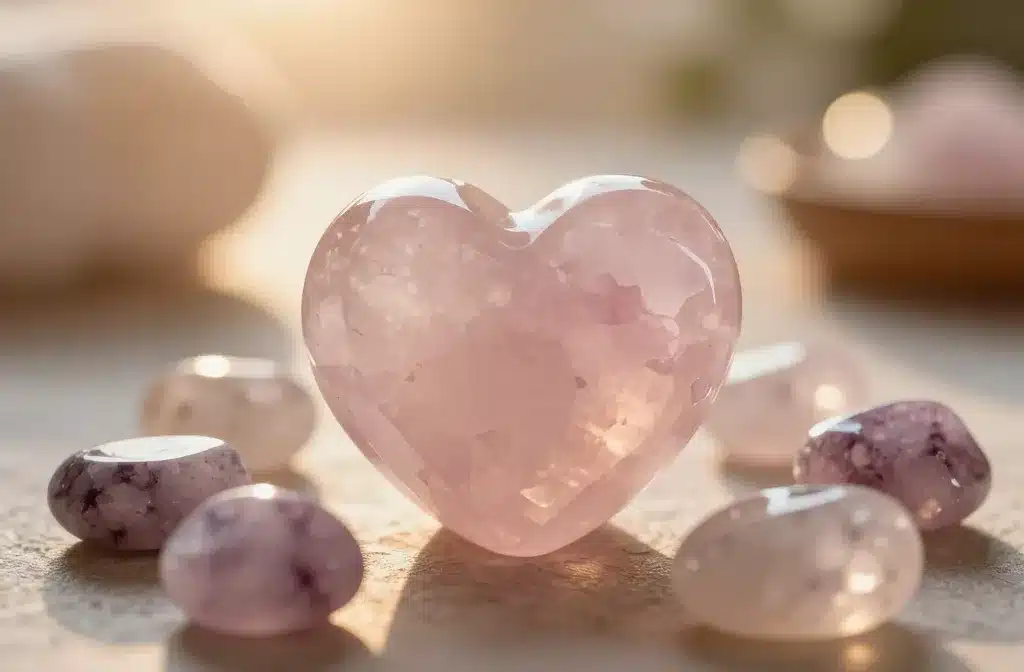
The Name: This one is quite literal. “Rose” refers to its soft, delicate pink color, while “Quartz” identifies its mineral family. Despite the simple name, its power is profound.
The Meaning: Rose Quartz is the classic stone of the heart. Its energy is soft, nurturing, and unconditional. It teaches us that love starts from within. It helps heal emotional wounds, encourages forgiveness, and attracts loving relationships.
When to use it:
- To cultivate self-love and acceptance.
- Healing from a breakup or emotional trauma.
- Attracting romance or deepening friendships.
- Creating a peaceful, loving atmosphere at home.
3. Citrine: The Stone of Light and Success
The Name: Citrine gets its name from the French word citron, meaning lemon. One look at its sunny, yellow-orange color and you will understand why.
The Meaning: Just like its citrus namesake, Citrine is fresh, bright, and energizing. It is often called the “Merchant’s Stone” because it is associated with wealth and abundance. Unlike other stones, it doesn’t hold negative energy; it transmutes it into positivity.
When to use it:
- Manifesting wealth and career success.
- Boosting self-confidence and self-esteem.
- Overcoming depression or lethargy.
- Sparking creativity and motivation.
4. Hematite: The Stone of the Blood
The Name: Derived from the Greek word haima, meaning blood. If you scratch a piece of grey Hematite, it leaves a reddish streak, which is due to its high iron content (iron oxide).
The Meaning: Hematite is the heavyweight champion of grounding. It feels heavy in the hand and acts as an anchor. It connects you deeply to the earth, stabilizing your energy and protecting you from negativity. It is fantastic for the mind, helping to sort out scattered thoughts.
When to use it:
- Grounding yourself when you feel “spacey.”
- Improving focus and concentration.
- Balancing emotions during high-stress times.
- Absorbing negative vibes from others.
5. Selenite: The Stone of the Moon
The Name: Selenite is named after Selene, the Greek goddess of the moon. Its pearly, luminous white appearance looks just like solidified moonlight.
The Meaning: This stone is all about high-vibration cleansing. It brings mental clarity and deep peace. Selenite is unique because it cleanses itself and other crystals. It acts like a beam of white light, sweeping away stagnation and connecting you to higher spiritual realms.
When to use it:
- Cleansing your aura or home.
- Recharging your other crystals.
- Connecting with angels or spirit guides.
- Bringing a sense of purity and calm to a space.
6. Lapis Lazuli: The Stone of Heaven
The Name: This name has deep roots. Lapis is Latin for “stone,” and Lazuli comes from the Persian lazhward, meaning “blue.” It literally translates to “blue stone,” but historically it was seen as the stone of the heavens.
The Meaning: Lapis Lazuli is the stone of truth and wisdom. Its deep celestial blue color with gold flecks (Pyrite) represents the night sky. It stimulates the intellect and encourages honest communication. It helps you confront truth and embrace your authentic self.
When to use it:
- Enhancing communication and public speaking.
- Stimulating critical thinking and problem-solving.
- Deepening self-awareness.
- Relieving stress and bringing inner peace.
7. Carnelian: The Stone of Flesh
The Name: The name Carnelian is believed to come from the Latin word carnis, meaning flesh, due to its reddish-orange color. While the name sounds physical, its energy is incredibly vitalizing.
The Meaning: Carnelian is the caffeine of the crystal world. It is full of life force energy. It is connected to the sacral chakra, which governs creativity and passion. It banishes procrastination and replaces it with courage and motivation.
When to use it:
- Boosting physical energy and vitality.
- Overcoming fear and taking action.
- Stimulating creativity and passion.
- Building confidence in social situations.
8. Malachite: The Stone of Transformation
The Name: Derived from the Greek word malakos, meaning soft. This refers to the stone being relatively soft compared to others, but don’t let the name fool you—its energy is intense.
The Meaning: Malachite is known as a stone of transformation. It is ruthless in exposing what blocks your growth. It draws out deep feelings and breaks unwanted ties. Its vibrant green swirls represent the healing power of nature.
When to use it:
- Breaking old patterns and habits.
- Emotional healing and releasing trauma.
- Protecting against electromagnetic pollution.
- Encouraging risk-taking and change.
9. Labradorite: The Stone of Magic
The Name: Named after the Labrador Peninsula in Canada, where it was first discovered by missionaries in 1770. The local Inuit legends said the Northern Lights were trapped inside the rocks.
The Meaning: Labradorite is the stone of mysticism and magic. It looks grey at first, but when it catches the light, it flashes with iridescent blues and golds (called labradorescence). It protects the aura and strengthens intuition, reminding us to look for the light in the darkness.
When to use it:
- Enhancing intuition and psychic abilities.
- Protecting your aura from energy leaks.
- Navigating times of change and transformation.
- Connecting with the magic of the universe.
10. Aquamarine: The Stone of the Sea
The Name: As mentioned earlier, this comes from the Latin aqua marinus, meaning “water of the sea.” Its pale blue-green color perfectly captures the essence of clear ocean waters.
The Meaning: Aquamarine is the stone of courage and letting go. Its energy is fluid and cooling, just like water. It helps to calm an overactive mind and reduce stress. It was historically carried by sailors for protection, and today it helps us navigate the stormy waters of emotion.
When to use it:
- Soothing anxiety and overwhelming emotions.
- Clarifying perception and confusion.
- Closing closure on unresolved situations.
- Promoting verbal self-expression.
How to Choose Based on Crystal Names and Their Meanings
Now that you have a list of crystal names and their meanings, how do you decide which one to bring home? It can be tempting to buy them all, but starting small is usually better. Here are a few strategies to help you choose.
Trust Your Intuition
This is the golden rule of crystal collecting. Often, you will find yourself drawn to a specific stone before you even know its name. Trust that pull. Your subconscious often knows what energetic support you need before your conscious mind does.
Identify Your Needs
Look at the meanings we discussed. What is your biggest struggle right now?
- Need better sleep? Go for Amethyst.
- Feeling uninspired? Try Carnelian.
- Dealing with heartbreak? Rose Quartz is your friend.
Matching the meaning to your current life chapter is a practical way to choose.
Consider the Name’s Origin
Sometimes the name itself will resonate with you. If you love the ocean, Aquamarine might feel like a natural companion. If you love the moon and night sky, Selenite or Lapis Lazuli might speak to you. Let the stories behind the names guide you.
Integrating Crystals into Your Daily Life
Once you have chosen your stones, you don’t need a complicated ritual to benefit from them. Integrating them into your routine is simple.
Wear Them
Jewelry is one of the oldest ways to use crystals. Wearing a pendant or bracelet keeps the stone’s vibration in your personal energy field all day. It also serves as a beautiful reminder of your intention.
Carry a Pocket Stone
Keep a small tumbled stone in your pocket, purse, or even your bra. Whenever you touch it throughout the day, take a deep breath and remember its meaning. For example, touching Hematite can remind you to ground yourself during a stressful meeting.
Create a Sacred Space
Place crystals in areas of your home where their energy is needed most.
- Bedroom: Amethyst for peace.
- Office: Citrine for abundance.
- Entryway: Black Tourmaline for protection.
- Living Room: Selenite to keep the energy light.
Meditate
Sit quietly for five minutes holding your chosen crystal. Focus on your breath and visualize the energy of the stone merging with your own. This is a powerful way to “tune in” and receive the stone’s benefits.
Caring for Your Crystal Collection
Crystals work hard to balance energy, so they need a little maintenance. Think of it like washing a filter; eventually, it needs to be cleared to work effectively.
Moonlight Cleansing:
The gentlest method is to place your stones on a windowsill overnight during a full moon. The moonlight naturally recharges them without damaging softer stones.
Smoke Cleansing:
Pass your crystals through the smoke of burning sage, palo santo, or incense. This clears away stagnant energy quickly and effectively.
Selenite Charging:
Place your smaller stones on a slab of Selenite. As a self-cleansing stone, Selenite will clear and recharge anything placed upon it.
Sound Healing:
If you have a singing bowl or a bell, ring it near your crystals. The sound vibration breaks up stuck energy and resets the stone’s frequency.
Note: Be careful with water. Stones ending in “ite” (like Selenite, Fluorite, Malachite) are often soft or porous and can dissolve or be damaged by water.
Your Journey with Crystal Names and Their Meanings
Exploring crystal names and their meanings is a journey of discovery. It connects geology, history, language, and spirituality into one fascinating practice. There is no right or wrong way to learn.
Don’t worry about memorizing everything at once. Start with one or two stones that really speak to you. Learn their names, understand their stories, and notice how they make you feel. Over time, your knowledge will grow naturally.
Remember, these stones are tools to support you. They amplify your own inner wisdom and strength. By understanding their names and meanings, you are empowering yourself to live with more intention and connection.
So, the next time you visit a crystal shop, you won’t just see rocks. You will see stories, energies, and potential allies. Trust yourself, follow your intuition, and enjoy the magic of discovery. Your perfect crystal is out there waiting for you.

Christian Grey is the creator of GemMeaning, where he shares simple insights about crystals, gemstone meanings, and spiritual guidance. His focus is on making complex ideas easy to understand and practical for everyday life.