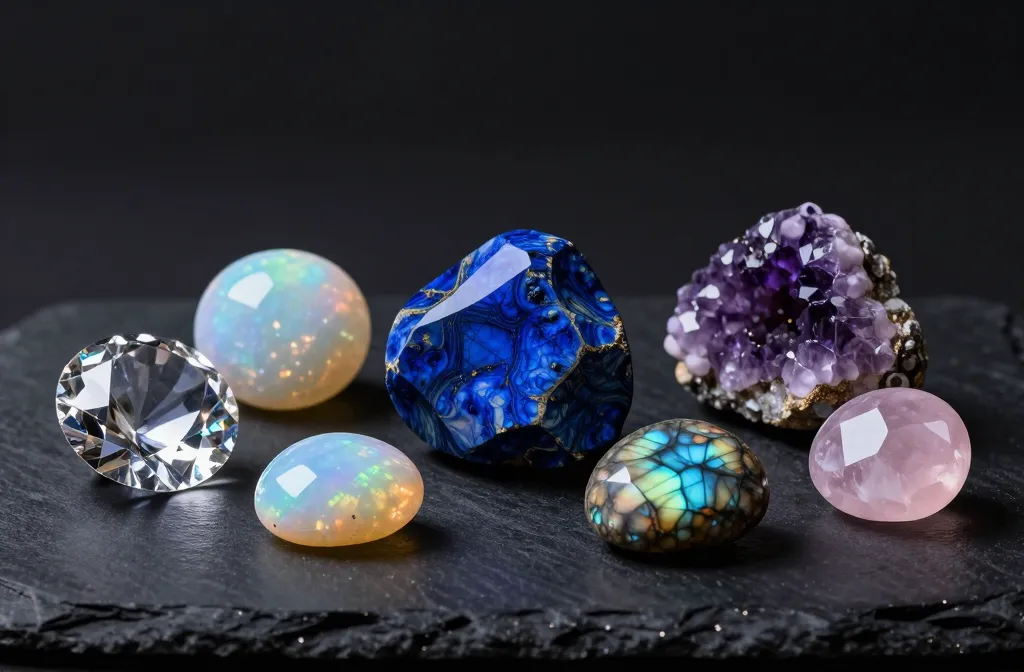
Some stones stop you in your tracks. Light catches a facet, color rolls through like a wave, and for a heartbeat the mineral feels almost alive. Beauty in rocks and minerals isn’t only sparkle—it’s story. Every hue, pattern, and shimmer hints at heat, pressure, elements, and time measured in eons.
Here you’ll meet classics that deserve their fame and lesser-known stunners that collectors whisper about. You’ll learn how they form, how to spot the real thing, and which pieces make practical jewelry versus display cabinet royalty. Expect honest talk on durability, treatments, and value so you can appreciate these wonders with both heart and head.
If you’re building a collection, choosing a meaningful gift, or planning a future heirloom, this guide will help you see like a gemologist—without losing that first-spark magic.
Diamond’s Fire and the Language of Light
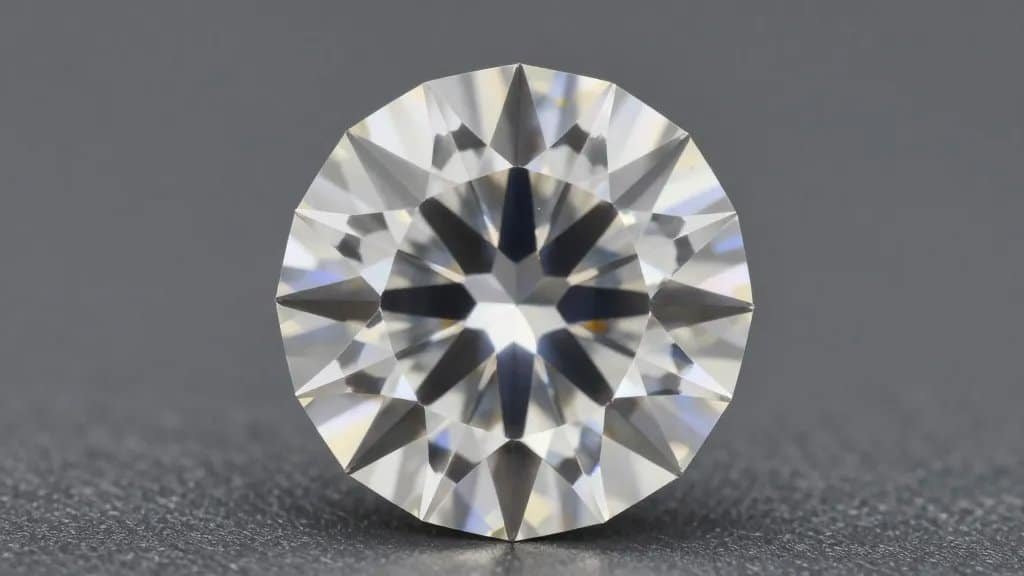
Diamond is the reference point for brilliance. With a Mohs hardness of 10, it’s the hardest natural material and can take a razor-keen polish. That polish, paired with a high refractive index and exceptional dispersion, creates the iconic rainbow “fire.” The best-cut stones throw pinpoints of light across a room; poorly cut ones look sleepy, reminding us that beauty in gems is an art and a science.
Colorless diamonds remain the benchmark, yet fancy colors—blues from boron, yellows from nitrogen, and the elusive pinks and reds caused by lattice distortion—are showstoppers. Most are crystalline octahedra in the rough. Modern stones may be laser-inscribed and often receive treatments: HPHT or irradiation to modify color, fracture filling to mask clarity issues. None of that is automatically bad, but it should be disclosed. For everyday wear, diamond is unmatched in durability, making it a reliable choice for rings and bracelets. When you compare sparkle across stones, remember “Gemstone Cuts” and “Gemstone Shapes” matter nearly as much as the species.
Ruby and Sapphire: Corundum’s Royal Palette
Ruby and sapphire are the same mineral—corundum—differing mainly in trace elements. Chromium creates ruby’s red; iron and titanium mix the blues and teals of sapphire. On the Mohs scale, corundum sits at 9, hard enough to live a long life in rings. The velvety blue of Kashmir sapphire and the pigeon’s-blood red of Burmese ruby have near-mythic status among collectors.
Look closely: fine ruby glows as if lit within, a fluorescence effect that makes color seem electric. Sapphires range wildly—cornflower blue, royal blue, pastel Montana blues, neon teals from Madagascar, and mesmerizing parti-color Australians that blend blue, green, and yellow in the same crystal. Star sapphires, displaying asterism, owe their six-rayed star to aligned rutile needles.
Common treatment is high-temperature heating to clarify or deepen color; it’s standard and acceptable when disclosed. Be cautious with lead-glass–filled rubies, which are fragile and better viewed as “decorative” rather than heirloom gems. For buying specifics, see “Gemstone Buying Guide” and “Gemstone Value Guide” to understand how color saturation and transparency drive price.
Emerald and the Allure of Imperfection
Emerald’s green is a mood rather than a hue—lush, deep, and calming. It’s beryl colored by chromium, vanadium, or both. Mohs hardness is 7.5–8, but emeralds often host a garden of inclusions—three-phase bubbles, veils, and tiny crystals—known as the “jardin.” These internal landscapes are the fingerprints that authenticate and, to many, enchant.
Because emeralds are frequently fractured, clarity enhancement is the norm. Traditional cedar-oil filling is accepted; polymer resins are also used, and extent of treatment matters for value and care. Origin carries cultural cachet: Colombia for classic saturation, Zambia for bluish greens and better clarity, Brazil for a spectrum of tones. Wear emerald rings mindfully: avoid harsh knocks and ultrasound cleaners. Emeralds excel in necklaces and earrings where they can bask in light without constant impact.
Opal: Color That Moves
Opal doesn’t sparkle—it dances. Tiny silica spheres diffract light into spectral color, called play-of-color, which shifts as you move. Black opal from Lightning Ridge can flash neon red, electric green, and cobalt on a smoky body tone, while Welo opal from Ethiopia often shows kaleidoscopic patterns with a lighter, almost honeyed base.
Opal’s Mohs hardness is about 5.5–6.5, and it contains water, so stability matters. Doublets and triplets (thin opal capped with quartz or glass and backed by dark material) are common; they’re not “fakes” but composites and should be priced accordingly. Solid opal, with continuous play-of-color to the edge, is more valuable. Avoid rapid temperature changes and dry storage; a soft cloth and mild soapy water are best. For daily-wear rings, consider bezel settings or choose opal for pendants and earrings, keeping bolder designs for special occasions.
Lapis, Malachite, and the Beauty of Texture
Not every breathtaking stone is transparent. Lapis lazuli, a rock composed mainly of lazurite with pyrite and calcite, wears a night-sky blue dusted in gold-fleck pyrite. The best Afghan material has saturated azure with minimal white calcite veining. Mohs hardness is around 5–5.5; it takes a lovely satiny polish rather than a sharp sparkle, offering a regal, old-world look in beads and cabochons.
Malachite is all about banding—rippling concentric rings and eyes in saturated green. Mohs hardness is ~3.5–4, so it scratches easily, but in careful hands it becomes gorgeous vases, beads, and statement pendants. Many pieces are stabilized or backed for durability. When buying, watch for plastic imitations with unnaturally uniform patterns; real malachite’s bands vary in width and intensity, and it feels cool to the touch.
These two show why “Gemstone Colors” and texture matter as much as brilliance. If sparkle is a shout, these stones are poetry read aloud—subtle, rhythmic, and deeply characterful.
Aquamarine, Morganite, and the Pastel Persuasion
Beryl wears many costumes. Aquamarine ranges from clear sky to deep sea blue, colored by iron. It’s Mohs 7.5–8 and often very clean inside, which lets cutters chase long emerald cuts and ovals that look like windows into arctic water. Heat treatment commonly removes greenish tints to emphasize blue.
Morganite, blushed with manganese, brings peach-to-rose pastels that flatter nearly every skin tone. Large, clean crystals are not rare, so big stones can be relatively affordable. Both aquamarine and morganite make superb engagement rings for those who want something softer than diamond yet durable enough for daily life with a bit of care. Ultrasonic cleaning is generally safe for aquamarine but avoid for heavily included stones; gentle methods are best for morganite to keep that delicate glow.
Tourmaline’s Rainbow and the Neon Phenomenon
Tourmaline is the chameleon of the gem world. Elbaites span pink, green, neon blue, bicolor watermelons, and everything between. The Paraíba-type tourmalines—copper-bearing stones from Brazil, Nigeria, and Mozambique—light up with a swimming-pool glow that seems backlit. Their saturation and internal “light” make even small stones look bold, and clean material is rare, so prices climb quickly.
On the Mohs scale, tourmaline is 7–7.5. It can display pleochroism, showing different colors at different angles. Savvy cutters orient the crystal to maximize the face-up hue, but you may notice the ends of a stone looking darker or different. Be aware of clarity enhancements with oils or resins; fine stones usually don’t need it, but it appears in lower grades. For those curious about how tourmaline stacks up with sapphire or spinel in certain colors, see “Gemstone Comparisons.”
Spinel, Garnet, and the Joy of Rediscovery
Spinel is the connoisseur’s secret that’s no longer secret. Long mistaken for ruby in royal crowns, spinel offers fireworks in red, hot pink, cobalt blue, lavender, and steely gray. It’s Mohs 8 with crisp, glassy luster and strong saturation. Unheated fine spinel is common enough to be a breath of fresh air after navigating treated markets, though top colors now command serious prices.
Garnet is a family with multiple species: fiery pyrope and almandine reds, rhodolite’s raspberry, grossular’s minty tsavorite, and andradite’s green demantoid with razor-bright dispersion. Demantoid from Russia and Namibia shows “horsetail” inclusions—fine, golden byssolite fibers—that help identify origin and are cherished by collectors. Most garnets are not treated, which many buyers appreciate. Mohs hardness varies from 6.5 to 7.5. For sparkle fans, demantoid and spessartite can rival the liveliness of much pricier gems.
Moonstone, Labradorite, and the Sorcery of Sheen
Feldspars create optical effects that feel almost supernatural. Moonstone’s adularescence is a soft, billowing glow beneath the surface—blue on colorless bodies is most prized. High-quality Sri Lankan moonstone shows a tight, centered sheen on a clean, nearly transparent crystal. Mohs hardness is ~6–6.5, so treat it gently in rings.
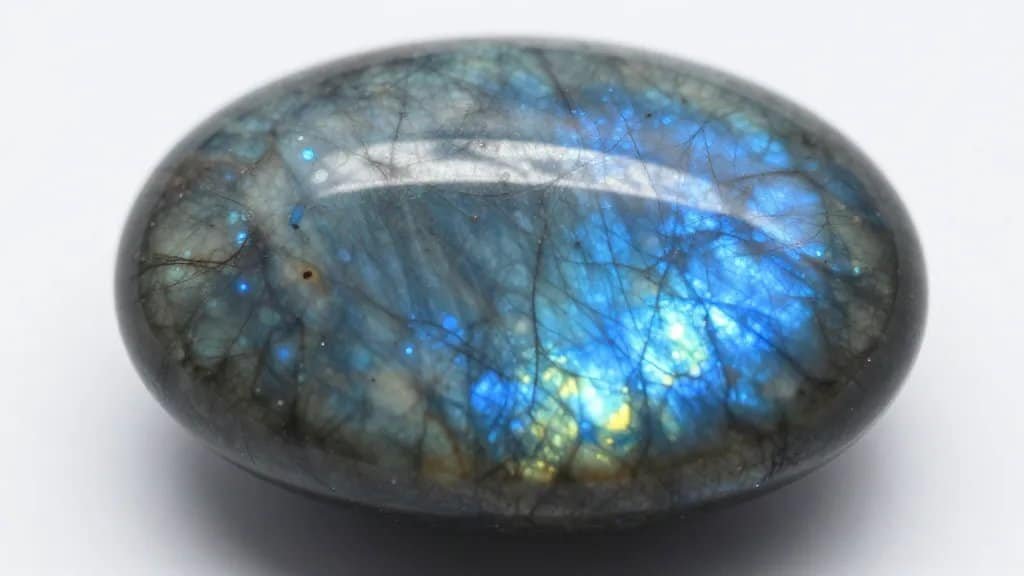
Labradorite, and its rare cousin spectrolite, flash labradorescence—broad swaths of neon blue, green, and sometimes orange that roll across a smoky gray base. In jewelry, both make expressive cabochons; in the hand, they’re conversation starters. Watch for synthetics or glass with uniform, too-perfect sheen. Natural stones show zones, layers, and slight interruptions that keep the magic believable.
Jadeite and Nephrite: Beauty in Toughness
Jade isn’t a single stone but two: jadeite and nephrite. Jadeite is the rarer, with a tighter interlocking crystal structure that allows a bright, almost sugary translucency in fine grades. Imperial jade—vivid emerald green from chromium—has a glow that seems to float within the stone. Nephrite, often creamy white (“mutton fat”), spinach green, or inky black, is less flashy but incredibly tough, carved into masterpieces that survive centuries.
Mohs hardness sits around 6–6.5, but toughness (resistance to breaking) is where jade excels. Treatments abound: “A-jade” is natural with only cleaning; “B-jade” has been bleached and polymer-impregnated; “C-jade” also has dye. Only A-jade retains long-term value. A simple tap-test can hint at polymer impregnation, but reliable identification requires lab testing—see “Gemstone Identification” for methods like FTIR and spectroscopy.
Collector Darlings: Alexandrite, Tanzanite, and Sapphirine Rarities
Some stones feel almost improbable. Alexandrite, a chrysoberyl variety, famously shifts from green in daylight to reddish in incandescent light. Fine stones are scarce and expensive, with Russian Ural material setting the standard. Mohs 8.5 means good durability, but clarity and cutting determine whether that color change reads clearly to the eye.
Tanzanite, vanadium-rich zoisite from a single locality in Tanzania, glows purplish blue with a hint of velvet. Heat treatment is routine, transforming brownish rough into the coveted blue-violet. While Mohs 6–7 means some care is needed, its charisma in cushion and oval cuts has made it an instant classic since its 1960s debut.
If you like to hunt the unusual, there’s hauyne—a sky-blue sulfur-bearing feldspathoid—rare and fragile but mesmerizing; benitoite, California’s sapphire-blue with diamond-like dispersion; and pezzottaite, a pinkish “raspberry beryl” cousin. For deeper rabbit holes, explore “Rare Gemstones” and “Collector Gemstones.”
How Beauty Happens: Formation, Inclusions, and Light
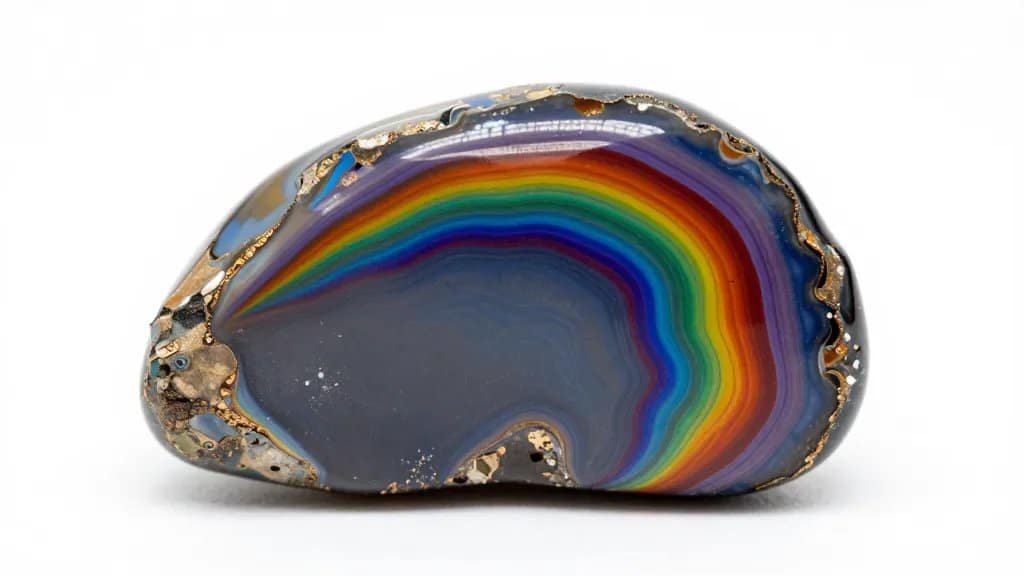
Gems are geological accidents of the happiest kind. High heat and pressure in the mantle forge diamonds; corundum grows in metamorphic marbles or basaltic rocks; beryl crystallizes in pegmatites where elements concentrate into gem soups. Each growth environment writes clues inside the crystal: fingerprints in emerald, rutile silk in sapphire, growth lines in spinel.
These inclusions aren’t just quirks—they’re diagnostic and, at times, decorative. Horsetail fibers increase the desirability of demantoid. Tiny gas bubbles reveal glass imitations. Under a loupe, a fine gem becomes a world: twinning planes, hexagonal growth, reflective cleavage. Light then does the rest, bouncing, bending, and splitting to create brilliance (overall return), dispersion (rainbow fire), and scintillation (sparkle as you move). If you’ve never compared cuts side by side, a quick study in “Gemstone Cuts” is a revelation.
Real vs. Imitation: Quick Field Pointers
- Glass vs. gem: Glass often shows rounded gas bubbles and a soft, soapy luster. Real stones have sharper reflections and, typically, inclusions that follow crystal logic.
- Double refraction: Many gems (tourmaline, zircon) are doubly refractive. Look through a faceted edge with a loupe—you may see doubled facets, a quick authenticity hint.
- Weight and feel: Plastics feel warm and light. Stones feel cool and heavier for size.
- Too perfect: Uniform color with zero inclusions in species known for inclusions (emerald, ruby) warrants testing.
- Tell-tale treatments: Surface-reaching fractures that flash rainbow colors can indicate fracture filling; a star that seems painted likely means a synthetic star sapphire.
For confident verification, professional tools and reports matter. Reputable sellers welcome questions and can discuss origin, treatments, and return policies—topics covered in detail in any solid “Gemstone Buying Guide.”
Practical Beauty: Durability, Care, and Where to Wear It
Durability isn’t only hardness; it also includes toughness and stability. Diamonds are hard but can cleave. Opals and tanzanites may craze or scratch. Jade resists breaking. If you’re planning a daily-wear ring, think Mohs 8 and up: corundum, spinel, chrysoberyl. For special-occasion glamour, opal, moonstone, and malachite shine in pendants and earrings.
Care basics:
- Cleaning: Warm water, mild soap, soft brush. Avoid harsh chemicals and steam for porous or included stones.
- Storage: Separate pouches so harder stones don’t scratch softer ones. Keep opal away from excessive dryness and heat.
- Repairs: Inform jewelers about treatments; heat from soldering can discolor fracture-filled stones or damage opal and turquoise.
Mountings matter. Bezels protect edges; halos distribute impact. Low-profile settings help with active lifestyles. For anniversary or milestone pieces, review “Gemstone Jewelry” categories—rings, necklaces, earrings, bracelets—to match design with gemstone personality.
Meaning, Myth, and Modern Symbolism
Gems have always doubled as symbols. Ruby for passion and courage, sapphire for truth and fidelity, emerald for renewal, and opal for imagination. Modern interpretations keep the poetry while letting go of superstition. If you enjoy personal talismans, align color with intent: calm blues for focus, greens for balance, pinks for compassion, intense reds and oranges for energy.
Some stones intersect with birth traditions: sapphire in September, opal and tourmaline in October, topaz in November, garnet in January, diamond in April, emerald in May, alexandrite and pearl in June, ruby in July, peridot in August, sapphire again in September, tourmaline in October, turquoise, zircon, and tanzanite in December. For gift planning, “Birthstone Jewelry” offers a ready-made map.
Buying Smart: Value Drivers You Can See
Beauty you notice first; value you learn to read. In most gems, color rules—look for saturation without darkness. Next comes clarity: in diamond, near-invisibility is king; in emerald, tasteful jardin is part of the charm. Cut makes or breaks sparkle and face-up color. Size amplifies everything: a 3-carat fine ruby is exponentially rarer than three 1-carat stones. Origin can tip scales for certain species, but don’t chase labels without corresponding beauty.
Ask for clear disclosures on treatments. Seek return windows and independent lab reports for significant purchases. Consider the whole piece: metal color can influence how you perceive a gem—yellow gold warms rubies and emeralds; white metals sharpen blues and icy diamonds. For price context and trade terms, a glance at a “Gemstone Value Guide” or trusted price list grounds expectations.
FAQs
Which beautiful stones are safest for everyday rings?
Diamond, sapphire, ruby, spinel, and chrysoberyl balance hardness and toughness well. They resist scratching and take daily knocks better than opal, emerald, or tanzanite.
How can I tell if an opal is solid, doublet, or triplet?
View the side: a doublet shows a sandwich—dark backing and opal; a triplet adds a clear cap. Solid opal is uniform through the edge.
Are vivid blue sapphires always heated?
Not always, but many are. Unheated stones with top color are rarer and pricier. A lab report verifies heat status.
Is “imperial jade” a color or a quality grade?
It refers to the most prized color in jadeite—intense, even, chromium-rich green with high translucency. Quality includes color, texture, and freedom from treatments.
Why do some gems look different in daylight vs. indoor light?
Light sources have different spectra. Stones like alexandrite show dramatic change; others shift subtly as certain wavelengths dominate.
What makes Paraíba tourmaline so expensive?
Copper content creates electric glow and high saturation. Fine crystals are rare, and demand is intense, pushing prices up.
Do inclusions always lower value?
Often, but not always. In demantoid, horsetail inclusions add value; in emerald, a pleasing jardin is acceptable if transparency and color remain strong.
A Final Note for Stone Lovers
The most beautiful rocks and minerals on Earth blend science with sensation. Learn how they form, how they play with light, and how to care for them—but let your eyes and heart vote first. Whether you favor fiery diamonds, velvety sapphires, or the hypnotic shimmer of opal, choose pieces that look alive to you. From there, the right knowledge—on identification, durability, and value—turns admiration into confident collecting.

Christian Grey is the creator of GemMeaning, where he shares simple insights about crystals, gemstone meanings, and spiritual guidance. His focus is on making complex ideas easy to understand and practical for everyday life.