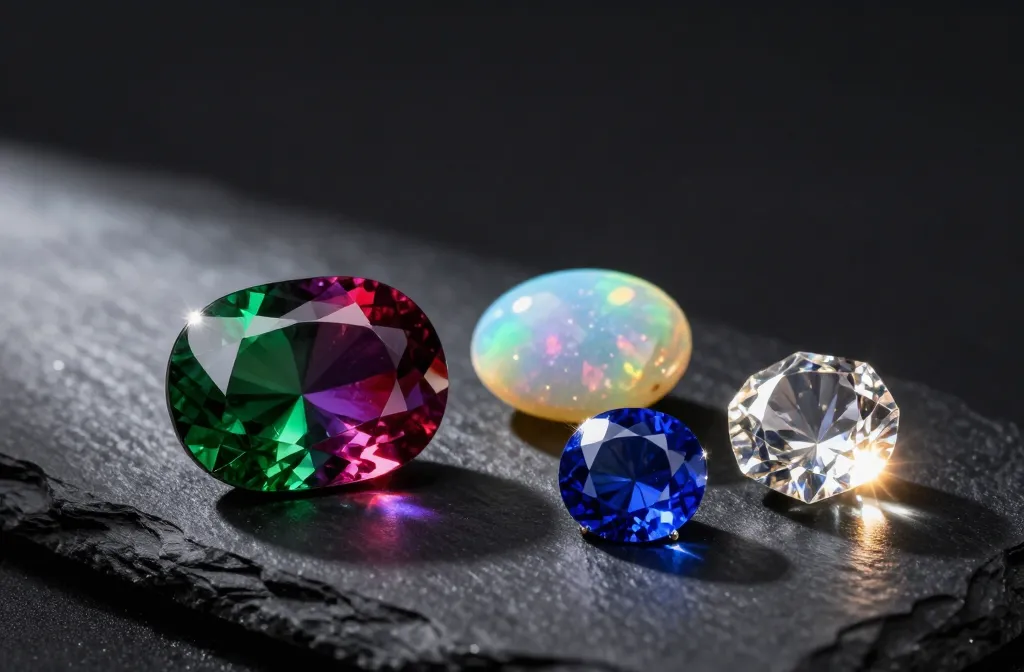
Every so often, a stone appears that rewrites what we think we know about color, light, and the hidden drama of geology. These are the pieces that make even seasoned collectors do a double take—the ones with stories so unlikely they sound like folklore.
Here you’ll meet gems that change color like a chameleon, crystals that trap ancient galaxies of light, and minerals so tough they can scratch anything you own—then shatter from a simple knock at the wrong angle. You’ll learn what they look like, how they form, where they come from, and why some are both irresistible and impractical in jewelry.
We’ll also touch on how to identify authentic specimens, what affects value, and how to care for these eccentric beauties. Expect surprises. The rarest gems rarely behave the way you think.
Ready to expand your gem vocabulary with facts that seem impossible until you see them sparkle? Let’s go stone by stone.
Alexandrite: A Daylight Emerald, Candlelight Ruby
Alexandrite’s color-change is so dramatic it almost feels staged. In daylight or fluorescent light, fine stones look forest green or bluish-green. Under warm incandescent or candlelight, they swing to purplish-red—like two gemstones fused into one. This isn’t mood lighting; it’s physics. The chromium that colors alexandrite absorbs light differently across the spectrum, and the gem’s unusual transmission curve tilts depending on the light source.
Discovered in Russia’s Ural Mountains in the 1830s, alexandrite is now also mined in Brazil, Sri Lanka, and East Africa, though classic Russian stones with sharp green-to-red shifts are the benchmark. On the Mohs scale, it stands at 8.5—tough enough for fine jewelry, but not immune to wear.
Value hinges on the strength and purity of the color change. A vivid grass-green to raspberry-red shift can push prices beyond many “Precious Gemstones.” Mixed or muted shifts, or brownish tones, reduce value quickly. Natural inclusions—fingerprints, fine needles, and growth lines—are forgiven if the color change delivers theater.
Identification tip: If a stone billed as alexandrite shows no change between cool and warm light sources, be wary. Synthetic alexandrite and color-change sapphire exist, and many simulants only manage a muddy shift. A quick comparison under daylight and a warm bulb is a simple test, but a proper “Gemstone Identification” exam will look for telltale inclusions and spectrum features.
Benitoite: A Blue That Glows Like Lightning
Benitoite’s color suggests sapphire at first glance—an electric, slightly violet blue with a crisp, glassy luster. But the giveaway is its fluorescence. Under shortwave UV, benitoite lights up an otherworldly neon blue, like a bolt frozen in crystal. This phenomenon helps gemologists separate it from sapphire and spinel.
California claims benitoite as its state gem, and the famous San Benito County locality remains the primary source. Cut stones are usually small; one carat is already special. Its trigonal crystals form sharp triangles and tabular shapes, with “crossed” twinning not uncommon in crystal specimens.
With a hardness around 6 to 6.5, benitoite is not a daily-wear ring hero. It’s happier in earrings or pendants where it won’t meet door handles or countertops. Clean with mild soap and water; skip ultrasonic cleaners because of potential inclusions or fractures.
Value factors include saturation (the best looks cobalt to cornflower), transparency, and size. Large, clean stones are exponentially rarer and command prices that surprise even collectors familiar with “Gemstone Value Guide” trends.
Padparadscha Sapphire: The Sunset Trapped in a Crystal
Padparadscha sapphire sits at the fragile border between pink and orange, a tone reminiscent of lotus blossoms and Sri Lankan sunsets. That delicate equilibrium is astonishingly hard to find. Most stones drift too peach, too pink, or too orange, missing the ethereal middle ground.
True padparadscha is primarily from Sri Lanka, with additional sources in Madagascar and Tanzania. Corundum’s Mohs hardness of 9 gives it superb durability, ideal for engagement rings or everyday jewelry. But cutting is an art; windowing (a see-through center) is common when cutters try to stretch yield from scarce rough, and that can drain the stone’s life.
Treatments matter. Many sapphires are heated to improve color and clarity—generally accepted in the market if disclosed. Beryllium diffusion, which can push color deeper into the peach-orange range, must be called out clearly; it changes value perception significantly. A good lab report is your safest compass.
Buying advice: Ask for daylight photos and warm-light photos. True padparadscha keeps its graceful salmon glow across lighting conditions, while impostors may swing garish or flat. Compare with high-quality “Gemstone Colors” references to calibrate your eye.
Painite: From “World’s Rarest” to Still Ridiculously Rare
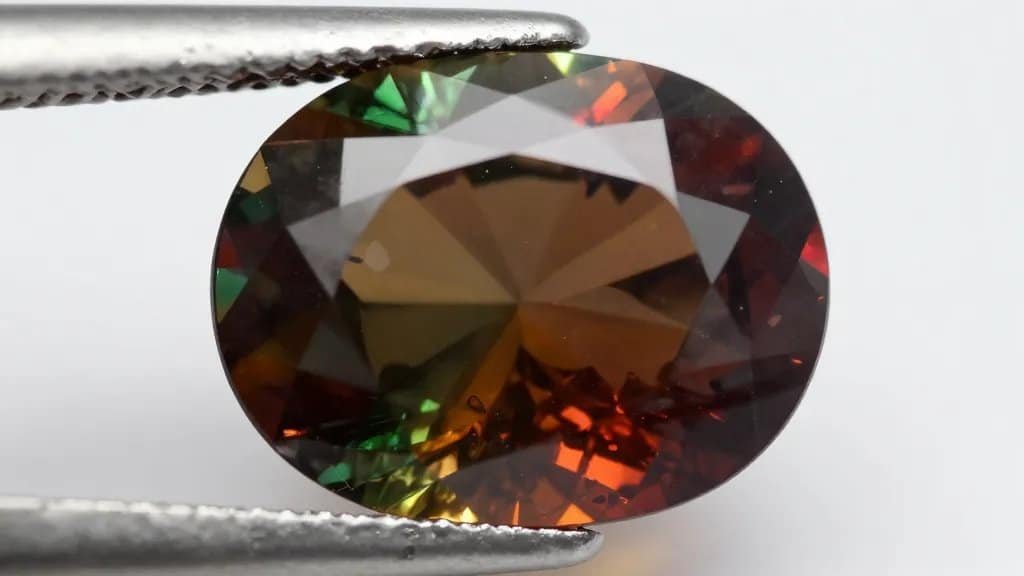
For decades, painite was the white whale of collectors. Discovered in Myanmar in the 1950s, it languished with only a handful of known crystals. Then additional localities turned up fragments and small crystals in the 2000s. Today we see more, but cuttable stones remain minuscule and often included.
Painite’s color ranges from brownish-red to deep wine with occasional orange glints. Not exactly a showboat compared to ruby or spinel—but scarcity rules. Even included gems under a carat can fetch serious sums. Its refractive indices and birefringence can help separate it from lookalike tourmalines and garnets under a gemological loupe and polariscope.
Durability is acceptable for occasional wear, but collectors typically keep painite in boxes, not on fingers. If you’re curating a “Collector Gemstones” case, a documented painite—even a fragment—tells a great story about how rarity can outshine beauty in value equations.
Paraíba Tourmaline: Copper That Paints With Electricity
Few gems have changed the market’s color vocabulary like Paraíba tourmaline. First found in Brazil’s Paraíba state in the late 1980s, this copper-bearing tourmaline pulses neon—think Caribbean shallows under hard noon sun. Colors range from electric blue to green and blue-green, with “swimming-pool blue” the dream tone.
The copper (and often manganese) inside produces intense absorption bands that interact with light to create that “lit from within” effect. Fine stones seem to glow even in shadow. Brazilian material is the classic, but similar copper-bearing tourmalines also appeared in Nigeria and Mozambique. Labs may identify origin; Brazilian commands a premium, though rich color trumps passport in most cases.
Tourmaline sits around 7 to 7.5 Mohs—durable enough for rings with care. Expect internal “garden” patterns, fluid inclusions, and growth tubes; they’re common and often tolerated if the color is thrilling. Be cautious with heat and ultrasonic cleaners. Prices spike fast with saturation and size; even sub-carat stones can be headline-worthy.
Red Beryl: Emerald’s Fiery Cousin That Almost Never Grows
Red beryl (bixbite) is to emerald what a comet is to rain—same family, completely different occurrence pattern. While emerald forms in massive hydrothermal systems, gem-quality red beryl grows in gas cavities of rhyolite flows in the western United States, mainly Utah’s Wah Wah Mountains. The environment is so stingy that facetable crystals are microscopic compared to emerald.
The color is a pure raspberry to cherry red from manganese. When cut, red beryl has a liquid ruby-like intensity combined with beryl’s vitreous luster. It’s a 7.5 to 8 on Mohs, so it could be worn, but most stones are too small and too precious to risk.
Red beryl’s value per carat rivals and sometimes surpasses top ruby because of extreme scarcity. Be mindful of synthetics and lookalikes (red spinel, ruby, and even treated quartz). Proper “Gemstone Identification” involves magnification to spot its distinctive inclusion patterns and, ideally, documentation from a respected lab.
Opal: The Gem That Traps Lightning, Nebulas, and Rain
Opal seems supernatural until you zoom in. It’s hydrated silica packed with ultrafine spheres that diffract light into a kaleidoscope called play-of-color. Depending on sphere size and uniformity, you get fiery reds, galactic blues, or full-spectrum bursts. Black opal from Lightning Ridge throws those colors against an inky body tone, amplifying contrast like fireworks at midnight.
But opal has quirks. It’s about 5.5 to 6.5 on Mohs, relatively soft and more prone to scratching than quartz or sapphire. It’s also sensitive to sudden temperature changes and low humidity. Well-cut opals receive a cabochon polish that lets color roll across the surface. Doublets and triplets (thin opal layers bonded to backing with a cap) offer a budget-friendly path to drama—just remember they need gentler care and should not be soaked.
Myth vs. fact: Opal is not inherently “bad luck.” That rumor traces to Victorian fiction and marketing wars. In many cultures, opal symbolizes hope, inspiration, and creative fire. If you’re choosing “Gemstone Jewelry” for daily wear, consider a protective bezel setting, especially for rings.
Taaffeite: Discovered in a Junk Box, Rarer Than Diamond
Taaffeite earned its legend status by accident. In 1945, gemologist Richard Taaffe bought a faceted stone he assumed was spinel. Under the loupe, he noticed double refraction—spinels are singly refractive—so it couldn’t be spinel. A new species had been hiding in plain sight on the market.
Colors range from mauve and lilac to grayish-violet and occasionally pink. It’s bright and clean, often cut in mixed ovals or rounds that show a soft, silky sparkle rather than a hard diamond flash. With a hardness around 8 to 8.5, it’s surprisingly durable for something so scarce.
Most taaffeite is tiny and not awash in saturation. Still, collectors chase it for its story and rarity. If a dealer presents a “cheap taaffeite,” alarm bells should ring—synthetic spinel and misidentified spinels are common. Double refraction checks and advanced testing help confirm the ID.
Jeremejevite, Grandidierite, and the Quiet Rarities
Some gems whisper instead of shout. Jeremejevite often appears colorless to pale blue, cut into crisp, bright gems that look like frozen air. It’s hard (around 7) and takes a high polish, but crystals big enough to facet are scarce. Value rises with saturation and clarity.
Grandidierite, on the other hand, flaunts a teal-to-green-blue pleochroism that can shift with the angle. Transparent stones over one carat are collector unicorns. Expect inclusions and a moody translucence even in good pieces. Both are better suited to pendants and safe storage than heavy-wear rings.
These “quiet rarities” remind us that scarcity can live in subtle palettes too. They reward a patient eye that loves texture, structure, and the way light tints a pale body tone rather than sets it on fire.
Gemstones That Break the Rules of Toughness
Hardness and toughness aren’t the same. Diamond is the hardest natural material at 10 on the Mohs scale, but a sharp blow in the wrong direction can cleave it. Meanwhile, jadeite and nephrite, with lower hardness, have exceptional toughness thanks to interlocking fibrous structures. That’s why jade carvings survive millennia while a diamond can chip in a clumsy setting.
Another counterintuitive case is tanzanite. At 6 to 7 Mohs, it scratches easier than sapphire and can cleave if struck. Its trichroism—blue, violet, and sometimes burgundy depending on direction—makes cutters orient it carefully. Spectacular in “Gemstone Rings,” yes, but best for occasional wear with mindful care.
The takeaway: always think beyond the Mohs number. Ask about cleavage, brittleness, and setting styles. A protective bezel or halo can make a world of difference for fragile beauties.
Inclusions: Flaws That Prove a Gem’s Story
In rare stones, inclusions are often badges of authenticity. Alexandrite may show fine parallel needles; Paraíba tourmaline can have fluid inclusions and hollow tubes; red beryl displays tiny crystal inclusions and growth zoning. These internal features help distinguish natural from synthetic and origin from origin.
Some inclusions become art. Trapiche patterns in emerald or ruby—spoke-like rays from a central hub—look like the gem grew its own snowflake. Star sapphires and rubies show asterism because of oriented rutile needles; move a light across the cabochon and a star glides over the dome. These phenomena aren’t defects—they’re the gemstone’s signature.
Real vs. Fake: Quick Reality Checks for Rare Treasures
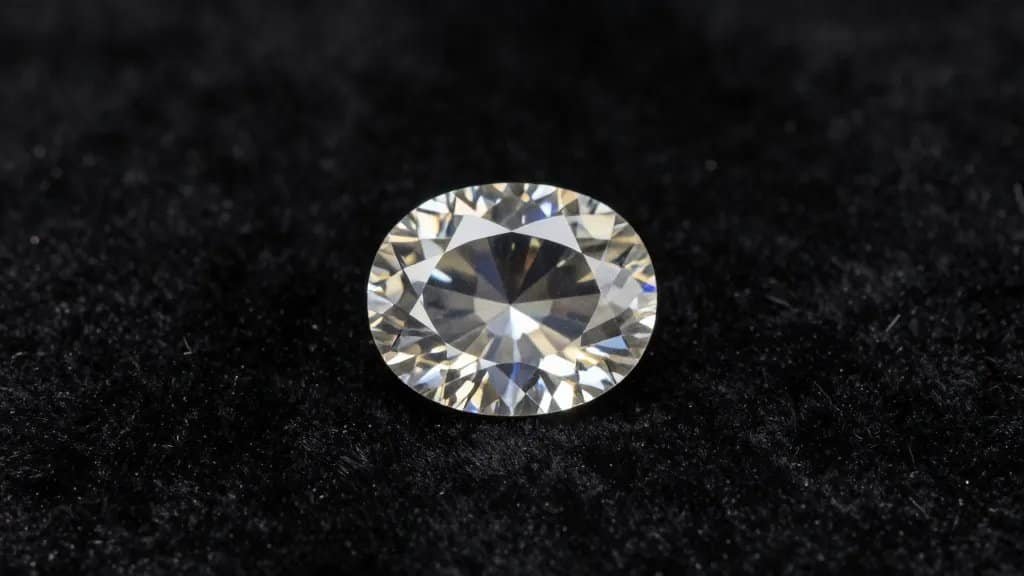
Rare gems attract creative imitations. A few practical pointers:
- Color-change claims: Test under cool daylight and warm incandescent. True alexandrite shifts decisively; color-change spinel and sapphire may behave differently, and glass often just dulls.
- Too clean, too big, too cheap: A vivid 5-carat Paraíba at a bargain price is likely treated tourmaline or glass. Compare with trusted “Gemstone Value Guide” ranges.
- Look for wear: Natural gems have crisp facet junctions but will show minor abrasions if worn. Glass often shows rounded facet edges and gas bubbles.
- Ask for documentation: For high-value stones—padparadscha sapphire, red beryl, alexandrite—request reputable lab reports. It’s standard in serious “Gemstone Buying Guide” practice.
Collecting and Caring for the Nearly Impossible
Building a rare-gem collection is part science, part patience. Focus on stones with corroborated provenance and lab reports when price justifies it. Collect across types: a small color-change alexandrite, a neon Paraíba cabochon, a modest benitoite, and a fragment of red beryl can form a museum-worthy tray.
Care matters. Store softer or brittle stones—opal, benitoite, tanzanite—separately in lined boxes. Avoid extreme heat, strong chemicals, and ultrasonic cleaners unless a professional advises. For rings, choose protective settings and set a cleaning routine: gentle soap, lukewarm water, soft brush, blot dry. Periodic checks by a jeweler will catch loose prongs before they meet a countertop.
If you plan to wear them, consider “Gemstone Earrings” and “Gemstone Necklaces” for fragile rarities. Reserve rings for sapphires, spinels, and diamonds, or gems with solid toughness and a well-designed setting.
How Rarity, Beauty, and Story Shape Value
Three forces shape the price of these extraordinary stones:
- Beauty: Saturation, brightness, and how the gem handles light. Paraíba’s inner glow and padparadscha’s balanced hue carry enormous weight.
- Rarity: True scarcity at the source. Painite and red beryl owe much of their mystique to how rarely nature produces them in facetable sizes.
- Story: Historic origins, unusual formation, or a dramatic discovery tale. The “found-in-a-junk-box” lore around taaffeite and the old Russian alexandrite legend add intangible value.
A well-rounded collector respects all three. Beauty steals hearts. Rarity steadies prices. Story makes you remember why you fell for rocks in the first place.
FAQs
Is alexandrite’s color-change visible in everyday life or only in a lab?
It’s easily visible. Step from daylight into warm indoor lighting, and fine alexandrite shifts from green to red-purple without special equipment.
How can I tell a real Paraíba tourmaline from a regular blue tourmaline?
Look for an electric, almost neon glow and often lighter tone than standard indicolite. Copper content confirms it, so a lab report is wise for expensive stones.
Are padparadscha sapphires always unheated?
No. Many are heated; it’s accepted if disclosed. Beryllium diffusion is a different treatment and must be identified, as it strongly affects value.
Is opal too fragile for an engagement ring?
It can work with a protective setting and mindful wear, but sapphires or spinels are better for daily durability. Consider opal for a right-hand ring or pendant.
Why are some rare gems small even at high prices?
The geology simply doesn’t produce large, clean crystals. Red beryl, benitoite, and painite are prime examples where even sub-carat stones are significant.
Do inclusions always lower value?
Not always. In rare stones, moderate inclusions are tolerated if color and rarity are exceptional. Some inclusions even create desirable effects, like stars in corundum.
What’s a safe first rare gemstone to buy?
Consider a small, lab-documented alexandrite or a modest Paraíba from a reputable dealer. Their beauty and recognizability make them satisfying starters.
A Final Word
The most astonishing gemstone facts aren’t marketing lines—they’re how nature works when pressure, chemistry, and time collide just right. If a gem seems too magical to be real, that’s your cue to look closer. Learn the light, learn the clues, and let rarity and wonder share the same box in your collection.

Christian Grey is the creator of GemMeaning, where he shares simple insights about crystals, gemstone meanings, and spiritual guidance. His focus is on making complex ideas easy to understand and practical for everyday life.