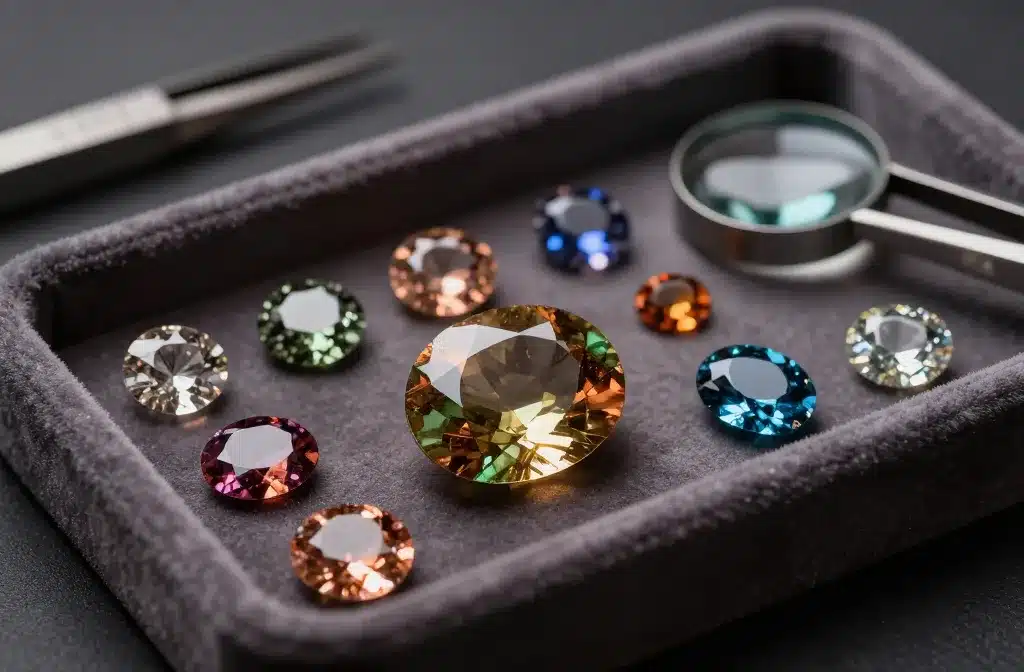
The jewelry counter loves the familiar—ruby, sapphire, emerald—while a world of underappreciated treasures sits quietly in boxes and mine lots. Those “unloved” gems often deliver character, story, and color you won’t find in the usual suspects, sometimes at a fraction of the price.
If you’ve ever wondered what seasoned collectors hunt when the mainstream moves on, you’re in the right place. You’ll learn which overlooked species deserve a second glance, how to judge their quality, what treatments to watch for, and which pieces make striking daily-wear jewelry.
We’ll wander from volcanic deserts to river gravels, from delicate crystals to armor-tough stones, and we’ll translate the lab-speak into plain advice. Expect practical buying tips, tactile descriptions, and honest comments about care and durability.
Ready for some stones with soul? Let’s open the trays most people skip.
Andalusite: Earthy Pleochroism with Subtle Drama
Andalusite is a masterclass in understated color play. Rotate a well-cut gem and you’ll see mossy green, coppery orange, and tea-brown flash through the facets. That shifting palette comes from strong pleochroism, which cutters harness with mixed step and brilliant facets.
Geology and origin: Andalusite forms in regional metamorphic rocks, especially in Spain (its namesake), Brazil, Sri Lanka, and Madagascar. It shares a family with kyanite and sillimanite—three polymorphs of Al2SiO5—so you’re literally wearing metamorphic history on your finger.
Hardness and wear: Mohs 6.5–7.5 with generally good toughness. It suits pendants and rings with protective settings. Avoid hard knocks and clean with warm soapy water.
Value factors: Look for crisp pleochroism, good transparency, and cuts that enhance the color blend rather than muddy it. Eye-clean stones above 2 carats can still be affordable. Unremarkable gray-brown pieces are common; the gems worth collecting feel alive as you turn them.
Collector tip: Andalusite’s close cousin, chiastolite, shows a distinctive cross pattern in rough slices—great for a mineral case, less for faceting. If you love unique patterns, a chiastolite cabochon makes a striking talisman, though it’s more curiosity than sparkle.
Scapolite: Sunset Pastels that Deserve Better PR
Scapolite lives in the pastel end of the spectrum: lilac, honey, champagne, and a delicate peach that flatters most skin tones. The best stones carry a soft, watery glow—think evening light through a wine glass—rather than high-octane brilliance.
Formation and sources: It crystallizes in metamorphosed limestones and skarns, with fine material from Tanzania, Madagascar, and Myanmar. You’ll occasionally find cat’s-eye scapolite with a sharp ray tracing down a rounded cabochon.
Hardness and care: Mohs 5.5–6.5. Not a stone for rough daily wear, but a well-designed pendant or occasional ring is fair game. Keep away from ultrasonic cleaners and harsh chemicals.
Treatments and pricing: Heating is not unusual to improve color. Prices remain modest compared to topaz or morganite. Eye-clean lavender stones above 5 carats are scarce but not unattainable.
Why collectors love it: Scapolite scratches a similar itch as kunzite—luminous pastels—but without the color-fading drama in sunlight that kunzite can suffer. If you’re curating a tray of soft, feminine colors, scapolite fills gaps you didn’t know you had.
Sphene (Titanite): Fireworks in Miniature
Sphene looks like a small gem trying to contain a bonfire. Its dispersion—the splitting of light into spectral colors—outpaces diamond, so a properly cut sphene sprays neon greens, oranges, and reds across the table.
Appearance: Most fine stones are chartreuse to golden-green, sometimes with brown or olive modifiers. Expect high refractive indices and pronounced birefringence, which can double facet edges and create a lively, slightly “trembling” look in the stone.
Origin and formation: Found in metamorphic and igneous rocks. Key localities include Madagascar, Sri Lanka, and Pakistan’s alpine pegmatites. Collectors also prize reddish-brown titanite crystals for mineral displays.
Durability: Mohs 5–5.5 with fair cleavage; it scratches easily and can chip. Earrings and pendants are safest. For rings, use protective bezels and occasional wear.
Buying advice: Look for bright, medium tones with enough saturation to carry their fire. Avoid overly included stones; haze kills dispersion. Keep sizes modest—1 to 3 carats often show better light performance than chunky cuts.
Value note: Clean green-gold sphenes with symmetrical cutting are climbing in price but still fly under many buyers’ radars. If you like outshining diamond lovers at a party, this is your ace.
Idocrase (Vesuvianite): The “Olive Jade” with Its Own Identity
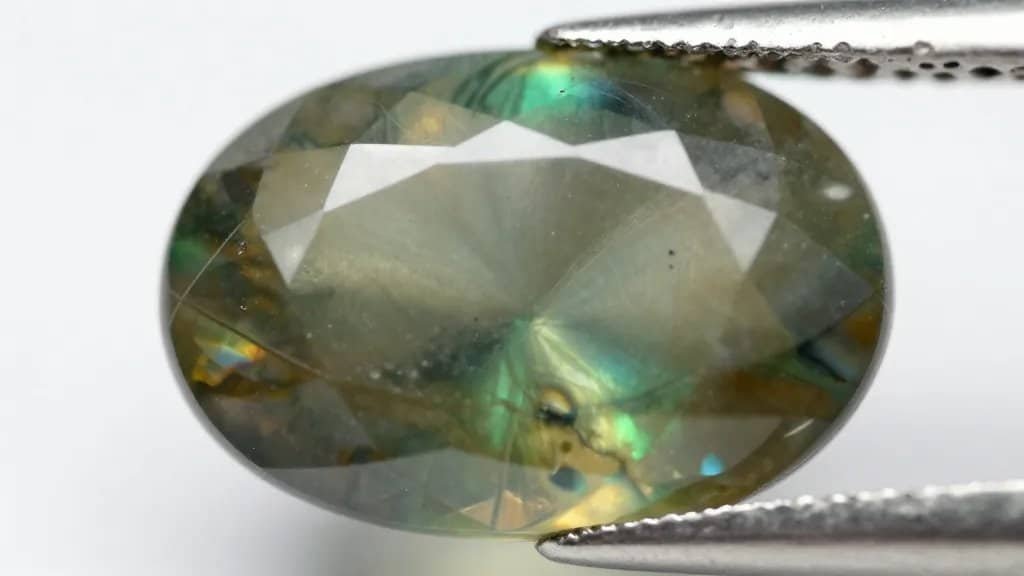
Vesuvianite often gets mis-sold as “Californite” or “idocrase jade” when it forms compact, tough masses. In fine cabochons it shows a rich, waxy luster in olive to spring-green, sometimes with wispy mottling that reads organic rather than busy.
Geology and sources: A contact-metasomatic mineral named for Mount Vesuvius, it also forms in skarns worldwide. California and Quebec produced classic material; Pakistan and Italy add interest for locality collectors.
Hardness and wear: Mohs about 6.5. Massive vesuvianite can be quite tough, suitable for daily-wear pendants, beads, and bracelets. Faceted transparent vesuvianite exists but is rarer and typically small.
Identification tips: It’s denser than most glasses and lacks the fibrous structure of nephrite or jadeite. Under magnification, you’ll see granular texture more often than interlocking fiber. If “jade” pricing seems suspiciously low, you may be looking at vesuvianite—which is not a downgrade if you appreciate its character.
Collecting angle: Select cabochons with even color, a high polish, and minimal pits. For a coordinated suite, vesuvianite pairs beautifully with yellow gold and warm-toned pearls.
Enstatite and Hypersthene: Velvet Glow with a Metallic Wink
These orthopyroxenes are quietly moody. Hypersthene, especially from Canada and India, often shows a satiny bronze or gunmetal sheen known as schiller, rolling just under the surface like a shadowed mirror. Enstatite can be brown, greenish, or honey-toned, sometimes offering subtle pleochroism.
Formation and locality: They crystallize in igneous and metamorphic rocks, and enstatite also occurs in meteorites—fun trivia for a conversation piece. Cutters typically fashion them into cabochons to emphasize sheen.
Durability: Mohs 5–6. They take a respectable polish but will scuff with rough wear. Choose pendants, generous cab rings with protective bezels, or cufflinks for a vintage vibe.
Value and buying: Prices are friendly. Look for strong, even schiller with minimal abrasions. The best hypersthene looks like polished black silk catching candlelight.
Why overlooked: They aren’t high-fire or candy-bright. But if you appreciate tone-on-tone sophistication and tactile luster, these stones deliver surprising elegance in men’s and unisex jewelry.
Heliodor and Golden Beryl: Sunshine Without the Hype
Golden beryl gets eclipsed by emerald (same species) and aquamarine (its bluer sibling). Yet a fine heliodor glows like filtered sunlight—transparent, limpid, with crisp facet junctions that throw tidy flashes rather than riotous fire.
Geology and origin: Beryl grows in granitic pegmatites. Golden hues come from iron; notable sources include Brazil, Madagascar, and Ukraine. Clean crystals allow larger stones that still look bright—10 to 20 carats are common without astronomical prices.
Hardness and durability: Mohs 7.5–8 with good toughness. It’s a capable daily-wear gem. Avoid extreme heat and strong acids, and it will reward you with easy maintenance and enduring luster.
Treatments: Heating can tweak color, and some stones may be irradiated then heated. Ask for disclosure and buy from reputable sellers.
Buying advice: Prefer medium, sunny hues over pale straw or overly brownish gold. Precision cutting pays off—look for symmetrical crowns and crisp brilliance. For an heirloom look, set heliodor in yellow gold with baguette side stones or in a delicate Art Deco-inspired halo.
Sillimanite Cat’s-Eye: A Sharper Ray than You’d Expect
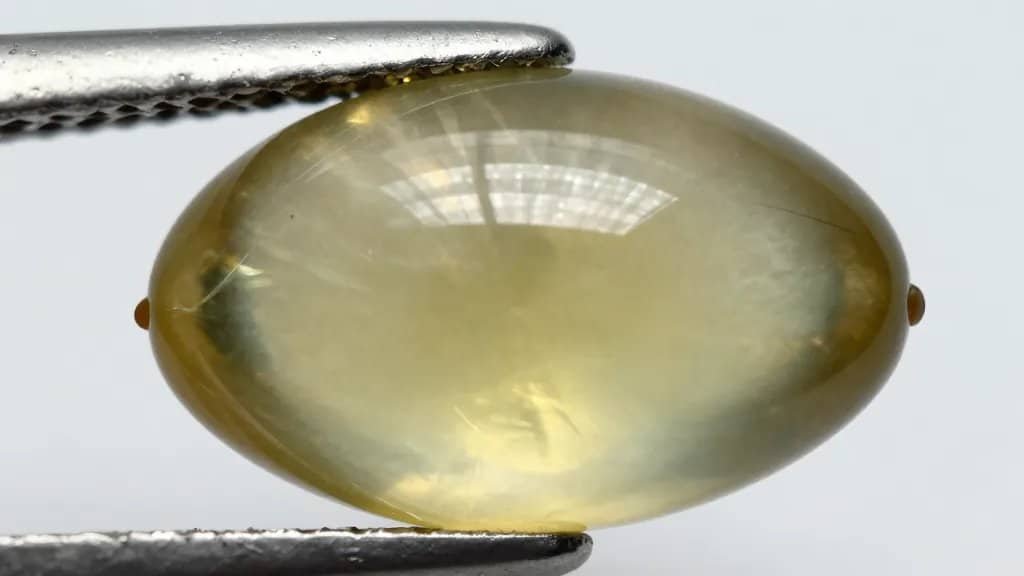
Among chatoyant gems, sillimanite rarely headlines, but its cat’s-eye can be razor sharp. In a domed cabochon, a single bright line glides across a silky body color from fawn to greenish-gray, occasionally lavender-tinted. The effect is mesmerizing in candlelight.
Geology: Another Al2SiO5 polymorph, sillimanite forms under high-temperature metamorphism. India and Sri Lanka produce classic cat’s-eye material.
Hardness and care: Mohs about 6.5–7. It’s sturdier than many chatoyant stones but still appreciates gentle handling. Clean with a soft brush and mild soap to keep the eye crisp.
Collecting notes: Assessment mirrors other cat’s-eye gems—sharply defined eye, centered under straight lighting, and a smooth, even dome. Stones with milk-and-honey effect (two-tone under directed light) are a treat and worth stretching the budget.
Wearability: This gem shines in men’s rings and understated signets. It carries an old-world gravitas without the price of top cat’s-eye chrysoberyl.
Magnesite and Variscite: Pattern Lovers’ Paradise
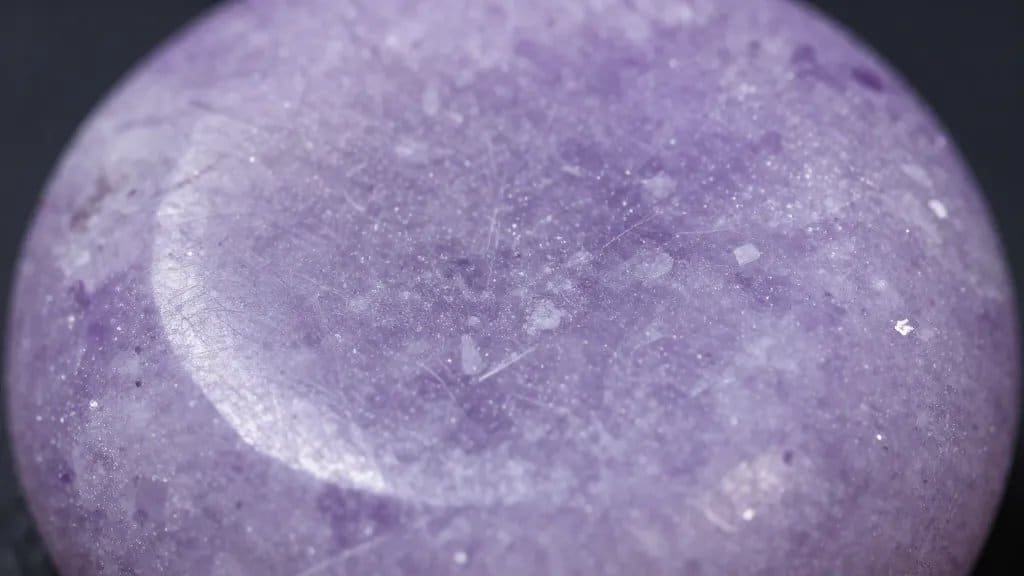
If you judge gems solely by brilliance, you’ll skip these. But for graphic patterns and calming palettes, magnesite and variscite are standouts. Magnesite often shows a white to cream body with chocolate veining that reads like modern art; variscite paints minty to apple-green pools with subtle marbling.
Formation and sources: Both form in low-temperature environments. Variscite has Utah classics and Australian beauties; magnesite appears worldwide and is sometimes stabilized for durability in beads and cabs.
Hardness and stability: Mohs roughly 3.5–5.5, so durability is limited. Stabilization is common and not inherently bad; it just needs honest labeling. Keep them for earrings, necklaces, and gentle-wear rings.
Buying guidance: Seek coherent patterns, polished surfaces without drag lines, and reputable disclosure. Because fakes abound, especially dyed howlite as “turquoise,” learn the tells: variscite tends toward softer, cooler greens with luster more waxy than vitreous; magnesite’s veining usually looks broader and less spiderwebby than dyed howlite.
Styling tip: Pair variscite with brushed silver for a clean, contemporary look. Magnesite loves leather and warm brass for a casual, gallery-worthy vibe.
Benitoite, Titanowillemite, and Short-Lived Stunners: Small Sizes, Big Stories
Some overlooked gems are tiny but potent. Benitoite, California’s state gem, flashes sapphire-blue with icy dispersion and crisp triangular facets. Fine stones above 1 carat are rare and costly, but sub-carat pieces remain relatively accessible and wildly collectible.
Under the UV lamp, benitoite glows electric blue—a party trick for mineral enthusiasts and a handy identification clue. Hardness is about 6–6.5, so keep it protected in rings or choose pendants.
For collectors of the unusual, titanowillemite and other fluorescent rarities aren’t everyday jewelry candidates, but they add punch to a mineral case. If your collection straddles the line between wearable and display, a small benitoite suite can anchor a themed tray of blue gems alongside lesser-known hauyne and afghanite.
Buying Smart: How to Spot Value in Overlooked Gems
When a stone isn’t backed by heavy marketing, your eye decides the price-to-pleasure ratio. A few habits help:
- Ask about treatments. Heat, irradiation, dye, and stabilization aren’t deal-breakers if disclosed and fairly priced.
- Prioritize cutting. Overlooked gems often suffer from sleepy cuts. A crisp pavilion and well-placed facets can elevate modest material dramatically.
- Check transparency and clarity appropriate to species. For sphene, clarity is king; for vesuvianite cabochons, a uniform, glassy surface matters more than absolute clarity.
- Consider jewelry context. Softer stones belong in earrings, necklaces, and protective settings. Reserve daily-wear rings for sturdier species; consult Gemstone Hardness and Gemstone Care resources for planning.
- Buy from specialists. Dealers who love these stones curate better rough and disclose more. They also provide provenance—useful for future resale and collector storytelling.
If you’re balancing beauty and budget, skim a Gemstone Value Guide and a Gemstone Buying Guide for benchmarks, then trust your eyes. Overlooked gems reward independent taste.
Real vs. Fake: Common Pitfalls
Hidden gemstones attract creative labeling. A few red flags:
- “Olive jade” often equals vesuvianite or serpentine. Not bad—just not jade. Price should reflect the identity.
- Dyed howlite or magnesite as turquoise or variscite. Look for suspiciously uniform veining or intense color pooling around fractures.
- Glass imitations of sphene: little to no dispersion under varied light and soft facet junctions are giveaways. Genuine sphene shows lively fire and sharper facet edges.
- Synthetic scapolite exists but is rare; more commonly, you’ll see misidentified quartz. Check refractive index and birefringence in any lab report.
When in doubt, a basic Gemstone Identification reference or a quick lab check can save a lot of regret.
Care and Cleaning: Keep the Charm, Lose the Damage
Many overlooked stones are softer or cleave readily. Sensible care goes a long way:
- Use warm water, mild soap, and a soft brush. Pat dry with a lint-free cloth.
- Avoid ultrasonic and steam cleaners for sphene, scapolite, enstatite/hypersthene, and stabilized materials.
- Store separately in soft pouches. A stray sapphire can turn scapolite cloudy in a heartbeat.
- For rings with softer stones, choose low-profile bezel or halo designs that shelter the girdle.
If you’re commissioning a piece, discuss setting geometry and metal choices with a jeweler familiar with less-common species. That conversation is as important as picking the stone.
Where These Stones Shine in Jewelry
Understated gems excel where nuance counts:
- Sphene: delicate pendants that catch light near the collarbone; stud earrings that throw confetti fire without snag risk.
- Scapolite: cocktail rings for evenings; cushion cuts in soft, brushed-gold bezels.
- Vesuvianite: signet-style rings, bead strands, and talismanic pendants with engraved backs.
- Andalusite: everyday pendants that feel autumnal; masculine rings with step-cut center stones.
- Cat’s-eye sillimanite: statement cabochon rings with clean shoulders; cufflinks for quiet luxury.
- Heliodor: geometric Art Deco-inspired pieces, channel-set bands, and Gemstone Necklaces where scale and clarity pop.
If you enjoy exploring Gemstone Cuts and Gemstone Shapes, these species reward creativity—precision ovals for pleochroic stones, high domes for chatoyant pieces, and mixed cuts for balancing brilliance with body color.
Common Mistakes New Collectors Make
- Chasing size over quality. A crisp 2-carat sphene beats a murky 6-carat any day.
- Underestimating durability. Not every pretty stone wants to be a daily ring. Match stone to lifestyle.
- Ignoring provenance and documentation. For resale or trade, a lab memo and locality can move mountains.
- Skipping the loupe. Even a 10x peek reveals windowing, chips, or dye concentrations.
- Forgetting the setting. A great stone in a flimsy setting won’t stay great for long.
FAQ
Are overlooked gemstones good investments?
They can be, but think in terms of connoisseur value rather than mass-market appreciation. Buy the best quality you can find, keep documentation, and choose stones with distinct optical character—sphene, cat’s-eye effects, or strong pleochroism.
Which of these is safest for everyday wear?
Heliodor (golden beryl) and massive vesuvianite handle daily use best. Andalusite can be fine with a protective setting. Sphene, scapolite, and hypersthene prefer gentler wear.
Do these gemstones have symbolic meanings?
Collectors often attribute calm and clarity to variscite’s greens, resilience to metamorphic polymorphs like andalusite, and insight to cat’s-eye stones. While symbolic meanings vary, they can add a personal narrative to a piece.
How can I tell if a stone has been treated?
Ask for disclosure and, when stakes are high, request a lab memo. Heat and irradiation can be subtle; dyes and stabilizers may show color concentrations in cracks or slightly different surface feel under the fingertip.
What lighting shows sphene at its best?
Point-source lighting—sunlight or focused LEDs—maximizes dispersion. Broad, diffuse light softens the effect. Try both to judge character.
Is cat’s-eye sillimanite rare?
Fine, sharp-eyed stones are uncommon but not unattainable. Larger, well-centered eyes command premiums, especially with milk-and-honey effect.
Can I commission a custom cut for these stones?
Yes, and it often transforms them. Seek cutters experienced with softer or pleochroic materials. Share your vision—precision ovals for andalusite, high domes for cat’s-eye, or tight brilliance for heliodor.
Final Thoughts
The thrill of collecting lives in discovery. Hidden gemstones most collectors overlook reward a trained eye, a bit of research, and a willingness to step off the beaten path. If a stone stops you mid-scroll and makes you rotate your wrist just to watch it breathe, that’s your cue—it belongs in your tray.

Christian Grey is the creator of GemMeaning, where he shares simple insights about crystals, gemstone meanings, and spiritual guidance. His focus is on making complex ideas easy to understand and practical for everyday life.