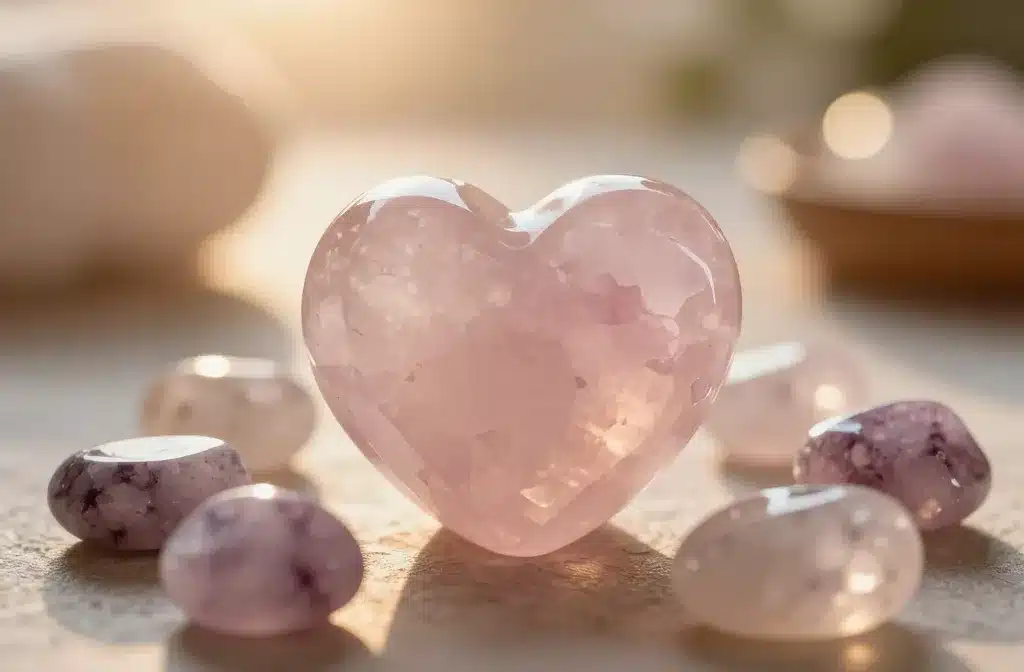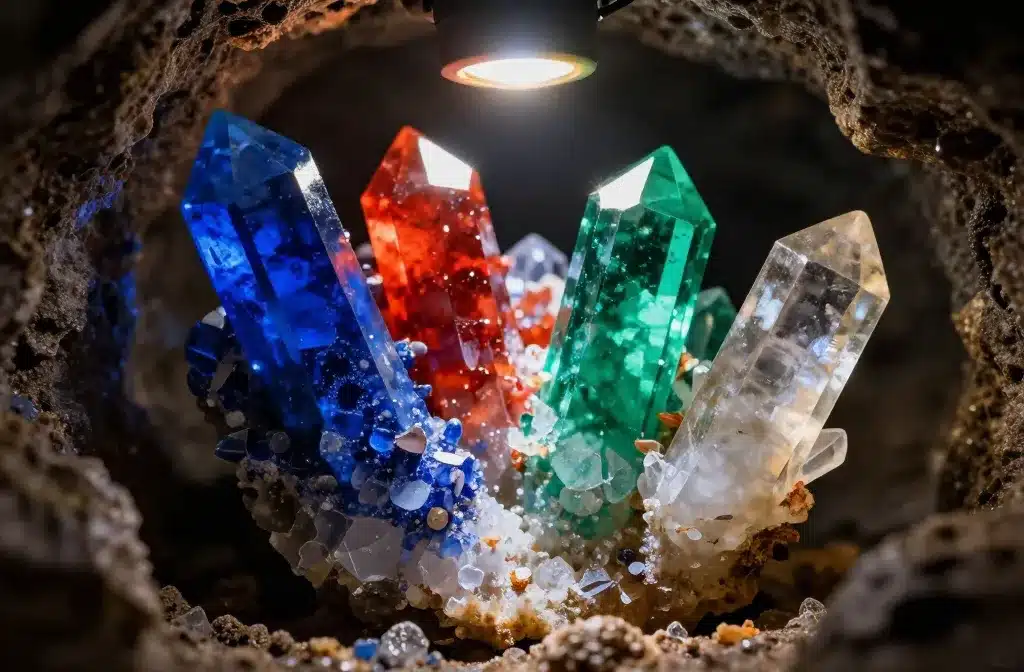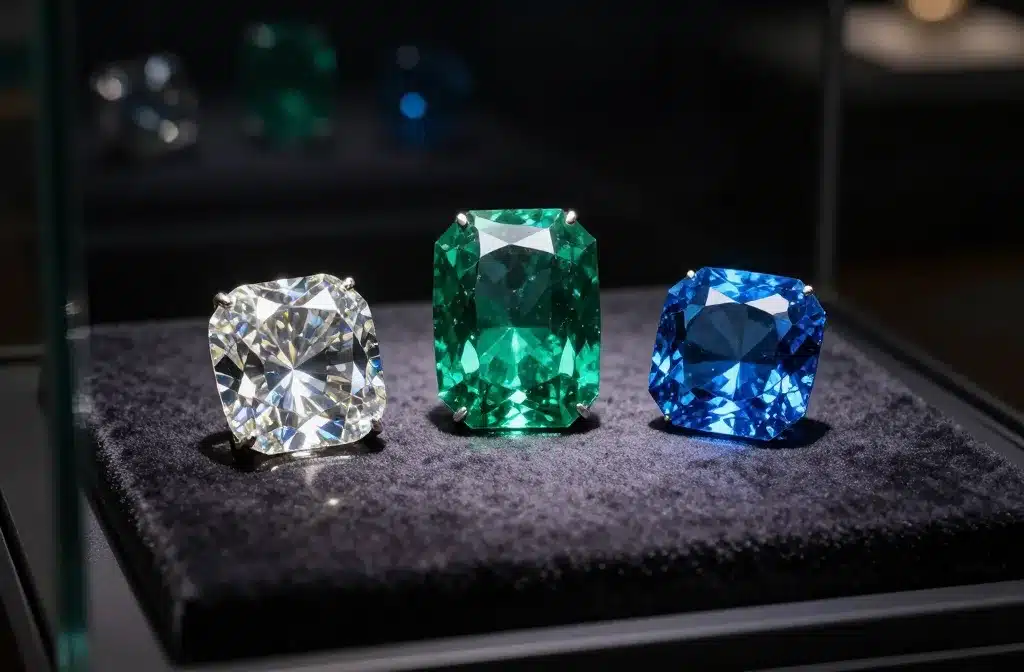
Some gemstones carry a hush with them. You lean closer to a display case and realize you’re looking at a fragment of Earth’s deep time—crystallized pressure, heat, and chance. The best museums curate these moments, gathering stones that shift how we think about color, rarity, and what counts as “precious.”
In the pages below, you’ll meet celebrated minerals elevated by size, clarity, or history. You’ll learn what separates a fine stone from a museum piece, why certain varieties add zeros to their price tags, and how to recognize the traits curators prize. Expect practical insight too: identification tips, care considerations, and how a collector might approach similar—if smaller—specimens.
We’ll move from classic treasures like diamond and emerald to modern stars such as tanzanite and paraíba tourmaline, with a few sleepers that quietly captivate connoisseurs. By the end, you’ll see why museum-quality gems feel different, even through glass.
And if a visit inspires your own collection, keep an eye out for related guides on Gemstone Identification, Gemstone Value Guide, and Gemstone Care for deeper study.
What Makes a Gem “Museum-Quality”
Size alone isn’t enough. Museums aim for stones that tell a complete story—scientific, aesthetic, and cultural. The recipe varies by species, but a few constants appear:
- Exceptional crystal quality: Eye-clean clarity or fascinating, diagnostic inclusions. Either can be prized when they’re archetypal for the species.
- Commanding color: Saturation that looks rich even under low light, with even distribution and minimal zoning.
- Notable size or rarity: A carat weight that’s rarely seen for that variety, or a color form that’s scarcely found.
- Provenance and story: Famous mines, historical ownership, or scientific significance add weight.
- Cut and presentation: Precision faceting or an uncut crystal that shows perfect morphology—both qualify when they reveal the gem’s character.
Value follows these traits, but curators also prize educational power: a specimen that teaches viewers about formation, chemistry, or the arc of gem history.
Diamonds That Redefine Sparkle
Diamond’s reputation can overshadow its subtleties. In a museum, you often see them distilled to essentials: colorless stones with icy fire, rare fancy colors, and striking crystals in octahedral or dodecahedral forms.
- Appearance and color: Top colorless diamonds (D–F) flash white light with clean, high-contrast scintillation. Fancy colors—vivid pinks, blues, canary yellows—owe their hues to defects or trace elements (boron for blue, plastic deformation for many pinks).
- Formation and durability: Diamonds grow deep in the mantle and reach the surface via kimberlite. At Mohs 10, they’re the hardest known natural material, but cleavage planes mean they can still chip.
- Value factors: Beyond the 4Cs, color rarity dominates. Pure, strong saturation in fancy pink or blue is museum territory. Natural color origin is crucial; lab-grown and treated stones are common and must be disclosed.
- Identification tip: Look for sharp facet junctions, adamantine luster, and intense return of light. Professional tools detect fluorescence patterns and strain indicative of natural growth.
Collectors can’t emulate giant museum diamonds easily, but a well-cut 0.50–1.00 ct stone with lively sparkle and documented origin still captures that magic. For more on durability, see Gemstone Hardness.
Emeralds with Lush, Gardened Hearts
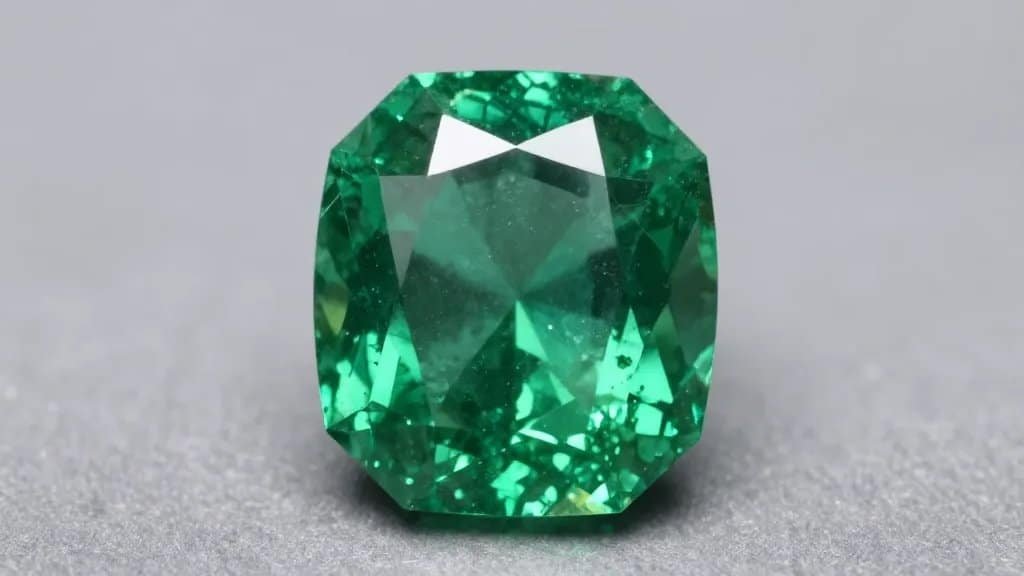
Fine emeralds glow like they’re lit from within. Colombia’s Muzo and Chivor districts produce that archetypal green: not too blue, not too yellow, with velvety depth. Zambia adds a slightly cooler tone and notable clarity. Brazil and Ethiopia offer exciting finds as well.
- Color and inclusions: The ideal is a vibrant, medium-dark green with even color. Most emeralds carry a “jardin” of inclusions—three-phase pockets, growth tubes, healed fractures—which add personality and can confirm natural origin.
- Mohs hardness and care: At 7.5–8, emerald is hard but brittle due to inclusions and fissures. Most are oil-filled to reduce visible fractures. Clean gently with warm, soapy water—skip ultrasonic and steam.
- Treatments and value: Oil and resin treatments are common; untreated stones with strong color command premiums. Museums favor stones with minimal intervention or historically documented treatments.
- Buying advice: Choose color first, then clarity and cut. Seek laboratories that specify treatment type and degree. For jewelry, protective settings like bezels are smart.
Museum-quality emeralds often pair old-mine pedigree with mesmerizing glow. If you’re exploring related topics, compare how emerald stacks up in Gemstone Comparisons or explore gemstone cuts that flatter included stones in Gemstone Cuts.
Sapphires in Every Shade of Sky and Fire
Corundum’s breadth keeps museums busy: cornflower-blue Kashmir, electric Ceylon hues, Burmese royal blues, and fancy colors including pink, orange, and padparadscha—the ethereal salmon-lotus blend that turns collectors poetic.
- Color and optics: Blue sapphires range from silky, velvety blues (from tiny rutile needles scattering light) to crystal-clear cobalt tones. Padparadscha should balance pink and orange delicately—too much of either and it slips into sapphire “with modifiers.”
- Formation and durability: Mohs 9, tough, and versatile for daily wear. Metamorphic versus magmatic origins can influence inclusion patterns and trace-element chemistry.
- Treatments: Heat is ubiquitous and accepted when disclosed. Diffusion treatments add color near the surface and affect value significantly. Unheated stones with premium color are museum darlings.
- Star sapphires: Asterism from aligned rutile creates a six-rayed star under a single light. Large, centered, sharp stars over saturated body color are showstoppers.
For jewelry, sapphire’s durability suits rings and bracelets. For education, a suite showing the rainbow of corundum makes a compelling exhibit and a great study set for Gemstone Colors.
Rubies that Burn from Within
At their best, rubies feel alive—fluorescent red that seems to push past the facet edges. Myanmar’s Mogok region yielded “pigeon’s blood” tones: a pure, rich red with a slight blue undertone. Mozambique has produced important rivals in recent decades.
- Color and fluorescence: Chromium is the chromophore, creating an inner glow under daylight and strong red fluorescence under UV. Iron dampens fluorescence, so rubies from different origins appear subtly different.
- Hardness and longevity: Mohs 9 and tough. Perfect for rings. Fine stones are commonly heat-treated; unheated rubies with prime color are exceedingly rare and demand top prices.
- Inclusions and ID: Silk (rutile) and fingerprint inclusions are common. Microscopic features help gemologists determine origin and treatment status.
In a museum, a well-proportioned, medium-size ruby with searing red often beats a larger, duller stone. If you’re shopping, prioritize hue and brightness in natural light, and request a lab report for high-value pieces. For broader context, see Precious Gemstones and Gemstone Buying Guide.
Green Legends: Jadeite and the Royal Glow
Jade, especially Burmese jadeite, belongs in the sculpture hall as much as in the gem room. “Imperial” jadeite shows a saturated, even, bright green that looks wet under polish—glossy, almost gelatinous translucency that seems to hold light.
- Structure and feel: Jadeite is a tough interlocking aggregate, not a single crystal like most gems. That structure gives it extraordinary toughness, ideal for carvings and bangles.
- Value factors: Color uniformity, translucency (not just transparency), and texture (fine to coarse grain) dominate. Museum-quality pieces combine intense color with near-flawless texture and minimal mottling.
- Treatments to know: “A jade” is natural with waxing only; “B jade” has been bleached and polymer-impregnated; “C jade” is dyed. Museums showcase A jade, often with historical provenance.
- Care: Avoid harsh chemicals and extreme temperature changes. Clean gently and store separately to prevent surface scratches to the wax luster.
Jade’s cultural history—from Qing court jewels to modern master carvers—adds narrative power that curators cherish. For history-focused readers, explore Gemstone History and Gemstone Myths for stories behind revered materials.
Opal: Captured Lightning and Rainbows
Stand in front of a top Australian black opal and time slips. Patches of electric red, piercing green, and deep blue ignite across a dark body tone. The color play isn’t dye; it’s light diffracting through microscopic silica spheres arranged in a grid.
- Varieties and appearance: Black opal (Lightning Ridge) displays the strongest play-of-color due to dark body tone. Crystal opal is transparent to translucent, light opal has pale body color, and boulder opal shows color against host ironstone.
- Value notes: Pattern matters—harlequin, rolling flash, broad flash, and rare ribbon patterns are prized. Red is rarer and carries a premium, especially when large patches are visible from multiple angles.
- Durability: Mohs ~5.5–6.5 with relatively low toughness; it’s hydrous, so avoid extreme dryness and heat. Solid opals outlast doublets/triplets, which layer thin opal with backing and caps.
- Care and wear: Choose protective settings and avoid sudden temperature changes. Wipe with a soft cloth; no ultrasonic or steam.
Museum opals often show large, face-up color fields that stay bright as you move—ideal for exhibits where viewers shift around the case.
Paraíba Tourmaline and the Electric Blues
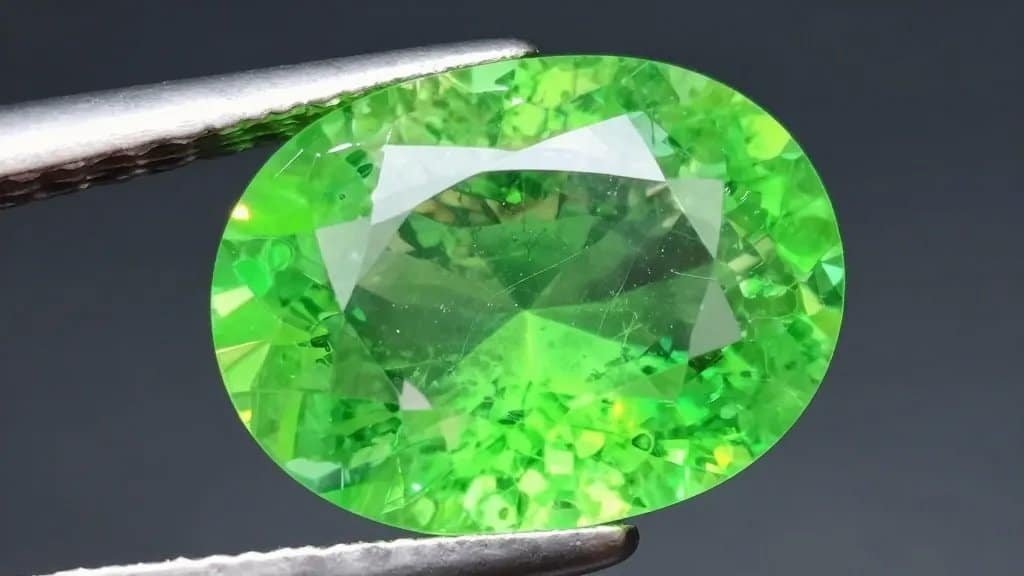
Some gems feel almost neon. Paraíba tourmaline, colored by copper (often with manganese), glows in vivid blue to greenish-blue tones that look lit from within. The Brazilian original mines in Paraíba and Rio Grande do Norte changed the tourmaline market; today, Nigeria and Mozambique yield top-quality copper-bearing stones too.
- Appearance: The best stones exhibit “glow”—intense saturation with a unique, slightly luminescent quality under daylight.
- Value drivers: Color purity and brightness beat size. Even tiny gems can be museum-worthy if they have that searing electric color. Certified copper content and origin impact price.
- Durability: Tourmaline sits at Mohs 7–7.5 with fair toughness—fine for rings with care.
- Treatments: Heat is common; disclosure matters. Watch for misleading “paraíba color” claims on non-cuprian stones.
If you’re comparing vivid hues across species, a paraíba beside a fine sapphire clarifies how different chromophores sculpt light—an excellent exercise for Gemstone Comparisons.
Alexandrite: Color-Change Royalty
Alexandrite’s party trick never gets old: green to bluish-green in daylight, raspberry to purplish-red under incandescent light. The cause is chromium, and the best Russian Urals stones set the benchmark. Brazil, Sri Lanka, and Africa now supply collectible material.
- Color change quality: Museums seek stones with strong, distinct change and attractive hues on both sides. A muted or muddy state weakens the effect.
- Rarity and value: Clean stones over 2–3 carats with dramatic change are scarce and highly valued. Cut is optimized to balance both color states.
- Durability: Chrysoberyl is Mohs 8.5 with excellent toughness—very wearable.
- Identification: Beware synthetics and simulants. Diagnostic inclusions, refractive indices, and spectroscopy help confirm natural origin.
Few gemstones prompt a museum crowd to switch on and off a light so many times. That shared grin is part of alexandrite’s charm.
Tanzanite and the Symphony of Pleochroism
Tanzanite, found in only one region of Tanzania, sits at the crossroads of rarity and sheer beauty. Properly oriented, a fine stone shows blue, violet, and hints of reddish or burgundy tones depending on lighting and viewing direction.
- Appearance and cut: Lapidaries aim the table to emphasize the most desirable mix—typically a rich blue-violet. Pleochroism means slight tilts in the stone can shift the mood dramatically.
- Treatments and origin: Heat treatment is standard to remove brownish tones and reveal blue-violet. Untreated stones exist but are subtle and rare.
- Durability: Mohs 6–7, with sensitivity to sudden temperature changes and abrasion. Suits pendants and earrings better than heavy-wear rings unless well-protected.
Museum pieces spotlight the species’ personality: a sizeable, well-oriented gem that flashes multiple identities as you move.
Spinel, Garnet, and Other Connoisseur Favorites
Not every museum hero is a household name. Some species live in the shadow of their famous cousins yet offer astonishing beauty.
- Spinel: Once mistaken for ruby (the Black Prince’s “ruby” is spinel), it now stands proud. Top reds rival ruby, cobalt blues echo sapphire, and hot pinks pop. Mohs 8 with excellent luster, often untreated. Bright, clean crystals from Burma, Vietnam, and Tanzania make superb exhibits.
- Garnet: A family of personalities—demantoid’s diamond-like fire (helped by high dispersion), tsavorite’s vitamin-green sparkle, and color-change garnet that toggles between green and red. Andradite’s horsetail inclusions in Russian demantoid are textbook identifiers, beloved by curators.
- Aquamarine: Large, clean beryls in cool blue with glassy luster. Pegmatites yield museum-scale crystals; fine Santa Maria hues are especially prized. Mohs 7.5–8 and quite wearable.
- Peridot: From Pakistan’s high-altitude Kashmir region and Arizona’s San Carlos Reservation, large, limpid peridots glow olive-lime with silky double refraction at the facet edges. Mohs 6.5–7; best worn with care.
These “collector gemstones” often remain attainable at small sizes, making them excellent stepping stones for building a display-worthy personal suite. For curation tips, see Collector Gemstones.
Uncut Crystals and Mineral Masterpieces
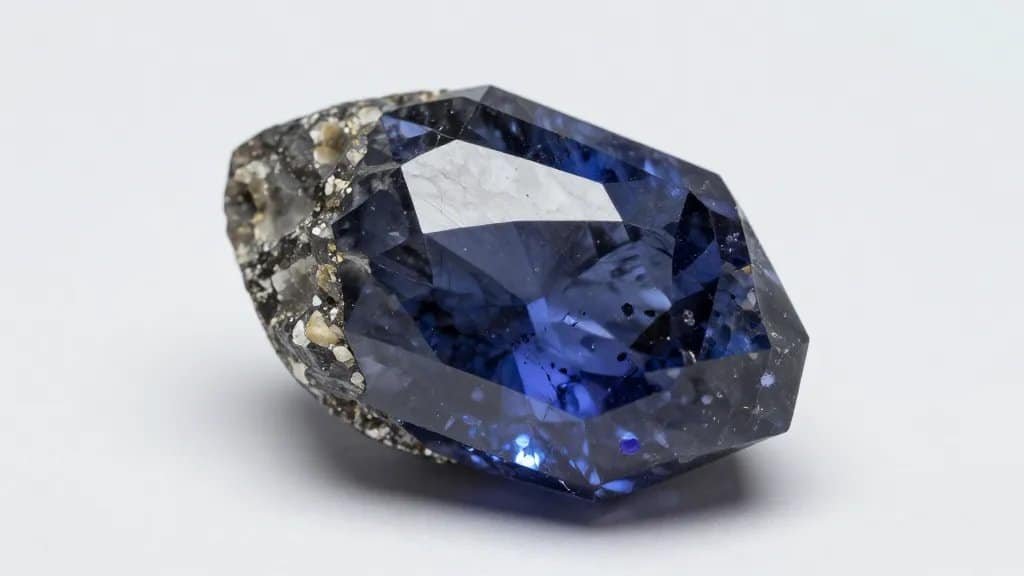
Museum-quality doesn’t always mean faceted. A flawless crystal perched on its matrix can be more instructive than a polished gem. Think of a sharp, transparent aquamarine prism resting in feldspar, or a textbook tourmaline “watermelon” slice showing pink core and green rim.
- Why crystals matter: They teach morphology—how a mineral prefers to grow—and highlight geological context. For education, they’re invaluable.
- Value considerations: Aesthetic balance, damage-free terminations, color saturation, and rarity of the habit guide prices. A small, perfect crystal can outshine a larger battered one.
- Care and display: Keep away from direct sunlight for color-sensitive species and handle with gloves. Dust gently; many crystals have natural parting or cleavage.
For students of Gemstone Identification, uncut specimens reveal diagnostically important clues you’ll never see in a faceted stone.
Real vs. Fake: How Museums and Buyers Stay Honest
High stakes invite clever fakes. Museums rely on labs armed with spectroscopy, microscopy, and advanced imaging. As a consumer or private collector, you don’t need a lab in your pocket, but you can be savvy:
- Documentation: For major purchases, request a report from reputable labs. Origin and treatment notes matter greatly for emerald, ruby, sapphire, and paraíba tourmaline.
- Red flags: Prices far below market, overly uniform color in species known for zoning, and vague treatment disclosures.
- Common mislabels: “Paraíba color” tourmaline without copper; dyed jade sold as natural; diffused sapphire presented as unheated; synthetic alexandrite substituting quartz or glass.
- Learn the look: Spend time studying reference stones and reputable museum exhibits. Your eye improves faster than you think.
When in doubt, step back. The best collections are built on patience and paperwork.
Caring for Legendary Stones at Home
A museum’s climate control is hard to replicate, but thoughtful habits go far:
- Cleaning: Most gems prefer lukewarm water, mild soap, and a soft brush. Avoid ultrasonic and steam for emerald, opal, tanzanite, and fracture-filled stones.
- Storage: Separate compartments or soft pouches prevent harder stones like sapphire from scratching softer neighbors like opal.
- Wear strategy: Reserve fragile or cleavage-prone gems for necklaces and earrings. Choose protective settings for rings.
- Maintenance: Have jewelers check prongs and bezels annually, especially on heirloom or high-value pieces.
For a deeper dive, bookmark Gemstone Care and Gemstone Jewelry to match durability with daily life.
How Museums Curate: Beyond Beauty
Curators often think in narratives. A case might trace a gem from mine to masterpiece: rough crystal, polished gem, finished jewel. Another might compare colors within a species or show inclusions that define origin. Educational labels explain chromophores, formation environments, and trade history.
As a private collector, you can borrow the approach. Build mini-stories: a trio of blues (sapphire, paraíba tourmaline, aquamarine), an inclusion suite (emerald jardin, demantoid horsetails, rutile silk in sapphire), or a single-species rainbow (garnet family). Such collections feel cohesive and teach you as they grow.
FAQ
Which museum-quality gemstone is most durable for daily wear?
Diamond and corundum (sapphire, ruby) lead for durability. Chrysoberyl (including alexandrite) also performs well. Emerald, opal, and tanzanite need more care, especially in rings.
Are untreated stones always more valuable?
Not always, but often for classic species. Unheated ruby and sapphire, and minimally treated emerald, usually command higher prices when color and clarity are top-tier.
How can I tell if a gem’s color is natural?
Some treatments leave clues, but reliable answers come from lab testing. Ask for reports on high-value stones and learn common treatment signatures for your target species.
What’s a good starter “museum piece” on a budget?
Look for fine spinel, tsavorite, demantoid under a carat, or a standout opal cabochon. Prioritize color and cutting over size.
Do museum gems ever appear in jewelry exhibits?
Yes. Many museums display historic jewels to illustrate craftsmanship and design eras alongside loose stones and crystals.
Is origin really that important?
For some species, yes. Kashmir sapphire, Burmese ruby, Colombian emerald, and Brazilian paraíba can add significant value when supported by lab evidence.
Can lab-grown stones be museum-quality?
Museums may exhibit them for scientific and educational reasons, but “museum-quality” in the collectible sense usually refers to exceptional natural stones.
Final Thoughts
Museum-quality gemstones distill the drama of geology and human craft into moments of color and light you can’t forget. Whether you’re standing before a glowing emerald or a neon-blue tourmaline, the traits that define greatness—saturation, structure, rarity, and story—are the same ones that can guide your own collecting, care, and curiosity. Keep learning, trust your eyes, and let remarkable stones teach you what excellence looks like.

Christian Grey is the creator of GemMeaning, where he shares simple insights about crystals, gemstone meanings, and spiritual guidance. His focus is on making complex ideas easy to understand and practical for everyday life.