Pick up a smooth pebble from a riverbank and hold it in sunlight. You’ll see soft glints in the polish nature started and time refined. Most people drop the pebble and keep walking. Gem lovers pause, because they know that with a little knowledge and the right touch, that “ordinary” stone can become a striking object—bookends, candle holders, tabletops, even delicate jewelry.
This article shares how common rocks get transformed into beautiful decor, why some varieties shine more than others, and what to look for if you’re collecting or buying pieces for your home. You’ll learn about color, texture, hardness, and durability, plus practical tips for care, authenticity, and value.
We’ll move from river-tumbled pebbles to geode slices that glow like stained glass. Along the way, you’ll find the language, materials, and small techniques that artisans use—insights that help you appreciate the craft and choose pieces that truly belong in your space.
Why Ordinary Rocks Make Extraordinary Decor
Rocks are time capsules. Each surface pattern, band, and crystal pocket records pressure, heat, fluid chemistry, and slow change. When shaped and polished, those subtle records become art. Decor made from common stones carries warmth and permanence—subtle compared to flashy precious gems, but no less intriguing.
There’s also durability to consider. Many decorative rocks sit in the 5–7 range on the Mohs scale, which is the practical zone for household objects that endure touch, dusting, and the occasional coffee mug. Quartz-based stones (agate, jasper) polish to a high luster and resist scratches from daily handling, while softer stones like calcite and soapstone bring a velvety matte look that feels handcrafted and calming.
Beyond the physical, people respond to meaning. Banding in agate suggests patience. The starry flecks of aventurine or basalt hint at night skies. Even an unassuming river stone, when waxed or oiled, can hold memory—of a hike, a coastline, a season—turning decor into a personal story rather than a showroom display.
Stones That Shine: Common Varieties Perfect for Home Pieces
You don’t need museum-grade minerals to create standout decor. Here are approachable, widely available stones that polish beautifully and hold up well.
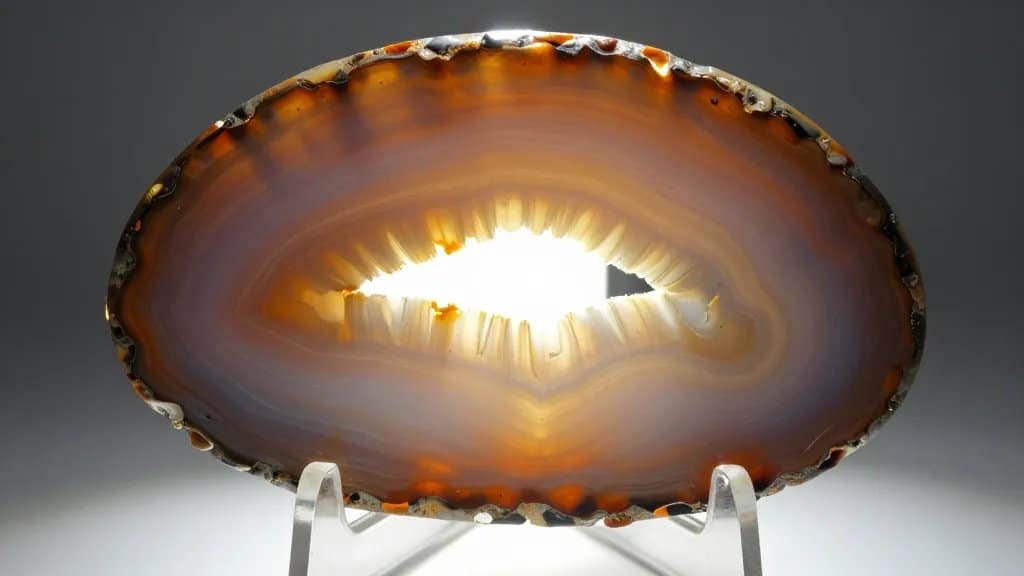
- Agate (Mohs ~7): A type of chalcedony with banded layers. Colors range from milky gray and caramel to mossy green and plum. Sliced thin, agate glows near a window or lamp; thicker slabs make sturdy coasters and trays. Natural agate often shows gentle, earthy tones. Intense neon hues usually signal dyeing.
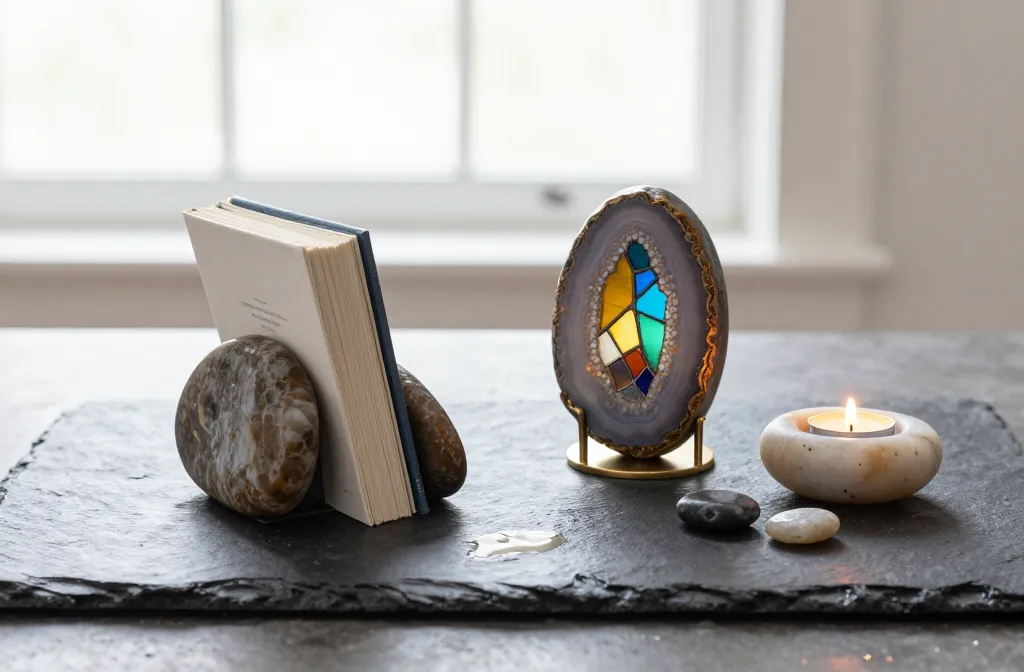
- Jasper (Mohs ~6.5–7): Opaque microcrystalline quartz with patterns that look like landscapes—picture jasper, brecciated jasper, red jasper. It takes a strong polish with a softer, satiny reflection compared to glassy agate. Excellent for bookends, mortars, and small sculptures.
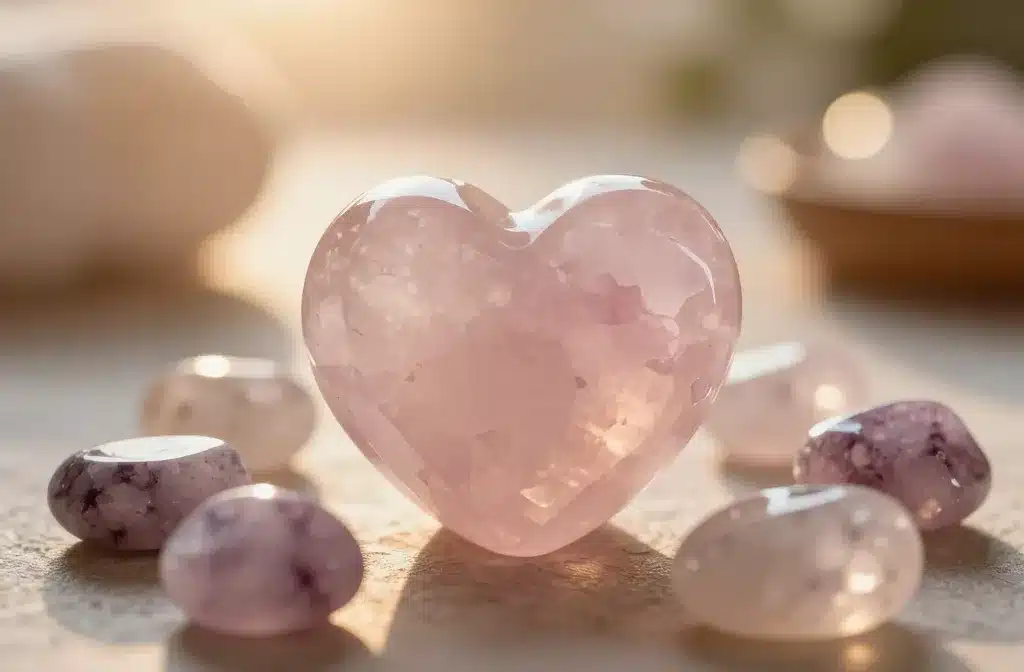
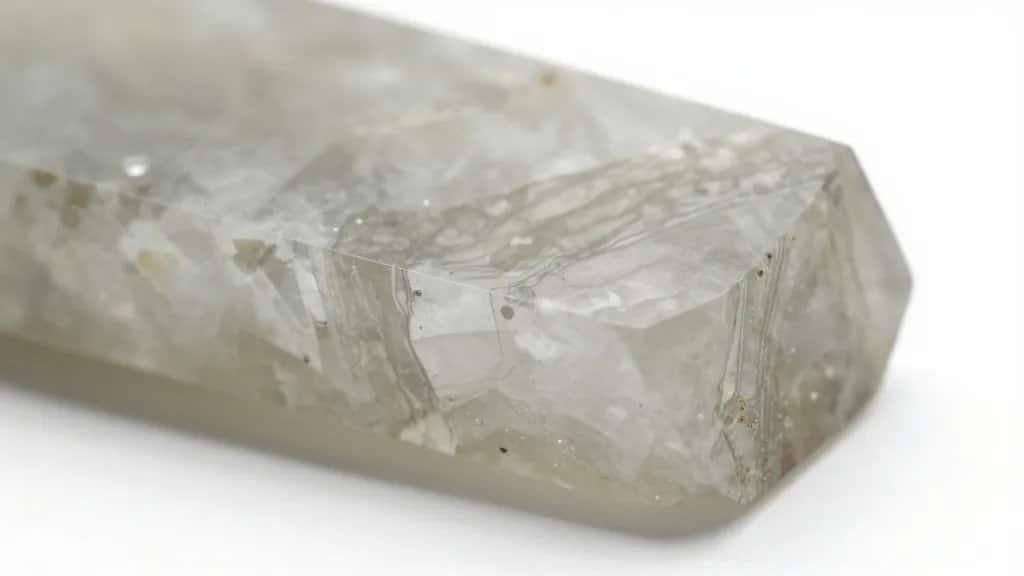
- Quartz (Mohs 7): Clear quartz points, rose quartz chunks, and smoky quartz clusters bring sparkle and texture. Tumbled quartz can become paperweights and drawer pulls; larger clusters add dramatic, crystalline contrast on shelves.
- Aventurine (Mohs ~6.5–7): Quartz with tiny mica or fuchsite inclusions that add a soft metallic shimmer (aventurescence). Commonly green, but also peach or gray. Lovely for candle holders and small bowls—subtle, elegant shine under ambient light.
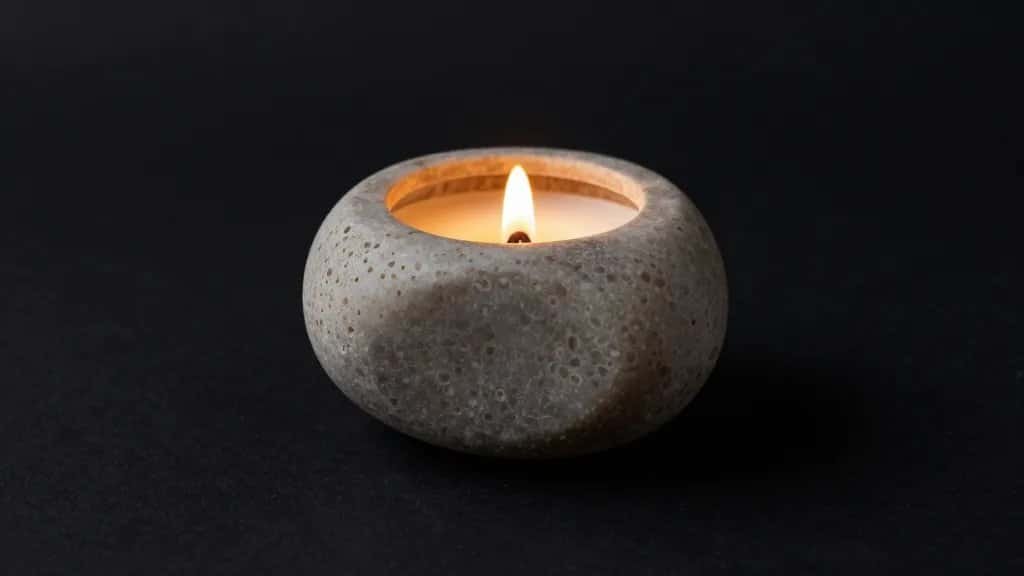
- Soapstone (Mohs ~1–2): Soft and carvable, ranging from deep charcoal to greenish-gray. It’s favored for candle holders, incense burners, and minimalist sculptures. It feels warm and velvety, and develops a gentle patina with oiling.
- Basalt and River Stones (Mohs ~6): Dark, dense, and durable. Basalt’s microbubbled texture whispers industrial chic. Smooth river stones, naturally tumbled, make zen garden accents, cabinet knobs, or stacked sculptures.
- Geodes and Druzy (Mohs ~6.5–7 on quartz interiors): Rough on the outside, sparkling crystals within. Halved geodes form bookends; thin geode slices lend an organic glam to suncatchers and tabletop insets. Natural hues are whites, grays, muted purples, and smoky tones.
- Marble and Travertine (Mohs ~3–4): Softer than quartz stones but classically elegant. Veined marble trays, spheres, and lamp bases feel cool and timeless. They scratch and etch more easily, so they’re perfect for low-traffic decorative roles.
How Rocks Become Decor: From Field to Finish
Transforming a common stone into a refined object follows a sequence that balances geology and craftsmanship.
- Selecting Rough: Artisans look for sound material—free of deep cracks or crumbly zones. Pattern, color contrast, and grain direction matter. For agate and jasper, a raw nodule is often slabbed to reveal interior banding.
- Cutting: A diamond saw slices slabs or shapes. The cut determines how bands, eyes, or mossy inclusions will display. A perpendicular cut across agate bands reveals concentric rings; a parallel cut shows flowing stripes.
- Shaping and Grinding: Carbide or diamond wheels refine edges and sculpt curves. The artisan works through progressively finer grits to remove scratches. This stage reveals potential: some stones brighten dramatically as the surface smooths.
- Polishing: Polishes vary by mineral. Quartz-rich stones respond to cerium oxide or tin oxide. Softer stones like calcite appreciate a lighter touch. A good polish should create depth and clarity without orange-peel texture.
- Stabilizing and Backing: Some porous materials (like certain jaspers or travertines) may be resin-stabilized to prevent crumbling. Coasters and thin slices often receive a cork, felt, or acrylic backing to protect furniture and absorb impact.
- Finishing Treatments: Waxes, oils, or sealers deepen color on porous stones (soapstone, travertine). This isn’t the same as dyeing; it’s closer to conditioning wood. On quartz stones, coatings are usually unnecessary beyond a clean, dry polish.
The key is restraint. A skilled lapidary reveals what’s already there, rather than masking it. If the final piece looks over-glossed, oddly vivid, or has trapped bubbles in a shiny surface, you might be seeing heavy coatings or color enhancements.
Color, Pattern, and Light: Getting the Most from Stones at Home
Decor works when stone and setting play to each other’s strengths.
- Transparency and Backlighting: Thin agate and some jaspers transmit light. Place a slice near a window or behind a warm LED strip and watch banding and plume-like inclusions bloom to life. Opaque stones, by contrast, prefer top lighting that skims to accentuate texture.
- Color Harmony: Gray-and-caramel agate warms minimalist whites. Green aventurine and soft black basalt pair with wood and brass. Rose quartz softens industrial interiors with a whisper of pink, especially in frosted finishes.
- Texture Contrast: Mix a high-polish slice with a raw-edge geode. The dialogue between glossy and granular keeps the eye engaged. For tabletops, matte-finish soapstone calms the scene, while a single polished quartz cluster adds sparkle like a punctuation mark.
- Scale and Weight: Stones have presence. Bookends should feel substantial; coasters need a slim, balanced profile. If a piece seems too light for its size, question the material or construction—it could be a composite or resin copy.
Durability, Hardness, and Everyday Use
Hardness isn’t everything, but it sets expectations. Quartz-family stones (agate, jasper, quartz) at Mohs ~7 are scratch-resistant for coasters, trays, and knobs. Marble at Mohs ~3 will etch if you rest a citrus drink on it; better for vases or sculptural accents. Soapstone, though very soft, is heat-tolerant and forgiving—ideal for candle holders or incense burners where a soft, lived-in patina is welcome.
For pieces you touch daily, prioritize tight grain and solid construction. Look for smooth, chip-free edges on coasters and trivets. If a polished face already shows spidered cracks, it may worsen with use. For mounted wall slices, confirm the hardware: discreet acrylic standoffs or brackets distribute weight and protect the stone from stress.
If you want to compare materials by toughness and care needs across jewelry and decor, consult a broader overview such as Gemstone Hardness or Gemstone Care for maintenance habits that translate well to household settings.
Real vs. Enhanced: What You’re Actually Buying
Enhancements are common and not inherently bad. The goal is honesty and stability.
- Dyeing: Bright blues, hot pinks, and electric greens in agate slices are typically dyed. Natural agate leans to smoke, cream, browns, and soft pastels. Dyed pieces can be fun—just keep them away from prolonged sun and alcohol-based cleaners to avoid fading or bleeding.
- Staining and Oiling: Soapstone is often oiled to darken and even its tone; travertine may be sealed. This is acceptable and often desirable. Ask what was used, so you can recondition later.
- Stabilization: Some porous jaspers, turquoise-like materials, or crumbly agates are impregnated with resin. A stabilized piece should still look natural, not plastic-slick. The benefit is durability and a cleaner polish.
- Composites: “Reconstituted” stone blends chips with resin, sometimes with dyes or metallic flecks. These can be lightweight and uniform. If you want true stone character—random banding, natural pits—choose solid-slab pieces from known varieties.
Trustworthy sellers will label treatments. If you’re uncertain, simple identification tips from Gemstone Identification and Gemstone Comparisons can help you decode common materials and spot telltale patterns.
Buying Advice: Value, Quality, and Sizing
Value in decorative stone isn’t about rarity alone; it’s about presence, craft, and stability.
- Cut Quality: Edges should be even and comfortable to the touch. Surfaces free of flat spots or swirl marks indicate careful polishing. Bookend pairs should be well-matched in height, color, and pattern orientation.
- Color and Pattern: Natural palettes age well. Distinct banding, scenic jaspers, or sparkling druzies command higher prices. Large, clean agate slices with strong translucency sit at the premium end for decor.
- Hardware and Backing: Protective felt, cork, or rubber feet are small signs of care. For geode bookends, hidden lead or metal weights add stability—ask the seller if the pair feels too light.
- Dimensions and Weight: For shelves and desks, measure depth and check weight limits. A quartz cluster that looks modest in a photo can weigh several kilograms. Don’t assume; confirm.
- Origin and Story: Pieces from known locales—Brazilian agate, Madagascar rose quartz, Indian green aventurine—often have consistent quality. Artisanal makers may note the quarry or river source, adding both transparency and charm.
For gift planning and special occasions, cross-reference Gemstone Gifts or Gemstone Jewelry if you want companion pieces—coasters for the home and a small pendant of the same material, for example.
Care and Cleaning: Keeping the Finish Gorgeous
Most decorative stones prefer simple care:
- Dust Gently: Use a soft, dry cloth or a microfiber duster. For textured druzies or geodes, a gentle puff from a hand blower removes grit without snagging crystals.
- Mild Soap Only: For fingerprints, a damp cloth with a drop of mild dish soap works. Avoid vinegar, bleach, or acidic cleaners—especially on marble, travertine, and calcite.
- Avoid Heat Shock: Don’t place hot mugs on thin agate slices unless they’re designed as coasters with a supportive backing. Sudden temperature swings can stress stones with internal fractures.
- Recondition Porous Stones: Soapstone appreciates periodic mineral oil to even its tone. Wipe off excess; let it cure before use. Reseal travertine if water stops beading on the surface.
- Sunlight and Dyes: Dyed pieces can fade; place them out of direct, intense sun. Natural stones are more stable, though some amethyst may pale over years in strong light.
These habits mirror guidance you’ll find in broader Gemstone Care resources—and they keep surfaces crisp without overcleaning.
Easy Projects: Turning Finds into Functional Beauty
If you enjoy hands-on work, you can elevate humble stones without a full workshop.
- River Stone Paperweights: Choose a smooth, palm-sized pebble. Wash, dry, and apply a thin coat of beeswax or a food-safe mineral oil to deepen color. Buff after a day. It becomes a tactile accent that invites touch.
- Simple Candle Bases: Arrange three to five flattish stones in a shallow dish and nestle a votive among them. The stones diffuse light softly and protect surfaces from heat.
- Drawer Pulls: Epoxy small, uniform pebbles onto metal knob bases. Make sure the contact surfaces are clean and slightly roughened for adhesion. The result feels organic and custom.
- Mini Zen Stack: Stack two or three graduated pebbles with a dab of clear adhesive inside a small tray filled with sand. It’s calm, balanced, and takes five minutes.
If you want to explore more ambitious pieces like slicing agate or shaping jasper, look for local lapidary clubs. You’ll learn safe sawing and polishing, as well as how gemstone cuts translate from jewelry to decor. For inspiration on shapes and facets that play with light, browse Gemstone Cuts and Gemstone Shapes.
Symbolism and Mood: Choosing Stones with Meaning
While decor is primarily visual, it’s also emotional. Choosing stones that resonate with your space can be as rewarding as selecting a paint color.
- Agate: Often associated with steadiness and protection. The quiet rhythm of its bands suits study corners and reading nooks.
- Rose Quartz: Soft pink that suggests warmth and kindness. Works well in bedrooms or spaces where you want a calming tone.
- Green Aventurine: Linked to growth and optimism. Pairs nicely with plants; its shimmer echoes dew on leaves.
- Basalt: Grounding and elemental. Dark, matte pieces bring balance to bright rooms and tie together mixed metals.
- Marble: Poise and tradition. Veining adds movement without noise, perfect for classic or minimalist settings.
You don’t have to subscribe to metaphysical beliefs to appreciate these associations. They’re like color psychology—gentle cues that shape how a room feels.
Common Mistakes to Avoid
- Overlooking Scale: A delicate slice gets lost on a massive coffee table; a boulder overwhelms a compact shelf. Match the visual weight to the setting.
- Confusing Dye with Natural Color: If the hue looks like candy, ask about treatments. Dyed pieces can still be lovely—just buy them knowingly.
- Ignoring Stability: Tall, narrow crystal clusters tip easily. For bookends, ensure bases are flat and heavy. Add discreet felt pads for grip.
- Using Harsh Cleaners: One pass with vinegar can etch marble. Keep a mild-soap habit and your stones will thank you.
- Mixing Too Many Statements: Let one or two stone pieces lead. Supporting textures—wood, linen, matte ceramics—make them shine more.
FAQs
Are brightly colored agate coasters natural or dyed?
Most vivid blues, pinks, and purples are dyed. Natural agate tends toward grays, creams, browns, and subtle pastels. Dyes are common and fine if disclosed; keep them out of strong sun to reduce fading.
Can I use marble or travertine for drink coasters?
You can, but they may etch from acidic drinks. Seal them and wipe spills quickly, or choose quartz-based stones like agate or jasper for better resistance.
How do I tell if a geode bookend is stable enough?
It should feel hefty with a flat, wide base. Quality pairs often have added weight or rubber feet. If it tips easily on a flat surface, look for a broader cut or a heavier pair.
What’s the best finish for soapstone decor?
Unfinished soapstone is pale and chalky. A thin coat of mineral oil or specialized soapstone wax deepens color and evens tone. Reapply as needed when the surface lightens.
Will crystal clusters shed or crumble over time?
Well-formed quartz clusters are sturdy, but the tiny terminating tips can chip. Place them where they won’t be brushed often, and dust with a blower or soft brush rather than wiping.
Is there a simple test to distinguish real stone from resin composites?
Real stone feels cool to the touch and is heavier for its size. Tap two pieces together: stone makes a higher, glassy click; resin sounds dull. Look for natural variation, not perfect repetition.
What size agate slice works best for backlighting?
Slices 3–6 mm thick balance strength and translucency. Thinner pieces glow more but need careful handling and a supportive frame or backing.
Bringing It Home
The beauty of ordinary rocks lies in their honesty—textures you can feel, patterns you can follow with your eyes, and colors that sit comfortably in a lived-in space. Choose stones that suit your room’s light and palette, favor good craftsmanship, and treat each piece with simple care. You’ll find that even a small slice of agate or a smooth river pebble can shift a room’s mood, reminding you every day that nature does quiet luxury better than any catalog ever could.

Christian Grey is the creator of GemMeaning, where he shares simple insights about crystals, gemstone meanings, and spiritual guidance. His focus is on making complex ideas easy to understand and practical for everyday life.