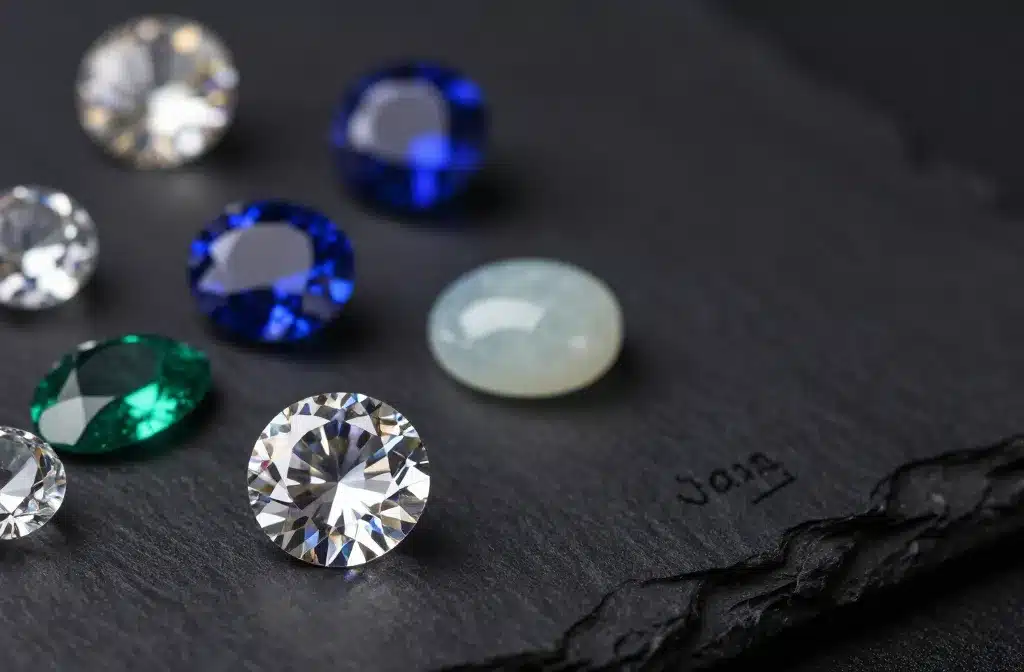
Gemstones have a way of stopping time. One flash of color in a ring or pendant and your mind races: How did the Earth make this? Why does it glow like that? The more you look, the more questions you have.
This article gathers lesser-known truths that even seasoned collectors love to debate. You’ll learn why some diamonds “burn,” how sapphires come in every color but one, and what makes certain stones change color right before your eyes. We’ll also talk durability, treatments, smart buying, and the oddities that separate a keepsake from a costly mistake.
If you enjoy stories where geology meets artistry, you’re in good company. Let’s pull back the curtain on how gems form, how they fool us, and how to appreciate them with a sharper eye—and a little more wonder.
Not All Diamonds Are Forever: Durability Isn’t Just Hardness
Diamonds top the Mohs Hardness Scale at 10, which measures scratch resistance, not overall toughness. A diamond resists scratches better than any natural material, but it can still chip if struck at the right angle along its cleavage planes. Think of it like glass: very hard, but brittle under impact.
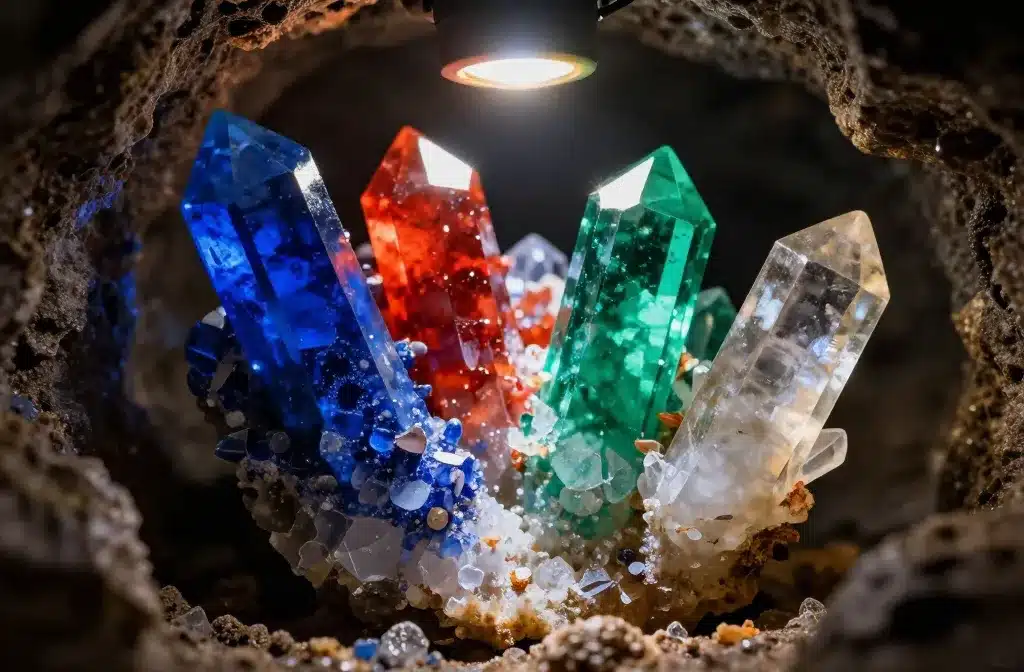
Emeralds rate about 7.5–8 on the Mohs scale, yet they often show internal fractures called “jardins.” Those tiny gardens make emeralds more prone to chipping than you might expect from their hardness alone. On the flip side, jadeite, which sits around 6.5–7, is remarkably tough thanks to its interlocking crystal structure. It handles knocks and bangs better than many harder stones.
Surprising takeaway: hardness and toughness are different qualities. For rings you’ll wear daily, that difference matters. A low-profile sapphire (Mohs 9) often outlasts a high-set diamond or emerald in an active lifestyle.
Sapphires Aren’t Only Blue—And Rubies Are Sapphires, Sort Of
Ruby and sapphire are both corundum. The difference is color: red corundum is ruby; every other color—blue, pink, orange, green, purple, even colorless—is sapphire. The iron and titanium in classic blue sapphire create that deep, velvety hue, while chromium turns corundum red and magically promotes fluorescence in many rubies.
One of the most prized “sapphires” is padparadscha, a rare pinkish-orange like sunset reflected on water. Collectors adore its warm glow and soft radiance. There are also color-change sapphires, shifting from blue to purple under different lighting. If you enjoy sorting stones by hue, explore Gemstone Colors and Gemstone Comparisons for a richer palette perspective.
Value factors differ by color: vivid, saturated blues without gray or brown undertone fetch the highest prices in sapphire, while rubies with a pure, vibrant red—often called “pigeon’s blood”—are exceptionally rare and prized.
Color Change Is Real Magic: Alexandrite and Beyond
A few gems seem to hold two personalities. Alexandrite is famous: green to bluish-green in daylight, red to purplish-red under warm indoor light. That dramatic flip happens because the stone selectively absorbs and transmits different wavelengths depending on the light source. The chromium in alexandrite sets the stage for this trick of physics.
Other stones can play along. Certain garnets shift from teal to raspberry. Some spinels and sapphires display subtler changes. The market pays for drama: the stronger the change and the cleaner the stone, the higher the value. Ask to view color-change gems under multiple lights—daylight, LED, and incandescent—to see the full performance before buying. It’s good practice echoed in any Gemstone Buying Guide.
Nature Prints Its Signature: Inclusions Tell the Story
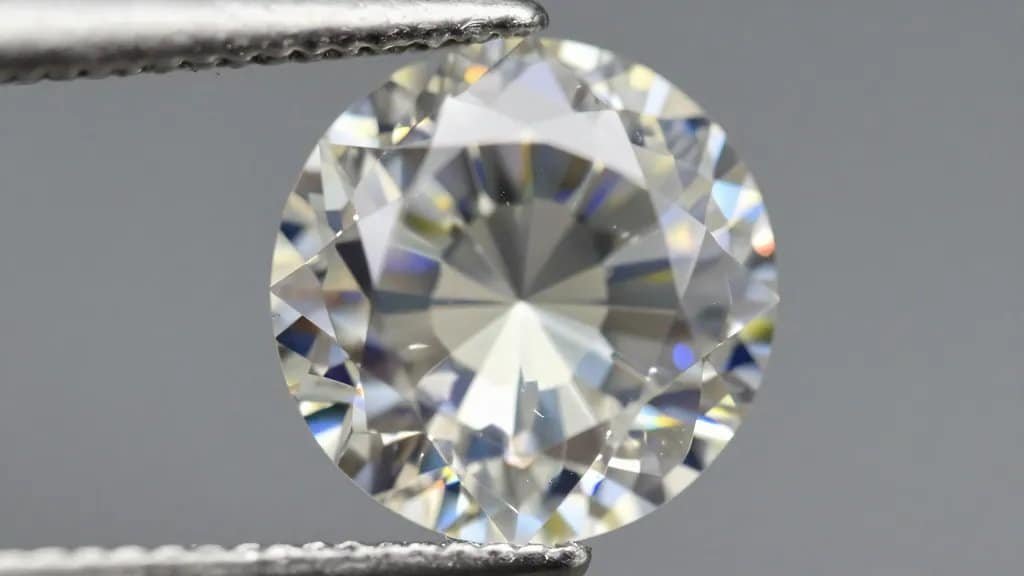
Gem inclusions are time capsules, not defects. Those clouds, needles, and veils formed as the crystal grew, capturing tiny drops of fluid, bits of other minerals, or the lines of its own crystal lattice. To a gemologist, inclusions are a fingerprint. They can reveal geographic origin, confirm natural formation, or expose laboratory growth.
For instance, rutile needles in sapphire create the silky sheen that, in cabochon cut, blooms into a six-rayed star. That phenomenon is called asterism. Emerald’s jardin points to natural formation and often helps separate a real emerald from a too-clean lab-grown stone. Under magnification, a trained eye can distinguish natural gas bubbles in amber from perfectly round bubbles typical of glass imitations. If you’re learning Gemstone Identification, practicing with a loupe or microscope turns mysteries into stories.
One charming surprise: some diamonds hold tiny “H-shape” or “arrowhead” mineral crystals. They’re like punctuation marks written by geologic time.
Heat, Oil, and Light: Treatments You Can’t Always See
Many gems receive treatments to improve color and clarity. Heat treatment of sapphire and ruby is widespread and stable. You won’t usually detect it without lab analysis, but it’s long accepted and should be disclosed. Heat can brighten blue sapphire and dissolve rutile needles, clearing the stone.
Emeralds are commonly oiled. Colorless oils or resins fill surface-reaching fractures to make the stone look cleaner. This is traditional but requires care: avoid ultrasonic cleaners and high heat, which can draw out fillers. Aquamarine, tanzanite, and citrine (often heated amethyst) owe their hues to controlled temperature changes that shift iron oxidation states inside the crystal.
Diffusion treatment—adding color-causing elements to the surface of sapphire—creates intense hues that sit near the surface. Recutting or deep scratches may reveal paler interiors. Glass-filled rubies fill cavities with lead-glass, achieving dramatic clarity but lower durability. These need gentle wear and cautious cleaning.
Smart practice: ask for written disclosure and, for high-value stones, seek reports from recognized labs. A quick look into a Gemstone Value Guide will show how treatment level influences price.
Some Gems Glow, Others Phosphoresce—And a Few Fool UV Lamps
Under ultraviolet light, certain gems fluoresce—emit visible light while excited by UV. Many rubies glow red; some diamonds glow blue, a trait that can either raise or lower value depending on color and market taste. Sodalite, hackmanite, and some fluorites can phosphoresce, meaning they continue glowing briefly after the UV light is switched off.
A surprise: fluorescence doesn’t always prove authenticity. Synthetic rubies can glow, too. However, fluorescence patterns can help separate natural from lab-grown diamonds. HPHT-grown diamonds often show characteristic “cross” or “mottled” patterns under special imaging, while natural stones display more random distributions. UV reactions are a tool, not a verdict, in Gemstone Identification.
Gem Birthplaces: Volcanoes, Seafloors, and the Space Between
Gems come from more places than mountain pockets. Peridot can ride to the surface in volcanic lava, arriving olive green and peppered with silky inclusions. Emeralds often crystallize in hydrothermal veins where hot fluids interact with chromium-bearing rocks. Tanzanite formed in a unique geologic setting found only in a small area of Tanzania, which is partly why it’s cherished and limited.
Amber is fossilized tree resin; it can trap ancient insects, pollen, and even air bubbles. Opal forms when silica-rich water seeps into cavities and evaporates, leaving spheres of silica that diffract light into peacock blues and fiery reds. That play-of-color is a structural rainbow, not a dye.
Meteorites deliver extraterrestrial gemstones. Moldavite, a green natural glass, formed from a meteor impact in Central Europe. Peridot has been found in pallasite meteorites, its crystals suspended in iron—like olive-green gemstones in a star-forged mosaic.
Color Isn’t Just Color: Tone and Saturation Drive Price
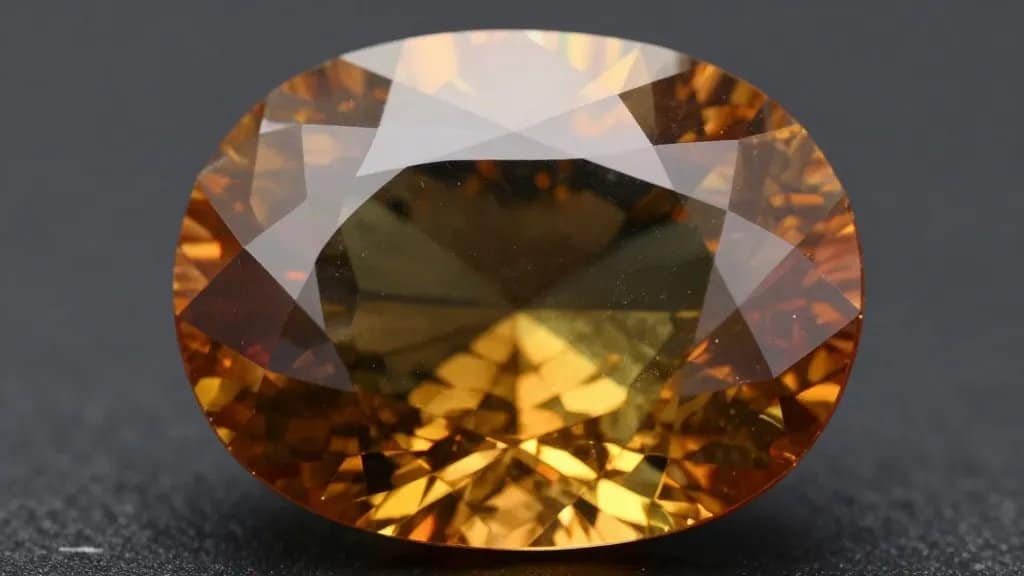
Value isn’t only about hue; it’s about the balance of tone (lightness to darkness) and saturation (intensity). The finest blue sapphire shows a medium to medium-dark tone with vivid saturation—rich, not inky. Top emeralds glow with a slightly bluish green that seems to light up from within, even if clarity isn’t perfect. And with rubies, a pure, lively red with a hint of fluorescence is the sweet spot.
Gem cutters coax the best face-up color by adjusting proportions. A thin cut can make a stone look washed out; too deep and it may appear dark at the center. Stones with pleochroism—different colors from different angles—like tanzanite and andalusite, require thoughtful orientation to display their best face. If you’re comparing stones, move them. Tilt, rotate, and watch how light returns to your eye. That simple habit beats many technical explanations.
Natural, Lab-Grown, Imitation: The Differences That Matter
Natural gems form in the Earth over millions of years. Lab-grown gems share the same chemical composition and crystal structure but grow under controlled conditions. Imitations mimic the look but are different materials entirely (like glass or cubic zirconia standing in for diamond).
Here’s the surprise: lab-grown doesn’t mean “fake.” A lab-grown sapphire is sapphire. It will test as sapphire and can be very clean and vividly colored. The key distinctions are rarity, formation history, and value. Natural stones usually command higher prices, especially with fine color and untreated status. Imitations, by contrast, should be priced far lower. If you’re unsure, request documentation and compare with advice in a Gemstone Buying Guide.
Another curveball: moissanite is a superb diamond alternative with higher dispersion—meaning extra fire. Its rainbow flashes can betray it to a trained eye, but many buyers love that vivid sparkle in rings and earrings.
Cut Shapes More Than Sparkle—It Shapes Personality
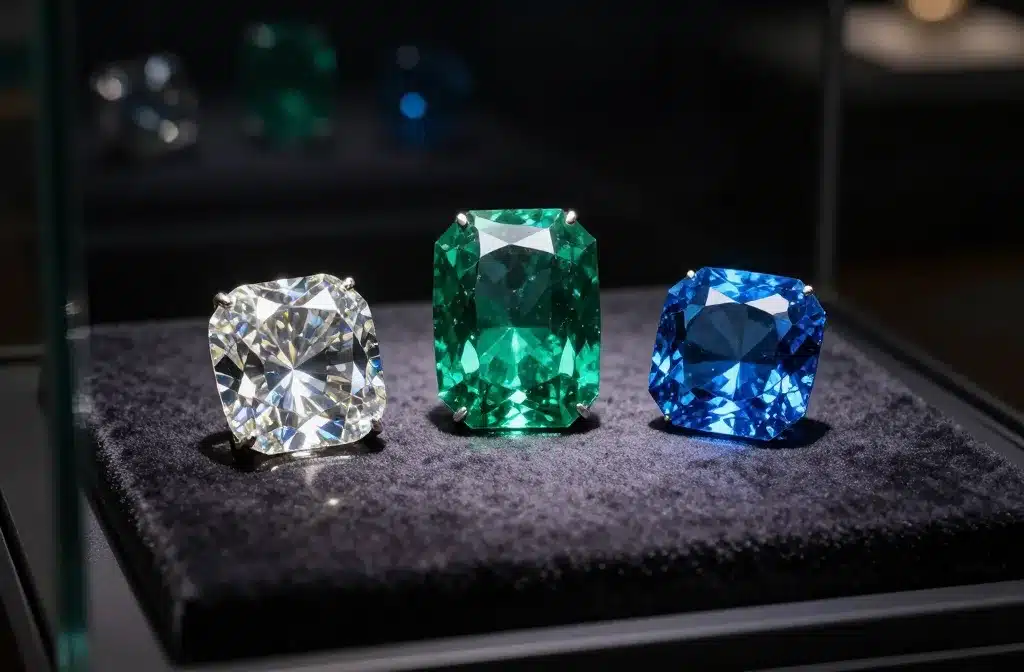
Brilliant cuts maximize fire and brightness, spraying the eye with quick pinpricks of light. Step cuts, like emerald and Asscher, favor broad, glassy flashes that read as elegance and poise. Cabochons showcase phenomena: stars in sapphire, cat’s-eyes in chrysoberyl, and adularescence in moonstone—an inner glow that moves like mist.
Oddly enough, a masterful cut can make a modest color sing, while a poor cut can mute a great hue. In colored stones, cutters sometimes choose a shape that preserves weight and face-up color rather than strict symmetry. That’s why you’ll see slightly off-oval sapphires that still look mesmerizing.
If you’re exploring Gemstone Cuts or Gemstone Shapes, consider how you plan to wear the piece. High crowns can catch on clothing; shallow stones may window—show a see-through patch at the center under direct light.
Care Myths That Shorten a Gem’s Life
One-size-fits-all cleaning advice doesn’t work. Ultrasonic and steam cleaners can crack, de-oil, or outright damage delicate stones. Emerald, opal, pearl, turquoise, and any glass-filled or fracture-filled gem deserve warm water, mild soap, and a soft brush. Avoid soaking opal or pearl for long periods, and keep porous stones away from harsh chemicals and perfumes.
Storage matters. Diamonds can scratch nearly everything else, so give them separate compartments. Sunlight can fade some gems—kunzite and some amethysts, for instance—so store away from prolonged UV exposure. If your piece is an heirloom, have a jeweler check prongs yearly; the security of a setting is as important as the stone’s inherent durability.
Regular gentle cleaning restores brilliance. Dust and lotion build films that make even the finest diamond look sleepy. A little soap and a soft toothbrush are your best friends.
Value Oddities: Why Some “Less Perfect” Gems Are Pricier
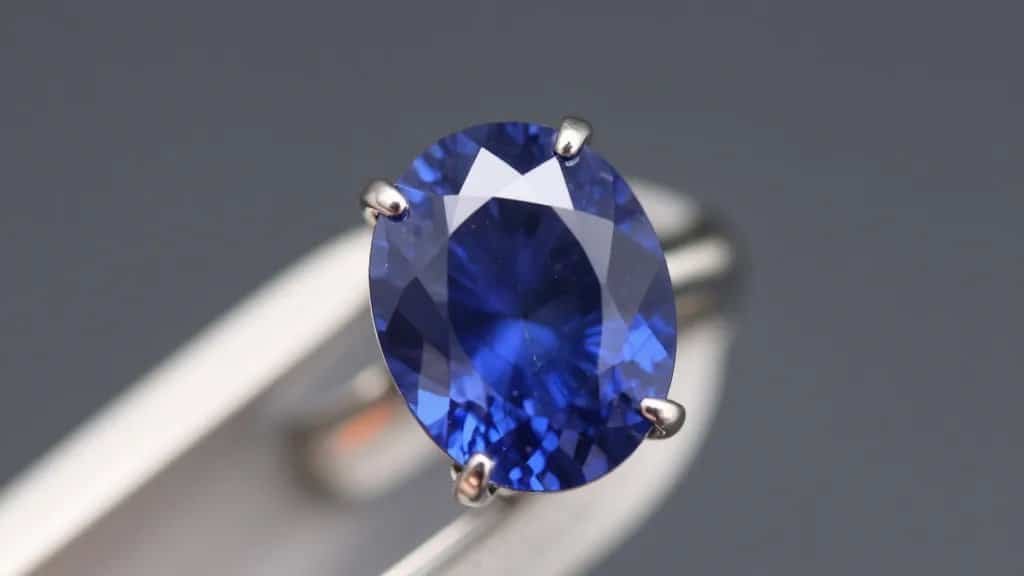
Perfection isn’t always the prize. Kashmir sapphires have a soft, velvety glow caused by fine rutile “silk.” That microscopic texture slightly diffuses light, and collectors pay a premium for the effect. In emeralds, a certain amount of jardin is expected; a totally clean emerald often raises eyebrows about origin or treatment.
In some opals, “harlequin” pattern—neat, checkerboard-like patches of color—can multiply price beyond what color alone would suggest. In star sapphires, a tall, crisp, centered star on a smooth cabochon outweighs small blemishes elsewhere. Collecting can be counterintuitive, which is part of the fun. If this intrigues you, look into Collector Gemstones and Gemstone Facts for more delightful exceptions.
Buying Smart: Quick Field Tips You’ll Actually Use
- Ask for disclosure in writing. Heat, oil, diffusion, and fillings affect care and value.
- View under multiple lights. Daylight, warm indoor, and LED reveal different truths.
- Use a loupe. Look for inclusions, chips at facet junctions, and filled fractures that flash glassy or bubble.
- Check for windowing. Look straight down—if you can read print through the center, the cut may be too shallow.
- Consider the setting. Protective bezels for softer or brittle stones; prongs for hard, tough ones that love light.
- Match gem to lifestyle. Sapphire or spinel for daily rings; opal and emerald for gentler wear or pendants.
If you’re exploring Gemstone Jewelry or Gemstone Rings, these habits save money and heartbreak.
Myths vs. Reality: Quick Corrections
- Myth: All green stones are emerald. Reality: Green tourmaline, peridot, chrome diopside, and tsavorite garnet often masquerade.
- Myth: Pearls last forever. Reality: They’re organic and can dehydrate or wear down; store with humidity and avoid acids.
- Myth: Opals are too fragile to wear. Reality: They’re softer (about 5.5–6.5 Mohs) and need care, but pendants and earrings are great choices.
- Myth: Bigger is always better. Reality: Color, cut, and clarity trump size in beauty and price, especially with colored stones.
- Myth: Birthstones are just tradition. Reality: Birthstone Jewelry is a meaningful way to mark time, and some months offer multiple excellent options.
FAQs
Which gemstone offers the best balance of beauty and durability for a daily ring?
Blue sapphire or spinel. Both are hard, resilient, and come in vibrant colors. Choose a low-profile setting for extra protection.
How can I tell if a gemstone has been treated?
Many treatments are invisible without lab tools. Ask for written disclosure and, for expensive stones, a reputable lab report.
Why do my gemstones look different at home than in the store?
Lighting. Jewelry stores often use cool, bright LEDs that emphasize brilliance. Check stones under daylight and warm light for a true read.
Is a lab-grown gemstone a good choice for an engagement ring?
Yes, if you value high clarity and color at a lower price. It’s the same material as natural, but lacks natural rarity. Disclose it proudly.
Can I clean all my jewelry in an ultrasonic cleaner?
No. Avoid ultrasonics for emerald, opal, pearl, turquoise, and any filled stones. Use mild soap and a soft brush instead.
What gemstone shows the strongest color change?
Fine alexandrite is the classic, shifting green to red. Certain garnets and sapphires also show notable changes.
Are “star” gems natural?
Yes, when caused by rutile silk creating asterism in cabochon cuts. Some synthetics also show stars; certification helps confirm.
Final Thoughts
The surprises inside gemstones are the reason many of us stay hooked: color that transforms, inclusions that narrate, and quirks that make value anything but linear. With a little knowledge—from hardness versus toughness to the quiet truths of treatment—you’ll choose pieces that not only sparkle, but endure and delight. When curiosity leads, your collection becomes a gallery of stories you can wear.

Christian Grey is the creator of GemMeaning, where he shares simple insights about crystals, gemstone meanings, and spiritual guidance. His focus is on making complex ideas easy to understand and practical for everyday life.