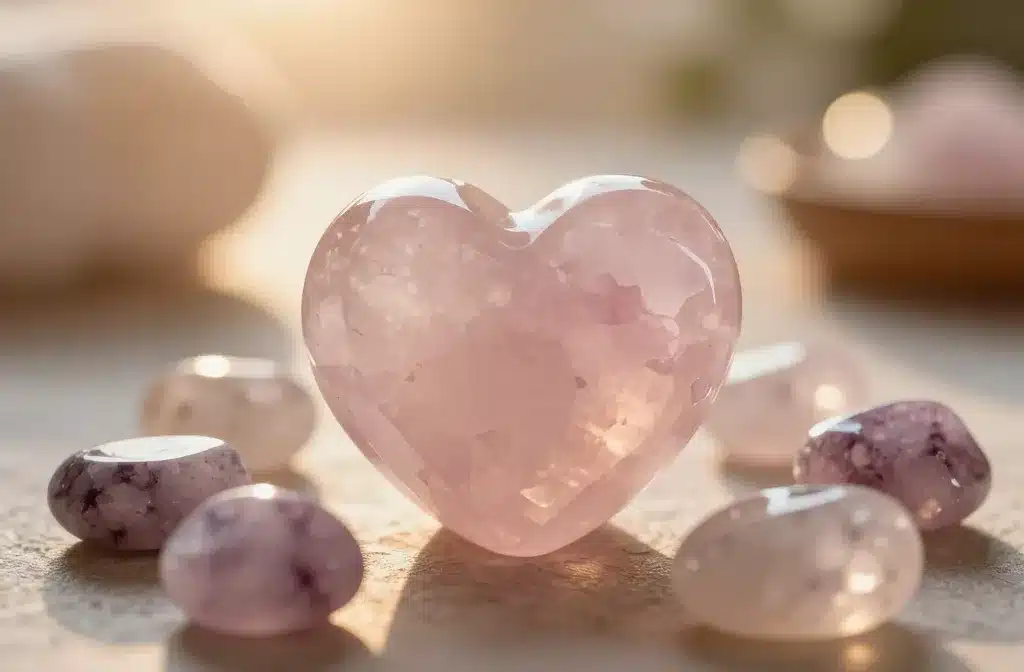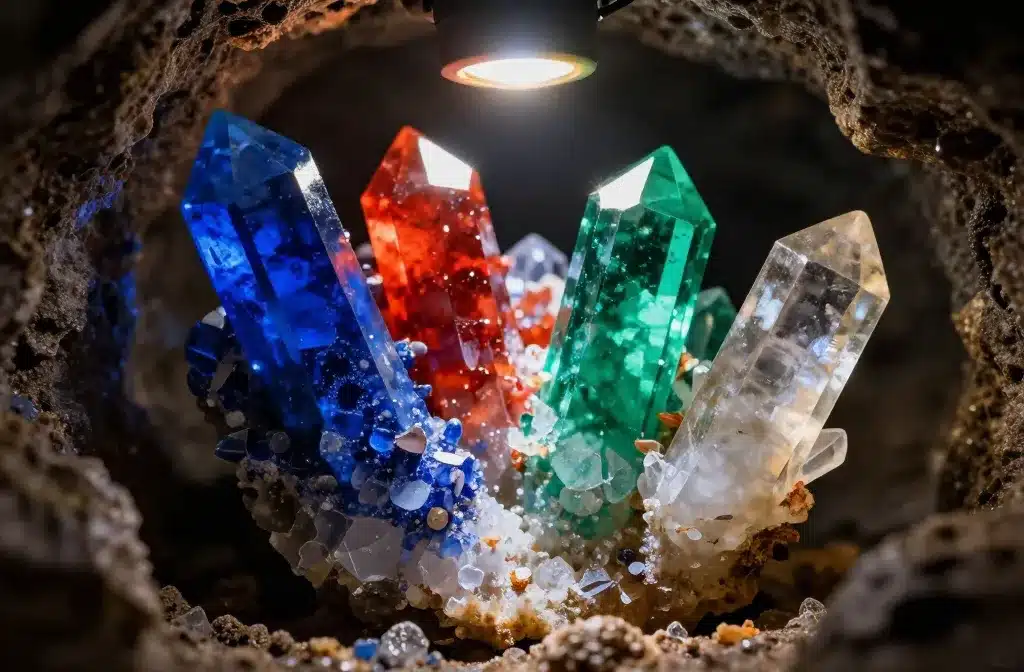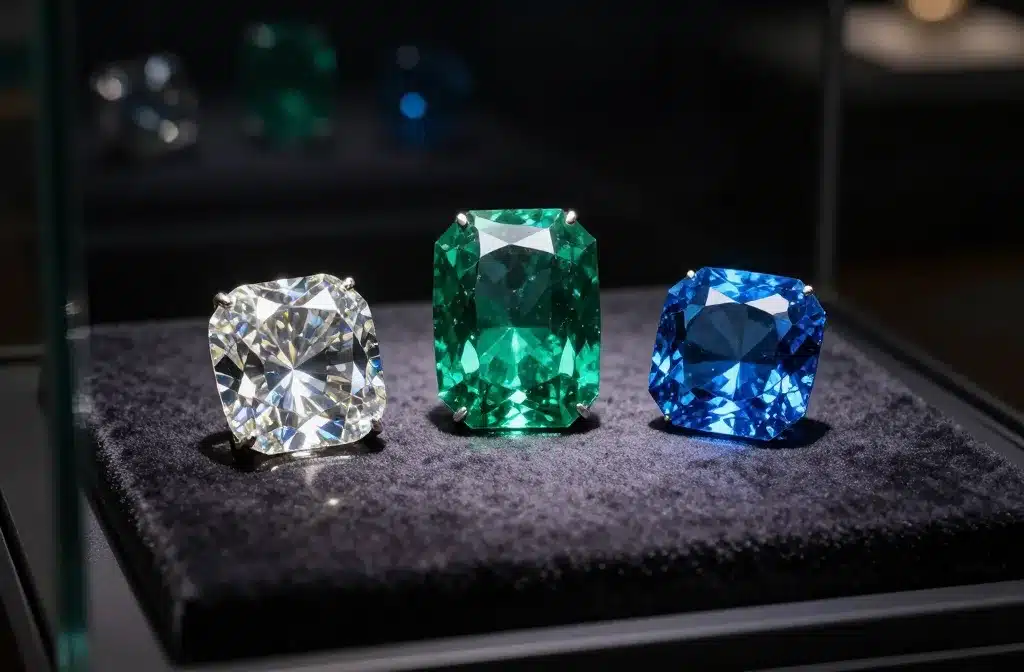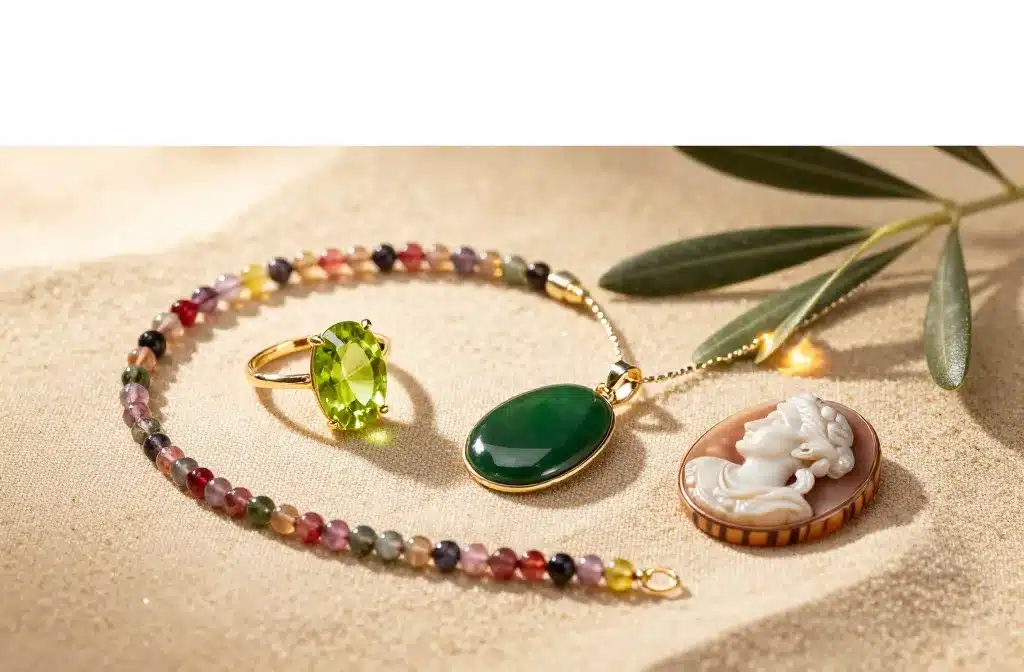
August is one of the lucky months with multiple birthstones, which means more choices for your style and budget. Think juicy lime greens, refined forest hues, and a soft glow that flatters sun-kissed skin. These gems feel like late-summer evenings—lively, warm, and quietly elegant.
In this guide, you’ll get a clear look at August’s birthstones—peridot, spinel, and sardonyx—along with how they’re formed, where they come from, how they wear, and why people fall for them. You’ll learn how to choose stones that look bright on your skin tone, how to spot value, and how to care for the jewelry you’ll actually wear every day.
We’ll also cover treatments, durability, and the small things that make a big difference—like cut style and setting choices. By the end, you’ll know exactly which August birthstone jewelry suits your life, your wardrobe, and your budget.
Ready to see August’s colors with gem-lover eyes? Let’s go stone by stone.
Meet August’s Birthstones: Peridot, Spinel, and Sardonyx
Most people think of peridot first: that crisp, apple-green gem with a sunny glow. But August also welcomes spinel, now recognized by modern lists, and the classical sardonyx, a striped chalcedony that was beloved by ancient engravers.
- Peridot (Olivine): A bright green to olive gemstone with a golden undertone, often eye-clean with a velvety sparkle. It’s one of the few gems that occur in only one color—green—though the shade can range from lemon-lime to deep olive, depending on iron content.
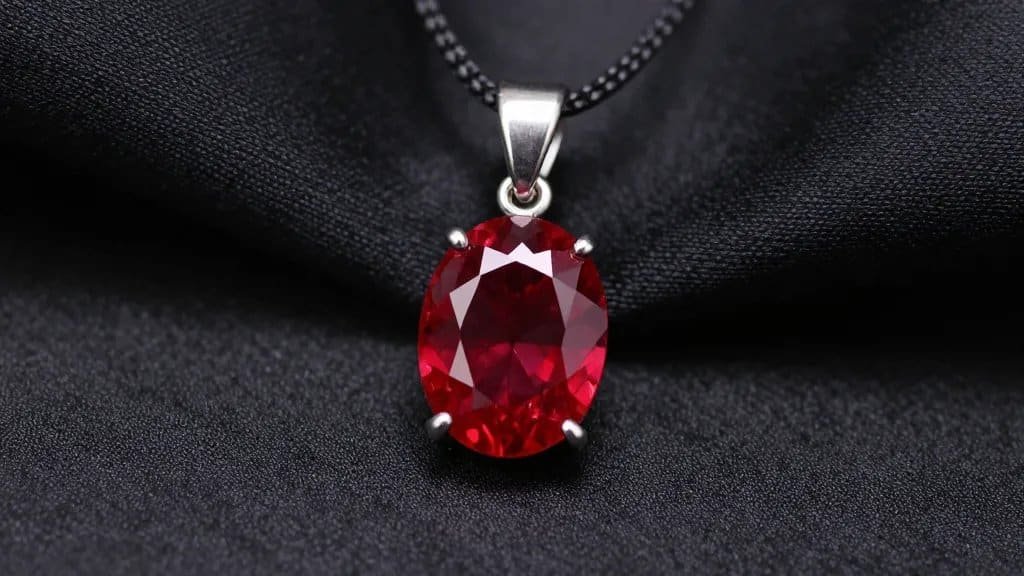
- Spinel: A chameleon of the gem world with colors from flaming scarlet to rose, lavender, cobalt, and steely gray. For August, pink to red spinel is often featured, but any color qualifies. Its brilliance and fire can rival ruby and sapphire.
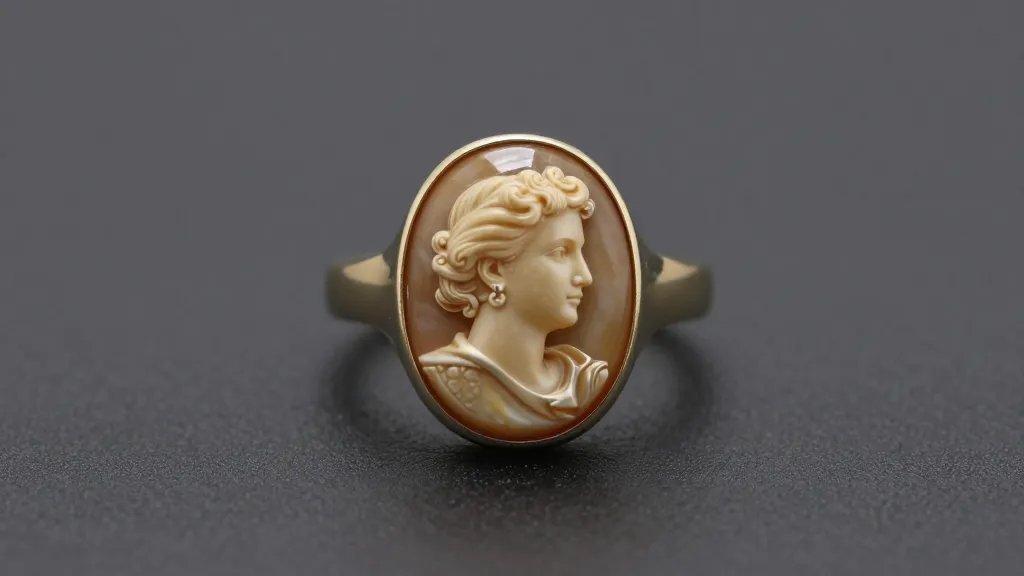
- Sardonyx: A banded stone combining sard (brownish-red chalcedony) and white onyx in layered stripes. Think elegant cameos, signet rings, and antique motifs. It’s opaque, earthy, and wonderfully classical.
Each offers a different vibe: peridot for fresh, vibrant looks; spinel for fine-jewelry sparkle; sardonyx for vintage charm and engraving. Together they make August a playground for personal style.
Color, Light, and Personality: How Each Gem Shows Off
Color sells gems, but how a stone handles light is what keeps you staring. Peridot has a soft glow that seems to pool under the surface. Even in low light, it shows a warm, golden-green body color. Under bright sun or spotlight, it can flash a lively, almost electric green. Inclusions in peridot often look like feathery wisps or “lily pads”—tiny disc-like crystals that, when subtle, can add character.
Spinel plays a different game: higher refractive index and a sharper, crisper sparkle. A well-cut spinel looks bright even in dim restaurants and glitters under daylight. Fine red spinel glows with a cherry ember tone, while pink and hot fuchsia spinel give modern, fashion-forward energy. Lavender spinel has a cool, sophisticated mood with silvery flashes.
Sardonyx doesn’t sparkle; it invites you to appreciate pattern and polish. The best pieces show strong, even banding—milky white against cinnamon, chestnut, or rust-red layers. A high polish brings a silk-like luster to the surface, and the contrast carries beautifully in carved intaglios and cameos.
From Earth to Adornment: Formation, Sources, and Rarity
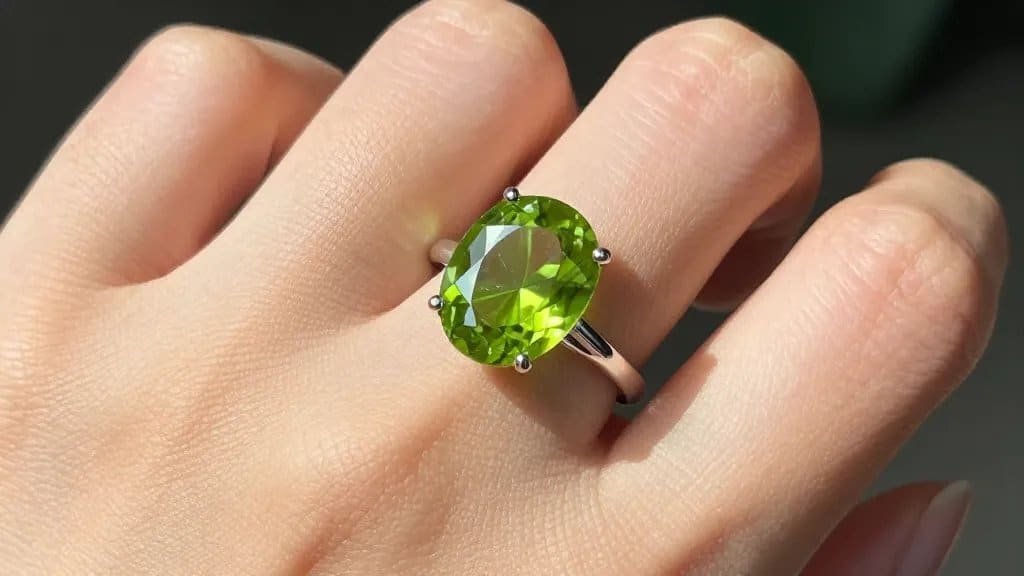
Peridot forms deep in the Earth’s mantle and can hitch a ride to the surface in volcanic basalts. That’s why some peridot crystals are found in lava flows or ancient volcanic fields. Notably, fine peridot has also been recovered from pallasite meteorites—space gemstones, though those are collector rarities. Today’s leading sources include Pakistan’s Kashmir region (chromatic, intense greens), Myanmar, Vietnam, China, the United States (Arizona), and Africa (notably Tanzania). Pakistan and Myanmar material can show a saturated, slightly bluish green prized by collectors.
Spinel crystallizes in metamorphic marbles and some basalts. Historically, the famed “Balas rubies” of Central Asia (actually spinel) adorned royal regalia for centuries. Modern sources include Myanmar (Mogok and Namya), Sri Lanka, Vietnam (Luc Yen), Tanzania, and Madagascar. Top-quality red spinel is rarer than most rubies on the market; vivid pink, cobalt blue, and neon lavender spinels are sought by collectors and increasingly featured in fine jewelry houses.
Sardonyx is a variety of chalcedony formed from silica-rich solutions, building up microcrystalline layers over time. The evenness and contrast of its banding determine its desirability. Historic sources include India and Brazil; fine carving material is still found in India and other locales where high-contrast layers can be quarried.
Durability and Daily Wear: Mohs Hardness, Toughness, and Settings
Durability isn’t just hardness; it’s how a stone resists scratching, splitting, and abrasion in the real world. This is where setting style and daily habits matter.
- Peridot (Mohs 6.5–7): Hard enough for regular wear, but it can abrade over years if it’s your everyday ring. Avoid rough knocks and protect edges with bezel or halo settings if you’re hard on your hands. Earrings and necklaces are low-risk and keep that lively color front and center.
- Spinel (Mohs 8): Excellent for daily wear, including rings. It’s tough enough to handle life like sapphire and ruby siblings, though it’s slightly softer. A simple four- or six-prong setting works well, and fancy cuts hold up nicely.
- Sardonyx (Mohs ~6.5–7): Similar to peridot in scratch resistance, but as a chalcedony, it’s fairly tough. Great for signet rings, cameos, and pendants. Keep it away from harsh abrasives to maintain the polish.
If you’re choosing an heirloom-style piece intended for decades of daily wear, spinel wins for ring durability. Peridot and sardonyx shine in pendants, drops, and cocktail rings worn thoughtfully.
Recognizing Quality: Cut, Clarity, and Value Factors
Peridot looks best when the cutter manages its medium-high birefringence and windowing tendency. Look for symmetrical shapes, no obvious “dead zones,” and even color across the face. A tiny bit of “lily pad” inclusions is common; avoid stones with fractures near the girdle or hazy clouds that dull the glow. Size affects value noticeably—fine stones above 5 carats with saturated color fetch higher prices.
Spinel rewards precision cutting. A well-proportioned stone will show lively brilliance with minimal window. Color drives value most: pure red and saturated hot pink are headliners; cobalt blue and neon lavender are darlings of collectors. Clarity matters, but minor silk or pinpoint inclusions can be acceptable in strong colors. Untreated origin stones with reputable lab reports command premiums.
Sardonyx is judged by band sharpness, contrast, and how the layers suit the design. For cameos, you want a crisp white layer over a rich sard base to make the carving “pop.” Chips at the edges and dull polishing lower value. Larger, well-banded plaques for signet rings or pendants are scarcer and priced accordingly.
Treatments and Imitations: What’s Real, What’s Enhanced
Peridot is generally untreated. That’s a pleasure in today’s market—what you see is what nature made. Beware of glass or synthetic green spinel sold as peridot; they can look similar at a glance. Under magnification, peridot’s “lily pads” and slightly oily luster are telltales. A gemologist can also check specific gravity and birefringence to confirm identity, as covered in Gemstone Identification topics.
Spinel is usually untreated, and that adds to its appeal. However, synthetic spinel has been around for decades. It’s commonly used in vintage class rings and some costume jewelry. Natural spinel rarely shows gas bubbles; synthetics often do, along with curved growth lines. When buying a fine red or cobalt spinel, request a lab report if the price climbs into the fine-jewelry tier. You’ll find useful pointers in Gemstone Buying Guide and Gemstone Value Guide resources.
Sardonyx may be dyed to enhance its banding or color. Traditional methods can be stable, but disclosure is required. If a piece looks too bold or evenly colored, ask. High-end antique sardonyx cameos often show natural, nuanced layers, whereas modern dyed pieces can appear starkly uniform.
Design Ideas: August Birthstone Jewelry You’ll Reach For
Think about where and how you’ll wear these stones, then match the design to both style and durability.
- Peridot everyday studs: 4–6 mm rounds or cushions set in yellow gold make skin look warmer and eyes brighter. A fine polish and secure friction backs are all you need for a daily glow.
- Peridot halo ring: A modest center (1.5–2 carats) in a protective halo of diamonds or white sapphires brings vintage glamour while guarding the girdle. Choose a low profile if you’re active.
- Spinel solitaire ring: One clean, saturated red or fuchsia spinel in a crisp bezel is modern and resilient. Platinum or 14k white gold keeps the look cool; yellow gold gives a neo-classic warmth.
- Spinel line bracelet: Graduated pink-to-lavender spinels create a color-flow effect. Because spinel is durable, it handles bracelet life well, especially with snug, articulated links.
- Sardonyx signet: A rectangular tablet engraved with a monogram or symbol carries quiet authority. Pair it with a brushed-gold shank for a refined, timeless piece.
- Cameo pendant: A sardonyx cameo framed in seed pearls or plain gold is endlessly wearable with dresses or knits. Look for crisp carving and clean edges.
If you love mixing stones, peridot pairs beautifully with amethyst for a fresh punch, with pink tourmaline for a haute-couture palette, and with diamonds for a clean, citrus-bright contrast. Spinel blends happily with sapphire, garnet, and diamond in Gemstone Necklaces and Gemstone Earrings that balance color and sparkle.
Skin Tone and Metal Pairings: Making Color Work for You
Peridot’s golden undertone sings in yellow and green gold alloys (14k or 18k). If you run cool-toned or prefer white metals, opt for peridot with a slightly deeper, more bluish green and set it in platinum or white gold to keep the look crisp. Light olive peridot can look washed out in white metal if the stone is pale.
Spinel is versatile. Red and hot pink spinels pop in rose gold and yellow gold; lavender and steely gray spinels look ethereal in white gold or platinum. If you want maximum contrast, mount a vivid pink spinel in white metal and surround it with tapered baguette diamonds for a sleek, Art Deco vibe.
Sardonyx loves yellow gold. The warmth of gold sets off the reddish-brown layers and anchors the antique mood. Silver gives sardonyx a cooler, Victorian feel—lovely for period-inspired pieces.
Caring for August Birthstone Jewelry
Good habits keep gems bright. These tips are simple and effective:
- Cleaning peridot and spinel: Use lukewarm water, mild dish soap, and a soft brush. Rinse well and pat dry. Spinel can handle ultrasonic cleaners in many cases, but avoid for peridot, especially if inclusions or fractures are present.
- Cleaning sardonyx: Gentle soap and water only. Avoid steam and ultrasonic cleaning. Dry thoroughly to prevent residue along banding lines.
- Storage: Keep separate from harder gems like sapphire and diamond to avoid scratches. Soft pouches or individual compartments work well.
- Wear last, remove first: Apply lotions, sunscreen, and perfume before jewelry to prevent film buildup and potential chemical contact.
- Check settings: Twice a year, have prongs and bezels inspected, especially on rings. A quick tune-up prevents lost stones.
For deeper maintenance routines and material-specific do’s and don’ts, see Gemstone Care references.
Buying Smart: Budget, Sizing, and Certification
Start with a budget and decide where you want to put the emphasis: size, color, or design complexity. For peridot, prioritize color purity and cut over sheer carat weight. A smaller, saturated stone looks more luxurious than a larger, pale one.
For spinel, color and cut drive price. If you’re shopping in the fine tier (especially red or cobalt), ask for a lab report from a respected institution. Origin can influence value, but a beautifully cut, non-heated, vivid spinel from Madagascar can be as thrilling as a Mogok stone at a friendlier price.
Sardonyx buyers should focus on carving quality and band contrast. Antique pieces come with added artistry—inspect for chips, reglued cameos, or worn profiles. Modern reproductions can be charming but check whether the color is dyed and whether disclosure is provided.
If you like to compare across materials and budgets, it helps to browse Gemstone Comparisons, Gemstone Rings, and Gemstone Value Guide resources to understand how peridot and spinel stack up alongside other Semi-Precious Stones and Precious Gemstones.
Who Falls in Love with Each Stone
Peridot attracts people who love nature-forward palettes and want a gem that feels friendly and optimistic. It flatters casual wardrobes, late-summer weddings, and sunlit events.
Spinel appeals to the detail-oriented—those who appreciate fine cutting, unenhanced color, and under-the-radar elegance. If you want everyday luxury without the ruby/sapphire price, spinel is your ally.
Sardonyx suits old-soul stylists: those who enjoy history, family crests, and tailored looks. It’s also ideal for meaningful gifts—think milestone birthdays, graduations, or a custom signet to mark a new chapter.
Fun Facts and Missteps to Avoid
- Space whisper: Some peridot has literally fallen from the sky inside meteorites, making it one of the few gems with extraterrestrial credentials.
- Royal mix-up: For centuries, red spinel masqueraded as ruby in crown jewels, including the Black Prince’s “Ruby” in the British Imperial State Crown—actually a spinel.
- Common mistakes:
- Choosing peridot too pale for white metal settings; it can look washed out.
- Assuming all red gems are ruby; spinel often offers better value and brightness.
- Cleaning sardonyx with harsh chemicals; it dulls the polish and can affect dyed layers.
- Skipping confirmation on high-end spinel purchases; always request documentation.
FAQs
Is peridot good for engagement rings?
You can use peridot, but protect it. Choose a bezel or halo, avoid daily rough wear, and plan regular maintenance. If you want low-maintenance durability, consider spinel for the main stone and use peridot as accents.
What color of spinel is most valuable?
Vivid, pure reds lead, followed by hot pinks and cobalt blues. Saturation, brightness, and clean cutting matter more than origin to most wearers.
How do I tell peridot from green glass?
Peridot typically shows “lily pad” inclusions and has a slightly oily luster. Glass often shows bubbles and a softer look. A jeweler can confirm with refractive index testing.
Can sardonyx jewelry be resized or re-engraved?
Rings can usually be resized by an experienced bench jeweler with the stone removed or carefully protected. Re-engraving is possible but should be done by specialists to preserve banding and detail.
Are August birthstones associated with any symbolism?
Peridot is linked with warmth, renewal, and good fortune; spinel with vitality and resilience; sardonyx with protection and courage—meanings drawn from centuries of lore.
Do August birthstones come in ethical or traceable options?
Yes. Some miners and dealers provide origin data and responsible sourcing claims, especially for spinel from Sri Lanka, Tanzania, and Madagascar, and peridot from Arizona. Ask for provenance when it matters to you.
What cuts flatter peridot and spinel best?
Peridot looks great in cushions, ovals, and emerald cuts that showcase even color. Spinel excels in precision rounds, ovals, and step cuts that highlight its brightness and clean crystal.
A Quick Wrap-Up for August Shoppers
Peridot brings a joyful green glow, spinel offers refined sparkle and strength, and sardonyx adds sculptural heritage. Choose the stone that fits your life, then let setting and metal do the rest. With a thoughtful eye on color, cut, and care, August birthstone jewelry becomes the piece you reach for on ordinary days and special nights alike.

Christian Grey is the creator of GemMeaning, where he shares simple insights about crystals, gemstone meanings, and spiritual guidance. His focus is on making complex ideas easy to understand and practical for everyday life.