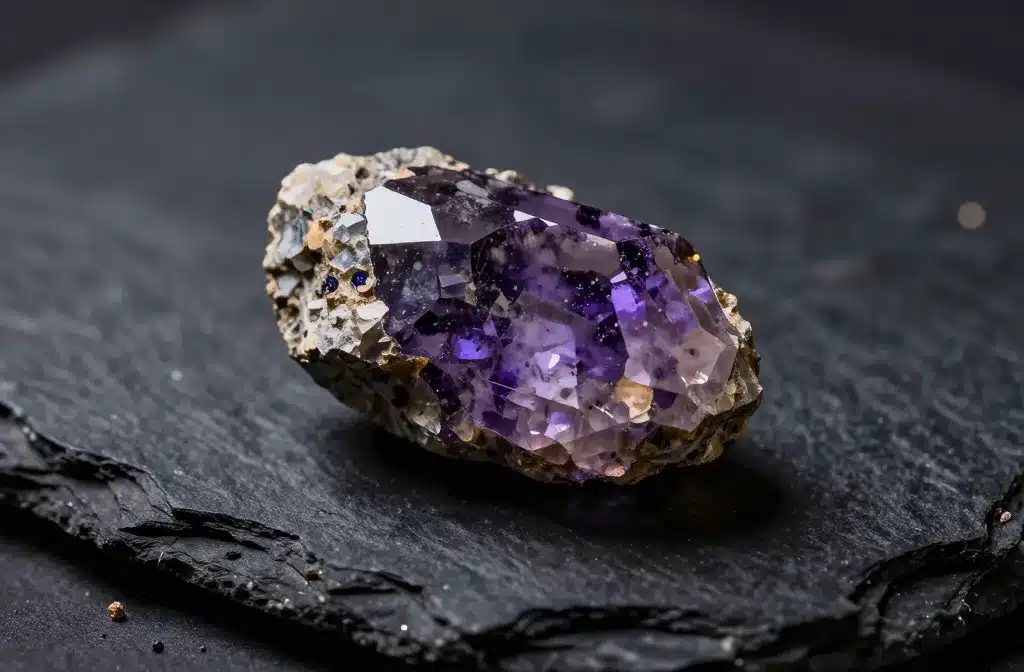
Some gems are more than beautiful—they’re timestamps. Hold one up to the light and you’re staring into the deep past, into the chemistry and cataclysms that forged our planet. The oldest gemstones tell stories that predate continents, life, and even the Moon’s final settling.
In this guide, you’ll meet the true elders of the gem world: minerals that formed billions of years ago, survivors of Earth’s most dramatic chapters. You’ll learn how to identify them, what makes them special in jewelry, and how scientists use them to read Earth’s earliest history.
We’ll keep it practical too. If you’re collecting, gifting, or setting ancient stones, you’ll find value tips, care advice, and real-world examples. Expect science, sparkle, and a few surprises—like why a tiny purple grain from Western Australia rewrote geology books.
Let’s open the time capsule.
What Counts as “Oldest”: Age, Discovery, and Gem Status
“Oldest” can mean a few different things with gemstones, so it helps to set the rules.
- Age of formation: When the crystal actually grew. This is the truest measure of an old gemstone.
- Date of discovery: When humans found or recognized it. Fascinating historically, but not what we mean here.
- Gem status: Not every ancient mineral is a gem. To qualify, it should be durable, capable of taking a polish, and attractive.
With that in mind, the oldest gemstone by formation age is zircon—specifically, microscopic grains from the Jack Hills of Western Australia dated to about 4.4 billion years old. Others, like diamond and sapphire, come later on the timeline but still qualify as ancient by any human standard.
Zircon: Earth’s First Jewelry-Grade Timekeepers
If age were a gemstone competition, zircon wins by a billion years. Zircon (ZrSiO4) is a durable, high-refractive-index mineral that often forms as tiny, resilient crystals inside ancient rocks. The Jack Hills zircons, some tinted rose-lilac by trace elements, have been radiometrically dated to roughly 4.37–4.40 billion years using uranium-lead (U-Pb) methods.
Appearance and colors: In jewelry, zircon shouldn’t be confused with cubic zirconia. Natural zircon can be colorless, blue, honey, green, or reddish-brown. It has bright, almost fiery brilliance due to high dispersion, with a glassy to adamantine luster when well-cut.
Hardness and durability: On the Mohs scale, zircon ranges from 6 to 7.5. It’s tough for its age but can be brittle, and older stones sometimes show wear or metamictization (structural damage from internal radiation). For rings, protective settings help. Earrings and pendants are easier on the stone.
Symbolism and meaning: Collectors often associate zircon with time, wisdom, and fidelity. It’s also a favored stone among geology buffs who appreciate its scientific importance.
Treatments and identification: Many blue zircons owe their color to heat treatment. Natural zircon is doubly refractive (unlike diamond), often shows strong birefringence doubling of facet edges under magnification, and has characteristic inclusions. Advanced testing can detect metamictization and separate it from lookalikes.
Value factors: Fine, untreated stones with lively color and high transparency fetch the best prices. Blue zircon is especially popular in modern jewelry. Truly ancient zircons (like Jack Hills grains) are usually too small and scientifically precious for typical jewelry, but some jewelers mount them in sealed vials or protective bezels for collectors who want to wear a fragment of the Hadean Earth.
Diamond: Ancient Carbon Carried by Volcanoes
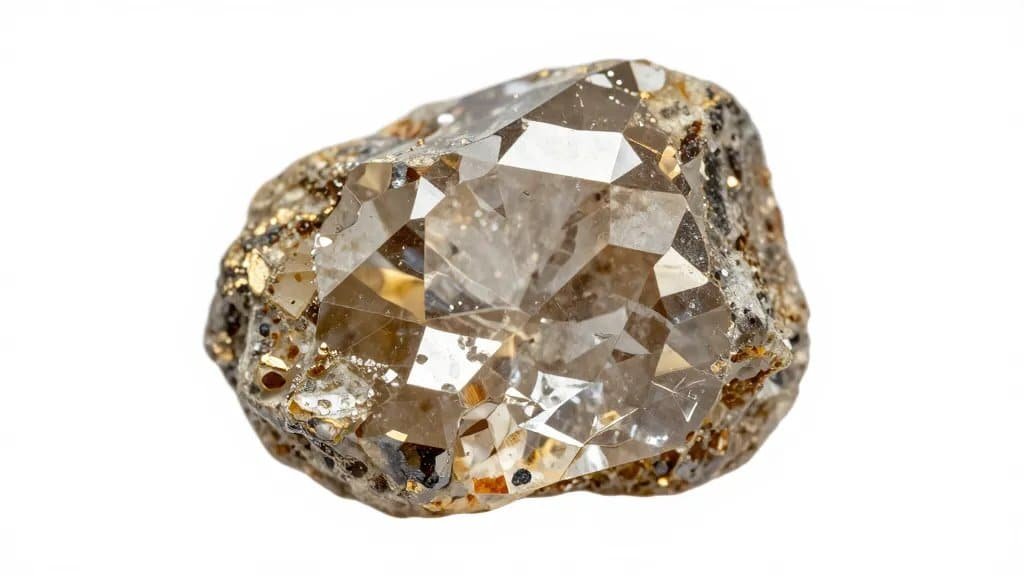
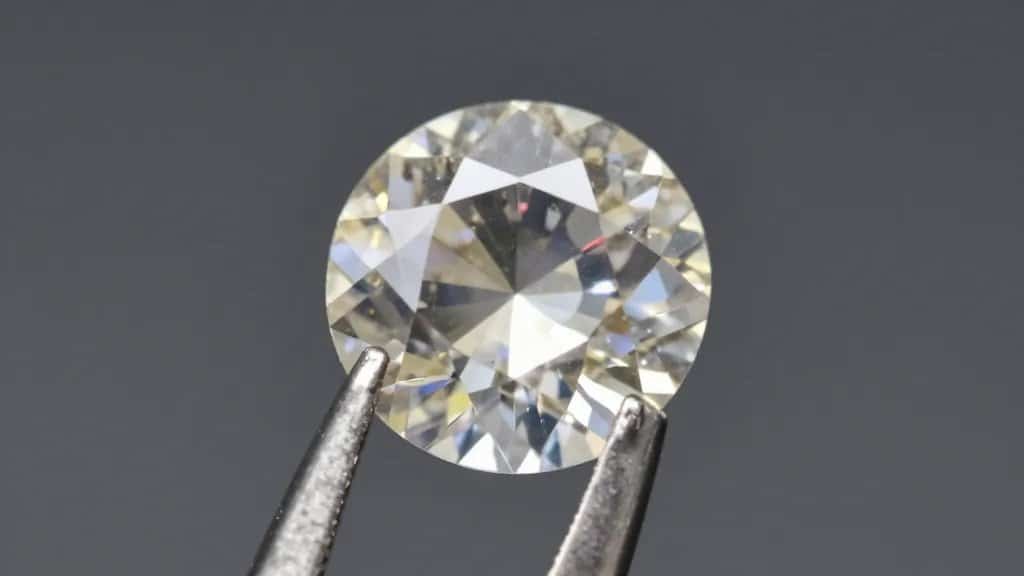
Diamonds feel timeless, and many really are. A significant portion of gem-quality diamonds formed 1–3.5 billion years ago, deep in the mantle under immense pressure and heat, later rocketed toward the surface by kimberlite or lamproite eruptions. While not the oldest mineral, diamonds hold their own as some of the oldest gemstones you’ll see in a ring.
Appearance and colors: The classic is colorless with razor-sharp brilliance and scintillation. Natural fancy colors—yellow, brown, blue, pink, and rarely green or red—derive from trace elements or structural anomalies. Type IIa diamonds, among the purest, often have exceptional transparency and can be linked to ancient, high-pressure origins.
Hardness and durability: Diamond tops the Mohs scale at 10. It’s the hardest natural substance, though cleavable. With good cutting and proper setting, it’s ideal for daily-wear jewelry.
Origin stories: Famous locales include Botswana, South Africa, Russia, Canada, and Australia. Some of the oldest diamonds trace to cratonic roots—ancient continental cores—adding geological romance to their sparkle.
Treatments and identification: High-pressure high-temperature (HPHT) processing can improve color. Lab-grown diamonds are chemically identical to natural ones; specialized testing (e.g., photoluminescence spectroscopy) distinguishes them. Natural diamonds may show older inclusion suites, like sulfide inclusions, that hint at deep mantle origins.
Value factors: The classic 4Cs matter—color, clarity, cut, carat—but provenance can add allure. Collectors sometimes prize stones with documented ancient inclusions or rare color centers.
Sapphire and Ruby: Crystals from the Early Continents
Corundum—best known as sapphire and ruby—formed in many geological settings, some over a billion years ago. Metamorphic blue sapphires from Sri Lanka and Madagascar, for instance, often come from ancient terranes; rubies from Mogok (Myanmar) and Mozambican belts grew during powerful mountain-building events that reshaped the planet long before the dinosaurs.
Appearance and colors: Ruby is the red variety of corundum, colored by chromium. Sapphire covers everything else: blue, pink, yellow, green, violet, even color-change. Fine stones show vivid, even saturation with lively brilliance. Inclusions can look like syringes, needles, or silk, sometimes yielding a star effect (asterism) when cut cabochon.
Hardness and durability: Corundum rates a 9 on the Mohs scale. It’s excellent for everyday jewelry, second only to diamond in hardness.
Geological formation: Many notable sapphires formed in high-grade metamorphic rocks and later liberated into gravels. Their age can exceed a billion years, though individual crystals vary.
Treatments and identification: Heat treatment is common to improve color and clarity; diffusion treatments impart or intensify color in the surface layer. Skilled gemological testing (microscopy, spectroscopy) separates natural from treated and synthetic stones. Silk and zoning patterns can hint at origin.
Value factors and buying advice: Seek rich color with brightness, minimal zoning, and attractive cut. For rubies, slightly purplish red to pigeon’s blood hues command premiums. For blue sapphires, look for velvety to royal blues without inky darkness. Certificates matter for significant purchases. Consider exploring Gemstone Buying Guide and Gemstone Value Guide to compare price and quality tiers.
Peridot from Space: The Olivine That Predates Earthly Jewelry
Peridot (gem-quality olivine) from Earthly volcanoes isn’t especially ancient compared to zircon or diamond. But pallasite meteorites carry olivine crystals that formed in the early solar system—about 4.5 billion years ago—making some extraterrestrial peridot older than any terrestrial gem setting you’ll find.
Appearance and colors: Meteorite olivine ranges from yellow-green to deep bottle-green. Transparent fragments polished from pallasites can show syrupy luster and a unique glow under warm light. Inclusions may include metal flakes from the iron-nickel matrix.
Hardness and durability: Olivine is around 6.5–7 on the Mohs scale, with a distinct cleavage and moderate toughness. It’s suitable for pendants and earrings; rings need protective settings and mindful wear.
Collectibility and value: Space peridot is a niche collector’s dream. Because cutting destroys precious scientific context, most keep fragments or thin polished sections. If you do set a piece, ask for documentation of meteorite source—Esquel, Imilac, or pallasites of known provenance carry cachet.
Ancient Organics: Amber and Jet with Prehistoric Secrets
Not all antique adornments are crystals. Amber and jet, beloved since antiquity, are organic gems formed from ancient life.
- Amber: Fossilized tree resin, typically 30–100 million years old, with Baltic amber often in the 35–50 million-year range. Warm honey to cognac tones dominate, though greens and blues appear in some deposits. It’s soft (Mohs ~2–2.5) and light, with a soft, warm luster and sometimes dramatic inclusions— insects, plant fragments, even feathers. Amber’s age makes it a window into ancient ecosystems.
- Jet: A compact, lignite-derived gem, commonly 180–200 million years old from deposits like Whitby, England. Deep black with a silky sheen, it carves beautifully. At Mohs ~3–4, it needs protection from scratches.
Use and care: Both are best in brooches, necklaces, or earrings. Avoid heat, chemicals, and ultrasonic cleaners. A soft cloth and mild soapy water are safest—great reminders to review Gemstone Care if you’re planning a mixed-material jewelry box.
Other Ancient Contenders: Garnet, Spinel, and Tourmaline
Plenty of familiar gems trace back hundreds of millions to over a billion years.
- Garnet: A family rather than a species. Almandine and pyrope garnets from ancient metamorphic belts can be very old. Color runs from burgundy to fiery red, orange (spessartine), green (tsavorite, demantoid), and more. Mohs ~6.5–7.5. Demantoid’s dispersion gives surprising fire, while tsavorite’s fresh green rivals emerald for durability.
- Spinel: Long misidentified as ruby in historic crowns, spinel forms in metamorphic marbles and ancient terrains. Colors range from fine red to cobalt blue, pink, lavender, and gray. Mohs ~8. It’s an underappreciated classic with strong value for wearers seeking durability and color.
- Tourmaline: An incredibly diverse group that threads through ancient pegmatites. Elbaites bring pinks and greens; indicolites carry teal-blues; chrome tourmalines glow a vivid green. Mohs ~7–7.5, good toughness, and an endless palette for creative Gemstone Jewelry.
These may not set age records like zircon, but many specimens grew during the Precambrian—old enough to outlast mountain ranges.
Why Age Matters: Science Locked in a Facet
Ancient gemstones aren’t just pretty—they’re resilient data vaults. Here’s how scientists read them.
- Zircon as a time capsule: Uranium atoms substitute into zircon’s lattice at formation, eventually decaying to lead at a known rate. Measuring U-Pb ratios dates the crystal precisely and sometimes captures oxygen isotopes that hint at ancient water cycles. Those Jack Hills zircons suggest liquid water on Earth over 4 billion years ago—far earlier than once thought.
- Diamonds as mantle messengers: Some contain tiny inclusions of deep-Earth minerals—like ringwoodite or peridotitic assemblages—revealing conditions hundreds of kilometers below. Isotopes of carbon and nitrogen shed light on whether carbon came from organic material recycled into the mantle or primordial reservoirs.
- Amber as a fossil library: Trapped organisms preserve snapshots of prehistoric ecosystems, including feathers, spiders, even behaviors like parasitism. That’s a lot to learn from a pendant.
In short, old gems preserve the planet’s diary. Wear them, and you’re carrying a chapter of Earth’s autobiography.
Collecting the Oldest Gems: Real-World Buying Advice
Bringing ancient stones into your collection doesn’t have to be daunting. A few grounded tips help you buy wisely and enjoy the history on your hand.
- Prioritize documentation: For significant purchases, ask for a lab report, especially for sapphire, ruby, and diamond. If you’re chasing “ancient” specifically, provenance notes or age-related research raise confidence—and value.
- Decide on display vs. wear: Meteorite peridot fragments, Jack Hills zircon grains, or amber with sensitive inclusions may fare better in a showcase than a daily ring. Consider Gemstone Earrings or Gemstone Necklaces for delicate or soft materials.
- li>Understand treatments: Heat in zircon and corundum is normal and often stable. Diffusion or fracture-filling can affect durability and value. A quick review of Gemstone Identification and Gemstone Comparisons can sharpen your eye.
- Cut for character: Older crystals sometimes have internal features that tell their story. A careful cut can highlight silk in sapphire, growth lines in spinel, or fascinating inclusions in diamond. Don’t fear a slightly off-round outline if it preserves history.
- Budget realistically: You don’t need museum funds. Beautiful blue zircon, vintage spinel, and garnet offer old-world charm at approachable prices. Save splurges for top-color ruby, sapphire, or rare provenance pieces.
Caring for Ancient Beauties
Keep age-old gems looking fresh with thoughtful care. Different materials need different routines.
- Zircon: Avoid ultrasonic and steam cleaners, especially for older or metamict stones. Use warm water, mild soap, and a soft brush. Store separately to prevent scratching—zircon can both scratch softer gems and be scratched by harder ones.
- Diamond: Ultrasonic is typically fine for untreated stones, but avoid it if the diamond is fracture-filled. Routine cleaning restores brilliance: mild detergent, warm water, and a soft brush under the pavilion.
- Corundum (ruby, sapphire): Robust, but watch for heat- or fracture-filled stones. Clean with soapy water and a lint-free cloth.
- Amber and jet: Keep away from perfumes, hairsprays, heat, and solvents. Wipe with a soft cloth. A tiny dab of olive oil can refresh dull jet; then buff gently.
- Peridot (terrestrial or meteorite): No ultrasonic. Protect from hard knocks and store away from harder stones.
If you enjoy comparing durability across your collection, Gemstone Hardness is a handy reference before deciding what to wear daily.
How to Tell If a Gem Is Truly Ancient
Age itself usually isn’t printed on a gem, but clues add up.
- Origin clues: Stones from cratonic sources or ancient metamorphic terranes often have deep geological ages. Ask dealers about locality and geological context.
- Inclusion signatures: Microscopic features can point to certain deposits and growth conditions. For example, coarse rutile silk in Burmese ruby or healed fingerprints in older metamorphic sapphires.
- Lab testing: Absolute ages are rarely measured for retail gems (except scientific zircon studies), but labs can confirm natural origin, detect treatments, and sometimes infer deposit or geological timeframes.
- Provenance papers: Estate pieces with documentation or meteorite peridot with find records add credibility.
For a deeper dive into evaluation techniques, see Gemstone Identification or Gemstone Facts for non-destructive testing basics.
Stories Woven in Stone: Myths, Lore, and Meaning
Age inspires stories, and gems have collected myths as readily as they collect inclusions.
- Zircon has been linked to sleep, prosperity, and clarity of mind—fitting for a mineral that clarifies Earth’s earliest history.
- Diamond symbolized invincibility in ancient India and Rome. Its antiquity and unmatched hardness tied it to courage and eternal love.
- Ruby, known as the “king of gemstones,” was believed to protect warriors and ensure vitality. Many of its classic sources are ancient, their rubies still pulsing with red light after a billion years.
- Amber was called “sun-stone” by the ancients; when rubbed, it gains static charge—a trait that likely sparked early fascination.
Whether you wear them for science or symbolism, old gems carry an undeniable gravity. They’ve outlasted empires and ice ages; they’ll likely outlast us too.
Frequently Asked Questions
What is the oldest gemstone ever discovered?
Zircon holds the record, with Jack Hills grains dated to about 4.4 billion years. These are too small for typical jewelry but are true gemstones by composition and durability.
Are all diamonds billions of years old?
Many are, often 1–3.5 billion years old, but some formed more recently. Age varies by deposit and mantle conditions.
Can I buy a Jack Hills zircon for jewelry?
Rarely in traditional faceted form. Most are microscopic and scientifically significant. Some jewelers mount intact grains in protective settings for collectors.
Is amber considered a gemstone even though it’s organic?
Yes. Amber is an organic gemstone. Its beauty, polish, and durability in adornment make it a long-accepted gem material.
How can I avoid buying treated or synthetic corundum by mistake?
Request a reputable lab report for high-value ruby or sapphire. Treatments like heat are common; diffusion or fracture-filling affects value. Microscopy helps, but certification is safest.
What’s the best ancient gem for daily-wear jewelry?
Diamond and corundum (ruby, sapphire) are top choices for durability. Spinel is also excellent. Reserve zircon, peridot, amber, and jet for gentler wear.
Does provenance increase a gem’s value?
It can. Notable origins, documented history, or meteorite sources often add collector interest and premium pricing.
Final Thoughts
The oldest gemstones connect beauty with deep time. From zircon’s Hadean spark to diamond’s mantle-born fire and amber’s fossil warmth, these materials are more than adornment—they’re witnesses. Choose the ones that speak to you, care for them well, and let your collection tell a story measured not in seasons, but in eons.

Christian Grey is the creator of GemMeaning, where he shares simple insights about crystals, gemstone meanings, and spiritual guidance. His focus is on making complex ideas easy to understand and practical for everyday life.