Some stones are more than glitter and geology. They carry empires, rewrite trade routes, and spark legends that outlive their owners. A handful of historic gems didn’t just decorate crowns—they shaped politics, culture, and even science.
Here you’ll meet the stones that shifted borders, fueled obsessions, and inspired new gem-cutting and identification techniques. You’ll learn what they look like, how they formed, and why rulers risked everything to possess them. Expect real-world tips too: how to recognize these gems’ traits in modern pieces, what affects their value, and how to care for them.
Think less museum catalog, more living stories. By the end, you’ll see why a diamond can topple a dynasty, why a pearl can tilt a naval battle, and why a blue sapphire quietly changed how we grade color today.
Ready to trace history through crystal and color? Let’s follow the sparkle.
The Koh-i-Noor: A Diamond at the Center of Power
The Koh-i-Noor—“Mountain of Light”—is a colorless diamond with a long, contested past. Historically larger than life, it traveled from the mines of India to the empires of Persia, the Sikh kingdom, and finally the British Crown. Its soft, watery brilliance stems from old cutting styles; originally a sizeable unbrilliant stone, it was recut in the 19th century to improve its fire and symmetry, sacrificing weight for sparkle.
Geologically, diamonds form deep in the mantle and arrive at the surface through kimberlite eruptions. The Koh-i-Noor likely came from India’s alluvial gravels, probably linked to the much-depleted Golconda region, famous for producing exceptionally pure Type IIa diamonds with remarkable transparency. That purity contributes to its limpid look—light seems to pass through it cleanly, with minimal tint.
Hardness is a diamond’s calling card at Mohs 10. Durability is more nuanced: diamonds are tough but have cleavage planes that can split under a sharp blow. The Koh-i-Noor’s recut helped reduce stress points, a common practice with older historic stones.
Why it changed history: possession of the Koh-i-Noor symbolized dominance across South Asia. Each transfer of the diamond echoed the rise or fall of a regime. It also popularized the political use of gemstones in statecraft—part treasure, part treaty, part trophy. In the world of valuation, the diamond emphasized provenance: sometimes the story adds as much value as the stone’s carats or clarity.
Buying and identification tips: in modern markets you won’t find the Koh-i-Noor, but Golconda-type diamonds still lure collectors. They show a glassy, “crystal water” look, often D–F color, and—in lab reports—may be Type IIa with minimal nitrogen. For a deep dive into materials and testing, see topics like Gemstone Identification and Gemstone Value Guide.
The Hope Diamond: A Blue That Rewrote Science and Myth
The Hope Diamond’s color stops people mid-sentence: a deep, steel-blue body color with a velvety saturation that glows differently under various lights. It’s a Type IIb diamond, boron-bearing, which not only gives it that rare blue but also makes it slightly electrically conductive—an identification clue for gemologists.
The diamond’s path wound from India to France and England before landing at the Smithsonian. Along the way it accumulated stories of misfortune—probably because drama sells better than lab data. The real scientific drama arrived in the 20th century. Researchers studying the Hope were pivotal in explaining diamond color centers and phosphorescence. Under short-wave UV, it famously produces a red afterglow that lingers—a phenomenon that helped advance our understanding of diamond defects.
On the Mohs scale it’s still a 10, with the same caution about cleavage. Cut matters: the modern cushion brilliant brings out its saturation and sparkle, balancing broad flashes with pinfire scintillation. The diamond’s slightly inky tone benefits from faceting that lightens the center.
Why it changed history: the Hope helped move gemology from curiosity to science. Museums used it to popularize public gemstone education, and its lab work supported advances that later improved color grading and detection of treatments in other stones. It also raised awareness that color in diamonds is not one-size-fits-all; the path from trace elements to optical behavior is complex.
Collector insight: blue diamonds are among the world’s rarest. If you see one outside a major auction, it is likely treated or lab-grown. Natural blue diamonds are eye-wateringly expensive. For comparisons across materials and enhancements, look to Gemstone Comparisons and Gemstone Buying Guide.
The Cullinan: From Earth’s Depths to the British Crown Jewels
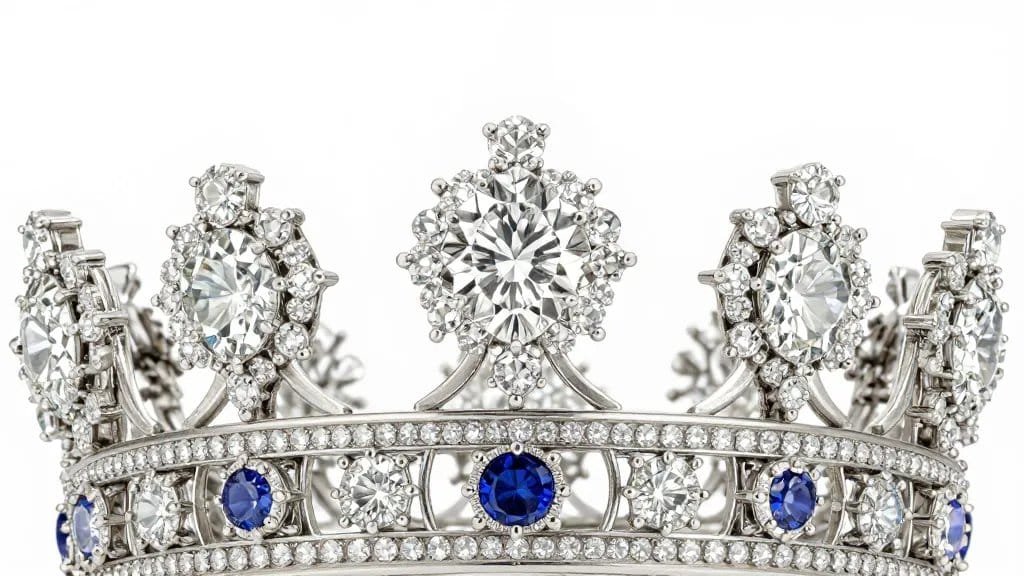
At 3,106 carats rough, the Cullinan remains the largest gem-quality diamond ever found. Discovered in South Africa in 1905, it was a chunk of crystalline ice the size of a fist. Its cleavage planes dictated how it could be split safely—a process that became a legend when Joseph Asscher opened a critical fracture with a precisely placed steel blade.
The Cullinan yielded nine major stones and dozens of smaller gems. Cullinan I, the Great Star of Africa, sits in the Sovereign’s Sceptre; Cullinan II in the Imperial State Crown. Their look is classic diamond brilliance: intense white light return, rainbow flashes, and crisp facet junctions. Good polish and symmetry amplify that “spotlight” effect people expect in crown jewels.
Historically, the Cullinan underscored how gem cutting can shape national identity. The transformation of a colossal rough into perfectly matched stones symbolized industrial skill and precision. It also influenced modern cutting standards, pushing the industry toward more scientific planning of rough using cleavage, inclusions, and weight distribution.
Buying note: large diamonds follow a different rulebook from everyday stones. At scale, keeping facet symmetry and light performance takes master-level planning. The Cullinan’s story is a reminder that a stone’s value depends as much on cut decisions as on weight. Curious how cut styles affect sparkle? Explore Gemstone Cuts and Gemstone Shapes.
The Black Prince’s Ruby: The Spinel That Fooled Kings
Gleaming in the center of the Imperial State Crown is the “Black Prince’s Ruby”—which is neither black nor a ruby. It’s a vibrant red spinel. For centuries, red spinels and rubies shared the same name because their appearance can be strikingly similar: saturated crimson to pinkish-red, vitreous luster, and strong brilliance in transparent crystals.
Spinel is 8 on the Mohs scale, with excellent toughness and typically fewer cleavage concerns than ruby. Many historic “rubies” in royal collections turned out to be spinels once gemology matured. The Black Prince’s Spinel, large and cabochon-cut, shows a soft surface glow rather than a fiery brilliant-cut sparkle. Cabochons were common for big, included stones to showcase color while hiding fractures.
Why it changed history: misidentification at royal levels pushed the rise of systematic gemstone testing. The realization that many “balas rubies” were spinels helped birth modern Gemstone Identification techniques—refractive index, spectroscopy, and later, advanced imaging. Culturally, it elevated spinel’s status from ruby’s cousin to a distinct, collectible gem.
Practical tip: if you love red but want value, natural spinel offers vivid color without the ruby premium, and it’s rarely treated. Watch for synthetic spinel, produced since the early 20th century; a reputable lab report is wise for larger stones. For pricing comparisons and durability details, check Gemstone Hardness and Gemstone Value Guide.
La Peregrina: A Pearl That Sailed Through Empires
La Peregrina—“The Pilgrim”—is an extraordinary natural saltwater pearl discovered in the 16th century in the Gulf of Panama. Large, symmetrical, and luminous, it traveled from Spanish monarchs to European courts and, centuries later, to Hollywood glamour on Elizabeth Taylor’s neck. Its appeal lies in that classic pearl glow: light softly pooling across layers of nacre, giving depth and warmth rather than crystal sparkle.
Pearls sit at Mohs 2.5–4.5, far below corundum and diamond, so they demand gentle wear. Acidic skin products, perfumes, and dry storage can erode nacre. La Peregrina’s survival over centuries speaks to careful handling and regular restringing—practices every pearl owner should copy.
Why it changed history: the Spanish crown’s wealth from New World pearls influenced maritime dominance and trade patterns. Exceptional pearls became diplomatic currency, adorning queens and cathedral treasures. In the modern era, La Peregrina helped rekindle interest in natural pearls—reminding collectors that, while cultured pearls dominate the market, nature still produces singular miracles.
Buying advice: natural pearls are rare; most pearls today are cultured. Differentiation requires x-ray or advanced testing to see the internal structure. For daily jewelry, choose well-matched cultured pearls and focus on luster (mirror-like reflections), surface cleanliness, and roundness. For upkeep, review Gemstone Care and Gemstone Jewelry for storage tips.
The Star of India and the Rise of Star Sapphires
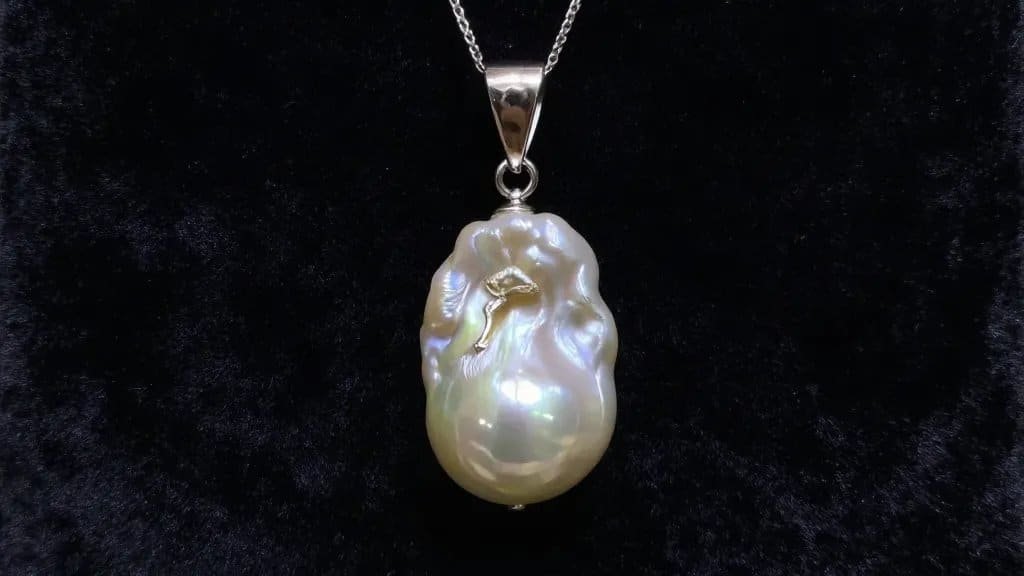
The Star of India is a massive gray-blue sapphire with a crisp six-rayed star drifting across its dome. That asterism appears when light reflects off rutile needle inclusions aligned with the crystal’s hexagonal symmetry—one of the loveliest intersections of geology and optics.
Corundum (sapphire and ruby) rates 9 on the Mohs scale, offering excellent wearability. Star sapphires are typically cabochon-cut to maximize the star. Color in the Star of India is subdued—steel-blue with milky translucency—so the star takes center stage rather than deep blue saturation. The stone famously survived theft from New York’s American Museum of Natural History in 1964 and returned to its pedestal, reinforcing its myth.
Why it changed history: it cemented the public’s fascination with phenomena stones—gems that do something with light. This attention helped expand markets for star sapphires, cat’s-eye chrysoberyl, and other “optic” gems. It also encouraged careful orientation in cutting, aligning the cabochon’s dome with the crystal’s c-axis to sharpen the star.
Buying note: look for a centered, sharp star with rays that reach the girdle and move smoothly across the surface. Uneven or fuzzy stars indicate poor cutting or low rutile density. For a broader overview of color and effects, see Gemstone Colors and Gemstone Comparisons.
The Timur Ruby and the Politics of Provenance
Another not-a-ruby: the Timur “Ruby” is a 352.5-carat red spinel etched with the names of Mughal and Persian rulers. Its slightly brownish-red tone and glassy polish give a regal, antique look, especially as a cabochon. The inscriptions turn the gem into a historical document, tracing conquests and transfers of power.
Why it changed history: it showcased how inscriptions and documented ownership can supercharge a gem’s cultural value. Provenance moved from a footnote to a major value factor. For collectors, paperwork—from old exhibition records to modern lab reports—can separate a museum-grade piece from a merely large stone.
Care and durability: like other spinels, it sits at Mohs 8 with good toughness. Avoid harsh ultrasonic cleaning if there are open fractures or old fillings. Use warm water, mild soap, and a soft brush, followed by a gentle cloth polish.
Emeralds of the Muzo and Gachala Fields: Green That Financed Empires
Colombian emeralds, especially from Muzo and Gachala, radiate a saturated green often described as fresh leaves after rain—vivid yet slightly bluish. Unlike diamonds, emeralds are prized for color over clarity; inclusions are expected and even named—“jardins,” or gardens—because of their mossy textures. They rate 7.5–8 on Mohs but can be brittle due to fissures.
Historically, these emeralds powered Spanish trade and adorned Mughal and Persian courts. Large carved emeralds—beads, bottle stoppers, plaques—were status symbols along Silk Road routes. The stones changed history by shifting gem wealth from Asia to European treasuries and setting color standards still used today.
Treatments and identification: most emeralds are oil-treated to mask surface-reaching fractures. It’s accepted, but disclosure matters. Modern fillers can include resins; a reputable report will indicate the degree of enhancement. Under magnification, you’ll see multiphase inclusions—tiny bubbles and crystals in fluid—that can point to Colombian origin, though only advanced labs can call it with confidence.
Buying guidance: prioritize hue and saturation with even color distribution. Expect some inclusions, but avoid stones where fractures threaten durability. Choose protective settings—bezels or halos—for Gemstone Rings and Gemstone Necklaces intended for frequent wear. Clean gently, avoiding ultrasonic and steam.
The Peacock Throne Gems: A Kaleidoscope of Conquest
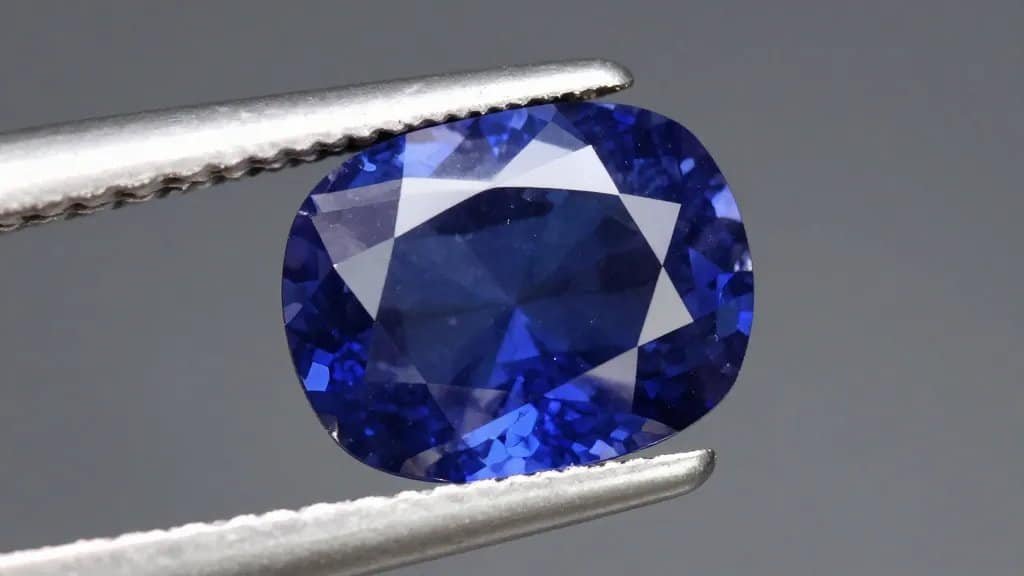
While not a single stone, the gem-laden Peacock Throne of the Mughal emperors altered the course of gemstone history. It gathered diamonds, rubies, emeralds, and pearls into a spectacle of power. The throne’s jewels—many sourced from India, Sri Lanka, and Colombia—traveled during invasions, scattering treasures like the Koh-i-Noor and Timur Ruby across new empires.
Why it changed history: it transformed gemstones into a geopolitical language. The throne’s dismantling redistributed elite gems into European and Persian treasuries, seeding royal collections that later shaped museum narratives and scholarship. It also influenced aesthetic tastes—pairing saturated greens with blood-reds, a contrast now classic in Gemstone Jewelry design.
How These Stones Reshaped Gem Knowledge and the Market
Each landmark gem taught a lesson. The Black Prince’s Spinel and Timur Ruby underscored the need for accurate testing, which grew into modern Gemstone Identification protocols. The Hope Diamond advanced our understanding of defects, fluorescence, and phosphorescence. The Cullinan professionalized large-stone planning, shaping how cutters approach value retention.
Value factors evolved too. Provenance, once a royal anecdote, became a measurable premium. Treatments moved from taboo to managed expectation (think emerald oiling). Color standards matured: we learned to name and grade “pigeon’s blood” in ruby, “royal blue” in sapphire, and “fine Colombian” in emerald with far better consistency. If you’re comparing qualities and prices today, a Gemstone Value Guide provides a grounded starting point.
For wearers, history suggests practical choices. Diamonds tolerate daily wear but dislike hard knocks along cleavage. Emeralds dazzle in evening pieces and protected settings. Pearls prefer gentle, frequent wear to maintain luster. Spinel, the silent star, delivers color and durability at accessible prices—worth exploring further under Rare Gemstones or Precious Gemstones depending on tradition.
Real vs. Fake: Lessons from Legends
Historic mix-ups gave us handy rules:
- Ruby vs. spinel: both red, but spinel is singly refractive with a different refractive index and often cleaner. Modern testing clears confusion.
- Natural vs. cultured pearls: identical to the eye; x-ray reveals internal structure. Grand claims need lab backup.
- Treated emeralds: oiling is common; clarity that looks “too perfect” can signal heavy filling. Ask for disclosure.
- Blue diamonds: natural stones are rare; verify with a lab report, especially for conductivity and spectroscopy results.
If a seller leans on a dramatic backstory without documentation, pause. Serious pieces travel with paperwork, exhibition records, and lab reports. For confident purchasing, consult a Gemstone Buying Guide and consider an independent appraisal.
Care and Display: Keeping History Bright
Good care protects both beauty and value:
- Diamonds: safe with ultrasonic cleaners unless heavily included or fracture-filled. Store separately to avoid scratching softer gems.
- Emeralds: no ultrasonic or steam. Warm, soapy water and soft brush only. Re-oiling by a professional can revive look after years.
- Pearls: last on, first off. Wipe with a soft cloth after wear. Restring periodically with knots between pearls.
- Spinel and sapphire: sturdy daily-wear options. Ultrasonic is often fine if the stone isn’t fractured or filled; when in doubt, hand-clean.
Display and settings matter. High domes emphasize asterism in star sapphires. Bezel settings shelter emeralds. Diamonds flourish in open, well-ventilated mountings that let light enter and exit for maximum brilliance.
FAQs
Is the “curse” of the Hope Diamond real?
No evidence supports a curse. The myth grew from sensational stories. Its scientific value and museum display have brought more good than gloom.
Why were so many “rubies” in royal collections actually spinels?
Before modern testing, visual similarity fooled collectors. Both can be rich red. Gemological tools later revealed different optical and chemical properties.
Are Colombian emeralds always better?
Not always. Many superb emeralds come from Zambia and Ethiopia. Color quality and clarity structure matter more than origin alone.
How can I tell if a blue diamond is natural or treated?
Only a respected gemological lab can say for sure through spectroscopy and advanced testing. Natural blues are extremely rare and costly.
Do star sapphires occur in colors other than blue?
Yes. You’ll find star sapphires in gray, black, pink, and even orange. Sharpness and symmetry of the star drive value.
What makes pearls lose luster over time?
Dry storage, heat, chemicals, and lack of wear. Pearls benefit from skin humidity but need cleaning and proper storage.
Is provenance really worth paying extra for?
For historic or collector gemstones, yes. Provenance can significantly increase value and desirability, especially with verifiable documentation.
A Final Thought
Gems are time capsules. The stones that changed history forever didn’t just glint in candlelight—they steered commerce, crowned monarchs, and nudged science forward. Whether you’re choosing a vivid spinel for a new ring or reading a lab report on an emerald, you’re participating in a story centuries in the making. Let color, craftsmanship, and credible documentation guide you—and wear a little history with confidence.

Christian Grey is the creator of GemMeaning, where he shares simple insights about crystals, gemstone meanings, and spiritual guidance. His focus is on making complex ideas easy to understand and practical for everyday life.