Gemstones are more than sparkle. Across cultures and millennia, people have read the sky and the earth through crystals, assigning them powers, stories, and roles in daily life. These traditions left fingerprints on modern jewelry habits, healing beliefs, and even how we describe color and status.
Here you’ll travel from Egyptian deserts to Himalayan valleys, from Grecian temples to Mesoamerican courts, and meet stones as ancestors knew them. You’ll learn what gemstones looked like in their prime, how they were mined and traded, and why some still carry talismanic weight. We’ll also separate myth from measurable properties—like hardness and durability—so you can appreciate both wonder and fact.
By the end, you’ll have a clearer feel for how ancient practices still shape gemstone choices, symbolic pairings, and the way we judge beauty. Keep an eye out for practical notes on identification, care, and buying that echo those old voices without losing sight of modern gemology.
Egypt: Lapis, Carnelian, and the Language of the Afterlife
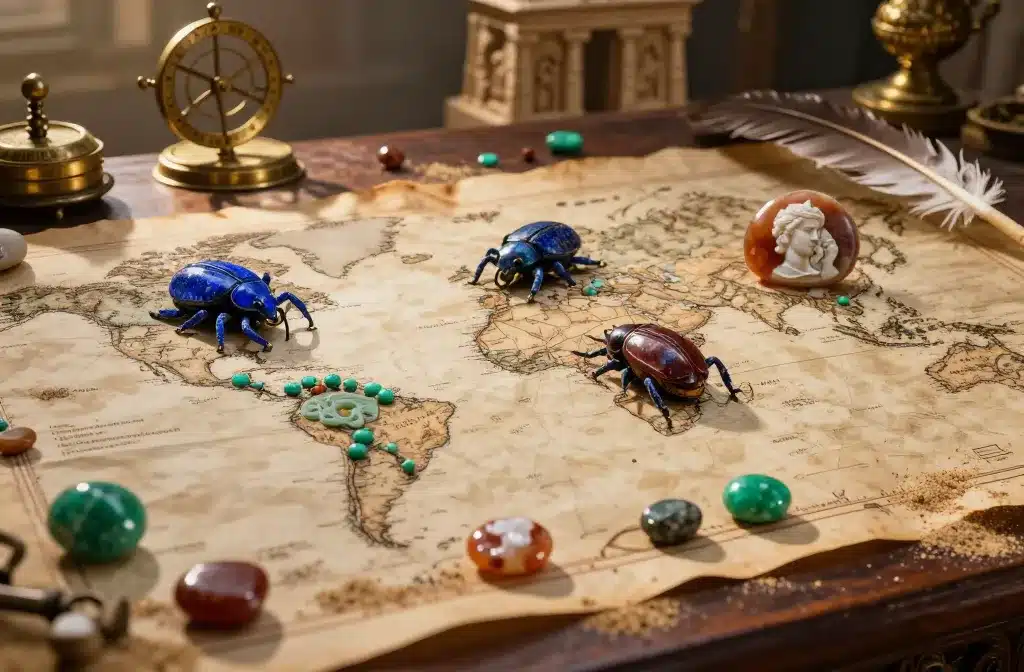
Ancient Egyptian artisans worked with a palette that reads like a sunset over the Nile: blue lapis lazuli, green feldspar and emerald, red carnelian, golden jasper, and turquoise with spider-web veins. Lapis, with its ultramarine depth flecked by pyrite “stars,” stood in for the heavens. Egyptians imported most lapis from what is now Afghanistan through long caravan routes, and shaped it into inlays, scarab seals, and protective amulets. Hardness sits around 5–5.5 on the Mohs scale; too soft for rough wear, but perfect for carved talismans.
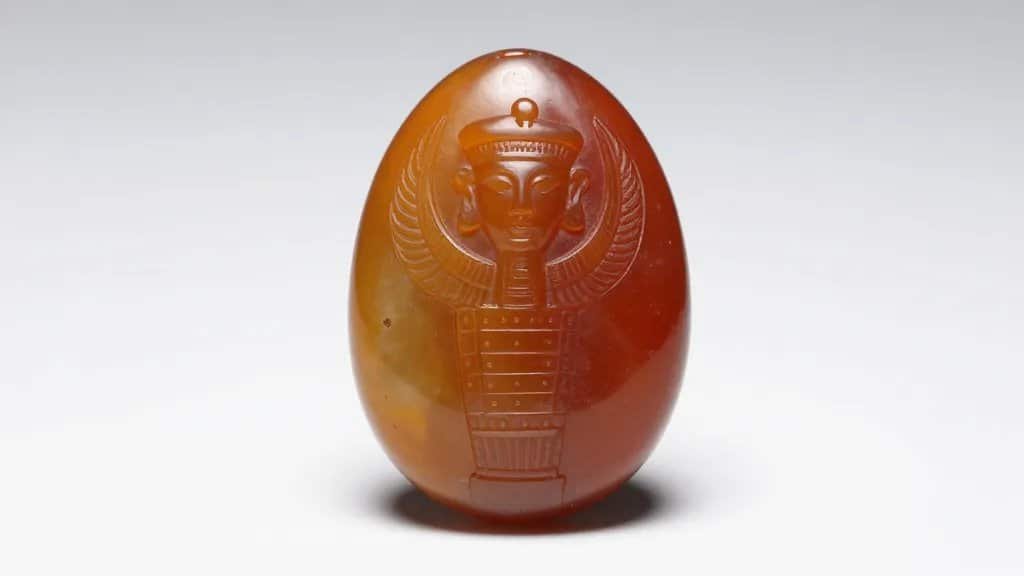
The ankh and the scarab weren’t mere motifs: carnelian scarabs placed on the chest promised rebirth. Carnelian’s warm, translucent orange to rust-red glow, often with soft banding, echoed the life-giving sun. With a Mohs hardness near 6.5–7, it survived daily use in beads and signet rings. Turquoise—often stabilized today but historically used in its natural, sometimes chalky form—symbolized protection and vitality. You’ll still see Egyptian-style inlays of gold and turquoise in modern Gemstone Jewelry, a nod to that striking color contrast and to the belief that stones watched over their wearers.
Mesopotamia and the Indus: Seals, Trade, and the First Gem Identifiers
Along the Tigris and Euphrates, lapis and agate moved like currency. Cylinder seals carved in chalcedony, agate, or hematite recorded identity and property. Under lamplight, polished agate showed layered bands of milk-white, honey, and smoke, sometimes with mossy inclusions that looked like trapped plants. People prized banding as proof of authenticity, a visual cue that still helps collectors today with basic Gemstone Identification.
In the Indus Valley, carnelian and jasper beads achieved impeccable polish. Heat treatment—yes, an ancient practice—enhanced carnelian’s color, deepening its orange. Even now, color-uniformity and translucence boost value in carnelian strands. While the ancients talked in omens rather than optics, their workshop habits prefigured modern concerns about treatments and stable color.
Greece and Rome: Philosophy Meets Practical Gemology
Greek lapidaries and Roman natural philosophers cataloged stones with a curiosity that feels almost modern. Amethyst—transparent purple quartz from lavender to royal violet—was worn to ward off intoxication. The Greek “a-methystos” means “not drunken.” As a quartz, it measures 7 on the Mohs scale, hard enough for intaglios and cameos. Roman engravers carved crisp motifs into sardonyx, stacking white and brown layers to create images that popped in relief.
Emerald, likely from Egyptian mines at Wadi Sikait, traveled into Roman rings and laurel-themed settings. Ancient emerald often showed jardin—fine garden-like inclusions—viewed not as flaws but signs of life. Today, that jardin still affects value and visibility; moderate clarity with vivid color is prized, and most emeralds receive oil treatment to reduce the look of fractures. Romans also adored pearls and garnets. Almandine garnet, with its deep claret hue and vitreous luster, gleamed in cabochons set in gold. Its 7–7.5 hardness gave it good wearability, which is partly why garnet remains a favorite in Gemstone Rings and Gemstone Earrings.
The ancients were good observers: they noticed how diamonds etched other stones and used them to drill hard gems long before the diamond’s full glory was understood. Their practical hierarchy foreshadowed our modern interest in Gemstone Hardness and durability.
Persia and the Silk Roads: Turquoise Skies and Kingly Flair
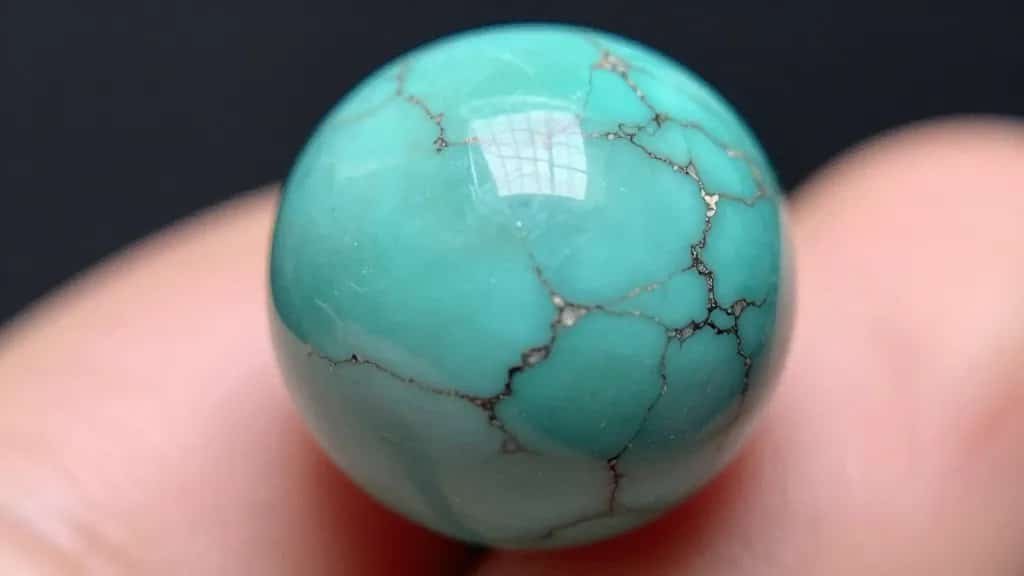
Persian turquoise—robin’s-egg blue with minimal veining—became a signature of rank and protection. Artisans set it in domed gold bezels or tiled it into mosaics that caught soft desert light. Chemically, turquoise is a hydrated copper aluminum phosphate; copper lends the blue, iron can push it greener. Its 5–6 hardness means it’s relatively soft and porous, which explains why stabilized turquoise is common today. The color’s serenity was thought to protect travelers, a belief that rode the Silk Roads toward the Mediterranean and East.
Spinel also traveled those routes, often masquerading as ruby in crowns—the Black Prince’s “ruby” in England is actually a red spinel. Spinel’s octahedral crystals form sharp, glossy facets and come in reds, pinks, blues, and even steely grays. At 8 on the Mohs scale, it resists abrasion; that durability helps explain why ancient regalia still looks crisp under museum lights. Distinguishing spinel from ruby was historically hard, proving the value of modern refractive index and spectroscopy—skills echoed in any serious Gemstone Comparisons or lab report.
India: Nine Planets, Nine Gems, and a Tapestry of Belief
Few cultures braided gemstones into daily life as intricately as India. The navaratna arrangement assigns nine gems to the nine celestial bodies: ruby (Sun), pearl (Moon), red coral (Mars), emerald (Mercury), yellow sapphire (Jupiter), diamond (Venus), blue sapphire (Saturn), hessonite garnet (Rahu), and cat’s eye chrysoberyl (Ketu). Worn in specific orders, these gems were believed to balance cosmic influences. Even if you don’t follow astrology, the arrangement reads like a curated color wheel: flame-red ruby, meadow-green emerald, canary and cornflower sapphires, milky pearl, and the smoky honey of hessonite.
Indian lapidaries perfected cuts that honored each stone’s optical strengths. Ruby and sapphire—both corundum at Mohs 9—took brilliant facets that shot back sharp flashes. Diamond’s adamantine luster and perfect octahedral cleavage demanded careful handling even then. Meanwhile, cat’s eye chrysoberyl, with its silky chatoyancy, was shaped into rounded cabochons to coax the slender light band across the dome. These practical traditions still guide modern Gemstone Cuts and Gemstone Shapes: choose facets for sparkle, domes for phenomena like stars and eyes.
China: Jade as Virtue, Not Just Stone
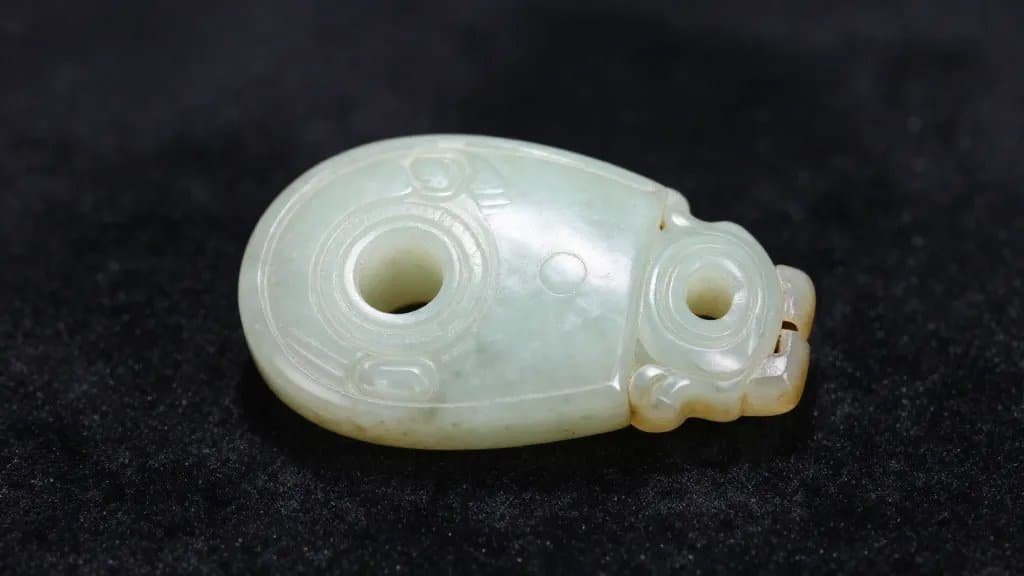
Translate “jade” in Chinese tradition and you get character, not chemistry. Jade signified purity, courage, and balance. Two minerals travel under the jade banner: nephrite (tough, interlocking fibers of amphibole) and jadeite (denser pyroxene, rarer, often brighter). Both sit around 6–6.5 on the Mohs scale, but toughness is where jade shines—those fibrous structures resist breaking. That’s why ancient bi discs and cong tubes survived centuries of burial; they were painstakingly abraded rather than cut.
Jade colors range from creamy mutton fat (highly valued nephrite) to the vibrant “imperial” green of chromium-rich jadeite. Translucency is key: fine jadeite glows like dew lit from within. In antiquity, polish mattered as much as hue; a glossy, skin-like surface symbolized refinement. Modern markets echo these cues: even color, fine translucency, and crisp carving command top prices. Because dyeing and polymer impregnation can enhance lesser material, a lab report is wise—an early lesson wrapped in modern Gemstone Buying Guide wisdom.
Pre-Columbian Americas: Turquoise Mosaics, Jade Rites, and Obsidian Mirrors
Across Mesoamerica, turquoise, jade, and obsidian carried power. Aztec and Mixtec artisans set tiny turquoise tesserae into wooden masks and knives, creating luminous skins of sky blue. The porous nature of some turquoise meant careful handling and, sometimes, backing for stability. Mayans revered jadeite, the same tough stone prized in China, shaping it into beads, pectorals, and earflares. The finest pieces show saturated apple to emerald green with a watery translucence. For rites of passage, jade symbolized breath and life.
Obsidian, a volcanic glass, lacks crystal structure but fractures into ferociously sharp edges. Ancient craftspeople knapped it into blades and polished it into mirrors so dark they seem to swallow light. On the Mohs scale, obsidian rates around 5–5.5, but its brittleness requires respect—no ultrasonic cleaners or sudden knocks. Even today, obsidian’s glossy surface and dramatic bands (in sheen or rainbow varieties) make striking statement pieces in Gemstone Necklaces and ritual-inspired talismans.
Africa Beyond the Nile: Red Seas, Green Hills, and Blue Fire
East Africa’s gem story long predates modern finds in Tanzania and Madagascar. The Red Sea produced ancient peridot—gem olivine—from volcanic islands like Zabargad. Under sunlight, good peridot radiates a grassy glow with a hint of golden syrup, a cheerful color that ancient mariners believed calmed storms. At 6.5–7 hardness and with distinct cleavage, peridot benefits from protective settings in rings but makes excellent pendants and earrings.
Ethiopia’s opal has rewritten modern expectations, but opal lore is ancient. Romans prized opal as the king of gems because it seemed to hold all colors. Play-of-color arises from silica spheres diffracting light; when neatly ordered, the dance intensifies. Opal is around 5.5–6.5 in hardness and can be sensitive to sudden temperature and dryness. Those who wore it historically often treated it as a talisman of vision and prophecy—poetic imagery for a gem that literally shimmers with shifting rainbows.
Myths, Meanings, and What the Science Says
Ancient texts brim with claims: amethyst cures drunkenness, emerald rests the eyes, sapphire protects from envy, ruby emits inner fire. While modern science doesn’t validate mystical powers, many beliefs stem from honest observation. Emerald’s green is indeed restful, thanks to its place in the visible spectrum. Ruby’s fluorescence makes it glow under sunlight, feeding the “inner flame” metaphor. Sapphire’s toughness (nine on the Mohs scale) explains why it became a byword for steadfastness.
If you love the stories, keep them. Add a layer of practical sense, and they become guides rather than rules. For instance, if a tradition recommends turquoise for travelers, consider it a travel charm—but choose stabilized material, set securely, and keep it away from cosmetics. That happy marriage of story and stewardship is how heirlooms are born.
Identifying Authenticity: Lessons Borrowed from Antiquity
Ancient artisans relied on eyes and fingertips. You can, too, with a few grounded tips:
- Surface and luster: Lapis shows a buttery, granular surface with gold-like pyrite specks; dyed howlite imitators look too even and lack pyrite. Jade’s polish feels “soft” and waxy compared to glassy impostors.
- Structure and inclusions: Banded agate should show natural, irregular layers; perfectly uniform banding in bright candy colors often indicates dye. Emerald’s jardin can be beautiful; gas bubbles alone may suggest glass.
- Weight and temperature: Genuine stones often feel cooler and heavier than plastic or resin beads. Jade and chalcedony hold a comfortable coolness longer than glass imitations.
- Optical behaviors: Cat’s eye and star effects require domed cuts; if you see a star in a flat stone, be skeptical. Spinel and ruby can look similar, but spinel often shows singly refractive behavior; trained eyes or a lab test can tell.
When the stakes are high, trust modern labs. Certificates matter for emerald, ruby, sapphire, jade, and high-value spinel. For collecting, a measured approach—rooted in traditional observation and modern tools—fits well with a thoughtful Gemstone Value Guide mindset.
Wearing and Caring: Keep the Old Magic Alive
Ancient people didn’t have ultrasonic cleaners, and some of their instincts were right. Gentle care often wins:
- Soft gems: Turquoise, lapis, malachite, opal, and coral prefer mild soap, lukewarm water, and a soft cloth. Avoid chemicals and extremes of heat.
- Fracture-filled or oiled stones: Emerald and some rubies or sapphires are commonly treated. Skip ultrasonic and steam. Wipe with a damp cloth and dry gently.
- Hard workhorses: Sapphire, ruby, spinel, and garnet handle daily wear well. Still, remove rings when lifting weights or working with abrasives.
- Stringing and settings: Ancient bead strands were restrung regularly. Do the same: restring necklaces yearly if worn often. For bezel-set cabochons, check the rim for looseness.
Choosing settings that echo tradition—granulation for Etruscan style, inlay for Egyptian looks, or intricate filigree nodding to Mughal heritage—can anchor a modern piece in old stories. Browse broader topics like Gemstone Care and Gemstone Jewelry to match style with sensible upkeep.
What the Ancients Would Notice in Today’s Market
They’d marvel at precision cuts throwing pin-sharp scintillation from even modest stones. They’d also recognize the perennial draw of saturated color and fine polish. Treatments would surprise them, but perhaps not entirely: heat for ruby and sapphire clarifies silk and deepens hue, a more controlled descendant of ancient practices. Dyes and glass infills, on the other hand, demand clear disclosure and thoughtful buying.
Value today still leans on rules they’d understand: color first (vivid but not inky), then clarity appropriate to species, cut that flatters the material, and carat weight as a multiplier rather than a virtue on its own. Rarity matters too—fine jades, velvety blue sapphires, neon spinels, and old-mine emeralds hold cachet. For deeper collecting insights, explore Collector Gemstones and Gemstone History to track provenance and evolving tastes.
Frequently Asked Questions
Did ancient people use synthetic or treated gemstones?
No synthetics existed, but heat treatment was practiced in some regions, especially for carnelian and possibly early corundum. Dyeing porous stones like agate and turquoise is also an old technique.
Which ancient gemstone is most durable for everyday wear?
Ruby and sapphire (Mohs 9) and spinel (8) are excellent for daily rings. Garnet (7–7.5) is good with basic care. Softer stones like turquoise or lapis are better in pendants or earrings.
How can I honor historical styles in modern jewelry?
Choose design cues: Egyptian inlay with turquoise and carnelian, Greek/Roman cameos in sardonyx, Mughal-inspired ruby and emerald ensembles, or Chinese-style jade bangles with high polish.
Are jadeite and nephrite equally valuable?
Not usually. Fine jadeite—especially vivid, even imperial green with translucency—commands higher prices. Nephrite has its own collectors, with prized creamy “mutton fat” varieties.
What’s a practical way to spot dyed lapis or howlite imitations?
Look for overly uniform blue and pores filled with dye; rub a cotton swab lightly with alcohol on an inconspicuous area—dye may transfer. Genuine lapis shows natural color variation and pyrite flecks.
Why did the ancients prize inclusions in some gems?
They often saw inclusions as life signs—jardin in emerald or silken rutile in sapphire evoked vitality. Today, some inclusions (like well-oriented rutile stars) increase value.
Is turquoise from ancient sources different from modern stabilized stones?
Ancient turquoise was typically untreated and often more porous. Stabilized modern turquoise is tougher and more colorfast, a practical choice for frequent wear.
Final Thoughts
Ancient gemstone traditions stitched beauty to meaning, and the thread still holds. Learn the stories, respect the science, and choose with both heart and head—your jewelry box will feel like a small museum where every piece earns its place.

Christian Grey is the creator of GemMeaning, where he shares simple insights about crystals, gemstone meanings, and spiritual guidance. His focus is on making complex ideas easy to understand and practical for everyday life.