Few gems carry the hush of history like emeralds. Their saturated green—deep as a forest at twilight—has long signaled power, faith, and a touch of mystery. When those stones also carry a royal provenance, they stop being “just” gemstones and become storytellers.
In this article, you’ll tour the great emeralds associated with monarchs and empires, learn how they formed and why their color is so compelling, and pick up practical tips for authentication, buying, and care. You’ll also see how symbolism, geology, and craftsmanship come together to create heirlooms that outlive crowns.
We’ll move from the mines to the palace vault, pausing at famous pieces—from Mughal-carved emeralds to tiaras that survived revolutions. Along the way, you’ll find collector insights and comparisons to help you judge value, beauty, and authenticity.
By the end, you’ll understand not just which emeralds made history, but how to evaluate one for your own collection—or simply appreciate the ones you’ll encounter in museums, auctions, and trusted references.
Why Royalty Chose Emeralds: Color, Symbolism, and Presence
Emerald’s green owes its color to trace amounts of chromium, vanadium, or both within the beryl crystal structure. The right chemistry and slow geological “cooking” create that saturated hue that feels both fresh and ancient. Historically, rulers saw more than color. Green symbolized rebirth, divine favor, fertile lands, and sharp vision. In Renaissance Europe it hinted at learning and virtue. In the Islamic world, green carried sacred resonance, which is why Mughal emperors prized massive Colombian crystals, often carved with Quranic verses or floral motifs.
There’s also simple optics. Fine emerald projects across a room with a velvet glow, less flashy than diamond fire but more commanding than most colored stones. On state occasions, that quiet gravity mattered. An emerald cabochon at the brow or a strand of big, clean beads on the chest sends an unmistakable message: continuity and command.
From Earth to Empire: Origins and Geological Backstory
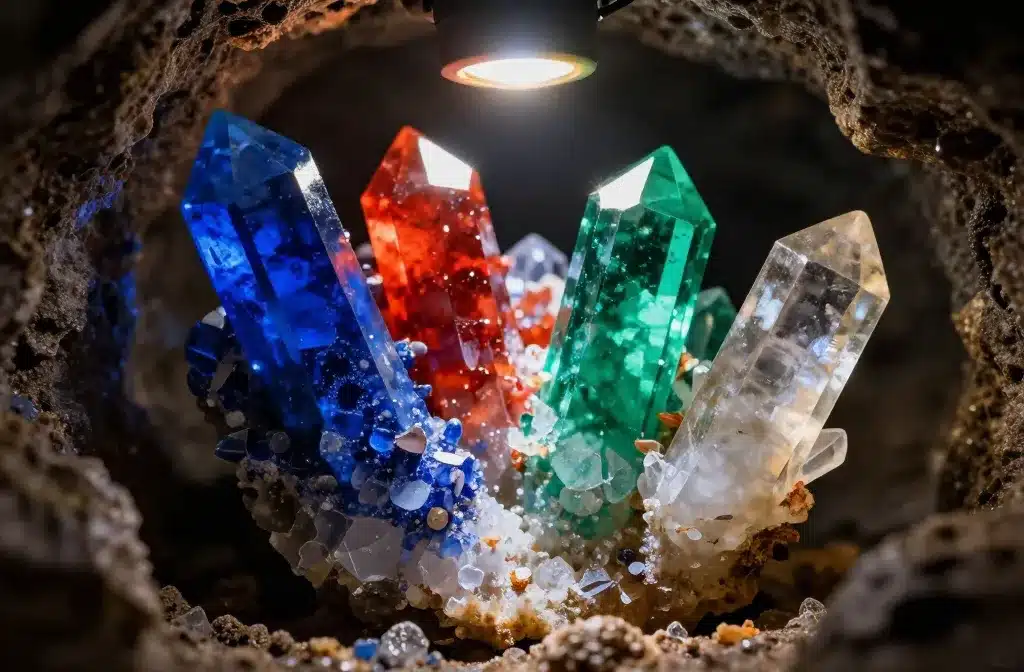
Most royal emeralds trace back to Colombian deposits, especially Muzo and Chivor. These mines produce the archetypal saturated “old mine” green with a bluish undertone and strong saturation that stays lively under low light. Geological oddity helps here—hydrothermal fluids infiltrating black shale and limestone led to emerald-bearing veins that, when lucky, grow into sizable crystals with rich color.
Other sources certainly appear in royal collections. The Habachtal in Austria furnished emeralds that occasionally reached European courts in the Middle Ages. More recently, Zambia’s Kagem mine has yielded fine emeralds of remarkable clarity, often with a slightly cooler, bluish-green cast. Some modern royal jewels include Zambian stones, although the famous historic pieces are largely Colombian.
On the Mohs Scale, emerald sits at 7.5–8, theoretically hard enough for daily wear. But its many internal fissures—known as “jardin,” French for garden—make it less tough than corundum gems. These inclusions are part of the stone’s personality; no two gardens are alike. Royal jewelers learned to mount emeralds in protective settings—closed backs in earlier centuries, sturdy prongs or bezels later—to preserve them through centuries of ceremonies.
Famous Royal Emeralds and the Stories They Tell
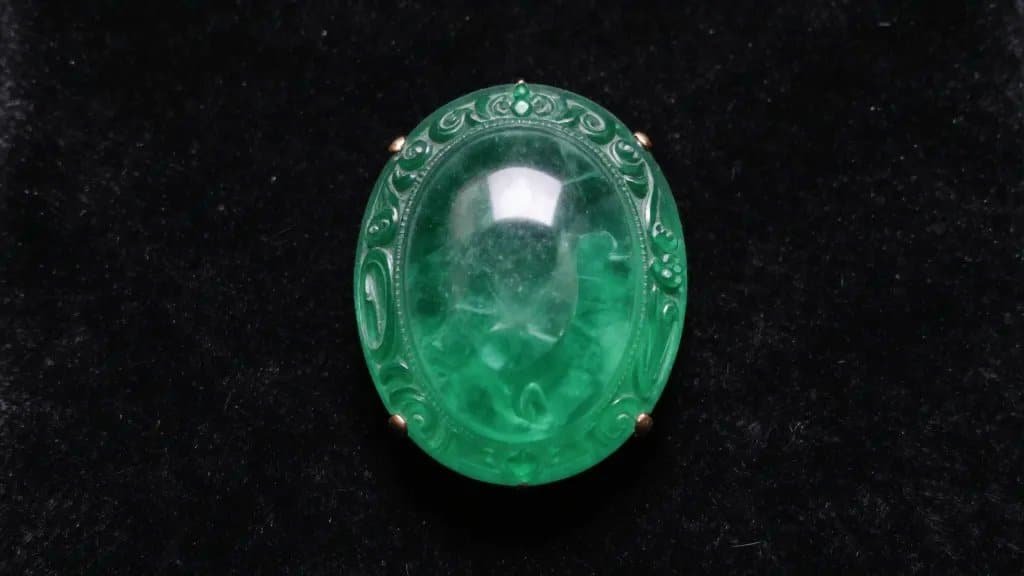
Great emeralds rarely live quiet lives. Here are some of the most storied pieces and why they matter to gem lovers.
- The Moghul Emerald: This massive Colombian emerald (carved 1695) bears intricate floral scrolls and Arabic inscriptions, likely connecting it to the Mughal court. Its surface carving transforms the gem into a work of devotional art, illustrating how emerald’s relative softness compared to corundum invites gemstone glyptics. Its auction history and museum displays have cemented its icon status.
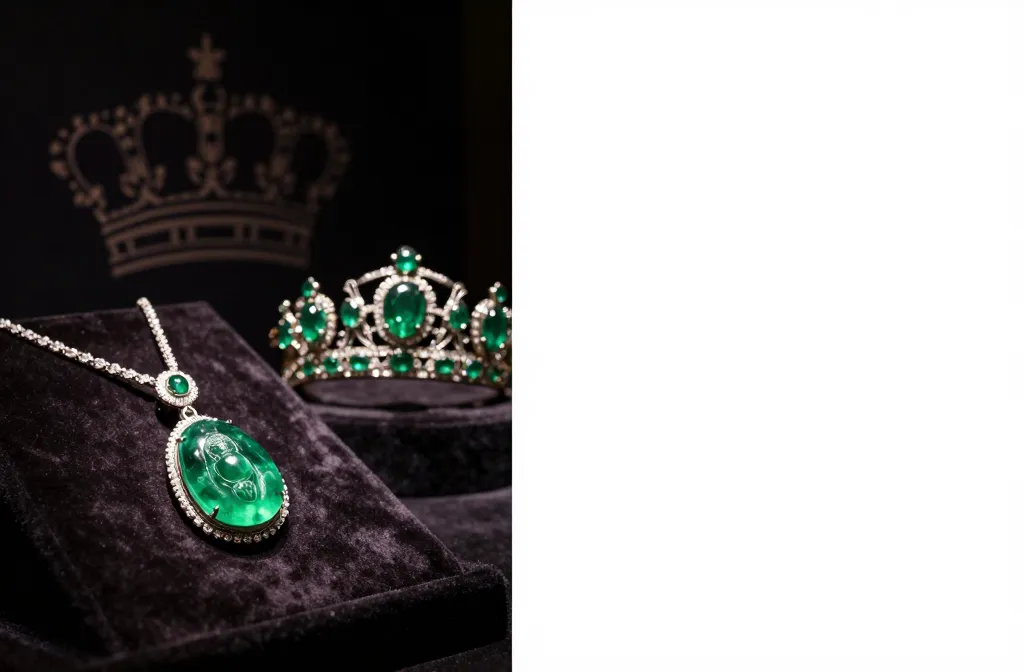
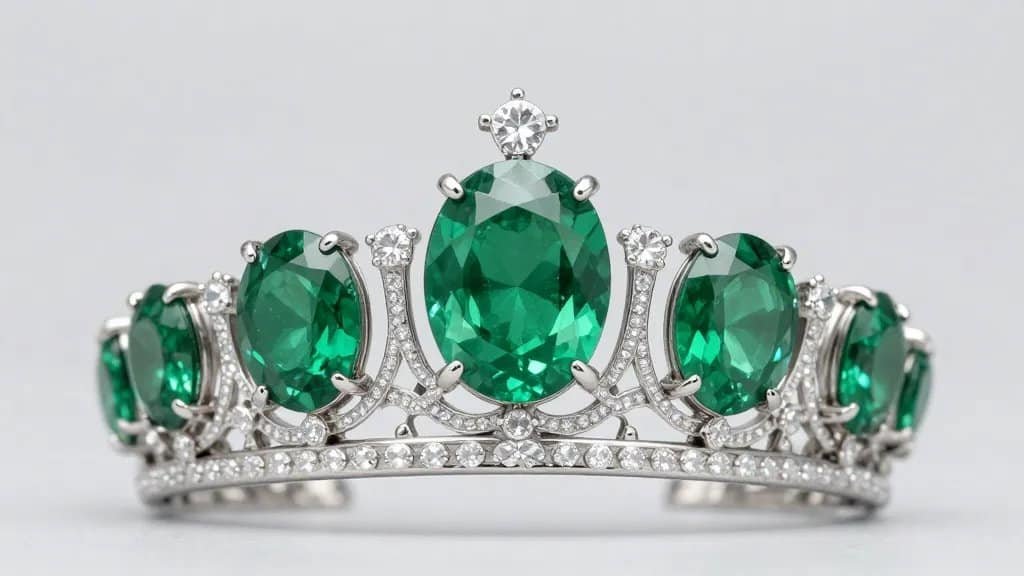
- The Grand Duchess Vladimir Tiara (British Royal Collection): Originally owned by Grand Duchess Maria Pavlovna of Russia, this tiara’s frame was smuggled out after the Revolution. Queen Mary acquired it and had it adapted to interchange pearl drops with polished emerald drops. The stark contrast between the cool white of diamonds and the lush green of pear-shaped emeralds makes it a masterpiece of versatility—and a nod to how royal jewels often evolve while preserving their core stones.
- The Delhi Durbar Parure: Created for Queen Mary in 1911, parts of this suite later incorporated spectacular emeralds. These stones, hailing from Colombia, turn stately Edwardian designs into lush statements. Large step-cut emeralds paired with diamonds showcase how crisp facet geometry tempers emerald’s internal garden, letting light sheet across the table in broad flashes rather than pinfire sparkles.
- Brazil’s Imperial Emeralds: The Brazilian imperial family wore notable emeralds during the 19th century, a time when the country’s own gem wealth included topaz and aquamarine more than emerald, but with trade routes ensuring Colombian stones found their way into court life. Surviving pieces often feature cushion cuts framed by rose-cut diamonds—soft, candlelit glamour meant for court salons.
- Spanish and Portuguese Emerald Treasures: Colonial trade funneled Colombian emeralds to Iberian courts. Period jewels display table cuts and cabochons set in yellow gold, sometimes with enamel. These early cuts, with their broad facets or domed surfaces, emphasize body color over brilliance, producing that regal, waxy glow you see under gallery lights today.
What Sets Royal Emeralds Apart: Cut, Craft, and Character
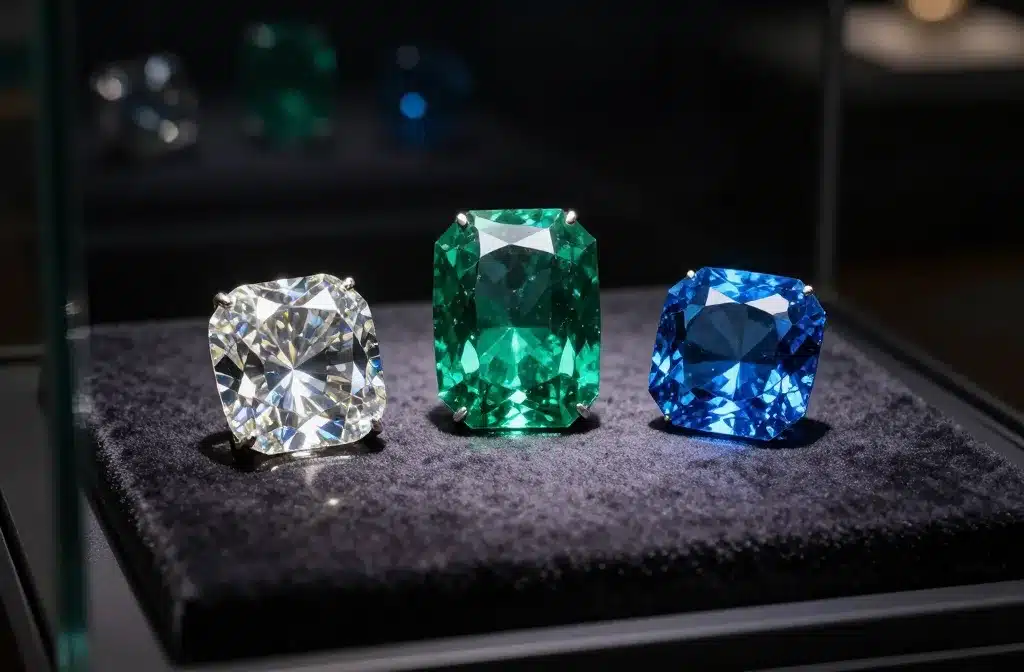
While size and color headline, craftsmanship completes the story. Historic emeralds frequently appear in forms that respect the crystal. The octagonal “emerald cut” became popular precisely to reduce chipping and to showcase color evenly. Older table cuts, sugarloaf cabochons, and rounded beads reveal a preference for smooth light and saturated presence. These shapes also cooperate with inclusions, allowing the garden to look serene rather than busy.
Royal jewelers also understood pairing. Emerald with diamonds is a classic, but older pieces often used silver-topped gold or closed-back settings to enhance color. The frame can warm a bluish stone or deepen a mid-toned one. In tiaras and orders of chivalry, symmetry and rhythm matter as much as carat weight—repeating pear-shaped drops or step cuts to build an architectural line of green that holds its own against brocade and orders.
Many royal emeralds retain tool marks, growth tubes, three-phase inclusions (liquid, gas, and tiny crystals), and minute fractures that tell a geological story. Rather than detract, these signatures reassure connoisseurs. A perfectly clean, large emerald is so rare that it often invites extra scrutiny.
Provenance and Value: How History Multiplies Worth
Value starts with the classic emerald triad: color, clarity, and cut, adjusted for carat weight. The dream tone is vivid green with a gentle bluish modifier, medium to medium-dark, neither too inky nor too pale. Clarity in emerald is assessed with leniency compared to ruby or sapphire, but transparency still matters—stones that seem to “light up” evenly across the face are premium.
Royal provenance supercharges this baseline. Documentation—letters, inventories, makers’ marks, and portraits—anchors stories to facts. Auction houses devote vast energy to this paper trail. A fine emerald might be worth six figures. Add a confirmed link to a queen with portraits showing her wearing it, and the estimate may triple. The reason is simple: a buyer isn’t just acquiring carats; they’re acquiring a cultural artifact.
Beware the seductive but vague “royal style” description. Serious collectors look for:
- Chain-of-custody evidence: inventory ledgers, court jeweler invoices, or estate records.
- Maker attribution: names like Garrard, Chaumet, Cartier, or Bolin linked to known royal clients.
- Photographic or painted likenesses: the same jewel identifiable by unique stone arrangement or an unusual cut.
- Consistent gemology: Colombian chemistry and inclusion patterns aligning with period expectations.
For a deeper dive on weighing color and clarity across gem types, look to a Gemstone Value Guide or Gemstone Comparisons resource. They’ll help situate emeralds among other Precious Gemstones and Collector Gemstones.
Treatments, Fakes, and Forensics: Protecting Yourself and the Legacy
Almost all emeralds, including royal ones, receive oiling to improve apparent clarity. Historically, cedarwood oil filled surface-reaching fissures to make gardens less obvious. Today, sophisticated polymers exist, though high-end trade still favors traditional oils. Treatment isn’t a sin, but it must be disclosed. The extent—none, minor, moderate, or significant—affects value.
Royal-era re-oiling across centuries is common, so conservative restorations are not unusual in museum or estate contexts. However, heavy polymer infill can mask instability, and may age poorly. Reputable labs (e.g., GIA, SSEF, Gübelin) note filling types and degrees, and sometimes origin. A lab report is standard at the top end.
As for impostors, watch for:
- Synthetics: Hydrothermal synthetic emeralds grew popular from the mid-20th century; earlier royal pieces won’t feature them unless later “restored.” Microscopic examination shows diagnostic growth patterns and chevron zoning.
- Doublets and triplets: Assembled stones with green layers can look convincing at a glance; side-on viewing often reveals joins.
- Green glass: Softer, bubbly, and too even in color; lacks emerald’s crisp refractive character.
Identification tools—microscope, refractometer, spectroscope—remain your allies. If you’re learning, a Gemstone Identification guide is a good companion. For everyday shoppers, ask for a respected lab report and be cautious with claims unsupported by paperwork.
Wearing the Crown’s Color: Jewelry Ideas Inspired by Royal Pieces
Most of us won’t pin on a historic order or don a state tiara, but we can borrow cues. If you love the Vladimir’s drama, consider emerald drop earrings with diamonds. Pear-shaped or briolette drops echo the gentle sway and catch warm, diffuse light at dinners and events. For a quieter nod, a sugarloaf cabochon ring in yellow gold channels Iberian antique vibes—simple, bold, and tactile.
Bracelets with alternating emerald and diamond links give a formal, almost architectural cadence. Necklaces with graduated emerald beads evoke Mughal strands, especially when paired with finely chased gold spacers. And if durability worries you, choose settings with protective bezels and lower profiles for rings you’ll wear often.
Emerald sits handily among Gemstone Necklaces and Gemstone Earrings when you want statement color without overwhelming sparkle. Consider the rest of your palette: emerald loves ivory, charcoal, and deep navy fabrics. It can also play beautifully against warm skin tones in yellow gold or gain cool sophistication in platinum.
Care, Cleaning, and Longevity for Heirloom Stones
Emerald’s Achilles’ heel is its network of fissures. Treat yours tenderly:
- Avoid ultrasonic and steam cleaners. They can dislodge fillers and stress fractures.
- Use lukewarm water, mild soap, and a soft brush. Rinse thoroughly; pat dry.
- Keep away from harsh solvents, heat, and sudden temperature changes.
- Store pieces separately in soft pouches to avoid scratches from diamonds and sapphires.
- Plan periodic checkups. A skilled jeweler can assess settings and, if appropriate, recommend light re-oiling by a specialist.
Handled well, emeralds last centuries. Many royal stones we admire today survived wars, travel, and repeated remounting because caretakers respected their needs.
Collecting with Confidence: Buying Advice and Red Flags
For anyone eyeing an emerald with lofty claims, combine romance with rigor:
- Insist on a lab report from a recognized institution and a treatment declaration.
- Ask for detailed provenance. If the seller mentions “royal,” request documentation beyond anecdotes.
- Evaluate color in various lights—daylight, warm indoor light, and neutral LED. Fine emerald remains vivid without turning murky.
- Check transparency from multiple angles. Gardens should look organic, not like cloudy swirls dominating the face.
- Review the cut. Even in antique styles, symmetry and a level table suggest care and stability.
If you’re new to the category, consult a Gemstone Buying Guide and cross-reference Gemstone Hardness and Gemstone Care resources. Trusted dealers welcome questions and will discuss origin and treatment openly.
Myths and Misreadings: What History Really Says
Myth: “Royal emeralds are flawless.” Reality: nearly all emeralds have inclusions, even at the top echelons. Those gardens are part of the charm and help experts track origin and authenticity.
Myth: “Only Colombian stones deserve royal status.” Reality: Colombian material dominates historic pieces, but courts wore whatever the best merchants supplied—including Afghan, Austrian, and, in later periods, Zambian stones. Beauty and availability ruled.
Myth: “Old stones are tougher.” Reality: Age doesn’t strengthen emerald. If anything, centuries of wear make good maintenance more vital. The survival of a royal emerald owes much to careful mounting and gentle handling.
Frequently Asked Questions
Are emeralds suitable for daily-wear rings?
With protective settings and mindful care, yes—but they’re not as rugged as sapphire or diamond. Choose bezel or low-profile mounts and avoid impacts and harsh cleaners.
How can I tell if an emerald is Colombian?
Origin is best determined by a major lab using inclusion analysis and trace-element chemistry. Visual hints exist, but lab confirmation is the standard for high-value stones.
Do all royal emeralds come with certificates?
Modern sales typically include lab reports. Museum-held pieces may rely on historical documentation, but when they enter the market, reputable sellers commission fresh reports.
What cut shows emerald color best?
Step cuts (the classic emerald cut) and sugarloaf cabochons emphasize body color and even glow. Brilliant cuts can work for smaller, lively stones.
Is oiling an emerald acceptable?
Yes. Minor, well-disclosed oiling is common and widely accepted. Heavy polymer infill lowers value and should be priced accordingly.
Why do some emeralds look bluish?
Trace elements and origin influence hue. Colombian stones often show a gentle blue modifier; lighting and metal color (yellow vs. white) also affect perception.
What’s the best metal for emerald settings?
Yellow gold flatters warm, slightly bluish stones; platinum or white gold emphasizes contrast with diamonds. The best choice depends on the stone’s individual tone.
A Final Word
Emeralds that belonged to royal families resonate because they unite Earth’s deep processes with human stories of ceremony, devotion, and taste. Study their color in calm light, trace their journeys through archives, and care for them with patience. Whether you collect or simply admire, these greens offer a masterclass in how beauty accrues meaning over centuries.

Christian Grey is the creator of GemMeaning, where he shares simple insights about crystals, gemstone meanings, and spiritual guidance. His focus is on making complex ideas easy to understand and practical for everyday life.