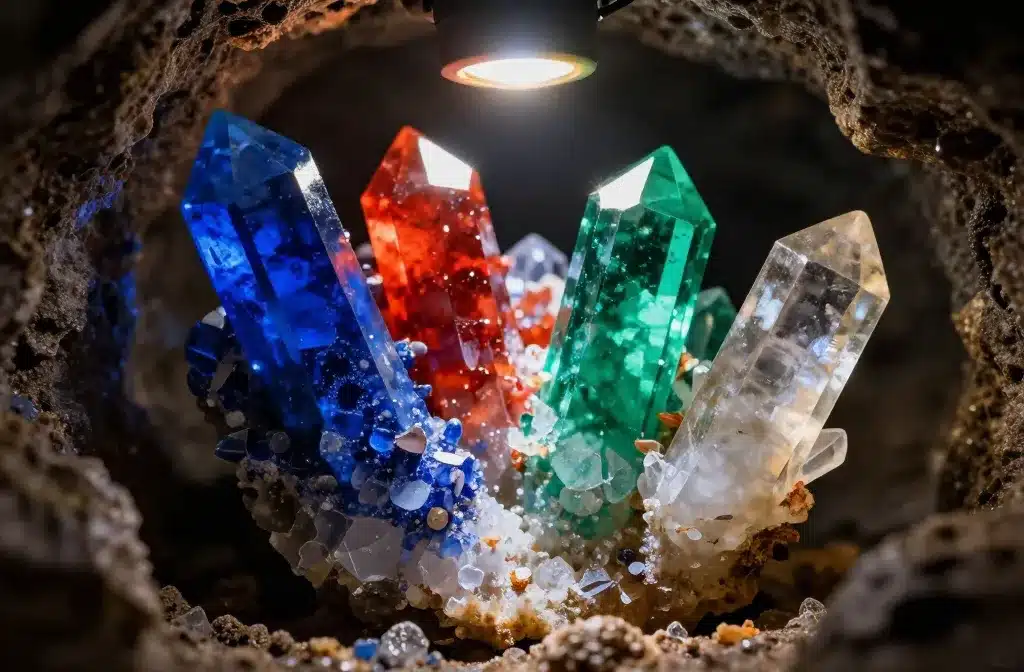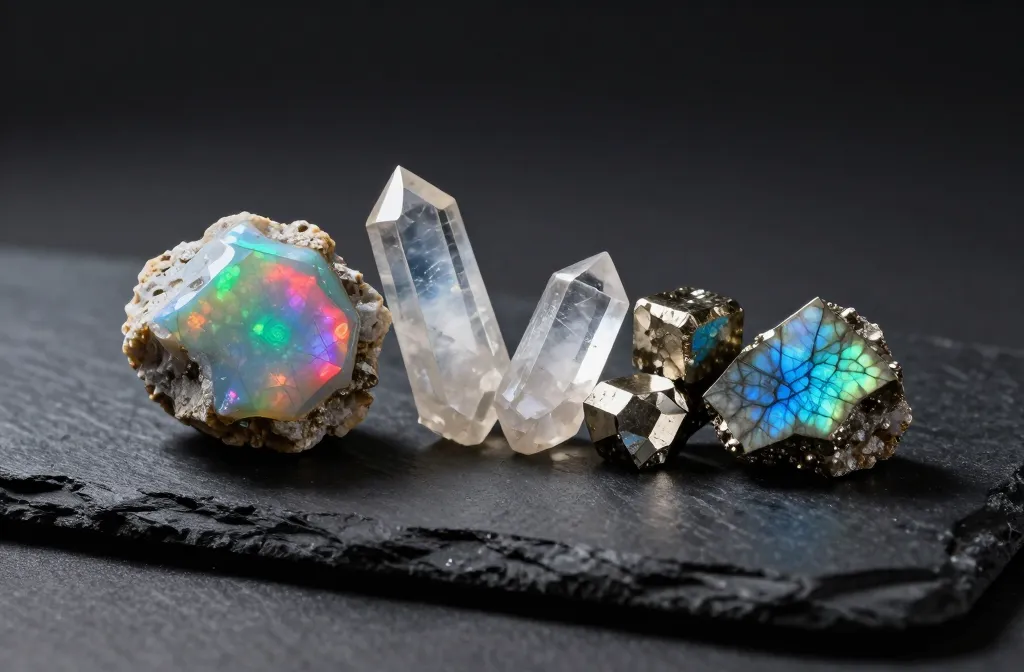
If you’ve only seen gemstones after they’ve been cut and polished, you’ve missed half the magic. Raw minerals are the candid portraits of Earth’s artistry—color, geometry, and light captured mid-formation.
Here, you’ll meet minerals that astonish in their natural state: shimmering plates, razor-sharp crystals, eerie glows, and colors that seem impossible. I’ll explain what they look like in the wild, how they form, what makes them valuable, and how to care for them if you decide to bring a specimen home.
By the end, you’ll understand why collectors chase rough just as fervently as faceted gems, and how to spot the difference between a spectacular natural piece and a cleverly made imitation.
Opal in the Rough: Fire Trapped in Stone
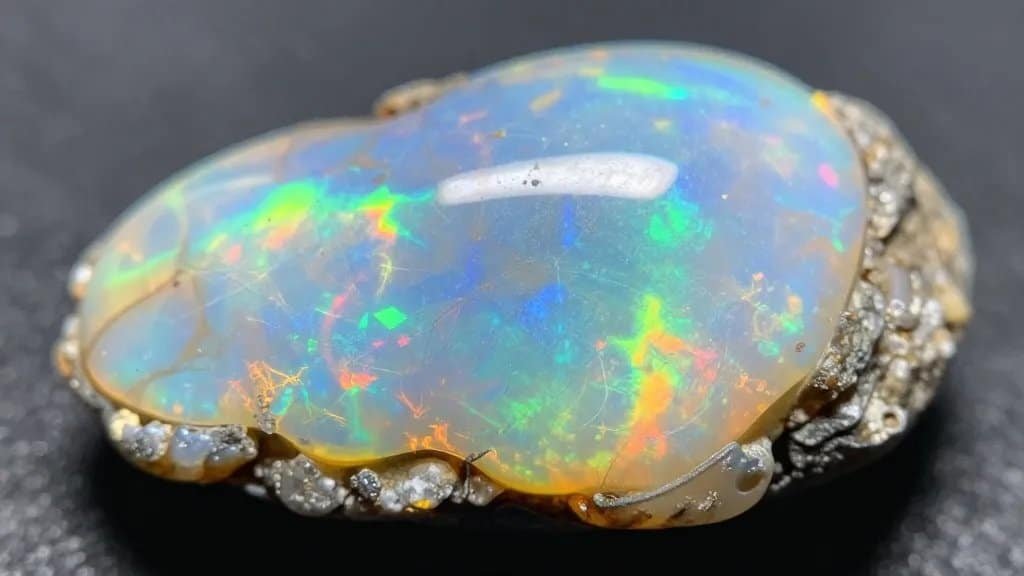
Uncut opal looks unassuming at first—often a chalky or iron-stained host cradling a glossy window of color. Then you tilt it, and a mosaic of neon plays across the surface. Those flashes—red, orange, green, electric violet—come from microscopic silica spheres diffracting light.
Precious opal forms in low-temperature silica-rich fluids that percolate into cracks of sandstone or basalt. Australian fields remain the benchmark, but Ethiopia and Mexico have written their own chapters, with Ethiopia producing hydrophane opal that can absorb water and temporarily change appearance.
Mohs hardness sits around 5.5–6.5, so it’s softer than the quartz family. Raw opal often shows a “potch” backing (common opal without play-of-color) beneath a bright seam. That contrast is a good sign. Beware of dyed common opal or assembled “doublets” masquerading as natural rough. Authentic rough shows natural parting, uneven thickness, and organic transitions between color zones.
Value hinges on brightness, broad uninterrupted patches of color, and dominance of red or multi-directional play. If you’re thinking jewelry, choose protective settings or consider a polished cabochon from your rough. For a deeper comparison with other soft gems, look up Gemstone Hardness and Gemstone Care to get a sense of durability in daily wear.
Tourmaline Crystals: Rainbow Geometry Straight from the Pocket
Few minerals arrive from the ground already shaped like fine jewelry. Tourmaline does. Long, striated prisms break out of pegmatites in a painter’s palette of hues—bottle-green, lagoon-blue, hot pink, and the famed watermelon slices with pink cores and green rims.
Formation in boron-rich, slow-cooling pegmatites allows large, clean crystals to grow. Brazil, Afghanistan, Mozambique, and California produce memorable pieces. You’ll often spot vertical ridges along crystal faces and naturally flat terminations that look as if they were buffed—nature’s precision at work.
Mohs hardness 7–7.5 provides decent durability. In rough, clarity windows can be tested with a flashlight: rotate gently and watch how internal veils come and go. Chromium-rich greens (chrome tourmaline) and saturated neon blues (paraíba-type) command serious attention and prices, even in rough fragments.
Heat treatment can clarify or shift color, but untreated material with vivid saturation earns a premium. If you’re converting a crystal to jewelry, consider tension and prong settings that showcase its natural ridges, or keep an intact crystal for a pendant to preserve the termination. Gemstone Cuts and Gemstone Jewelry are helpful references if you’re torn between specimen and wearable art.
Fluorite: Perfect Cubes and Northern-Lights Color
Fluorite is the showman of symmetry. It forms crisp cubes and octahedra that cleave so cleanly they look hand-carved. Colors run from cool glacier green to royal purple, sometimes banded in translucent layers like hard candy. Under UV light, many fluorites fluoresce a bold blue or violet glow—hence the term “fluorescence.”
Geologically, fluorite precipitates from hydrothermal fluids in veins and cavities; classic locales include England’s Weardale, Illinois-Kentucky in the U.S., and China’s Hunan Province. Mohs hardness is only 4, so it scratches easily and cleaves if knocked. That fragility actually helps identification—few minerals split so decisively along octahedral planes.
Value follows saturated color, sharp edges, and minimal nicks. In the raw, scuffing stands out as frosted patches on otherwise glassy faces. For display, a dust cover and gentle lighting protect that silky luster. For wear, fluorite is best reserved for earrings or a pendant protected from bumps, not for rings or bracelets.
Herkimer “Diamonds”: Quartz That Outsmarts the Lapidary Wheel
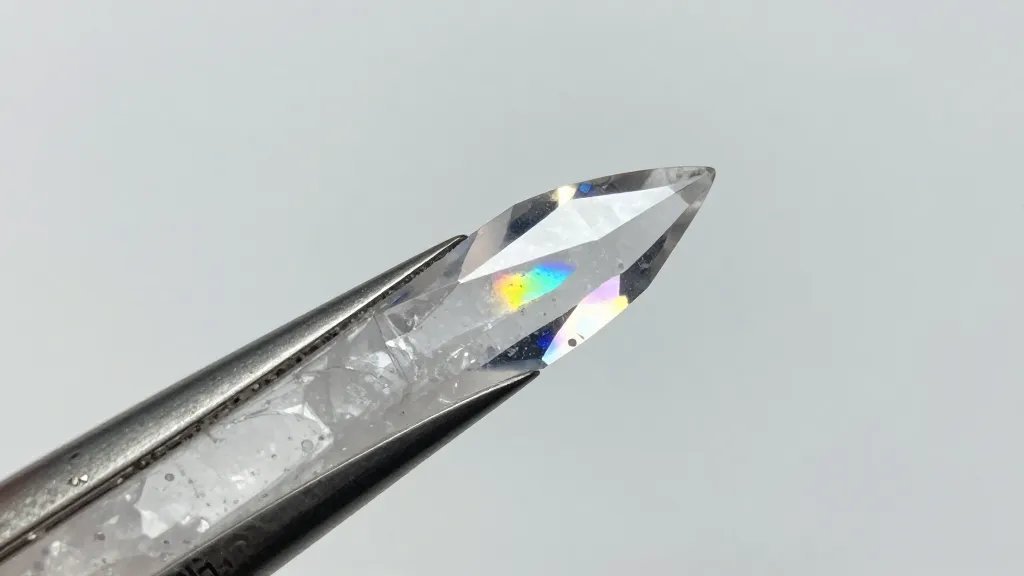
Herkimer “diamonds” aren’t diamonds—they’re exceptionally clear, naturally doubly terminated quartz crystals from Herkimer County, New York, and a handful of similar localities. They emerge from dolostone cavities already polished by time, with brilliant luster and striking internal rainbows from microscopic stress features.
These crystals formed in vugs where silica-rich fluids had room to grow crystals freely, unanchored to a matrix. You’ll sometimes see tiny hydrocarbon inclusions or “enhydros”—bubbles trapped in fluid cavities. Mohs hardness is 7, and their crisp terminations make them lovely as-is for minimalist jewelry.
Identification is straightforward: two pointed ends, tight growth lines, and exceptional clarity distinguish them from most rough quartz. If you’re comparing stones, browse Gemstone Identification for tips on telling quartzes apart—amethyst, citrine, and smoky often share traits but differ in color centers.
Buyers should watch for polished quartz sold as “Herkimer-style.” Authentic pieces have natural micro-abraded points, tiny contact marks, and internal character that polished fakes lack.
Labradorite and Spectrolite: Stone with a Secret Sky
Labradorite looks modest in hand—pewter-gray slabs with a satiny sheen—until a flash of light hits just right. Then it erupts into labradorescence: sheets of blue, green, and sometimes coppery gold reflecting like oil on water. Finnish spectrolite is the most dramatic, with near-neon swaths including deep oranges and violets.
This effect arises from thin lamellae inside the feldspar that scatter wavelengths. Cutters orient slabs to maximize the flash, but raw pieces can still sing. Tilt and rotate; a dull rock suddenly becomes a peacock’s tail. Mohs hardness around 6–6.5 is workable but benefits from care in settings that shield broad faces from scratches.
Real labradorite displays directional play—no light, then shock of color—rather than an all-over glitter. Beware coated feldspar or plastic overlays claimed as “super labradorite.” Values rise with uninterrupted fields of color and strong contrast against a dark body. In jewelry, a simple bezel with an open back lets you chase the flash in different light.
Benitoite: Small Crystals, Galactic Brilliance
Benitoite is California’s state gem and one of the most hypnotic blue minerals you’ll ever see. Raw crystals are typically tiny, sapphire-blue trigons perched on a snowy matrix of natrolite or crosscut by black neptunite. Under shortwave UV, benitoite fluoresces an icy sky-blue, turning a small specimen into a mini light show.
It forms in high-pressure, low-temperature metamorphic rocks where barium-rich fluids encounter silica. The famed San Benito County deposit is the standard. Mohs hardness 6–6.5. Because crystals are small, value skyrockets for clean, well-formed triangles with intense color and good contrast on matrix.
Imitations are rare but keep an eye out for dyed quartz or misidentified sapphire. UV response is a strong clue, but combine it with crystal shape and the presence of associated minerals. This is a collector’s stone—most benitoite rough is better showcased on a shelf than cut, unless a professional cutter sees a clean window worth faceting.
Wulfenite and Vanadinite: Hot Color, Delicate Drama
Some minerals don’t want to be jewelry—they want to be admired. Wulfenite forms delicate, thin tabular crystals in citrus orange to red. Vanadinite grows as vibrant red hexagonal barrels that look like lacquered candy. Both crystallize in the oxidized zones of lead ore deposits, often on earthy matrix that adds rustic charm.
Wulfenite’s Mohs hardness is around 2.5–3; vanadinite about 3–4. They chip if you breathe on them wrong. Their brilliance in raw form is the point—stacked plates and tidy hexagons that catch any available light. Seek sharp edges, bright uniform color, and sturdy matrix support. Avoid handling tips directly; use a tray and keep them dust-free.
Because of lead content, wash hands after handling and keep specimens away from curious pets and children. These aren’t for jewelry boxes. They’re conversation-starting displays that remind you color doesn’t need a polish to blaze.
Nevada Variscite and Utah’s Hexagonal Beryl: Understated Power
Not every breathtaking rough screams. Nevada variscite whispers in calm apple-green to mint, often spiderwebbed with chocolate-brown matrix. Its silky luster and soothing color make superb cabochons, but fine nodules and seams are collectible as-is.
Variscite forms from phosphate-bearing waters moving through aluminum-rich host rocks. Mohs hardness 4.5–5.5—soft, but durable enough for careful pendants and earrings. Natural pieces show gentle mottling, not the stark “painted” patterns of dyed howlite or resin. A warm, waxy luster is a good sign.
Meanwhile, in Utah’s topaz and beryl localities, you can find raw hexagonal beryl crystals—pale aquamarine or heliodor—that demonstrate textbook crystal form. Even pale color can thrill when the hexagonal prism is complete and faces are crisp. With beryl at Mohs 7.5–8, these are workable for jewelry if you find clean sections, though many collectors keep perfect prisms pristine in a display case.
Real vs. Fake: Quick Identification Habits That Help
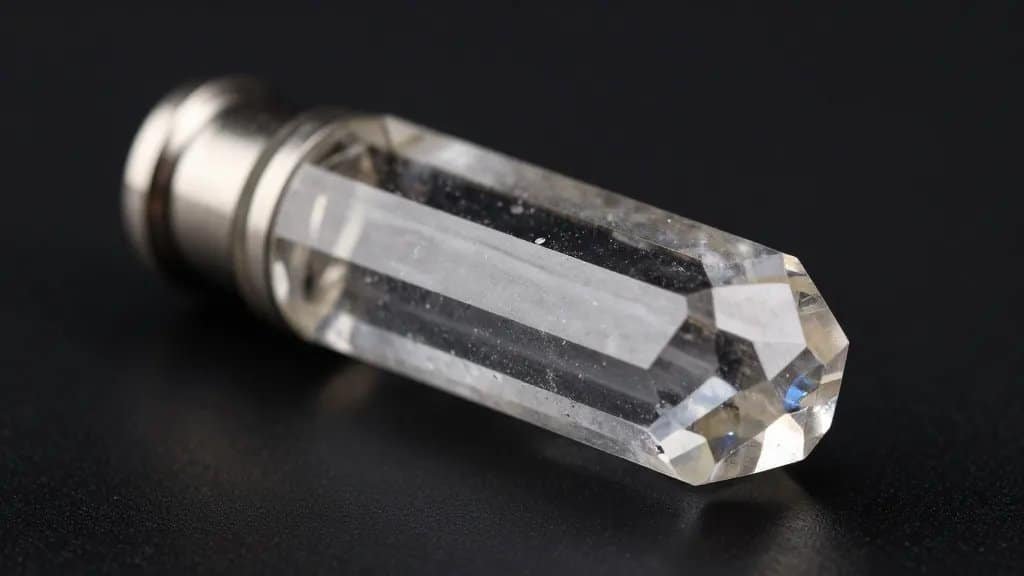
The raw market is vibrant—and so are the imitations. A few habits will save money and heartache.
- Examine growth features: Natural crystals show symmetry with subtle imperfections—faint striations, healed fractures, or contacts. Glass imitations often look too smooth and bloated, with swirl bubbles rather than mineral inclusions.
- Check hardness thoughtfully: A scratched corner on fluorite is expected; a gouge on corundum rough is suspicious. Learn relative hardness through Gemstone Hardness resources and test discreetly.
- Watch for uniform dye: If color pools in cracks or looks neon under the surface without zoning, suspect dye. Natural color usually varies with depth or along growth lines.
- Ask about locality and associated minerals: Credible sellers can discuss mine names and paragenesis. A vanadinite cluster with barite matrix makes sense; vanadinite glued to generic gravel does not.
- Use light: A small LED flashlight reveals transparency windows, color banding in tourmaline, and play-of-color in opal. Rotate slowly and learn a stone’s “sweet angles.”
Buying Advice: Choosing Rough You’ll Love Years from Now
Decide first: specimen or cutting rough. If you want a display, prioritize form—sharp terminations, balance on matrix, and undamaged edges. If you want to cut, look for clarity windows, thickness, and orientation potential. Many great specimens lose value when cut; many cutting-grade chunks look plain but yield stellar gems.
Budget for surprises. Rough is honest but unpredictable; a tourmaline that looks dark may open to a bright heart once oriented, while a promising opal may hide sand pits. Buying from reputable dealers with return policies helps. A basic loupe, daylight-balanced flashlight, and a felt-lined box will make evaluation easier and safer.
Consider your climate and display conditions. Hydrophane opal can absorb humidity; wulfenite hates vibration; fluorite fades in prolonged sunlight. Keep silica gel or gentle backlighting for cases, and save sunny windows for hardier quartzes and beryls.
Care and Cleaning: Keeping Raw Minerals Stunning
Skip the ultrasonic bath for almost all rough. Many specimens include fractures, inclusions, or cleavage planes that cannot handle vibration.
- Dust with a soft artist’s brush or use a gentle air blower. Avoid canned air at close range—it can shock delicate crystals.
- If washing is necessary, lukewarm water with a tiny drop of mild soap and a brief soak works for quartz and beryl. Dry on a towel and let air-dry fully.
- Keep porous or hydrophane opal away from prolonged soaking; it may change appearance temporarily. Let it equilibrate naturally if it gets damp.
- Store soft or brittle minerals separately, padded and immobilized. Label boxes—future you will appreciate the locality and notes.
For jewelry-grade rough like Herkimer quartz or Labradorite slices, remove pieces before high-impact activities and store them in soft pouches. If you’re building a collection, a quick glance at Gemstone Care and a Gemstone Buying Guide will help you create routines that protect beauty and value.
Who Should Wear Raw Minerals—and How
Raw jewelry suits people who enjoy texture and geometry. A Herkimer crystal pendant or a slim tourmaline rod makes minimalist statements with authentic sparkle. Labradorite slices paired with blackened silver feel modern and moody. Variscite cabochons in brushed gold deliver calming color with organic warmth.
Match durability to lifestyle. For everyday rings, stick to hard species—quartz, beryl, or well-protected tourmaline. Save soft beauties like fluorite and wulfenite for showcases or occasional wear. If symbolism matters to you, opal’s creativity, labradorite’s transformation, and tourmaline’s balance are commonly embraced meanings, while benitoite’s rarity speaks to the collector’s heart.
FAQs
How do I tell raw opal from glass or resin with glitter?
Natural opal shows depth and shifting patches of color that move as you tilt, not fixed sparkles. Under magnification, you’ll see organic color cells, not metallic flecks or uniform glitter.
Can I wear a Herkimer “diamond” daily?
Yes, with care. Quartz at Mohs 7 handles daily wear, but protect the pointed terminations with a bezel or prongs and remove it for heavy work.
Why did my fluorite lose color on the windowsill?
Some fluorites are light sensitive and can fade in strong sunlight. Display them under indirect lighting or in a cabinet away from UV exposure.
Is all bright-green “turquoise-like” rough actually variscite?
No. Turquoise, variscite, and dyed howlite or resin can look similar. Variscite tends toward apple-mint green with a waxy luster; laboratory tests or a reputable seller’s certification help confirm.
Do raw tourmaline crystals chip easily?
Tourmaline is relatively tough, but long, thin prisms can be brittle at the terminations. Handle by the prism body and store them in padded trays.
Why does my Ethiopian opal look different after rain?
Hydrophane opal absorbs moisture, which can make it appear more transparent or muted. It typically returns to normal as it dries slowly at room temperature.
Are benitoite crystals safe to clean with an ultrasonic cleaner?
No. Ultrasonic cleaners can exploit micro-fractures and damage matrix; a soft brush and gentle rinse are safer.
Final Thoughts
Raw minerals remind us that brilliance begins underground. Whether you’re mesmerized by opal’s fire, tourmaline’s geometry, or fluorite’s perfect cubes, there’s a piece of Earth’s story that will stop you mid-sentence. Choose with your eyes and your hands—seek crisp form, authentic texture, and living color—and your collection will feel as alive as the day each crystal left its pocket. If you’re ready to compare options or plan your next piece, explore related guides on Gemstone Value Guide, Gemstone Comparisons, and Collector Gemstones to refine both your eye and your instincts.

Christian Grey is the creator of GemMeaning, where he shares simple insights about crystals, gemstone meanings, and spiritual guidance. His focus is on making complex ideas easy to understand and practical for everyday life.