If you spend enough time around gemstones, reality starts to outshine fiction. Crystals that glow like cat eyes, stones that float in water, and diamonds born in a laboratory that are chemically identical to those pulled from a volcanic pipe—these things make even seasoned collectors do a double take.
This article gathers the strangest, most delightful facts from the gem world and explains why they’re real. You’ll meet minerals that change color like mood rings, sapphires that aren’t blue, and pearls that aren’t exactly “stones” at all. Along the way, you’ll pick up practical tips for identifying and caring for unusual specimens.
Think of it as a guided tour through the cabinet of curiosities that is Earth’s geology—no magic tricks, just science with great taste.
By the end, you’ll not only know these rock facts that sound completely fake, you’ll be able to explain them to anyone who raises an eyebrow at your collection.
Sapphires Come in Every Color—Including Colorless
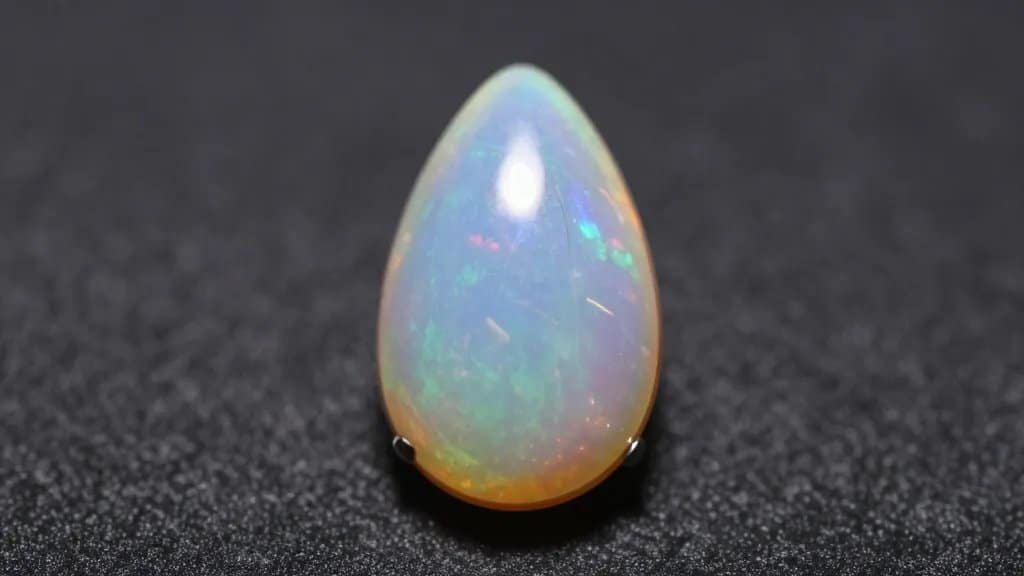
If your mental image of sapphire is a royal blue oval, you’re only seeing a sliver of the story. Sapphire is the gem name for the mineral corundum, and corundum can be any color except red (red corundum is ruby). That means you’ll find pink, yellow, green, violet, orange, and even perfectly colorless sapphires. The trade name “padparadscha” describes a rare blend of pink and orange reminiscent of a lotus flower at sunset—so specific that gemologists debate its exact boundaries.
What decides the color? Trace elements. Iron and titanium together yield blue; chromium pushes toward pink to red; iron alone can produce yellows and greens. On the Mohs Scale, sapphire ranks 9, second only to diamond in durability, making it a smart choice for everyday jewelry like engagement rings. Value rides on color saturation, uniformity, clarity, and origin. Classic blues from Kashmir and Burma have a velvety depth due to fine inclusions that scatter light, while modern Madagascar stones can be startlingly bright and clean.
Identification tip: Sapphires often show pleochroism—subtle changes of hue when you rotate the stone—especially in blue and violet stones. A jeweler’s loupe may reveal tiny “silk” rutile needles in natural stones, a clue often missing in lab-grown or heavily heated material. If you’re comparing options in a Gemstone Buying Guide, color trumps carat weight more often than people think.
Alexandrite Looks Like Two Different Gems Under Different Light
It’s no parlor trick: alexandrite can be green in daylight and raspberry or purple-red under incandescent light. The cause is chromium substituting for aluminum in chrysoberyl’s crystal lattice. Daylight is rich in blue-green wavelengths, which the stone transmits, while incandescent bulbs skew red, which the stone also allows through—resulting in the dramatic shift. The effect can be subtle or jaw-dropping depending on quality.
Fine alexandrite is one of the priciest Collector Gemstones per carat, outranking many Precious Gemstones. Stones over a carat with a strong “emerald by day, ruby by night” change are extremely rare. Natural-origin clues include parallel twinning lines and minute fingerprint inclusions; synthetics often have curved growth or gas bubbles. On the Mohs Scale it’s 8.5, so alexandrite stands up well in Gemstone Rings, though I’d still choose protective settings for high-value stones.
Pro tip: If you’re comparing Gemstone Colors in a store, step outside. View under daylight, then examine under warm indoor lighting. Always ask to see the stone away from a display spotlight that can mask the true change.
Some Diamonds Glow Electric Blue—and Keep Glowing After the Light Turns Off
Diamond fluorescence sounds like sci-fi, but it’s common: about a third of natural diamonds fluoresce under ultraviolet light, usually blue. Some even show phosphorescence—continuing to glow after the UV source is removed. The most famous phospher is the Hope Diamond, which briefly turns red when the lights go out thanks to boron and nitrogen defects in its crystal lattice.
Fluorescence can affect perceived color. In some near-colorless stones (say, J–K color), strong blue fluorescence may counteract faint yellow in daylight, making the stone face up whiter. In others, it can create an oily or hazy look. This is where a nuanced Gemstone Value Guide helps: don’t assume fluorescence is bad. Judge each stone with your own eyes under a variety of lights.
Diamond sits at 10 on the Mohs Scale, yet it can still chip along cleavage planes if struck just right. That’s why brilliant cuts round off vulnerable edges with facets. If you’re comparing Gemstone Cuts, the classic round brilliant is engineered to throw back more light than nearly any natural transparent gem.
Opal Isn’t a Crystal—and It Can Weigh Less After a Long Flight
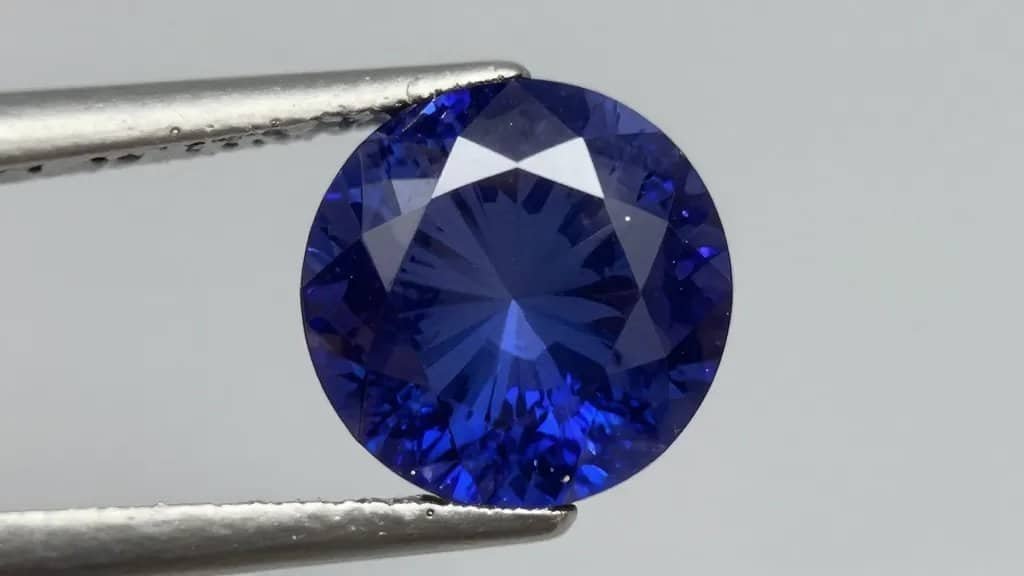
Opal breaks all the tidy rules. It’s amorphous, meaning there’s no orderly crystal structure. Instead, it’s made of tiny silica spheres stacked in a near-regular array with water filling the gaps. When light passes through, diffraction paints the iconic play-of-color: pinfire sparks, broad “harlequin” patches, rolling flashes that seem to glide just under the surface.
The kicker: opal can lose water in dry conditions. I’ve weighed African hydrophane opal before and after a long, low-humidity trip and watched the scale tick lower. As it dehydrates, hydrophane can turn slightly lighter or even more translucent, then regain weight as it reabsorbs moisture. This isn’t damage, but repeated cycling can create crazing (a web of fine cracks) in some stones.
Care advice: Keep opal away from prolonged, direct heat. Store it with a stable humidity level, not pressed against heating vents or in sunlit cases. Ultrasonic cleaners are a hard no. A soft cloth, tepid water, and a drop of mild soap is all you need. If you’re choosing Gemstone Jewelry with opal, bezel settings and protective frames can shield edges from knocks.
There’s a Natural Gem That Floats in Water
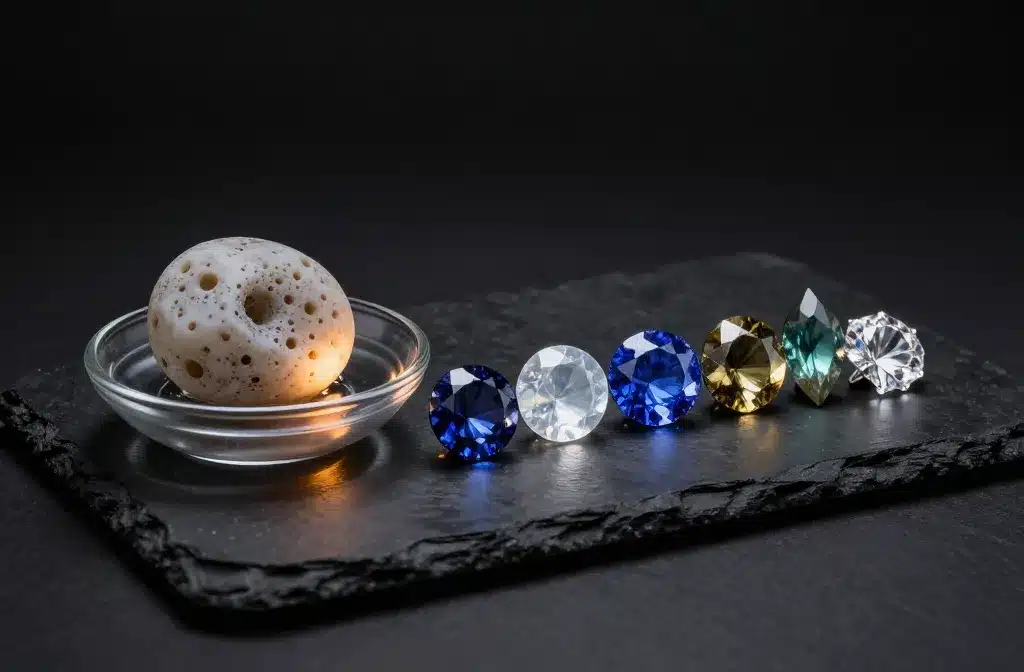
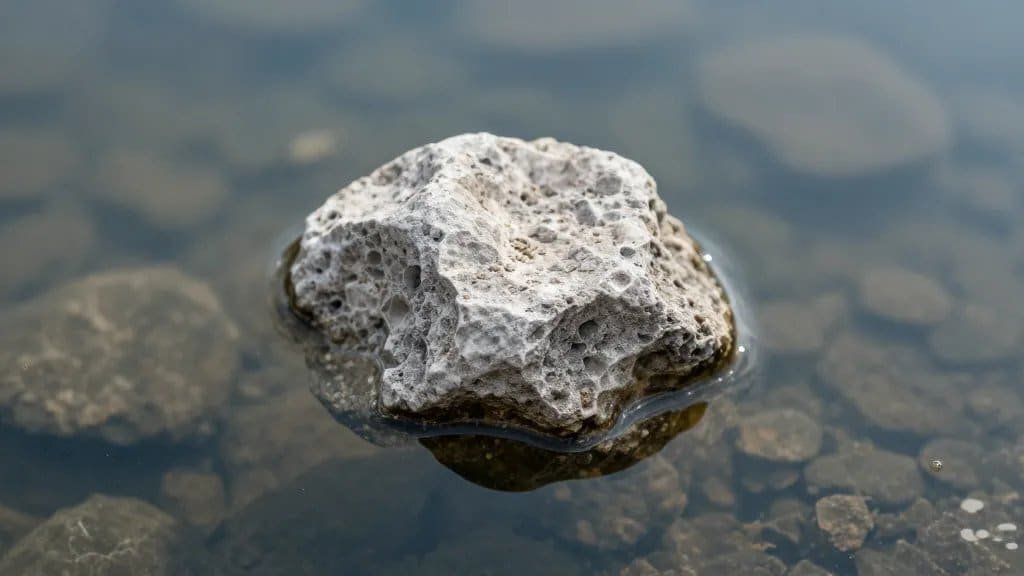
Most rocks sink—but not Iceland spar? Not quite. The floater is pumice, a volcanic glass full of trapped gas bubbles, light enough to bob at the surface after an eruption. While pumice isn’t a faceted gemstone, it’s a rock that regularly surprises people who assume all stones sink. In the gem realm, there’s also “Shamrock Peridot” lore about stones floating, but peridot’s density means it sinks every time. If someone hands you a “gem that floats,” they’re likely being cheeky with pumice or a highly porous imitation.
That said, there is a genuine optical mind-bender: clear calcite (Iceland spar) doubles what you see through it. This birefringence splits light into two paths, creating a crisp doubled image of text beneath the crystal. It’s an excellent demonstration specimen for anyone curious about light behavior in crystals.
Emeralds Are Often Full of Gardens—and That’s Okay
High-clarity emeralds do exist, but the norm is a landscape of internal features: tiny crystals, healed fissures, and wispy veils that gemologists fondly call “jardins” (gardens). The beryl family’s hexagonal channels make emerald especially prone to inclusions. Chromium and vanadium grant the intense green; iron can shift the hue toward bluish.
Because emeralds often grow with fractures, they’re traditionally treated with colorless oils or resins to reduce the visibility of surface-reaching fissures. The practice is widely accepted when disclosed. On the Mohs Scale, emerald is about 7.5–8, but its toughness is lower than sapphire, which means a careful wearer and protective settings are wise, particularly in Gemstone Rings where knocks are common.
Identification tip: Under magnification, Colombian emeralds often feature three-phase inclusions—tiny cavities containing a gas bubble, liquid, and a crystal—like pocket-sized snow globes. These are strong indicators of natural origin. If you’re shopping, ask for a lab report and disclosure notes; they can make all the difference in price and care guidelines.
Pearls Are the Only “Gemstones” Made by a Living Animal
They’re not mined; they’re farmed inside oysters and mussels. A pearl is layers of nacre—aragonite platelets glued with conchiolin—built like exquisite brickwork around an irritant or bead. The thinness and uniformity of those nacre layers determine luster. Great luster looks like a mirror dipped in moonlight. Poor luster looks chalky, even if the pearl is large.
Pearls rank low on the Mohs Scale (about 2.5–4), which means they scratch easily and hate acids, perfumes, and hairspray. Put them on last, take them off first, and wipe with a soft cloth after wearing. They’re perfect in Gemstone Necklaces and Gemstone Earrings that avoid hard knocks. Natural pearls are exceptionally rare; most on the market are cultured, and that’s not a downgrade—cultured pearls can be breathtakingly beautiful.
Fun fact: There are also “keshi” pearls—small, nacre-only pearls formed accidentally in cultured environments. Their freeform shapes and high luster make them catnip for designers seeking organic elegance.
Andradite Garnet Can Out-Sparkle Diamond
Garnet isn’t a single gem but a family. The andradite variety, especially demantoid, has dispersion higher than diamond, which means it splits white light into rainbow fire with almost cheeky enthusiasm. Set a fine demantoid next to a diamond in bright light and watch those spectral flashes steal the show.
Demantoid’s greens come from chromium and iron, often tilting slightly yellowish in daylight. Russian demantoid is famous for “horsetail” inclusions—wispy, radiating golden fibers of byssolite that collectors prize rather than avoid. On the Mohs Scale, demantoid is about 6.5–7, so reserve it for Gemstone Earrings, pendants, or special-occasion rings with protective settings.
Buying note: Stones with vibrant medium tone and lively fire command serious premiums. The classic horsetail isn’t mandatory, but it’s a romantic calling card for historical Ural material and a conversation starter at any gem club meeting.
Rubies and Sapphires Can Literally Glow From Within
Under strong light, some ruby and sapphire seem to light up from the inside—a phenomenon called fluorescence (ruby’s red glow is particularly striking). At the same time, some corundum shows asterism: a star that glides across the surface when moved in a single cabochon cut. The star forms when rutile needles align in three directions; polish the stone as a dome, and a six-rayed star appears, sometimes twelve if there’s overlapping symmetry.
Star rubies and sapphires look soft and silky, not sparkly, because cabochons emphasize sheen over facet brilliance. The best show sharp, centered stars that float smoothly over the surface. Beware of imitation stars created by carving or heat-diffusing titanium on the surface—tilting the stone under a penlight can reveal a star that doesn’t stay centered or looks too perfect. If you love history, Star corundum has a rich place in Gemstone History, from talismans to royal regalia.
There Are Gemstones Born in Space Dust and Inside Meteorites
Peridot (olivine) has been found in pallasite meteorites—glittering green crystals set like stained glass in an iron-nickel matrix. Most gem peridot still comes from Earth (Arizona, Pakistan, Myanmar), but the extraterrestrial angle is delightfully true. Another cosmic oddity is moissanite, first discovered in a meteor crater. Natural moissanite is vanishingly rare; the moissanite used in jewelry is lab-grown and prized for high brilliance and fire.
Speaking of labs, lab-grown diamonds, rubies, and sapphires share the same chemistry and crystal structure as their natural counterparts. They’re not simulants; they’re the same species with a different origin story. Inclusions, growth patterns, and trace elements usually reveal the origin to a trained gemologist. If you’re weighing options in a Gemstone Comparisons exercise, lab-grown can be a value-forward route to size and color without paying for geological rarity.
“Oil” in Emeralds and “Lead Glass” in Rubies Sound Like Scandals—They’re Treatments
Treatments can transform a stone’s appearance, but they exist on a spectrum from traditional to contentious. Colorless oil in emeralds has been used for generations and is generally accepted with disclosure. At the other end, high-lead glass filling in heavily fractured rubies can make unstable material look transparent. These composites can be beautiful, but they demand special care: avoid heat, ultrasonic cleaners, and jewelers’ torches. Even household jewelry steamers can cause problems.
Smart buying means asking for disclosure on any stone—what treatment, to what degree, and is it stable? Reputable sellers provide documentation, and major labs grade treatment levels. If transparency matters to you, a quick look at a Gemstone Identification or Gemstone Myths resource can arm you with the right questions.
Aragonite and Calcite Share Chemistry—but Not Personality
Both minerals are CaCO3, yet they’re different polymorphs with distinct structures. Calcite is the stable form at Earth’s surface, often forming scalenohedra with that classic birefringence trick. Aragonite prefers needle-like crystals and is less stable over geological time. Pearls are built from aragonite platelets; that’s part of why they’re sensitive and why nacre’s arrangement creates such seductive luster.
The lesson is simple: composition alone doesn’t define a gem’s look or behavior. Crystal structure, trace elements, and growth conditions make all the difference, and that’s why two stones with the same chemistry can feel like unrelated personalities at the workbench.
Obsidian Can Be Rainbow, Gold, or Even “Snowy”
Obsidian is volcanic glass—no crystal lattice, just frozen lava. Most people picture glossy black, but gas bubbles, magnetite inclusions, or microscopic film layers create special effects. “Rainbow” obsidian flashes bands of purple, green, and copper under strong light; “gold sheen” and “silver sheen” varieties shimmer like a midnight sky dusted with mica. “Snowflake” obsidian shows gray-white splotches of cristobalite that look like falling flakes suspended in ink.
On the Mohs Scale, obsidian sits around 5 to 5.5 and can chip with a conchoidal fracture, making it better for pendants and Gemstone Earrings than exposed ring settings. It takes a glassy polish and looks dramatic against warm skin tones. Care is easy: avoid hard knocks and store separately to prevent scratches from harder stones.
Turquoise Can Darken Just from Skin Oils
Natural turquoise is porous. Over time, skin oils and lotions can deepen its color or turn it greener, creating that vintage patina collectors either love or lament. Many stones are stabilized—infused with clear resins—to improve durability and lock in color. Both natural and stabilized turquoise are legitimate, but value depends on origin, matrix pattern, and intensity of that robin’s egg or teal hue.
Care tip: Wipe after wearing, avoid long soaks, and skip ultrasonic cleaners. If you prize an even, bright color, stabilized stones are practical for Gemstone Bracelets and daily-wear Gemstone Rings that see frequent contact with skin.
Practical Ways to Spot the Real, the Rare, and the Too-Good-To-Be-True
These unbelievable facts are charming; the market, however, also holds plenty of engineered miracles. A few habits keep you on the right side of wonder:
- Look under different lights: daylight, warm indoor bulbs, and a small UV lamp for fluorescence checks.
- Use magnification: a 10x loupe reveals inclusions that tell origin stories—natural growth lines, needles, fingerprints, and, sometimes, curved striae in synthetics.
- Ask for disclosures and reports: a one-page lab document can clarify treatment and origin, two big drivers in price.
- Match gem to lifestyle: consult Gemstone Hardness to choose stones that fit your wear habits and setting style.
- Study comparable pieces: a quick pass through a Gemstone Value Guide and Gemstone Care resource makes shopping calmer and smarter.
FAQ
Is color-change alexandrite the same as “mood ring” technology?
No. Mood rings use thermochromic liquid crystals that shift with temperature. Alexandrite changes due to its chemistry interacting with different light sources, not heat.
Do all blue sapphires come from Kashmir or Burma?
Not at all. Superb sapphires come from Sri Lanka, Madagascar, Tanzania, and Australia, among others. Origin can affect value, but color and cut come first.
Can I wear opal or turquoise daily in a ring?
You can, with care. Choose protective settings, remove during chores or sports, and avoid extremes of heat, dryness (for some opals), and chemicals.
Are lab-grown diamonds “fake”?
No. They’re real diamonds with the same physical and chemical properties as natural. The difference is origin and rarity, which affects price and collectibility.
Why do some rubies and sapphires show a star while others don’t?
Star stones contain aligned rutile needles and are cut as cabochons to display asterism. Faceted stones either lack enough needles or would lose the effect in facet reflections.
Does fluorescence lower a diamond’s value?
Sometimes, but not always. In certain color grades it can improve face-up color. Evaluate each stone individually under multiple light sources.
How do I clean delicate gems safely?
Use lukewarm water, mild soap, and a soft brush or cloth. Avoid ultrasonic and steam for opal, emerald (especially treated), turquoise, and heavily included stones.
A Short Takeaway to Pocket
The gem world is full of truths that sound like tall tales: color-shifting chameleons, stars trapped in stone, diamonds that glow, and opals that breathe. Once you understand the science—light, structure, and trace elements—those oddities become the very reasons we love them. Let curiosity lead, ask good questions, and match the stone to the life you’ll live with it. The wonder takes care of itself.

Christian Grey is the creator of GemMeaning, where he shares simple insights about crystals, gemstone meanings, and spiritual guidance. His focus is on making complex ideas easy to understand and practical for everyday life.