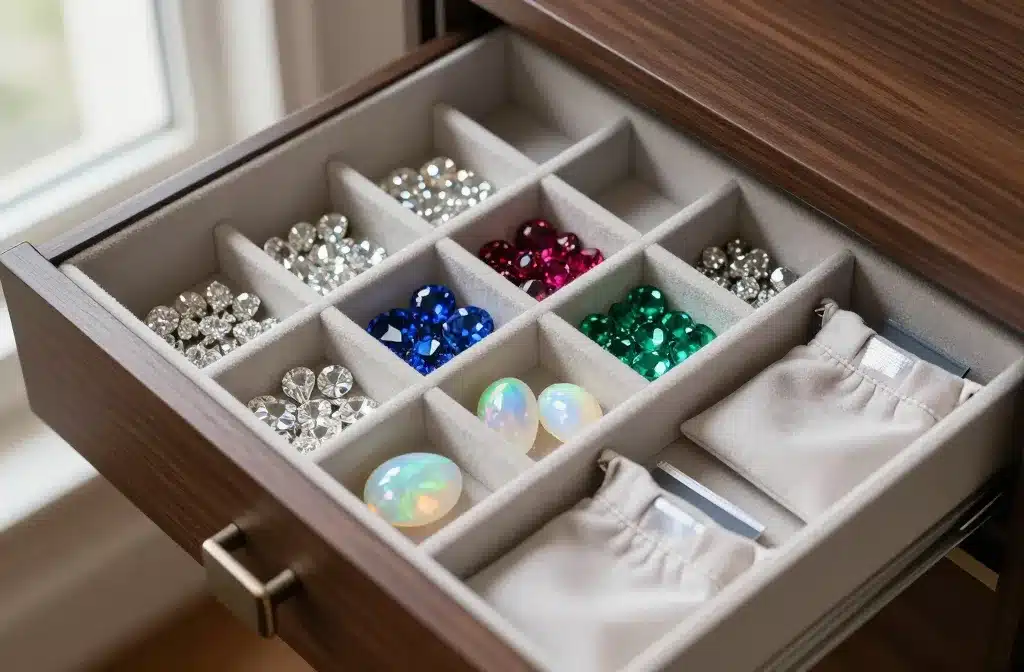
Open a jewelry box and you’ll see more than sparkle—you’re looking at a crowd of minerals with wildly different personalities. A diamond that shrugs off daily wear sits next to a tender opal that drinks in moisture, and a starlit sapphire may share space with a soft, silky moonstone. How you store them determines whether they age gracefully or collect scratches and stress.
This guide lays out when gemstones can live together peacefully and when they absolutely shouldn’t. You’ll learn how hardness, toughness, cleavage, and even humidity shape storage choices, plus practical setups for homes and travel. I’ll share real-world tips from a bench jeweler’s perspective, including what to keep apart, what can mingle, and how to make your box a safe haven rather than a scratch factory.
Expect clear examples—rubies versus emeralds, opals versus everything—and straightforward advice on trays, pouches, anti-tarnish materials, and labels. By the end, you’ll know exactly how to sort your gems, protect delicate finishes, and keep that showroom sparkle without turning your dressing table into a museum vault.
Let’s get your stones the storage partners they deserve.
Why Gemstones Don’t All Play Nicely: Hardness, Toughness, and Cleavage
Before deciding who room-shares with whom, understand the traits that matter. Three properties rule storage safety:
- Hardness (Mohs scale): A measure of scratch resistance. Diamond is 10, corundum (ruby, sapphire) is 9, quartz (amethyst, citrine) is 7, and opal is 5.5–6.5. Harder stones can scratch softer ones simply by rubbing shoulders in a drawer.
- Toughness: Resistance to breaking or chipping. Jadeite and nephrite are famously tough; emeralds are harder than quartz but often brittle due to inclusions and fissures.
- Cleavage: Some gems split along internal planes—think topaz and diamond. A sharp knock in the wrong direction can do more harm than everyday wear.
These three explain why two stones of the same hardness can still need different storage. An emerald might technically cope with a quartz neighbor in terms of scratching, but its internal fractures and oil-filled fissures can turn a casual tap into a costly repair. Meanwhile, diamond is king of hardness yet still has cleavage; a loose stone in a crowded pouch can chip another diamond or even itself if it’s unlucky.
General Rule: Store Gemstones Separately—With Sensible Exceptions
If you like simple rules: separate is safest. Individually wrapping stones or keeping each piece of jewelry in its own soft pouch prevents most mishaps. Still, you can group some pieces if you’re thoughtful:
- Safe together: Stones of similar hardness and durability, each in its own compartment within a tray, can live in the same drawer—e.g., a corundum section for sapphires and rubies, a quartz section for amethyst, citrine, and smoky quartz.
- Never together: Diamonds with anything softer; opals and pearls with hard stones; emeralds with hard or rough-backed settings; soft or porous gems with metal chains that can rub like tiny saws.
- Conditionally together: Well-set pieces with protective bezels or halos can sit in the same compartment if they don’t touch. Loose stones should be bagged individually.
Think of storage like seating guests at a formal dinner: don’t put the loud talker (diamond) next to the shy listener (opal), and give the accident-prone cousin (emerald) extra elbow room.
Gem-by-Gem Guidance: Who Needs Space and Who Can Share
Here’s how common gemstones behave in close quarters, plus practical setups that work.
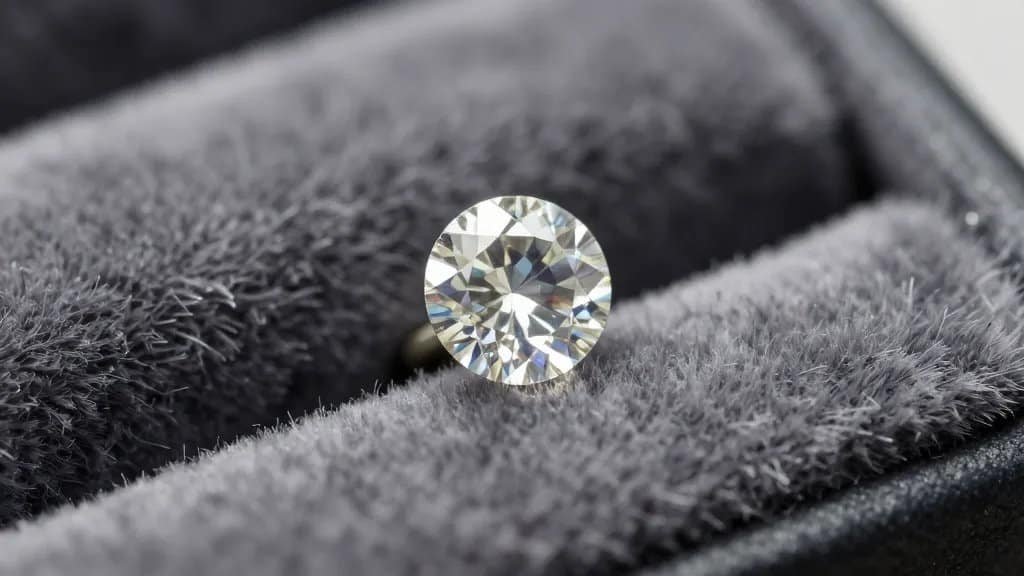
- Diamond (10): Will scratch nearly everything else, including diamond. Store separately in individual pouches or ring slots. Keep loose diamonds in gem papers or small hard boxes. Beware rough diamond girdles in shared compartments.
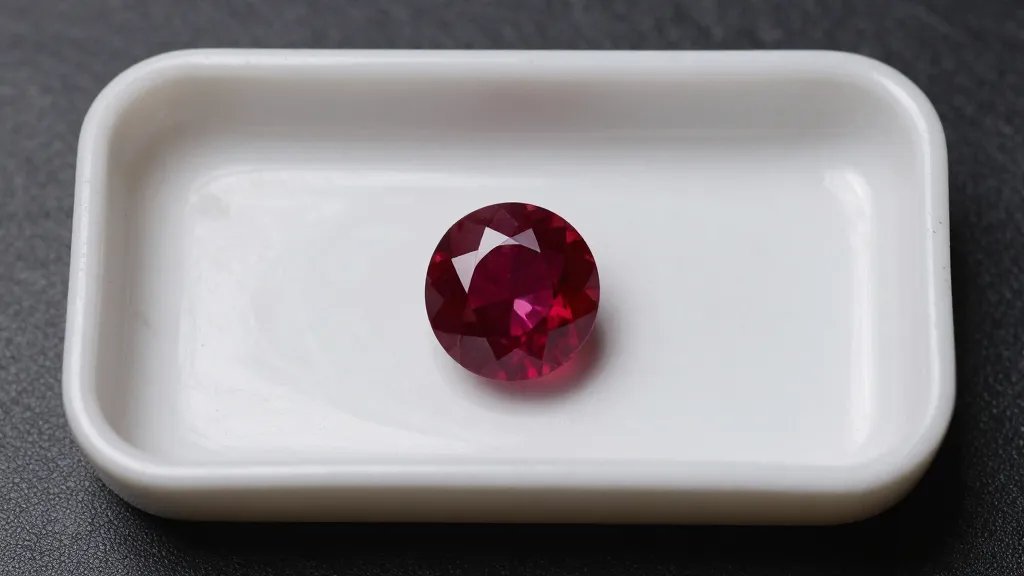
- Ruby & Sapphire (9): Durable and less aggressive than diamond, but still able to mar softer stones and precious metal finishes. Store in separate compartments; they can share a tray section as long as pieces don’t touch.
- Spinel (8) and Chrysoberyl (8.5, includes alexandrite): Tough daily-wear gems, fine to group within a compartmented tray. Keep apart from quartz and softer stones to avoid faint micro-scratches.
- Topaz (8): Hard but has perfect cleavage. Avoid overcrowding; store individually or in cushioned slots. Don’t let it knock against other pieces.
- Quartz Family (7): Amethyst, citrine, rose quartz, smoky quartz, rock crystal. Reasonably scratch-resistant, but keep away from harder neighbors. Group within a quartz-only tray insert with felt or flocked compartments.
- Tourmaline (7–7.5): Varied colors, sometimes with internal stress. Best in separate pockets. Avoid pressure; don’t stack.
- Garnet (6.5–7.5): Generally tough and good mixers with other mid-hardness stones in divided trays. Watch for sharp points on fancy cuts.
- Peridot (6.5–7): Prone to surface-wear and abrasions. Store gently, individually wrapped if possible.
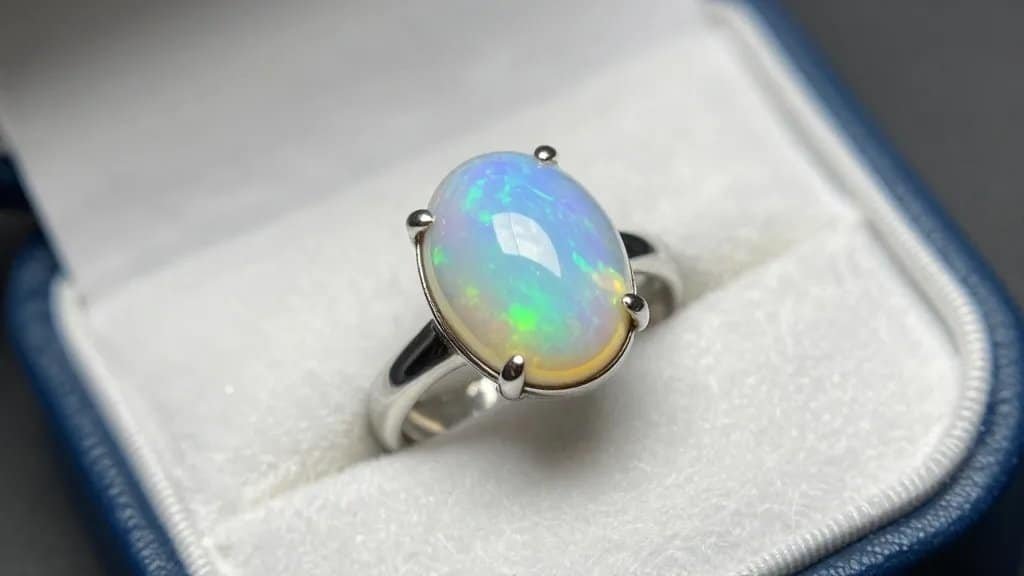
- Opal (5.5–6.5): Sensitive diva. Store alone, padded, away from heat and extreme dryness. Doublets/triplets need extra care to avoid moisture issues.
- Turquoise (5–6), Malachite (3.5–4), Lapis (5–6): Porous and soft. Keep in separate pouches and away from harder stones, perfumes, and oils.
- Pearl (~2.5–4): Organically soft with a satiny luster that scuffs easily. Always separate. Use soft cloth pouches; let them “breathe” to avoid desiccation.
- Moonstone (6–6.5) and Labradorite (6–6.5): Cleavage and surface softness call for padded individual slots. Avoid friction.
- Emerald (7.5–8): Often fissured and usually oil-treated. Store by itself, cushioned. Don’t stack; avoid pressure and temperature swings.
If your collection includes rare materials or collector gemstones, consider a labeled cabinet system. That makes it easier to reference related topics like Gemstone Identification or Gemstone Hardness when you’re cataloging new finds.
Jewelry Settings Change the Rules: Bezels, Prongs, and Metal Finishes
Storage isn’t just about the gem; the setting matters. A sharp-edged princess-cut diamond in a fragile prong setting is a tiny rake, ready to scuff neighboring pieces. Meanwhile, a smooth-bezel cabochon turquoise is less likely to harm others, though it’s vulnerable itself.
- High prongs and angular girdles: Keep these away from softer gemstones and delicate metals. A gold bangle rubbing against a prong can collect fine scratches overnight.
- Bezel-set pieces: Safer to store near others because the stone’s edge is shielded. Still, avoid direct contact.
- Textured metal (hammered, matte, brushed): Scratches easily. Store separately from diamonds and sapphires to maintain the finish.
- Delicate chains: Wrap the pendant separately or place the chain in a narrow channel to prevent tangling and abrasion with stone surfaces.
For rings, a slotted ring bar is useful, but don’t seat a diamond right next to an opal or pearl. Scatter hard stones between empty slots or separate by metal-only spacers.
Best Storage Setups at Home: From Display to Drawer
Pick a system you’ll actually use—organization fails when it’s fussy. Here are practical options with pros and cons.
- Compartmented trays: Velvet or flocked trays with dividers let you group by family—corundum here, quartz there. Add silica packs to control humidity, avoiding extremes for opals and pearls.
- Individual pouches: Microfiber, chamois, or soft cotton pouches are space-efficient. Label each pouch. Keep diamonds and corundum in their own pouches even within a drawer.
- Gem papers and mini boxes for loose stones: Classic in the trade. Write details on the paper—variety, weight, treatment—so you don’t need to handle the stone to ID it.
- Multi-tier jewelry boxes: Combine ring bars, lidded sections for pearls/opals, and open trays for sturdier pieces. Ensure the lining is dye-stable; some cheap linings can transfer color to porous stones.
- Anti-tarnish compartments for silver jewelry with gems: Safe for most stones, but keep pearls and opals in a neutral environment; some anti-tarnish chemicals can be too aggressive for organic gems over time.
Keep your box away from direct sunlight, heating vents, and bathroom humidity. Heat can dehydrate opals and cause oils in emeralds to sweat out; steam can weaken adhesives in composite stones and pearl strands.
Travel and Daily Carry: Preventing Scratches on the Go
Travel is where most damage happens. On a long weekend, a single pouch holding mixed pieces can come back as a bag of micro-abrasions.
- Use a roll or case with firm dividers: Separate hard from soft. Rings in individual slots, necklaces clasped and routed through channels, earrings pinned on a card and cased.
- Bag-within-a-bag method: Place each item in a small zip bag, then group similar hardness bags into a larger padded pouch. Keep diamonds totally apart.
- Carry-on only for high value: Checked baggage is rough and risky. Your lapidary-grade sapphire should never meet a suitcase wheel.
- Avoid sudden temperature swings: Don’t leave opals, turquoise, or pearls in a hot car or on a sunny windowsill of a hotel room.
If you’re packing collector gemstones, include a small notebook or phone notes with species, locality, and treatments. That record pairs well with topics like Collector Gemstones and Gemstone Facts for future reference.
Humidity, Light, and Chemicals: Silent Enemies in Storage
Scratches aren’t the only threat. Environment matters more than most people realize.
- Humidity: Opal prefers a stable, moderate environment; extreme dryness can encourage crazing in some stones. Pearls appreciate a bit of ambient moisture and dislike sealed desiccated storage for long periods. Balance is key—avoid extremes.
- Light: Prolonged UV exposure can fade some stones (e.g., certain amethysts, kunzite). Store away from direct sunlight.
- Chemicals: Cosmetics, perfume, hairspray, and cleaning agents can etch or dull porous stones like turquoise and malachite, and weaken silk threads on pearl strands. Put jewelry on last and store clean.
- Adhesives and composites: Doublets, triplets, and treated stones with surface films or fracture fillings are sensitive to heat and solvents. Separate, cushion, and keep cool and dry.
For a deeper look at durability versus appearance, resources like Gemstone Care and Gemstone Value Guide complement these storage essentials.
Cleaning Before Storing: Keep Grit From Becoming Sandpaper
Even the gentlest storage fails if dust and grit cling to your jewelry. Fine particles on a stone or under a prong act like abrasive paper against neighbors.
- Routine wipe-down: Use a soft, clean microfiber cloth before placing pieces away.
- Mild soaks: For sturdy stones like sapphires and diamonds, a lukewarm water and gentle dish soap bath with a soft brush works. Rinse and dry fully.
- Avoid harsh methods on sensitive stones: No ultrasonic or steam for opal, emerald (especially fracture-filled), pearl, turquoise, or heat-sensitive stones. A damp cloth only, then dry.
- Check settings: Loose stones wiggle and scuff others. Tighten prongs and ensure bezels aren’t snagging before storage.
Clean pieces also look brighter the next time you open the box. Sparkle is partly physics and partly housekeeping.
Practical Sorting System: A Five-Minute Setup That Works
If you want a quick, reliable system, try this:
- Create four labeled areas: “Diamonds & Corundum,” “Sturdy Mid-Range” (spinel, chrysoberyl, garnet), “Quartz Group,” and “Delicates” (emerald, opal, pearl, turquoise, peridot, moonstone, lapis, malachite).
- Put each piece in a soft bag or dedicated compartment inside its group. Diamonds always have their own bag; pearls and opals live solo in padded sections.
- Separate metal-heavy bracelets and chains from all stones; give them their own tray to avoid rubbing.
- Add note cards: stone type, treatments (e.g., “emerald, oil-treated”), and any care warnings.
- Once a month, do a quick audit—wipe down, check prongs, and re-seat anything drifting.
This takes minutes to set up and prevents 90% of damage I see in the workshop.
Common Mistakes to Avoid
- Tossing all jewelry in one soft pouch: Fabric doesn’t stop abrasion between pieces.
- Letting diamonds mingle: They can chip each other at edges or scratch everything else.
- Storing pearls sealed in plastic long-term: They like a bit of air movement to maintain luster.
- Over-drying opals with desiccant packs: Balanced humidity is safer than bone-dry conditions.
- Hanging heavy gemstone necklaces: Gravity can stress links and settings; lay them flat in compartments.
- Forgetting treatments: Oiled emeralds, dyed turquoise, fracture-filled gems, and triplets need cooler, more cushioned storage away from solvents and heat.
FAQs
Can I store diamond earrings together in one pouch?
It’s safer to separate them or use a holder that fixes each earring in place. Diamonds can nick each other’s girdles if they rub.
Is a felt-lined jewelry drawer enough protection?
Only if pieces don’t touch. Add divided trays or individual pouches; felt alone won’t prevent stones from sliding and scratching.
How should I store pearl strands?
Flat, in a soft pouch or dedicated compartment, lightly breathable, away from heat and perfume. Avoid hanging to prevent stretching.
Do opals need moisture in storage?
They need stable, moderate humidity—not wetness. Avoid sealed desiccated boxes and extreme dryness; store padded and away from heat.
Can I keep quartz jewelry with sapphires?
Better not. Sapphires can scratch quartz. Give quartz its own section or ensure strict separation within a tray.
What about silver jewelry with gemstones and tarnish strips?
Use anti-tarnish compartments for most stones, but keep pearls and opals in neutral pouches. Replace strips regularly and avoid direct contact with delicate gems.
Is a safety deposit box good for all gemstones?
Yes for security, but manage humidity. Avoid prolonged extreme dryness for pearls and opals; use cushioned containers and check occasionally.
Final Thoughts
Store gemstones with the same respect you’d give them at the bench: separate by hardness and temperament, cushion the sensitive, and keep everything clean. If you remember only one rule, make it this—let no gem touch another in storage. With that, your collection will keep its color, polish, and personality for decades, ready for any occasion and any setting, from Gemstone Rings to heirloom Gemstone Necklaces passed down with pride.

Christian Grey is the creator of GemMeaning, where he shares simple insights about crystals, gemstone meanings, and spiritual guidance. His focus is on making complex ideas easy to understand and practical for everyday life.