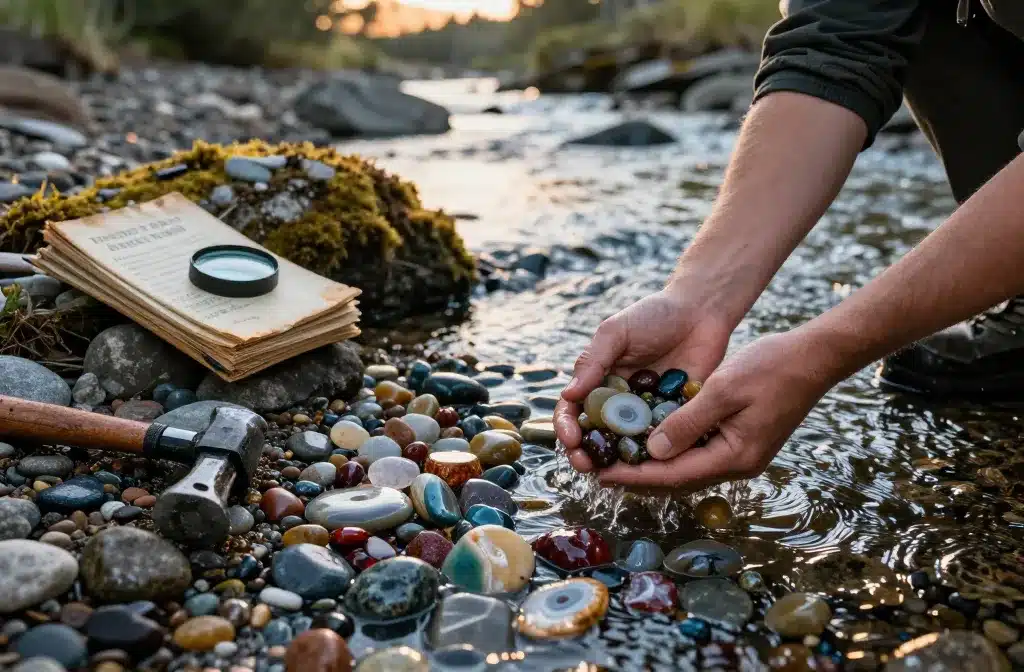
There’s a special thrill in spotting a glimmer in the dirt, brushing it clean, and realizing you’ve found something nature shaped over millions of years. Hunting your own rocks and minerals turns ordinary walks into treasure quests and makes geology feel personal and immediate.
In this guide, you’ll learn where to look, what to look for, and how to tell promising pebbles from the truly collectible. We’ll cover common yet beautiful finds, how they form, what they’re worth, and simple tests to identify them. You’ll also get practical field tips, gear recommendations, and care advice so your discoveries look great on the shelf—or in jewelry.
Don’t worry if you’re not near a famous mine. Many of the best beginner finds hide in plain sight at riverbanks, road cuts, beaches, and construction sites. With a sharp eye and a little knowledge, you can build a meaningful collection that tells the story of your local landscape.
Ready to see your surroundings in a new light? Let’s map the ground beneath your feet.
How to Read the Land: Where Good Stones Hide
Great rockhounding begins with picking the right terrain. Water and exposure are your best allies. Rivers, creeks, and beaches tumble rocks clean and concentrate dense minerals. Fresh cuts—road cuts, quarries, new basements—reveal raw layers before weather softens them. Old mine dumps can be surprisingly generous, too, if access is legal and safe.
Volcanic areas tend to host agate, jasper, obsidian, and zeolite-lined geodes. Sedimentary basins offer petrified wood, fossiliferous limestone, and ironstone concretions. Metamorphic hills and mountain belts are where you’ll encounter garnet, schist with mica sparkle, and sometimes kyanite or staurolite.
A simple tactic: study local geologic maps or rock club newsletters. They translate confusing formations into real-world spots. And always check land rules. Respect private property, collect within legal limits, and pack out what you pack in.
Agate and Jasper: Nature’s Art Glass
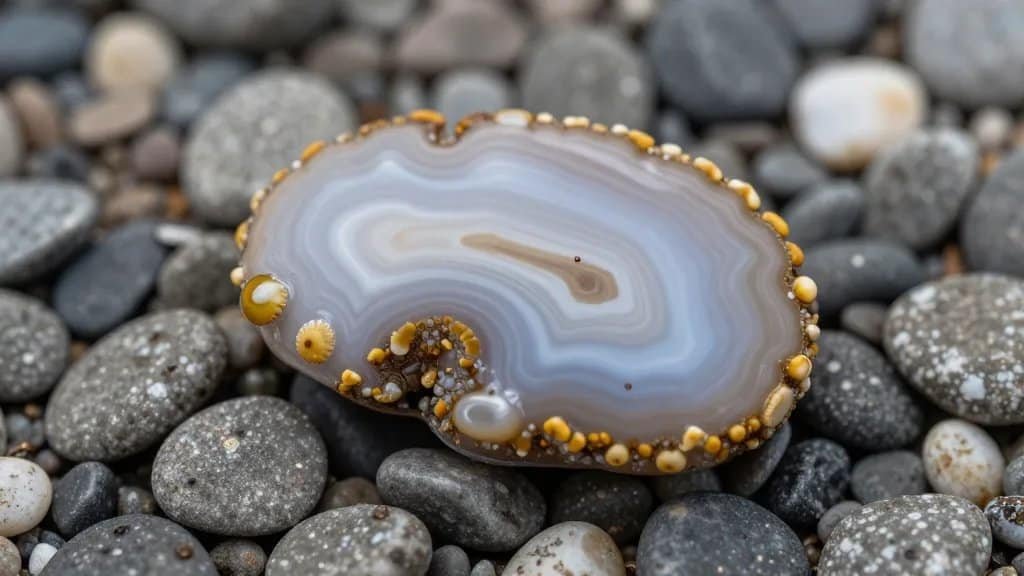
Agate and jasper are both quartz varieties (hardness 7 on the Mohs Scale) formed from silica-rich fluids filling cavities and cracks. Agate is translucent with banding; jasper is more opaque and often patterned. Both take a high polish and make lovely cabochons, beads, and worry stones.
Where to find: Basalt flows and gravel bars are classic agate territory. Look along river bends after a storm—freshly turned stones often reveal waxy, semi-translucent peels of agate. Jasper, with its earthy reds, yellows, and greens, turns up in the same places, especially where iron has stained the silica.
Field ID: Agate shows curved, concentric banding or mossy inclusions when held to light. The surface feels slightly waxy rather than glassy. Jasper presents as solid colors or scenic patterns—think miniature landscapes in stone. A steel knife won’t scratch either, but quartz can scratch a window glass pane.
Value and uses: Most agates and jaspers are modest in value but beloved for their patterns. Exceptional plume, lace, or scenic jaspers can be collectible. In jewelry, these stones excel in rings, pendants, and bracelets that prioritize pattern over sparkle. For deeper perspective on durability and how they compare to crystalline gems, see Gemstone Hardness and Gemstone Comparisons.
Quartz Crystals: From Frosted Points to Smoky Spires
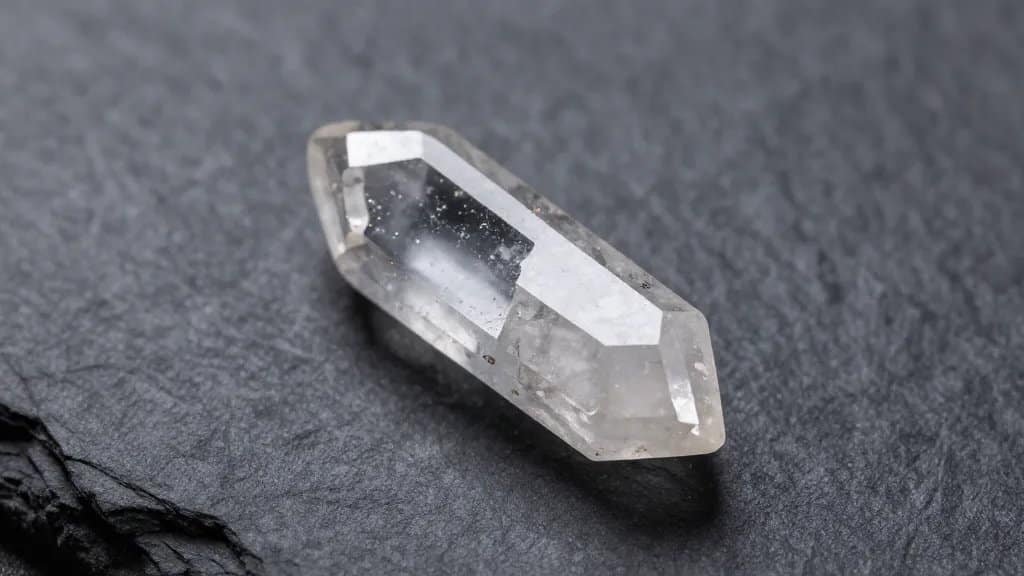
Quartz is the backbone of many collections because it forms beautiful, well-shaped crystals that are easy to recognize. Clear rock crystal, smoky quartz, and amethyst are all SiO2 with different colors caused by trace elements and natural irradiation. Hardness is 7, with good durability for display and occasional wear.
Where to find: Pegmatite dikes, vugs in granite, and weathered vein outcrops. In some regions, creek beds below granite hills carry worn quartz points. Look for iron-stained cavities and clay pockets—the place crystals grew is often muddy rather than rocky.
Field ID: Quartz crystals have a six-sided prism with pyramidal terminations. Clear to milky white is common; gray-brown indicates smoky quartz; purple hints at amethyst. Beware glass shards: they often have curved, conchoidal fractures without the consistent hexagonal faces. Quartz feels cooler than air and is heavier than bottle glass of similar size.
Value and uses: Perfect, transparent, well-terminated crystals bring more interest. Clusters with undamaged points display beautifully. Amethyst increases desirability, particularly if color is even and saturated. In jewelry, quartz suits pendants and earrings where size and clarity shine. For pricing context, consult a Gemstone Value Guide, especially when crystals show color zoning or inclusions that influence appeal.
Garnet: Ruby Tones in Rugged Country
Garnet pops up as dodecahedral crystals—soccer-ball-like shapes—in schists and metamorphic river gravels. Most field-collected garnet is almandine, a deep wine red to brownish red, with hardness around 7–7.5 and excellent toughness.
Where to find: Mountain streams cutting through metamorphic bedrock, especially near mica schist outcrops. Panning concentrates garnet because it’s dense; you’ll see tiny red grains sparkling in the black sand. In road cuts, watch for dark, rounded nodules embedded in schist layers.
Field ID: Crystals show 12 or 24 faces and break into equant, chunky pieces rather than slivers. Even opaque garnet reveals a rich, ruby-like glow at thin edges under strong light. A magnet won’t attract it; a streak test on unglazed porcelain is usually colorless to faint.
Value and uses: Facetable garnets from field finds are rare but not unheard of. Most are cabochon or specimen grade. Polished slices reveal attractive translucency. Deep red garnet earrings and necklaces offer a classic, old-world charm. If you’re comparing wearability, check Gemstone Jewelry and Gemstone Care for setting ideas and safe cleaning methods.
Obsidian and Apache Tears: Volcanic Glass with Edge
Obsidian is natural volcanic glass—black, sometimes mahogany-banded or rainbow-sheened. It’s sharp when broken and historically used for tools. Though its composition varies, treat it as glass for care purposes. Hardness sits around 5–5.5, so it scratches more easily than quartz.
Where to find: Rhyolitic lava flows and domes in volcanic regions. Weathered obsidian breaks into glossy shards that sparkle under direct sun. “Apache tears” are small, rounded obsidian nodules trapped in white perlite—look for dark marbles in chalky matrix.
Field ID: Glassy luster, conchoidal (shell-like) fracture, and a jet-black or smoky translucence at the edges. The surface often shows flow lines. Compared with black chert, obsidian is glossier and more uniform.
Value and uses: Value is modest; the appeal is visual and historical. It polishes well into beads, worry stones, and statement cabochons. Because of its lower hardness and brittle nature, stick to pendants or earrings rather than daily-wear rings. Clean with a soft cloth—no harsh abrasives. For more on wearability across different stones, compare notes in Gemstone Hardness and Gemstone Earrings.
Petrified Wood and Fossil Stones: Time Capsules You Can Hold
Petrified wood forms when silica replaces the organic structure of ancient trees, preserving growth rings and bark textures in stone. Colors range from caramel tans to iron reds, even blue-greens if copper is present. Hardness is about 6.5–7, making it durable and polish-friendly.
Where to find: Arid badlands, riverbanks cutting through ancient forest beds, and gravel pits. Pieces often look like weathered logs or limb casts with wood-grain texture still visible.
Field ID: Heft and hardness give it away—wood that won’t yield to a steel point, with visible grain and end-ring patterns. Fractures may follow the “grain,” and the interior can display agate-like translucency.
Value and uses: Large, high-pattern slabs and colorful “agatized” wood attract collectors. Slices polish into tablet-like cabochons perfect for pendants. Fossil coral (agatized coral) and dinosaur bone with cell patterns are related finds and equally striking. These make memorable Gemstone Gifts because each piece is visually unique and storied.
Hematite, Magnetite, and Other Heavyweights: Metallic Minerals in the Wild
If a stone feels surprisingly heavy for its size and has a metallic sheen, pay attention. Hematite (iron oxide) often shows a dark steel-gray to black luster and a red-brown streak; magnetite is strongly magnetic and streaks black. Both are common in metamorphic and igneous settings and can accumulate in placer deposits.
Where to find: Streambeds below iron-rich outcrops, old iron mines, and beach sands known for “black sand.” A simple magnet quickly flags magnetite-rich zones.
Field ID: Hematite may appear smooth and gunmetal shiny or earthy and red-brown; a quick streak on unglazed porcelain turns rust-red. Magnetite pulls to a magnet and can even weakly magnetize a needle. Both are much denser than typical river stones.
Value and uses: These aren’t traditional gems, but they make striking display pieces and bead material (hematite, natural or man-made). Be wary of “magnetic hematite” jewelry—it’s usually synthetic ferrite. For clarity on authenticity testing, bookmark Gemstone Identification and Gemstone Myths.
Geodes and Thunder Eggs: Hidden Caverns of Sparkle
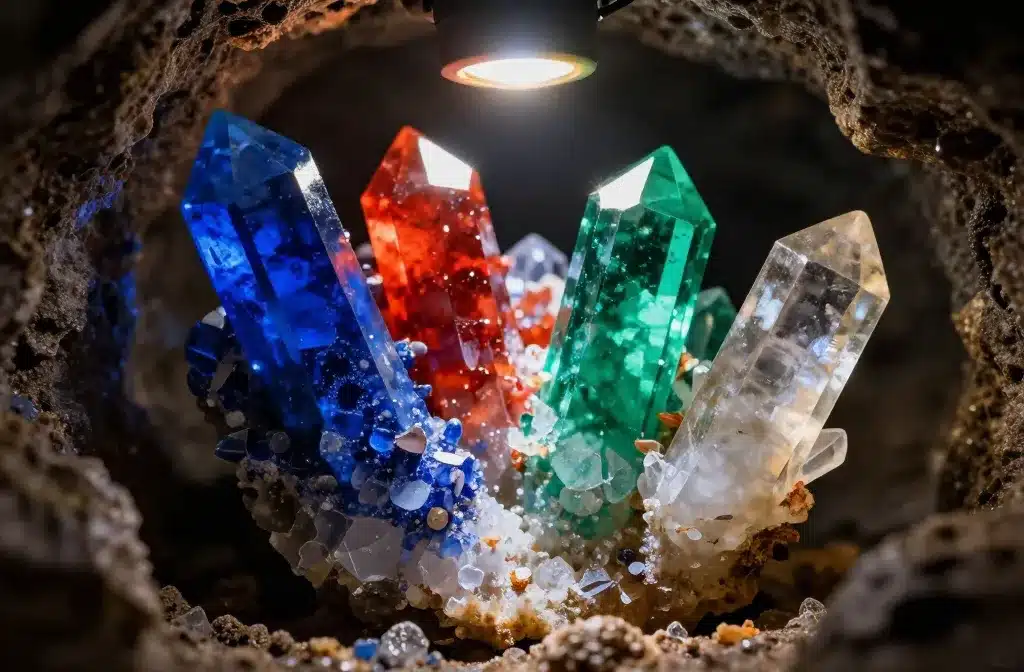
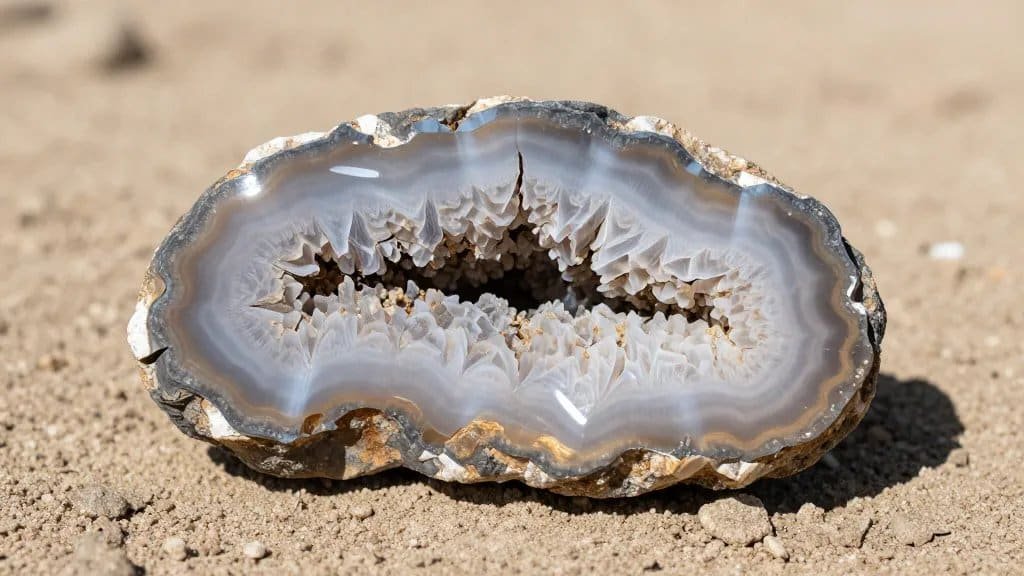
Geodes are hollow, nodule-like stones lined with quartz or calcite crystals. Thunder eggs are similar volcanic nodules filled with agate, jasper, or quartz, often solid inside. Both are formed by gas bubbles or cavities later filled by silica-rich fluids.
Where to find: Basalt fields, ash-flow tuffs, and sedimentary limestones known for geodes. Stream banks near these formations are prime hunting grounds. Nodules feel heavier than standard river stones and often have a bumpy, cauliflower-like rind.
Field ID: Tap: a geode may sound slightly hollow. The exterior is usually drab; the magic is inside. Cutting or carefully cracking with a chisel reveals crystal-lined chambers or patterned agate interiors.
Value and uses: Clean, intact geodes with sparkling, well-formed crystals display beautifully. Thunder eggs with colorful agate centers can be sliced and polished into bookends or cabochons. Value rises with color saturation, symmetry, and freedom from fractures.
Beach Finds: Chalcedony, Jade Look-Alikes, and Sea Glass
Coastal environments polish stones smooth, making identification more tactile. Chalcedony pebbles have a waxy translucence; serpentine can masquerade as jade with its soapy feel and green hues. True nephrite or jadeite is less common but not impossible in some regions.
Where to find: High-tide lines after storms concentrate fresh material. Look for pale, glowing pebbles when backlit by low sun. In colder climates with glacial history, expect quartzite, agate, and occasional garnet-bearing gneiss pebbles.
Field ID: Chalcedony transmits a soft, even light; quartz pebbles look more glass-clear in patches. Serpentine feels slick and scratches more easily (hardness ~3–6) compared to true jade’s toughness (nephrite ~6–6.5, jadeite ~6.5–7). If you’re evaluating a “jade” pebble, try a bright flashlight: jade diffuses light smoothly; dyed serpentine may show blotches.
Value and uses: Beach stones excel in simple wire wraps or drilled pendants. Sea glass isn’t a mineral, but its frosted pastel colors pair nicely with natural stones in bracelets and earrings.
Simple Field Tests That Save You Headaches
You don’t need a lab to make smart calls. A compact field kit and a few habits go a long way.
- Hardness: Carry a steel knife, a copper coin, and a small quartz chip. If the knife scratches it, hardness is under 5.5. If quartz can’t scratch it, you’re at 7 or above.
- Streak: A broken tile or unglazed porcelain lets you see a mineral’s true powder color—hematite’s red-brown, magnetite’s black, limonite’s yellow-brown.
- Luster and transparency: Note whether it’s glassy, waxy, metallic, or earthy; see how light passes through edges.
- Heft: Compare weight in your hand. Dense stones like garnet and iron oxides feel “heavy for size.”
- Magnet: Quick test for magnetite or materials with minor magnetism.
- UV light: A mini UV torch can reveal fluorescence in calcite, fluorite, and some agates.
Photograph finds in place, then label your baggies. Provenance—where you found it—matters for learning and future value discussions. For refining your at-home testing, explore Gemstone Identification guides that cover refractive index, specific gravity, and advanced methods.
Real vs. Fake: Common Pitfalls
Most fakes turn up at markets, not in creeks, but it’s smart to be skeptical:
- Dyed quartz and agate: Unnaturally bright blues or purples often indicate dye. Look for color concentrated in cracks or surface pores.
- Reconstituted stones: “Block turquoise” and “goldstone” are man-made; surfaces may show uniform glitter or tiny bubbles.
- Glass vs. crystal: Glass has rounded, swirled inclusions and lacks consistent crystal faces. Air bubbles are a giveaway.
- Magnetic “hematite”: Usually synthetic ferrite, strongly magnetic compared to natural hematite’s weak or no magnetism.
If you’re buying to augment your field finds, check a Gemstone Buying Guide, ask for disclosure on treatments, and compare side-by-side with known specimens.
Safety, Ethics, and Smart Packing
Rockhounding is more fun when everyone—and every site—stays safe and intact.
- Gear: Sturdy shoes, gloves, eye protection, small rock hammer, chisel, spray bottle, magnet, hand lens, labeled bags, and a first aid kit. A soft brush helps reveal patterns without scratching.
- Legal and ethical: Know land ownership, collecting limits, and protected areas. Don’t pry fossils or crystals from culturally or scientifically sensitive sites. Fill small holes and leave the spot cleaner than you found it.
- Technique: Start with loose material. If you must chisel, work edges slowly to avoid shattering crystals. Keep clear of unstable slopes and never tunnel under overhangs.
Cleaning, Display, and Turning Finds Into Jewelry
First pass cleaning is gentle: soak in water with a drop of dish soap, then use a soft toothbrush. Iron staining on quartz sometimes lightens with a longer soak; avoid harsh chemicals unless you know the mineral’s tolerance. Calcite and other carbonates react badly to acids, even vinegar.
For display, highlight texture and color. A simple stand or shadow box elevates a specimen dramatically. Label with name, location, and date. Your future self will thank you.
Jewelry from field finds works best with durable stones. Agate, jasper, quartz, and petrified wood hold a polish for pendants and earrings. Softer stones like obsidian or serpentine are better for gentle-wear pieces. To pick flattering outlines and proportions, explore Gemstone Cuts and Gemstone Shapes. If you commission a piece, a lapidary can turn your best nodule into a cabochon that’s both personal and wearable.
What Your Finds Say About the Earth Beneath You
Every stone hints at the geologic script of your region. Agates and jaspers whisper of ancient lava and mineral-rich waters. Quartz veins trace the last breaths of cooling magma. Garnets testify to heat and pressure deep in the crust. Petrified wood records vanished forests and shifting climates.
Collecting isn’t just about pretty colors. It’s about connecting fragments into stories and watching patterns emerge trip after trip. Keep a small notebook. Over time, you’ll learn which river bends hold agate after heavy rain, which road cuts shed garnet-rich schist, and which beaches bloom with chalcedony in winter light.
FAQs
What’s the best beginner-friendly rock to hunt?
Agate is ideal. It’s common in many regions, tough, and rewarding to polish. Its banding and translucency are easy to recognize with practice.
How do I know if a pebble is worth cutting or polishing?
Look for consistent color, interesting patterns, and freedom from deep fractures. Hold a damp stone to simulate a polish; if it looks great wet, it’ll likely shine in the tumbler or on a lap wheel.
Can I use a rock tumbler on everything I find?
No. Tumble only similarly hard stones together to avoid scratching. Quartz-family stones do well; soft or brittle materials like obsidian need gentle handling or separate runs.
Are there telltale signs of amethyst vs. purple glass?
Amethyst grows in hexagonal crystals and often shows color zoning—deeper purple near the tips. Glass lacks crystal faces and may show bubbles or swirls inside.
What simple tools should I carry on short trips?
A hand lens, small magnet, pocketknife, a piece of unglazed tile for streak, a few zip bags, and a water bottle for rinsing. Add gloves and safety glasses if you plan to chip rocks.
How do I safely crack a geode?
Use a geode cracker or a pipe clamp with a chain for controlled pressure. If using a chisel, score a line around the circumference and tap gently in passes to encourage an even split.
Do I need permits or permissions?
Often, yes. Always verify land ownership and collecting rules. Public lands may allow limited collecting; private land requires permission. Some areas ban removal entirely.
Final Thoughts
The most satisfying collections grow from curiosity, not just rarity. Learn your local rocks, keep notes, and bring home only what you love. Over time, your shelf becomes a map of places walked and seasons remembered—proof that the world still hides wonders in plain sight. And when a stone begs to be worn, you’ll have the knowledge to turn a field find into a personal piece of Gemstone Jewelry that tells your story as much as the Earth’s.

Christian Grey is the creator of GemMeaning, where he shares simple insights about crystals, gemstone meanings, and spiritual guidance. His focus is on making complex ideas easy to understand and practical for everyday life.