Some rocks don’t just sit on the landscape—they perform. They bend light, pull the eye, and invite you to look closer, the way a fine gem does under a loupe. For anyone who adores gemstones, these natural stage sets are irresistible: they tell the same story of color, structure, and time, just at cathedral scale.
In this guide, you’ll meet rock formations that look spectacular from afar and reveal gemlike secrets up close. You’ll learn how their colors form, why certain shapes catch the sun so well, and which details a gem enthusiast should notice—cleavage, crystal habits, banding, and the subtle sheen of mineral polish shaped by wind and water.
We’ll travel from iron-painted arches to agate cathedrals and chalcedony waves. Expect practical pointers too—care tips for jewelry inspired by these stones, simple identification cues, and how to translate landscape patterns into smart choices in gemstone cuts and settings.
Bring your curiosity and a mental loupe. The world’s most photogenic rock formations are nature’s grand gemstone display, and once you learn what to look for, you’ll never unsee it.
Arches of Iron and Light: Sandstone That Photographs Like Fire Opal
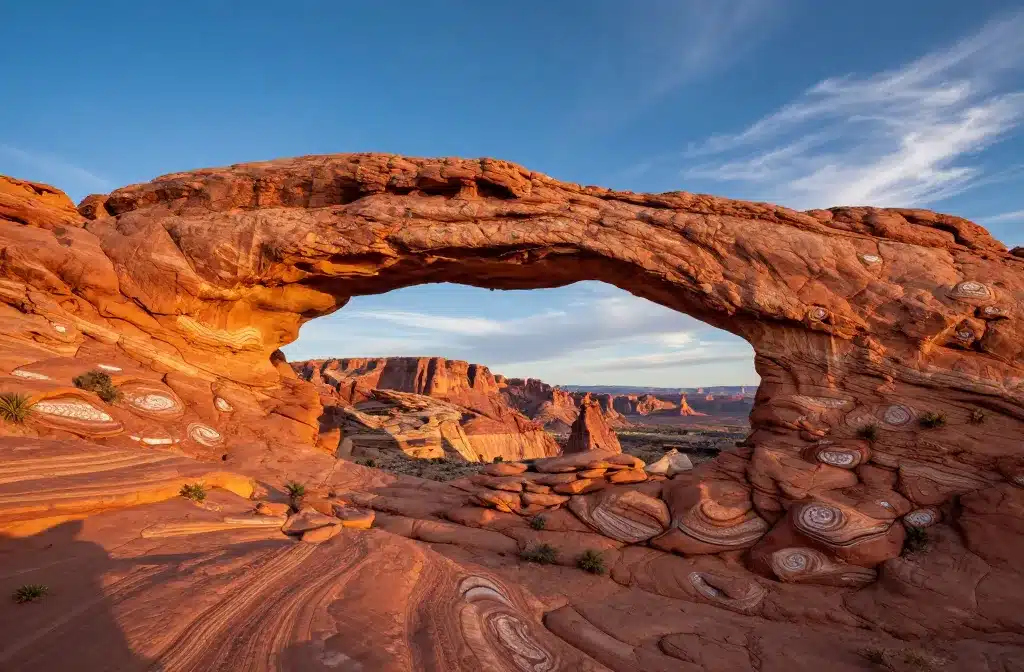
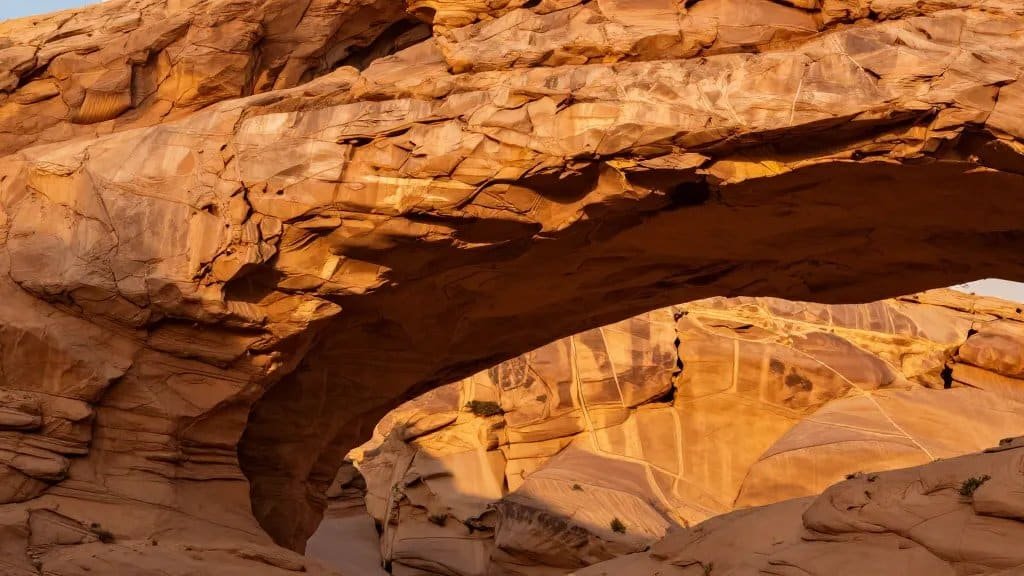
Red-rock arches in the American Southwest—think Utah’s Delicate Arch or the spans in Arches and Canyonlands—owe their glow to iron oxides staining quartz-rich sandstone. Photograph them at golden hour and the cliffs bloom into apricot, rust, and ember, much like the play-of-color shimmer you glimpse in a top-grade fire opal.
Compositionally, this sandstone is mostly quartz grains (Mohs 7) cemented by silica or iron-rich binders. The iron paints the stone from coral to cinnamon. Weathering and exfoliation carve windows and bridges, creating dramatic negative space that catches sky color and lets light rim the edges—precisely the kind of backlighting we use to judge a gemstone’s saturation and translucency.
Gem takeaway: If this palette captivates you, you’ll likely love carnelian, sunstone, and well-saturated orange sapphire. All handle light confidently; carnelian’s waxy luster echoes sandstone’s soft sheen. When buying, check for even color rather than blotchy patches; in sunstone, ask about copper platelets—their aventurescence mimics sunset glints on arch walls. See related topics like Gemstone Colors and Gemstone Comparisons for nuance on warm hues.
Basalt Columns: Nature’s Faceting Lesson in Iceland and Beyond
Giant’s Causeway in Northern Ireland and Icelandic sea cliffs show basalt crystallized into tidy hexagonal columns as lava cooled and shrank. From a distance they feel architectural—steps for titans. Up close, the columns mimic the regularity of a brilliant cut; each face is a mirror for sea spray and cloud light.
Basalt itself is dark and fine-grained, a volcanic rock packed with microscopic crystals. Its drama is geometric, not sparkly. The strength comes from repetition and contrast: matte charcoal prisms against white breakers. Photographers love low, sidelong light that etches each facet with shadows—just as a jeweler angles pavilion facets to create crisp contrast and life in a diamond.
Gem takeaway: People drawn to these columns often appreciate onyx, black spinel, and schorl tourmaline. Each offers graphic, high-contrast style in jewelry. Black spinel (Mohs 8) is durable and takes a sharp polish, ideal for Gemstone Rings that need daily toughness. If you prefer volcanic narratives, consider peridot formed in mantle-derived lavas—its vivid green offers a bright counterpoint to basalt’s somber mood.
Agate Cathedrals and Painted Deserts: Banding You Can Read Like a Map
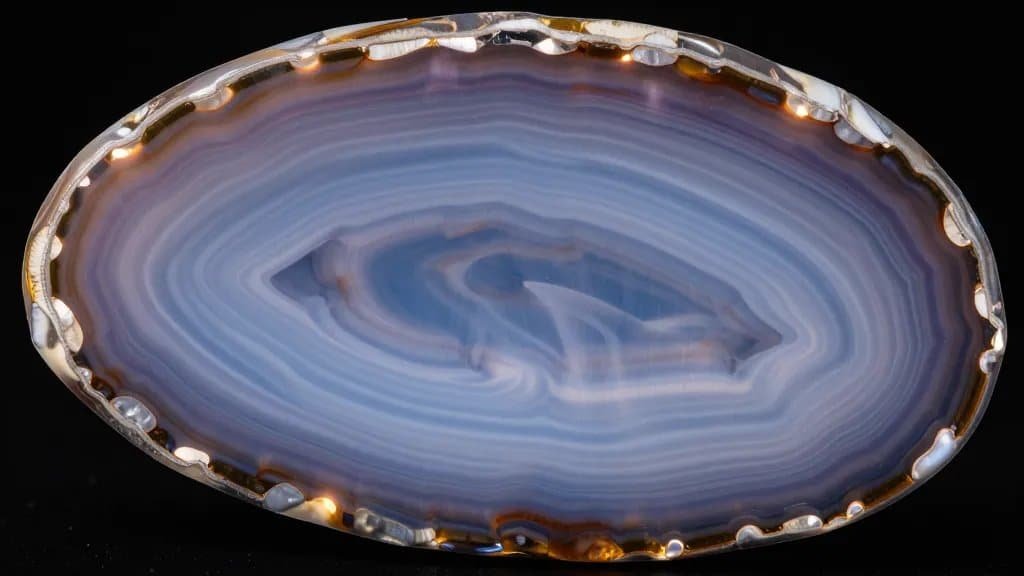
Agate geodes cracked open in Brazil or Uruguay reveal banded chalcedony in scalloped waves—lavender, smoke, honey, and snow—often rimmed with tiny quartz points that twinkle like frost. Step outside, and the Painted Desert or the badlands of Argentina repeat the same language at landscape scale: rhythmic bands of mineral-rich sediments, each layer a different wet-season memory.
Agate (Mohs 6.5–7) forms when silica-rich fluids infiltrate cavities, building concentric layers. The appeal is all about band definition, translucency, and harmonious color transitions. In photographs, diffuse light works best; harsh overhead glare flattens banding, while shade or overcast light coaxes depth, just as a softbox flatters an agate slice on a jeweler’s bench.
Gem takeaway: Lovers of agate’s bands may also enjoy sardonyx and malachite. With malachite (Mohs ~3.5–4), respect its softness—save it for Gemstone Earrings or Gemstone Necklaces rather than bracelets and rings. Stabilization or backing is common; ask about treatments the same way you’d ask how an agate cabochon was dyed or heated. If you’re building a collection, banding sharpness and unusual color zoning are strong value factors—see Gemstone Value Guide for how pattern rarity impacts price.
Marble Mountains and Carrara Dreams: The Velvet Glow of Metamorphic Rock
Fine marble quarries—Carrara in Italy, Danby in Vermont, Makrana in India—have an ethereal, candlelit quality. Marble’s interlocking calcite grains scatter light softly, giving surfaces a diffused glow that feels almost skin-like. Large white slopes can appear to radiate from within at dawn, a phenomenon akin to adularescence in moonstone: light diffused by internal structures to create a floating sheen.
Geologically, limestone recrystallizes under heat and pressure to form marble. Veining occurs where other minerals weave through—graphite grays, serpentine greens, or iron-streaked golds. Polished marble reads as silky rather than glassy, a tactile parallel to moonstone’s gentle sheen versus the crisp sparkle of topaz.
Gem takeaway: If marble’s hush speaks to you, consider moonstone (Mohs 6–6.5) or white sapphire for more durability. For jewelry, moonstone’s adularescence is more visible in larger cabochons; avoid open-bezel rings for daily wear since edges can chip. In a Gemstone Buying Guide, you’ll see tips like checking adularescence’s position: rock the stone to verify the glow floats across the entire face, not just a corner.
Rainbow Hills: Iron, Copper, and the Palette of Painted Cliffs
The Seven Colored Earths of Chamarel in Mauritius and the iron-laced hills of Zhangye Danxia in China show mineral pigments baked into sweeping dunes and layered ridges. Iron oxides paint reds and ochres; ferrous-ferric interplay brings purples; manganese whispers black; copper tints greens and turquoise.
These places are color-theory masterclasses from the earth itself. Colors separate along grain size and moisture, much like how inclusions can separate tones in a gem. In soft light, you’ll see gradients; in side light, each fold turns into a saturated stripe, echoing the way pleochroic gems—iolite, andalusite—shift hue with orientation.
Gem takeaway: Fans of these rainbow hills might gravitate to tourmaline suites that move from chrome green to raspberry rubellite, or to bicolor ametrine. Tourmaline (Mohs 7–7.5) takes excellent polish and thrives in Gemstone Necklaces where light can pass through. Check for clarity and well-planned cuts: bicolors should place the color junction artfully, not dead center without purpose. Natural color zoning can be a feature, not a flaw, when the cutter treats it as part of the composition.
Granite Domes and the Diamond Lesson of Luster
Yosemite’s glacially smoothed granite domes hold sunlight in a speckled, crystalline way familiar to anyone who loves glittering feldspar or mica in a cabochon. Granite is a coarse-grained igneous rock: quartz (vitreous luster), feldspar (sometimes pearly), and mica (bright, flaky flashes). Under angled sun, each mineral reads like a tiny facet; at midday, the effect turns flat—precisely how poor lighting can kill brilliance in a gemstone.
Mohs-wise, granite’s quartz component is around 7, feldspar near 6, and mica as soft as 2–3 along sheets, which is why edges weather into scallops and flakes. The texture rewards side lighting and close study, a reminder to evaluate gems under varied conditions—daylight, LED task light, and low evening light—to judge true performance before purchase.
Gem takeaway: If the granular sparkle appeals to you, look at aventurescent sunstone, golden sheen sapphire, or even micro-faceted spinel beads. Their micro-reflections echo granite’s sparkle without needing big open facets. For Gemstone Bracelets that move a lot, choose harder options (spinel, sapphire) and reserve softer feldspar for pendants and earrings.
Wave Rocks and Silica Ribbons: Chalcedony in Motion
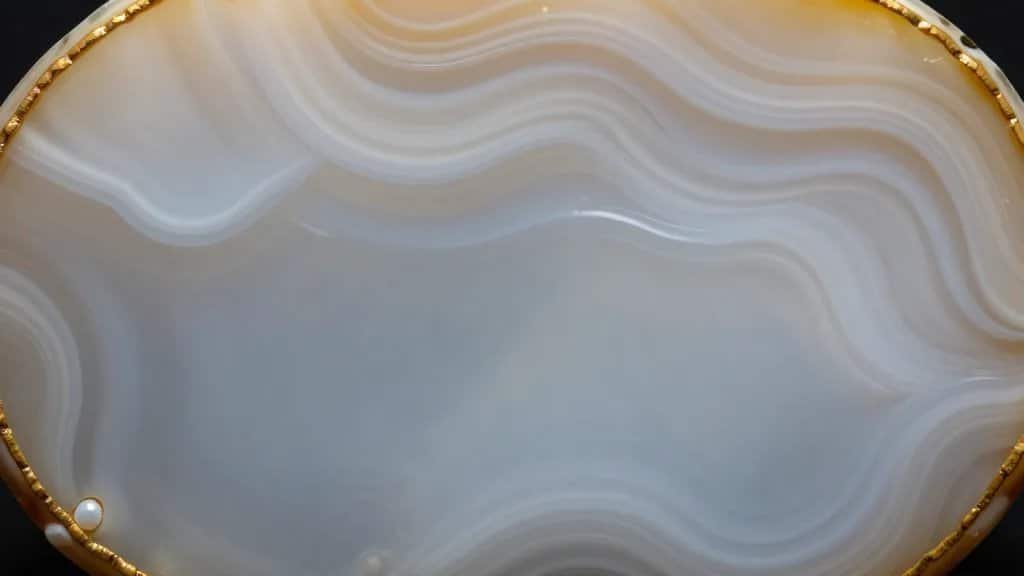
Australia’s Wave Rock and certain desert alcoves in the American Southwest seem frozen mid-crest, their stripes flowing like silk. These forms come from differential erosion and mineral-rich runoff that stains the rock in liquid lines—iron for ginger, manganese for charcoal, clay for pale beige. The resemblance to banded chalcedony isn’t accidental; both are stories about silica and time, writ at different scales.
Photogenic flow lines trigger the same pleasure you get from plume agate or Indonesian ocean jasper, where patterns feel alive. If you love pieces with movement, choose cabochons that let patterns travel from one shoulder of the stone to the other. In beads, align patterns intentionally; a strand that lets stripes meander will look more harmonious than randomly drilled chips.
Gem takeaway: Jasper and chalcedony (Mohs ~6.5–7) are sturdy everyday choices. They’re often untreated but can be dyed; ask for disclosure, and learn a few simple tests under Gemstone Identification—look for color concentrated in fractures or drill holes as a giveaway of dye.
Salt Spires and Desert Roses: Evaporites with Unexpected Elegance
In places like the Chott el Djerid or the Badwater Basin, salt spires rise like frosted candelabras. Elsewhere, gypsum crystals gather into “desert roses,” tight rosettes of petals edged with sand. These evaporite formations catch light softly, resembling frosted quartz or satin-finished pearls.
Gypsum (Mohs 2) and halite (Mohs 2–2.5) are very soft and water-soluble. They sculpt quickly, and they also scratch if you breathe on them wrong—exaggeration, but only slightly. Their beauty is transient, and that’s part of the allure: crystallization, wind carving, then a quiet fade.
Gem takeaway: For jewelry, these textures inspire rather than translate directly. If the satin frost sings to you, try matte-finished rock crystal or white sapphire with a sandblasted surface. If you do collect actual gypsum roses, keep them away from humidity and never wash them—use a soft blower or brush. Gemstone Care principles apply here: gentle handling, stable environments, and no ultrasonic cleaners.
Jade Valleys: Toughness You Can Feel in the Landscape
In British Columbia, Myanmar, and parts of Central Asia, river-worn boulders of nephrite jade line streambeds, green-black and waxy, their surfaces smoothed by eons of tumbling. Nephrite’s famed toughness (interlocking fibrous structure) lets it survive where other stones would shatter—like a seasoned tool that only grows more dependable with use.
Look closely at polished jade outcrops used in monuments or gateways. Light doesn’t flash; it suffuses, as if the color floats just beneath the surface. This is the “grease” or waxy luster jade lovers adore. Under overcast skies, the greens deepen into spinach and bottle tones; in bright light, veins appear like smoke under glass.
Gem takeaway: For wearable pieces, jade’s durability makes it a smart candidate for Gemstone Bracelets and worry stones. When buying, prioritize texture and translucency over pure color names. Fine nephrite reads silky and dense; inferior pieces can look chalky or mottled without depth. Learn to feel heft—nephrite often feels heavier than you expect. For collector-level nuance, see Collector Gemstones and Gemstone Facts on jade grading and regional signatures.
Crystal Caves: Cathedral-Scale Quartz and the Lesson of Clarity
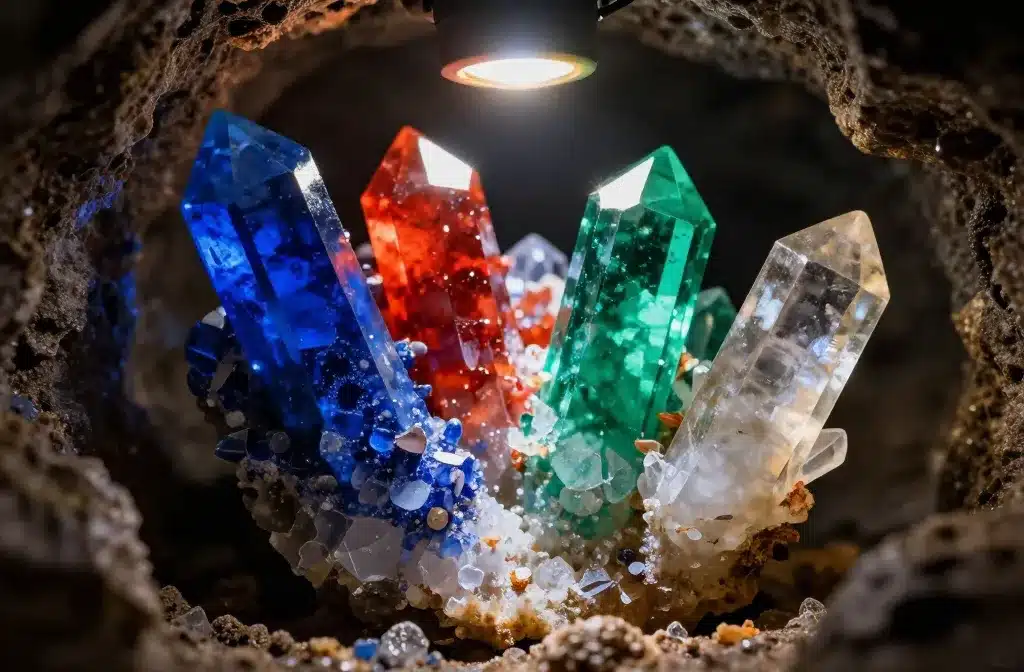
Mexico’s Naica Mine holds selenite crystals the size of freight cars—translucent blades with satin interiors. Other caves shelter quartz cathedrals that glitter like starfields. At this scale, you see the same clarity trade-offs that matter in cut stones: pure transparency is rare; wisps, veils, and growth tubes appear as graceful internal weather.
Selenite (a gypsum variety) is soft, but its large, limpid crystals embody serenity. Quartz cathedrals, on the other hand, feature druzy coatings—myriads of tiny crystals that catch light in a sugar-sparkle. Photographers angle lights low to bring out relief, just like jewelers play with fiber optics to study inclusions.
Gem takeaway: If you’re charmed by crystalline forests, explore rock crystal quartz, herkimer “diamonds,” and druzy-coated agates. Rock crystal is accessible and durable (Mohs 7), perfect for bold Gemstone Necklaces. For identification, real herkimer quartz has natural double terminations and can host black petroleum inclusions; beware of glass imitations with trapped bubbles and too-perfect surfaces. Gemstone Identification guides outline quick loupe checks for these tells.
From Landscape to Jewelry: Translating Patterns, Hardness, and Light
The most photogenic formations teach the same lessons we use at the bench.
- Light direction changes everything. Side light sculpts basalt columns and makes step-cut gems come alive. Test gems in varied lighting before purchase; brilliance that vanishes under warm indoor bulbs may disappoint in a ring.
- Texture versus polish. Marble and jade glow; granite and druzy sparkle. Choose cabochons for glow-rich stones (moonstone, jade) and bright faceting for high-refractive species (sapphire, spinel). For a deeper perspective, read Gemstone Cuts and Gemstone Shapes.
- Hardness is not toughness. Nephrite survives river tumbling; gypsum collapses in rain. In jewelry, Mohs hardness predicts scratch resistance, but structure predicts chip resistance. Consult Gemstone Hardness to match stone to setting style.
- Color honesty. Painted hills show mineral-driven hues, not dye. In the gem market, some agates, jaspers, and even turquoise are stabilized or dyed. Ask for disclosure and request lab reports for higher-value stones. Gemstone Buying Guide and Gemstone Value Guide lay out what to expect by species.
- Scale your expectations. A landscape’s sweeping band might compress into a millimeter-wide stripe in a cabochon. When commissioning custom work, provide the cutter with a pattern priority—do you want the plume centered, or the stripe to traverse the whole face?
Care and Cleaning Inspired by the Field
Wind and water can either polish or punish. The same is true for jewelry.
- Keep softer stones—malachite, opal, turquoise—away from abrasives and acids. Wipe with a barely damp cloth, then dry.
- Avoid ultrasonic and steam on stones with fractures, fillers, or layered structure (opal doublets, treated emerald, dyed agate). When in doubt, gentle soap and lukewarm water, soft brush, quick dry.
- Store pieces individually. Just as river pebbles grind each other smooth, gems in a drawer can scratch neighbors. Harder species like sapphire will mark quartz and feldspar.
- Maintenance matters. Prongs loosen the way cliff edges spall. Get settings checked annually, especially on Gemstone Rings that see daily wear.
Buying With a Photographer’s Eye
If a rock formation catches you at sunrise, remember the feeling when you choose a stone. Seek pieces that carry the same mood.
- For drama and silhouette (arches, columns): choose step cuts, baguettes, or shield cuts that emphasize outline and contrast.
- For glow (marble, jade): pick generous cabochons with high domes; avoid overly thin cuts that look lifeless.
- For pattern (agate bands, wave rock): examine the stone’s “storyline” from multiple angles. Ask the seller for a full rotation video if buying online.
- For sparkle (granite glints, druzy caves): micro-faceted beads or fine melee pave will mimic that stardust quality without overpowering.
A few well-chosen pieces that echo the landscapes you love will feel more personal than a crowded jewelry box. If you’re unsure where to start, exploration across topics like Semi-Precious Stones, Gemstone Jewelry, and Birthstone Jewelry can help narrow your aesthetic.
FAQ
Which photogenic rock formation best mirrors the look of opal?
Iron-stained sandstone arches at golden hour echo fire opal’s warm glow, while gypsum “desert roses” mimic the soft, internal light of common opal without play-of-color.
What lighting is best for photographing banded rocks like agate formations?
Diffuse light—overcast sky or shade—preserves color and reveals band depth. Side light adds texture but can blow out pale layers.
How can I tell if an agate cabochon is dyed?
Check drill holes and fractures for concentrated, overly vivid color. Uniform neon hues are suspect. A loupe often reveals color pooling that natural agates don’t show.
Which gemstones are durable enough for daily-wear rings inspired by rugged landscapes?
Sapphire, spinel, and garnet varieties (excluding demantoid’s brittle tendons) hold up well. Quartz is acceptable with care; feldspars and malachite suit pendants or earrings better.
Are druzy stones in jewelry natural or coated?
Both exist. Natural quartz druzy occurs frequently; some pieces receive metallic vapor coatings for rainbow effects. Ask about treatments and prefer natural sparkle for timeless wear.
What gem cut best captures the geometry of basalt columns?
Step cuts—emerald, baguette, or carre—highlight crisp edges and mirror-like faces, echoing the columnar geometry.
Is jade always green like river-worn boulders?
No. Nephrite ranges from creamy white to spinach green and black; jadeite spans lavender, icy white, and imperial green. Texture and translucency often matter more than hue for value.
Final Thoughts
The world’s most photogenic rock formations are nature’s open-air gem cabinet. Study how they handle light, texture, and pattern, and you’ll sharpen your eye for gemstones you truly love. Let landscapes guide your taste, your lighting choices, and how you wear each piece—so every stone you pick carries a memory of the earth at its most beautiful.

Christian Grey is the creator of GemMeaning, where he shares simple insights about crystals, gemstone meanings, and spiritual guidance. His focus is on making complex ideas easy to understand and practical for everyday life.