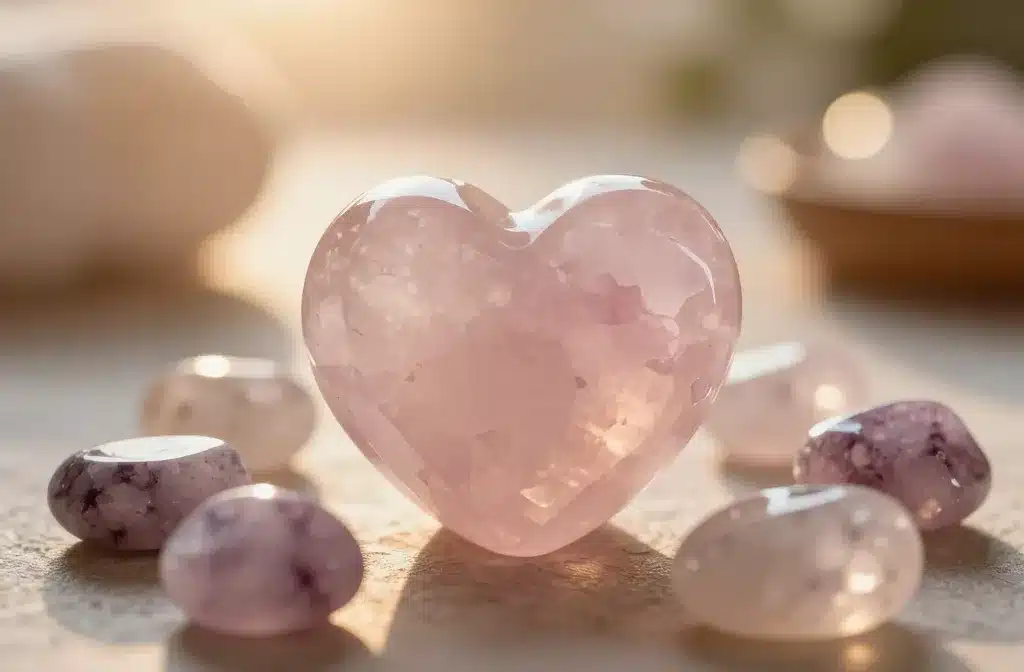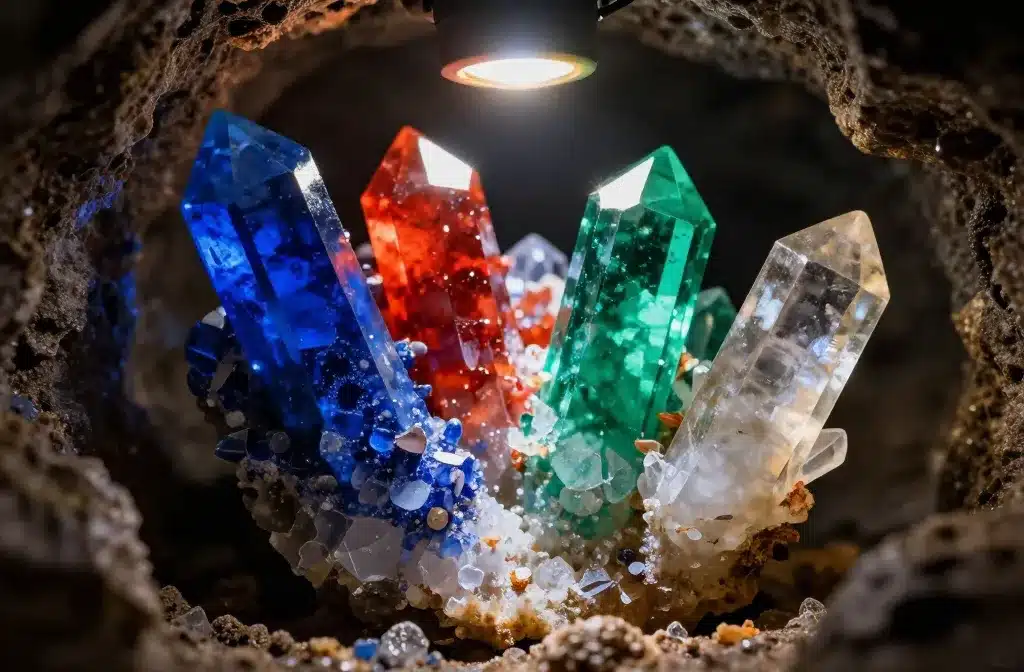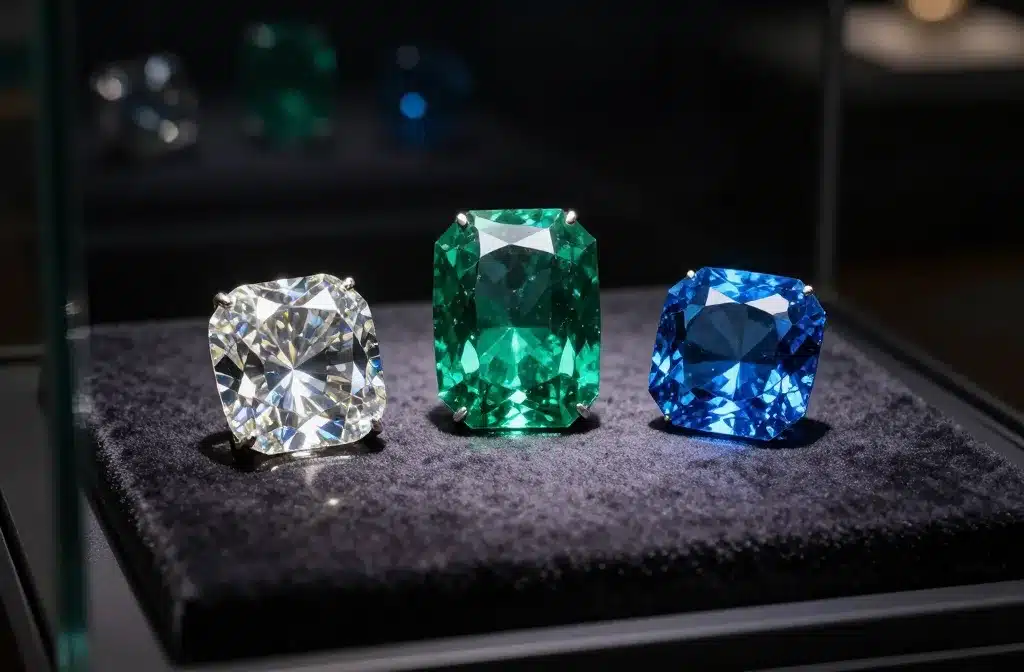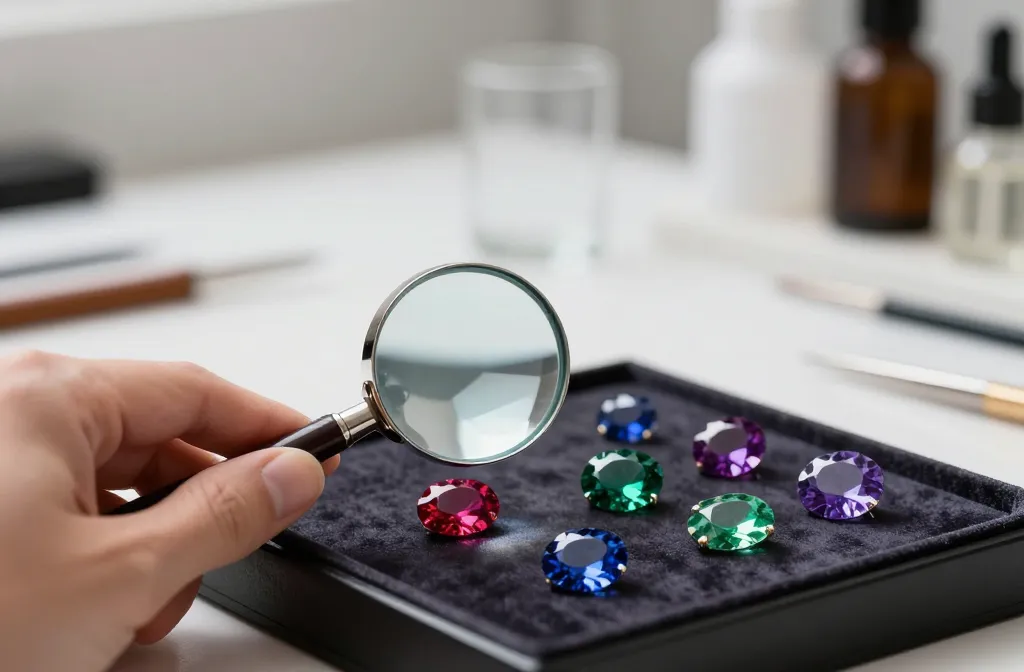
There’s a special thrill in choosing a gemstone—the way a ruby glows like live coal, or a sapphire holds a twilight sky. But beauty alone doesn’t guarantee a wise purchase. The market is a mix of honest craft, clever treatments, and the occasional trap.
By the end of this guide, you’ll know how to inspect a stone’s color and cut, read lab reports, recognize common treatments, and gauge real-world durability. You’ll also learn what drives price, which questions to ask, and how to care for your gem once it’s yours.
Think of this as advice from a jeweler’s loupe. We’ll keep it simple, practical, and real—so you can buy with clear eyes and long-term confidence.
Ready to shop smarter? Let’s examine the ten checkpoints that separate an impulse buy from a keeper.
1) Color: Hue, Tone, and Saturation—The Soul of the Stone
Color accounts for most of a gemstone’s value, especially in colored gems. Look beyond the basic name. A “blue sapphire” could be anything from inky navy to crisp cornflower to grayish steel. You’re evaluating three things:
- Hue: The basic color family (blue, red, green). Desirable hues are pure and pleasing—ruby should lean red, not too pink or purple; emerald should stay green, not yellowish.
- Tone: How light or dark the color appears. Stones that are too dark can look dead indoors; too light can wash out. A lively medium to medium-dark tone is often ideal.
- Saturation: How intense the color appears. Strong saturation looks rich and vivid, without turning inky or muddy.
View the stone in multiple lights—daylight by a window, soft indoor light, and bright LEDs. Some gems shift color slightly; alexandrite famously changes from greenish in daylight to reddish under warm light. Resist showroom-only judgments. If the color thrills you in everyday light, you’re on the right track.
2) Clarity and Inclusions: Nature’s Fingerprint vs. Deal-Breakers
Very few natural gems are perfectly clean. Inclusions can be tiny crystals, wisps, needles, or growth lines. Some add character—like the silky sheen in fine Kashmir sapphires or the mossy gardens in green jadeite. Others weaken the stone or cloud the view.
- Transparency: Is the gem see-through, translucent, or opaque? A transparent stone with good clarity usually sparkles more.
- Placement: Inclusions near the center or just under the table facet show more. Edge inclusions are easier to hide with settings.
- Risk: Long fractures, feathers reaching the surface, or stress-looking “cleavage” planes can compromise durability—especially in everyday rings.
Use a loupe if you have one (10× magnification is standard). If not, hold the stone close to your eye and tilt it slowly under a small light source. Look for disruptions in the light path. Remember, clarity standards vary by gem species—emeralds often have inclusions; sapphires and rubies may have silk; spinels and garnets are often cleaner. Judge each stone by what’s typical for its type.
3) Cut and Shape: Light Performance over Perfect Symmetry
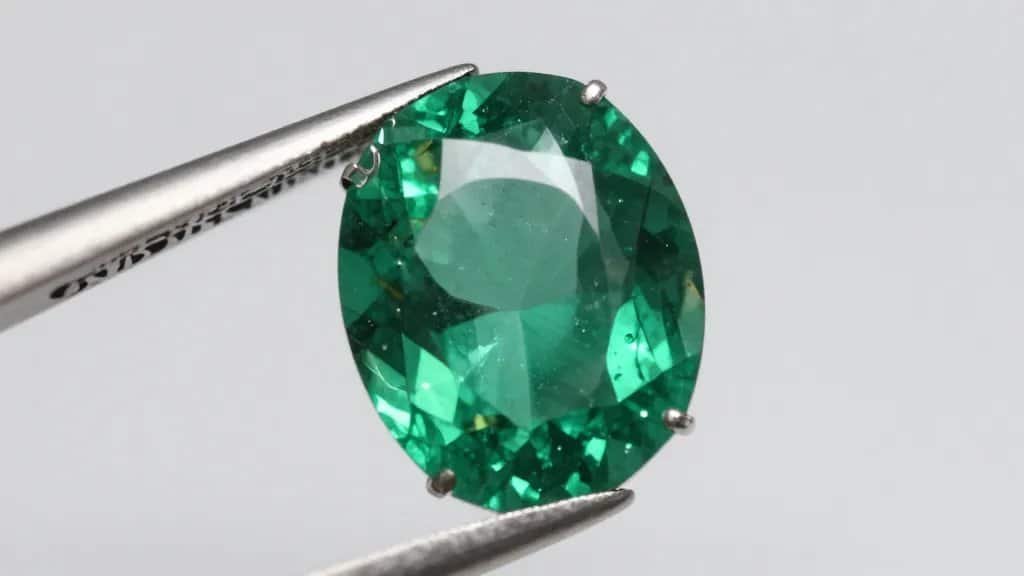
Cut is how the gem’s angles and proportions direct light. A top-quality cut makes a stone look brighter and larger. A poor cut can dull even a fine color. Look for:
- Brightness: Does the stone come alive when you rock it slightly? Bright areas should outweigh dark patches.
- Windowing: If you can read text clearly beneath the center of a mounted gem, it has a “window”—light is leaking straight through. This lowers beauty and value.
- Extinction: Big black areas mean light is trapped and not returning to your eye.
- Symmetry and Polish: Facets should line up; the polish should be crisp with sharp edges, not rounded or wavy.
Different cuts serve different gems. Step cuts (emerald cut) emphasize color and clarity; brilliant cuts amplify sparkle; mixed cuts balance both. In fancy shapes—oval, pear, cushion—check for a bow-tie effect across the center. A faint bow-tie can be fine; a dark, harsh one is not.
If you’re exploring designs, browse Gemstone Cuts, Gemstone Shapes, and Gemstone Jewelry to see how cut choices change the stone’s mood and brightness.
4) Authenticity and Lab Reports: Trust, but Verify
A reputable lab report is the gemstone equivalent of a passport. It confirms species (sapphire vs. spinel), natural vs. synthetic, treatments, and sometimes origin. Established labs include GIA, AGL, SSEF, GRS, Gübelin, and IGI. For high-value stones, prioritize top-tier labs.
- What to expect: Species/variety identification, measurements, weight, and detection of common treatments (like heat for corundum or oil in emerald).
- Origin: Some labs will opine on origin (e.g., Sri Lanka, Burma, Colombia) based on trace elements and inclusions. Origin can influence price, but it doesn’t change how the stone looks to you.
- Beware of: “Certificates” printed by sellers with little detail, vague appraisals with inflated retail values, or reports that omit treatment status.
For mid-to-high value purchases, a modern lab report is well worth the cost. If a seller resists third-party verification, that’s your cue to slow down or walk away. For deeper study, explore Gemstone Identification and Gemstone Buying Guide topics.
5) Treatments and Enhancements: Common, Acceptable, or Deal-Breaking?
Many gemstones receive routine treatments to improve color or clarity. Some are stable and widely accepted; others significantly affect value and care.
- Common and generally accepted: Heat treatment in sapphire and ruby; oiling in emerald to reduce the visibility of fractures.
- Value-impacting or riskier: Glass/lead-filled rubies (extremely fragile, dramatic value drop); fracture-filled diamonds (sensitive to heat/chemicals); diffusion-treated sapphires (color mostly on the surface); dyed jadeite or turquoise; beryllium diffusion in sapphire.
- Stability questions: Dyed stones can fade; resin or polymer fillings can discolor with heat or solvents.
Always ask: “What treatments does this stone have, and are they permanent?” Ethical sellers disclose. Treatment info should also appear on the invoice. If you hear “probably untreated” without proof, assume it’s treated until verified by a lab.
6) Durability: Mohs Hardness, Toughness, and Daily Life
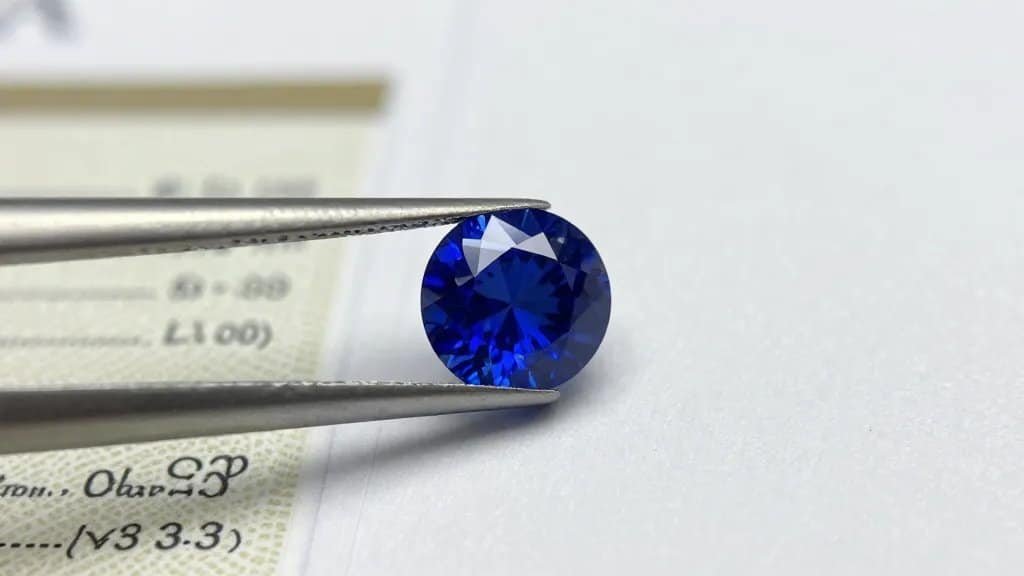
A dazzling ring that chips on the first door handle isn’t a bargain. Durability blends three factors:
- Hardness (Mohs scale): Resistance to scratching. Diamond is 10; corundum (sapphire/ruby) is 9; spinel is 8; garnet and tourmaline hover around 7–7.5; opal is 5.5–6.5; pearl is ~2.5–4.
- Toughness: Resistance to breaking or chipping. Jadeite is notably tough; emerald is relatively brittle due to fractures; topaz has perfect cleavage and can split if struck right.
- Stability: Sensitivity to heat, chemicals, or sudden temperature changes. Opal is vulnerable to dehydration and sudden temperature shifts; pearls hate acids, including vinegar and perfume.
Match the stone to the lifestyle. For daily rings, corundum, spinel, chrysoberyl, and some garnets are excellent. Opals, pearls, and softer stones shine in earrings or necklaces where they’re safer. See Gemstone Hardness and Gemstone Care for practical maintenance tips.
7) Sourcing and Origin: Story, Ethics, and Value
Origin can influence both price and cachet. Kashmir sapphire, Burmese ruby, Colombian emerald—these names carry romance and premiums. But origin isn’t a substitute for beauty. A vivid Sri Lankan sapphire may outshine a duller stone from a famed location.
Ethical sourcing matters to many buyers. Ask about the supply chain: artisanal vs. large-scale mining, fair trade initiatives, or vendor relationships with miners and cutters. Some sellers offer traceability or mine-to-market stories. While not every gem can be perfectly traced, a transparent conversation builds trust.
For collectors, origin and pedigree can add meaning. For everyday buyers, let your eyes lead, then weigh origin and ethics as part of the whole package. If provenance intrigues you, explore Gemstone History and Collector Gemstones to understand how regions shape a gem’s personality and lore.
8) Price and Value Drivers: Know Why It Costs What It Costs
Price should make sense in light of color, clarity, size, cut, rarity, and treatment. If the figure feels too good for the quality, there’s a reason—often undisclosed treatment, lower clarity than it appears, or a lab report you haven’t seen yet.
- Color-first pricing: In colored stones, color trumps the rest. A 2-carat sapphire with perfect color and decent clarity usually beats a larger, duller stone.
- Size leaps: Prices jump at “magic sizes” (1, 2, 3 carats), especially for sapphire, ruby, emerald, and alexandrite. A 1.98 ct may cost far less per carat than a 2.01 ct of the same quality.
- Treatment discounts: Heated sapphires can be fairly priced; glass-filled rubies should be far cheaper. Untreated stones command premiums—verify with a reputable lab.
Compare a few similar stones and keep notes: species, carat, dimensions, color grade (your own words are fine), clarity, cut, treatment, origin, lab, and price. Over time, patterns emerge and outliers stand out. If you want a deeper dive, the Gemstone Value Guide and Gemstone Comparisons can help you make sense of price ranges.
9) Real vs. Synthetic vs. Imitation: Know What’s in the Box
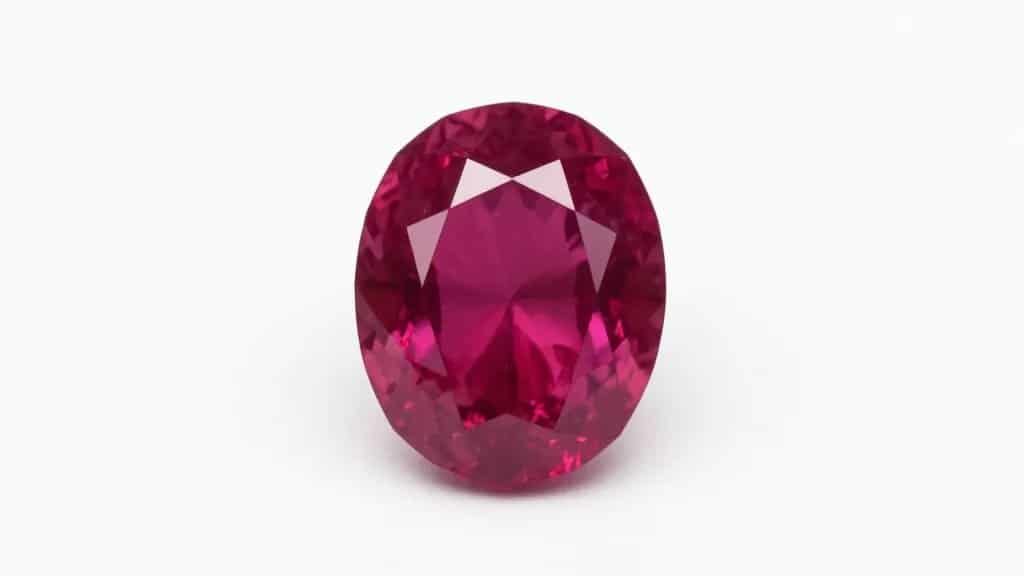
Synthetics are lab-grown crystals with the same chemical composition and structure as natural gems (e.g., lab-grown sapphire). Imitations are look-alikes made from different materials (e.g., glass, cubic zirconia, or assembled doublets/triplets).
- Synthetics: Often very clean and vividly colored; inclusions can show growth lines or gas bubbles atypical for natural stones. They’re great for budget-friendly sparkle but should be clearly disclosed.
- Imitations: May show tell-tale signs like bubbles, swirled flow lines, a too-perfect look, or a suspiciously light weight. Composite stones (doublets, triplets, glass-filled) often reveal seams or color concentrations at the edges.
- Testing: A simple thermal tester can separate diamond from most simulants but struggles with moissanite. For colored gems, professional gemological testing is best.
If a deal hinges on natural origin, get a reputable lab report. To study look-alikes in more detail, see Gemstone Identification and Gemstone Facts.
10) Fit for Purpose: Setting, Care, and Long-Term Joy
Before buying, visualize the gem in the jewelry you’ll actually wear. A deep stone may sit high and wobble in a low-profile ring; a fragile stone might chip in a tension setting. Consider:
- Setting style: Bezels protect edges; prongs show more light. Halo designs can make smaller stones look larger but demand careful cleaning.
- Metal choice: Platinum prongs hold stones securely; gold offers warmth and variety. White metals can emphasize cool-toned stones; yellow gold flatters warm colors and can make pale gems look richer.
- Care routine: Can you avoid harsh chemicals? Will you remove rings for the gym or yard work? Ultrasonic cleaners are risky for many treated or included stones; warm soapy water and a soft brush are safer for most.
Also think about symbolism and meaning if that’s part of your joy—sapphires for loyalty, rubies for passion, emeralds for renewal. If you’re shopping for birthdays or anniversaries, Birthstone Jewelry can help align tradition with taste.
Smart Buying Habits: A Quick Checklist You Can Use
To keep everything straight while shopping, run through this sequence:
- Assess color in varied light (hue, tone, saturation).
- Check clarity and look for risky fractures or surface-reaching inclusions.
- Evaluate cut: brightness, windowing, extinction, symmetry, polish.
- Ask about treatments and insist on disclosure in writing.
- Confirm authenticity and, for higher value, obtain a respected lab report.
- Consider durability for the intended jewelry type and lifestyle.
- Discuss origin and sourcing if those matter to you.
- Compare prices across similar stones with consistent documentation.
- Decide on the right setting and metal for protection and style.
- Plan care: cleaning method, storage, and safe-wearing habits.
Following this plan turns a confusing purchase into a confident one. If you’d like structured advice for specific jewelry pieces, visit Gemstone Rings, Gemstone Necklaces, or Gemstone Earrings for practical pairing ideas.
Care and Cleaning Basics by Gem Type
Here’s a practical guide so your new stone stays lively:
- Diamond, Sapphire, Ruby, Spinel, Chrysoberyl: Generally safe with warm soapy water, soft brush, and occasional ultrasonic if untreated and not heavily included.
- Emerald: Avoid ultrasonic and steam; many are oiled. Clean gently with lukewarm water and a soft brush; avoid solvents.
- Opal, Pearl, Coral, Turquoise: No ultrasonic or steam; avoid chemicals and extremes. Wipe with a soft damp cloth; store away from dryness and direct heat (opal especially).
- Topaz, Tanzanite, Kunzite: Avoid hard knocks and sudden temperature changes; gentle cleaning only.
- Garnet, Tourmaline, Peridot: Soapy water and soft brush; watch for scratches with peridot.
Store gems separately to prevent scratching. Diamonds will scratch nearly everything else, so give them their own space.
Common Mistakes to Avoid
- Falling for size over quality—big but dull rarely satisfies long-term.
- Buying a “bargain” ruby that’s actually glass-filled and fragile.
- Skipping a lab report on high-value stones.
- Ignoring durability for a ring you plan to wear daily.
- Judging color only under jewelry store lights.
- Assuming “untreated” without documentation.
If you’re comparing several species or colors, you might enjoy browsing Gemstone Colors and Precious Gemstones vs. Semi-Precious Stones to align expectations and budget.
FAQs
How do I quickly tell if a gemstone is real without equipment?
There’s no foolproof at-home test for all gems. Basic checks include looking for bubbles (often glass), uneven color concentrations near edges, and reading through the stone (windowing). When in doubt, seek a jeweler’s loupe exam and a lab report for certainty.
Are untreated stones always better?
Not always—beauty first. Many heated sapphires are stunning and durable. Untreated status often raises price and collector appeal, but a well-cut treated gem can look superior to a mediocre untreated one.
Which gemstones are safest for everyday rings?
Diamond, sapphire, ruby, spinel, and chrysoberyl are strong choices. Garnet and tourmaline can work with mindful wear. Avoid daily-wear rings with opal, pearl, or tanzanite unless you’re careful.
Do I need a lab report for every purchase?
For modest purchases, maybe not. For high-value or origin-sensitive gems—ruby, sapphire, emerald, alexandrite—a respected lab report is strongly recommended.
Why do two similar-looking stones have very different prices?
Subtle differences in color saturation, clarity, cut precision, treatment status, origin, and size thresholds can swing value dramatically. Documentation and seller reputation also affect price.
Can a setting hide flaws?
Yes. Prongs or bezels can mask edge inclusions or chips. That’s fine if the stone is otherwise sound. Don’t use settings to hide major structural issues in a daily-wear piece.
What’s the safest way to clean my gemstone at home?
For most stones, use warm water, mild dish soap, and a soft brush. Rinse well and pat dry. Avoid ultrasonic cleaners unless you’re sure the gem is untreated and robust.
Final Thoughts
A gemstone should delight you every time it catches the light. Let your eyes lead, but anchor your choice in solid checks: color, clarity, cut, authenticity, treatments, durability, and fair pricing. Pair the right stone with the right setting, care for it well, and it will reward you with beauty that lasts for generations.

Christian Grey is the creator of GemMeaning, where he shares simple insights about crystals, gemstone meanings, and spiritual guidance. His focus is on making complex ideas easy to understand and practical for everyday life.