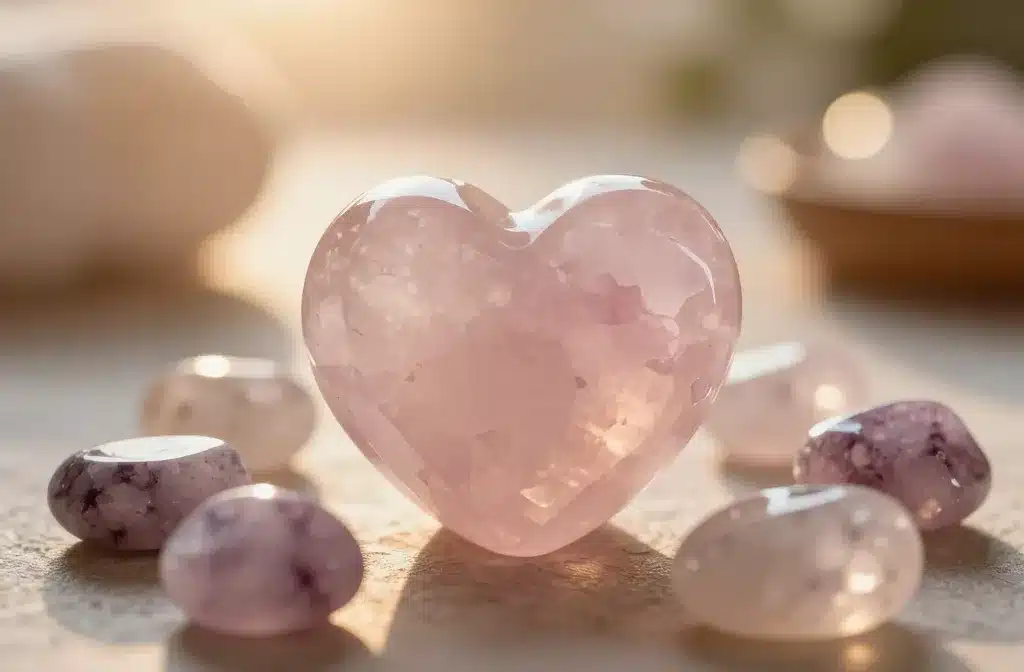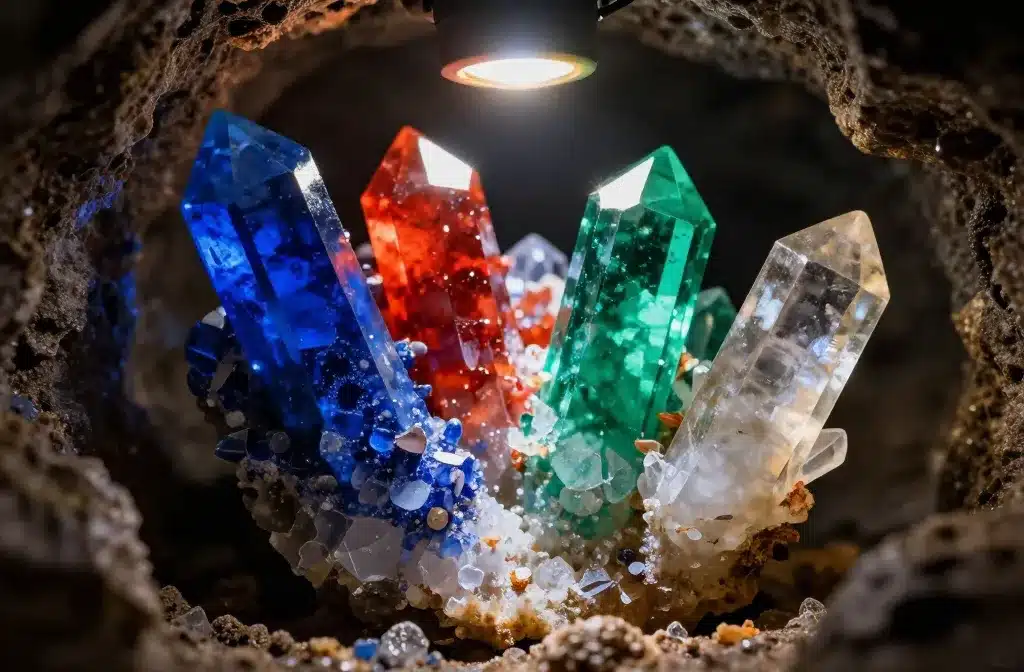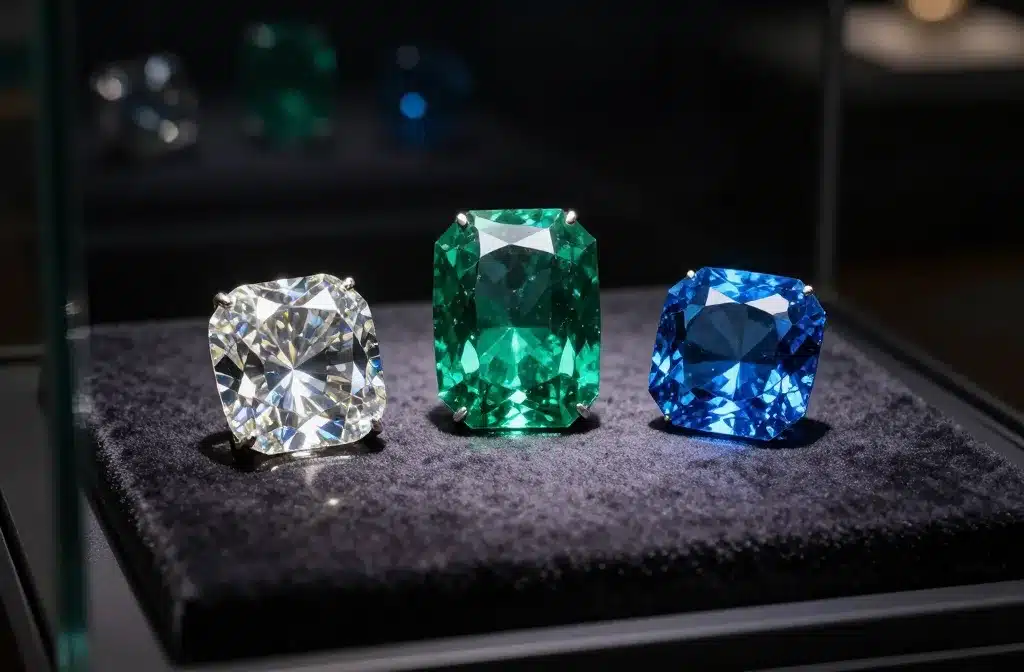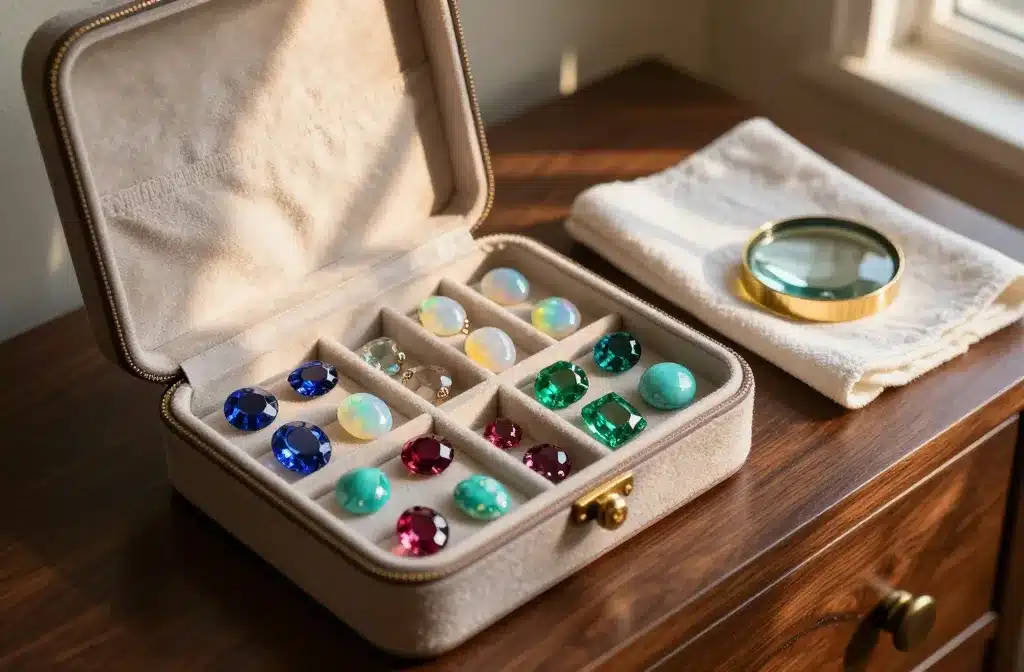
Your gemstones tell stories—of volcanic fire, ocean depths, and ancient pressure. A good jewelry box respects that history and keeps each stone safe from scratches, humidity, and the chaos of a morning rush. Choose the right one and you’ll protect value and enjoy looking at your collection every day.
In this guide, you’ll learn which designs truly work for gemstone collectors, how to prevent damage from mixed hardness levels, and what materials won’t off-gas or stain. We’ll compare travel cases to display chests, break down tray systems, and flag details the product pages gloss over.
Expect practical recommendations and insider checks I use when housing sapphires, opals, and antique garnets side by side. You’ll leave knowing exactly what to buy for your budget and your stones.
And yes, we’ll keep it beautiful—because storage can be as pleasing as a perfectly cut crown.
Why Gemstones Need Different Storage Than Regular Jewelry
Gemstones are tough, but not invincible. Hardness on the Mohs Scale tells you scratch resistance, not overall durability. Diamonds (10) can scratch almost everything; quartz (7) will abrade softer gems; opal (5–6.5) and turquoise (5–6) are comparatively tender and can craze if they dry out or overheat. Pearls and amber are even more delicate, reacting to acids and solvents.
A standard jewelry box with jumbled compartments is a recipe for micro-scratches and chipped girdles. Facet junctions, thin pavillons, and high polishes show wear quickly under bright light. To protect value—and your enjoyment—store gemstones so they don’t rub, and keep humidity and temperature stable. That means lined interiors, secure dividers, and zero rolling room.
Core Features to Look For in the Best Jewelry Boxes
Before you fall for a glossy wood veneer, check the details that matter for stones:
- Individual, Non-Abrasive Compartments: Look for firm dividers that prevent contact. Micro-scratch prevention is priority one.
- Lining Material: Good: suede microfiber, ultra-soft felt, or genuine velvet that doesn’t shed. Avoid cheap flocking that pills and traps grit.
- Non-Reactive Construction: Acid-free adhesives and glues. Low-VOC finishes. Nickel-free snaps for pearl and opal proximity.
- Anti-Tarnish Zones for Silver Mountings: If you store gemstone jewelry set in sterling, anti-tarnish liners help. Keep raw gemstones away from anti-tarnish strips to avoid direct contact.
- Rigid Trays with Lids: Drawer-style or stackable trays with dust covers limit airborne particles and humidity swings.
- Humidity Management: For sensitive stones (opal, pearl), stable mid-range humidity is best. A sealed box plus a small, rechargeable desiccant or humidity pack helps regulate extremes.
- Visibility and Layout: Clear top displays are tempting; ensure UV-filtered glass or keep away from sunlight to prevent color fading in stones like kunzite and amethyst.
- Locking or Latching: A simple latch prevents a dropped box from becoming a gem avalanche.
Best Box Types by Collector Style
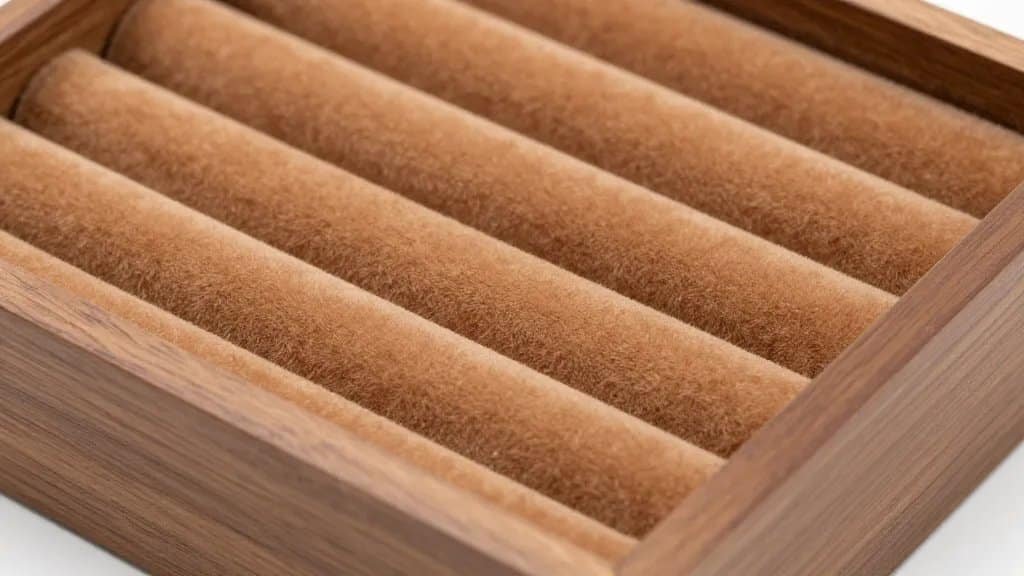
Not every collector needs the same format. Match the box to how you handle and enjoy your stones.
- Stackable Gem Trays: Ideal for serious collectors who catalog and rotate pieces. Choose standardized sizes with ring rows, 1-inch and 2-inch compartment trays, and full pads for larger carvings or geodes. Add rigid acrylic lids to keep dust out and allow quick viewing.
- Drawer Chests with Mixed Inserts: A handsome furniture-style chest with interchangeable inserts suits mixed collections: rings, pendants, cabochons, and cut stones in papers. Look for deep bottom drawers for tools and loupe storage.
- Travel Cases and Rolls: For shows, appraisals, or family trips, pick a zippered case with padded slots and rigid sidewalls. Jewelry rolls are convenient but can compress fragile crowns; a compact hard case is safer for faceted stones.
- Display Boxes with Glass Lids: Good for those who love daily inspiration. Ensure interior dividers keep stones isolated, and place the box far from windows to reduce UV exposure and heat.
- Safe-Friendly Inserts: If security is paramount, build the system around your safe. Use metal or wood trays sized for safe shelves so you don’t stack haphazardly in the dark.
Material Matters: Interiors, Exteriors, and What to Avoid
Materials affect both protection and long-term preservation.
- Interior Linings: High-density suede microfiber is my first choice: it’s soft, doesn’t shed, and resists imprinting. True velvet is luxurious but can trap micro-dust. Felt varies wildly—choose dense, non-pilling types. For pearls, silk-lined slots are exceptional.
- Exteriors: Solid wood with a catalyzed finish is stable and elegant. Engineered wood is fine if off-gassing is controlled. Faux leather over rigid board is durable for travel. Fabric exteriors are less wipeable; if you handle rough specimens, choose a surface that cleans easily.
- Adhesives and Metals: Acidic glues and sulfur-containing anti-tarnish papers can react with delicate organic gems. Keep anti-tarnish strips in a separate corner, not in direct contact with porous stones.
- Magnets and Closures: Low-profile magnets are tidy, but ensure they don’t slam shut on loose stones. A soft-close hinge or simple latch is gentler.
Organizing by Hardness, Setting, and Sensitivity
Think of your storage like a seating chart where rowdy guests don’t sit next to wallflowers. Separate by risk, not just by color or type.
- Hardness Tiers:
- Tier 1 (Hard): diamond, corundum (ruby, sapphire), chrysoberyl—store separately from softer stones; even through fabric, constant contact can burnish or mark other gems.
- Tier 2 (Medium): spinel, topaz, garnet, tourmaline, quartz family (amethyst, citrine), zircon (brittle)—still need dividers and stable trays.
- Tier 3 (Soft/Delicate): opal, turquoise, lapis, malachite, fluorite, apatite, pearls, amber—give them roomy, cushioned spaces. Avoid pressure on cabochon domes.
- By Setting Type: Prong-heavy rings should have tight ring rows so prongs don’t snag neighbors. Bezel-set pieces are more forgiving but still deserve individual slots.
- By Sensitivity: Light-sensitive stones like kunzite and some dyed gems appreciate dark drawers. Hydrophane opal benefits from consistent humidity; don’t over-dry.
- By Wear Frequency: Keep everyday gemstones in the top drawer and high-value or fragile pieces lower, where gravity is on your side if a drawer slips.
Top Picks: Styles That Consistently Perform
Brands change designs, so focus on build. Here are style blueprints that rarely disappoint.
- Stackable Museum-Style Trays with Dust Covers: Rigid sides, microfiber lining, labelled compartments, and clear acrylic lids. Perfect for faceted stones in papers or capsules. Add foam inserts for unusual cuts—trillion points and knife-edges need extra cushion.
- Multi-Drawer Chest with Modular Inserts: A compact chest (4–8 drawers) that accepts ring rows, 24-compartment trays, bracelet pillows, and open wells. The flexibility lets you reshuffle as your collection grows.
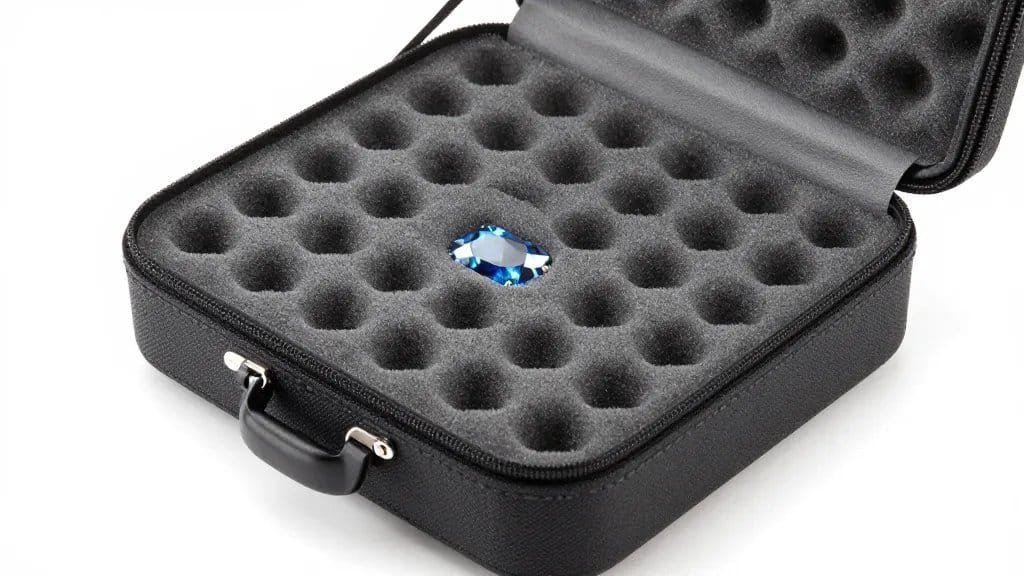
- Travel Vault Case: Semi-hard EVA shell, zip closure, custom foam cutouts, and removable pads. It’s the difference between arriving with crisp facet junctions or mystery nicks.
- Showroom Display Box with UV-Filtered Lid: For home display away from direct sun. Each compartment should fit only one piece; include a felted lift tab so you don’t pry stones out with nails or tweezers.
- Safe Drawer System: Anodized aluminum or sealed wood drawers sized to your safe, with pull-out rails and stop blocks so trays can’t dump forward. Quiet luxury with real function.
Small Details That Make a Big Difference
Little upgrades extend the life and pleasure of your collection.
- Labels and Catalog Cards: Slip thin, acid-free cards under each piece with origin, species, variety, weight, and treatments (heated, oiled, fracture-filled). Future-you will thank you.
- Capsules and Gem Jars: For loose stones, use gem jars with foam tops inside a tray. They prevent abrasion and let you view table and pavilion without handling.
- Silica Gel or Humidity Packs: Use one per box, recharge periodically. Keep opal away from strong desiccants; aim for balanced humidity, not bone-dry.
- Soft Lift Tools: A rubber-tipped grabber or a microfiber finger cot avoids fingerprints on high-polish cabochons and mirrors.
- Drawer Stops and Anti-Slip Feet: Boxes shouldn’t skate across a dresser. Stability saves stones.
Common Storage Mistakes and How to Avoid Them
I see the same pitfalls in collection after collection. They’re easy to fix.
- Mixing Diamonds with Everything: A single diamond stud migrates and hairlines bloom on neighboring gems. Give diamonds their own confined tray.
- Letting Pieces Roam: Overly large compartments encourage rolling. Fill space with padded inserts or choose tighter grids.
- Velvet That Sheds: Those fibers burnish onto prongs and collect grit that acts like sandpaper. Upgrade the lining or lay a microfiber pad.
- Direct Sunlight Displays: Amethyst fading seems slow—until you compare to a stored reference. Keep display boxes in shade.
- Storing Dirty Jewelry: Skin oils dull polish and cement dust. Quick clean and dry before putting pieces away. See Gemstone Care if you need species-specific methods.
Care Routines to Pair with the Right Box
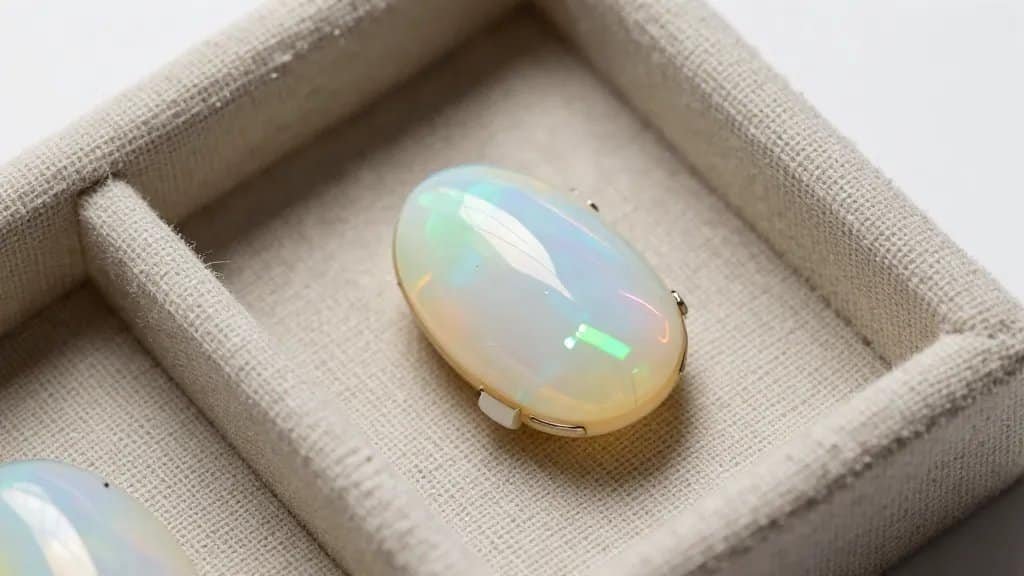
A thoughtful routine works hand-in-hand with a great jewelry box.
- Pre-Storage Check: Wipe each piece with a lint-free cloth. For rings, inspect prongs with a loupe; if a stone rocks in the seat, it doesn’t go back into regular rotation.
- Species-Specific Cleaning: Ultrasonic is fine for many corundum and diamond pieces but not for fracture-filled gems, emeralds with surface-reaching fissures, opal, or pearls. Reference Gemstone Care or a Gemstone Buying Guide for treatment notes.
- Rotation and Air: Pearls appreciate an occasional breath—don’t seal them indefinitely with aggressive desiccants. Opals prefer steady humidity; avoid heaters and windowsills.
- Quarterly Re-Layout: As your collection evolves, reshuffle to maintain space discipline. Replace tired foam or compressed ring rows.
Budget to Luxury: What You Get at Different Price Points
You can protect gemstones well at most budgets if you choose smartly.
- Entry Level: Sturdy faux-leather cases with microfiber lining and basic dividers. Add gem jars and silica gel to upgrade performance. Avoid open, floppy rolls for anything fragile.
- Mid-Range: Solid construction, smooth drawers, modular inserts, better latches, and cleaner adhesives. Usually the sweet spot for collectors with mixed pieces.
- High-End: Custom hardwood chests, UV-filtered lids, museum-grade trays, silk lines for pearls, and safe-compatible dimensions. If you collect larger or rare stones (see Collector Gemstones or Rare Gemstones), the fit and finish protect value and elevate the experience.
Special Notes for Specific Stones
Some gems ask for special consideration beyond the general rules.
- Opal: Store away from strong desiccants and heat. Use a softly cushioned compartment with minimal movement. Hydrophane opal can change appearance with humidity; keep conditions stable.
- Emerald: Often oiled; avoid desiccation and ultrasonics. Use snug, padded slots and keep away from diamond neighbors.
- Zircon: High brilliance but brittle; protect facet edges with tighter compartments and avoid pressure.
- Amber and Pearls: Organic, sensitive to solvents, perfumes, and acids. Silk or microfiber nests, moderate humidity, and never sealed with anti-tarnish paper touching them.
- Turquoise, Lapis, Malachite: Porous; limit contact with treated papers or off-gassing foams. Choose inert linings and keep them dry but not parched.
How to Evaluate a Box Before You Buy
Product descriptions can be vague. Here’s how to judge quality without guesswork.
- Ask for Lining Specs: Fabric type, fiber content, and pad density. If sellers can’t answer, treat it as a red flag.
- Check Tolerances: Drawers should glide smoothly and stop before tipping. Dividers mustn’t flex under finger pressure.
- Look for Replaceable Inserts: Being able to swap components extends the life of the system as your collection changes.
- Smell Test: Strong chemical odor suggests off-gassing. Your stones don’t want that environment.
- Dimensions vs. Your Pieces: Measure your bulkiest ring or cabochon height; ensure the lid clears without pressing the piece into the lining.
Where This Fits with the Rest of Your Gem Knowledge
Storage is part of the bigger picture: understanding Gemstone Hardness helps you separate and protect pieces; Gemstone Identification and Gemstone Value Guide inform how you label and insure; and exploring Gemstone Colors or Gemstone Cuts can inspire how you group trays for quick comparisons. If you collect for wear, connect this with Gemstone Jewelry care habits and cleaning guidance.
FAQs
Should loose gemstones be stored in papers, jars, or direct compartments?
For frequent viewing, gem jars with foam tops inside a tray are safest. Papers are fine for durable stones but can scuff softer gems if handled often. Direct compartments work only if there’s zero movement and a very soft lining.
Is a clear-lid display safe for amethyst or kunzite?
Only if kept away from sunlight and strong indoor UV. Even then, long-term display can fade color. Use shaded areas or solid drawers for those stones.
Can I keep silver gemstone jewelry with raw gemstones?
Yes, but separate compartments. If you use anti-tarnish strips for silver, keep them away from porous or delicate stones and never in direct contact.
Do I need a lock on the jewelry box?
A latch prevents spills; a lock adds basic security. For high-value pieces, prioritize a safe with fitted trays over a fancy lock.
How often should I recharge silica gel packs?
Every 1–3 months depending on climate. If storing opals or pearls, use minimal desiccant and monitor to avoid overly dry conditions.
What’s the best way to store rings with high prongs?
Use tight ring rows with firm padding so settings don’t tilt. Alternatively, individual gem jars or small compartments with foam inserts prevent snagging.
Are travel rolls okay for gemstone jewelry?
They’re acceptable for sturdy settings and harder stones. For fragile crowns, soft cabochons, or large solitaires, choose a rigid travel case with shaped inserts.
Final Thoughts
The best jewelry boxes for gemstone collections blend gentle materials, firm separation, and layouts that match your habits. Prioritize non-abrasive linings, zero movement, and stable humidity, and your stones will look as crisp and lively next year as they do today.

Christian Grey is the creator of GemMeaning, where he shares simple insights about crystals, gemstone meanings, and spiritual guidance. His focus is on making complex ideas easy to understand and practical for everyday life.