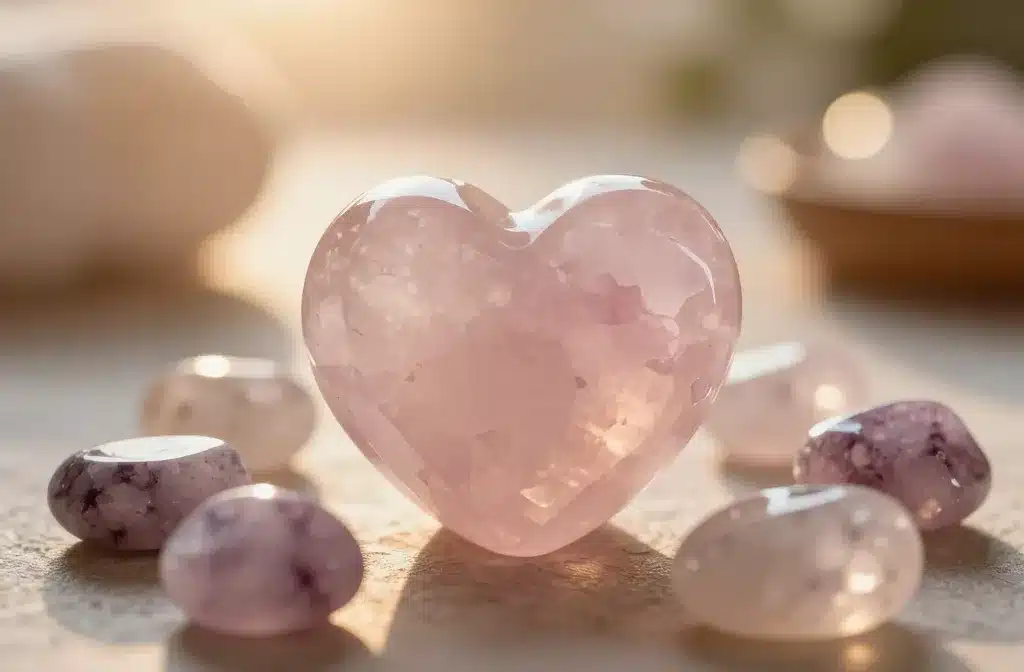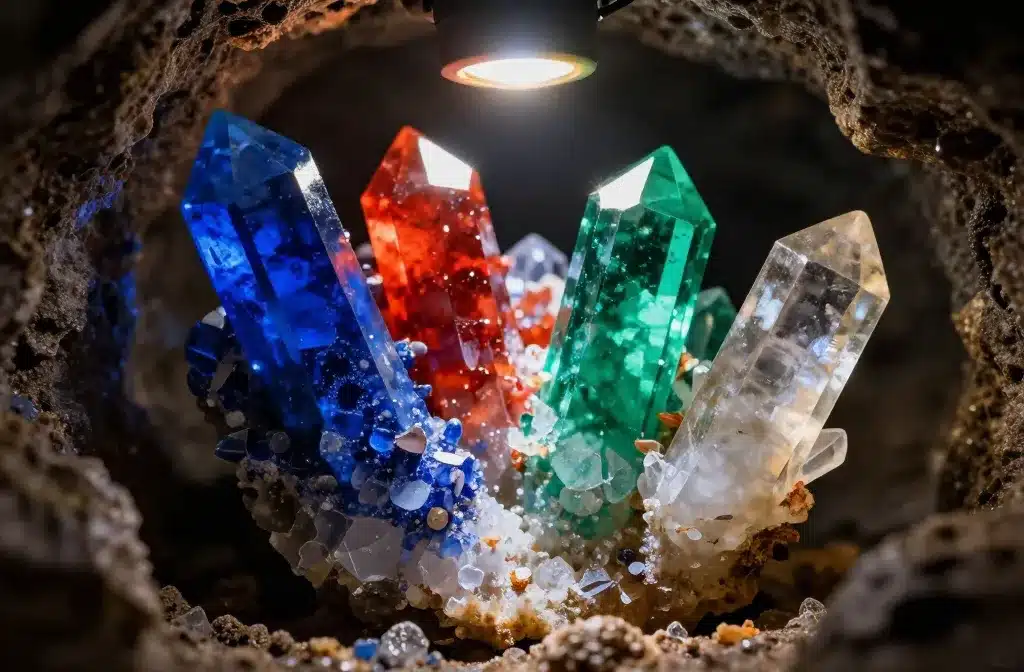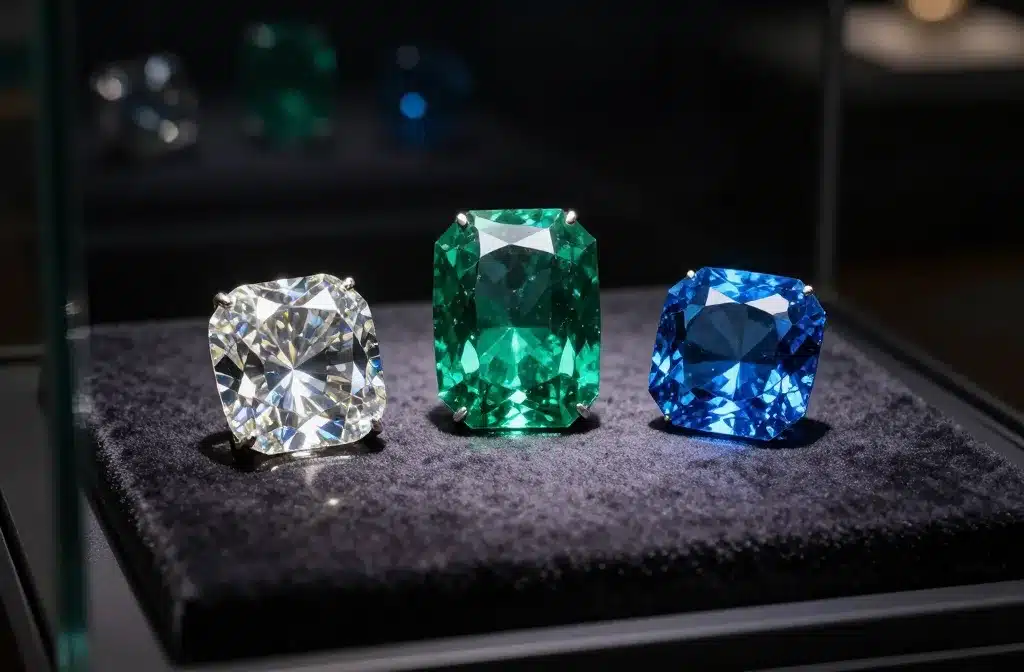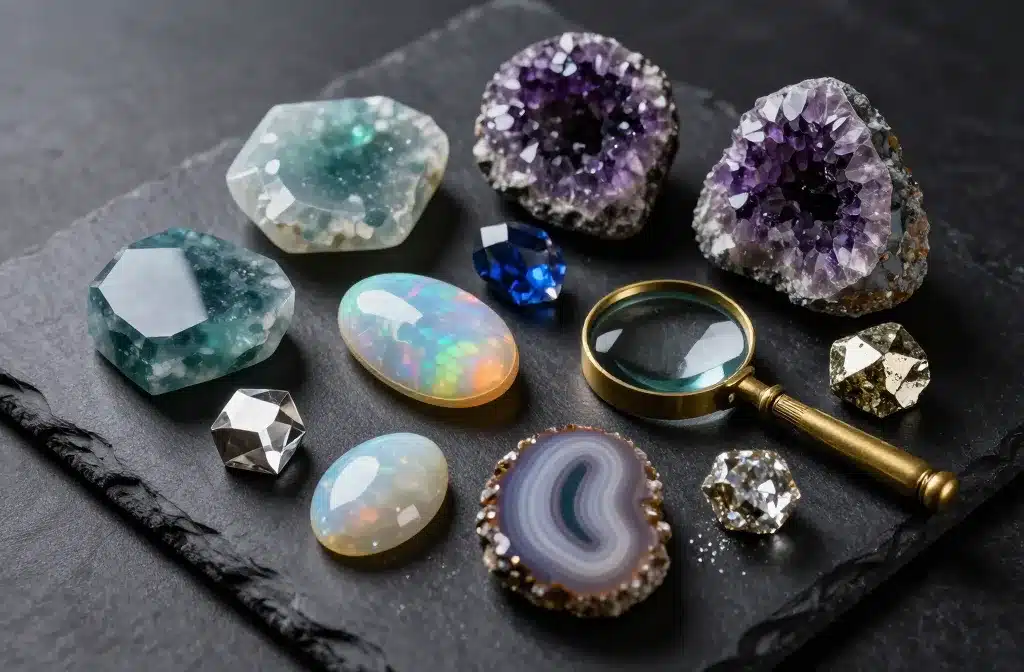
Some stones ask you to look twice; others refuse to let you look away. Gems and minerals are Earth’s archives—each crystal a page written by heat, pressure, and time. Collectors chase them for beauty, scientists for clues, and jewelers for their glow under everyday light.
Here you’ll learn how remarkable stones form, what sets prized specimens apart, and why certain localities inspire feverish demand. We’ll visit iconic deposits, compare varieties, and explore care, value, and buying tips you can actually use. Expect color, character, and a few myths gently corrected along the way.
By the end, you’ll be able to spot hallmarks of quality, understand geological backstories, and feel confident exploring deeper topics like Gemstone Identification, Gemstone Hardness, and the Gemstone Value Guide.
Pack your loupe. We’re heading around the world—one glittering stop at a time.
The Geologic Recipe: How Beauty Crystallizes
Every gem begins as chemistry meeting geologic circumstance. Heat and pressure reorganize atoms into tight lattices; fluids move elements through fractures; volcanic pulses fling crystals skyward. This dance writes everything we see—color, clarity, and durability.
Hardness anchors a gem’s everyday practicality. On the Mohs Scale, diamond sits at 10, corundum (ruby and sapphire) at 9, and quartz family at 7. Jewelry that’s worn daily—rings and bracelets—benefits from higher hardness and toughness, while softer materials like malachite (3.5–4) or opal (5.5–6.5) shine in earrings and necklaces where they face less wear.
Color often depends on trace elements. Chromium fires ruby; iron and titanium paint sapphire in blues; vanadium can give emerald its lush glow. Inclusions—tiny growth features or trapped minerals—are not always flaws. In Kashmir sapphire, fine “silk” softens the blue and heightens desirability; in demantoid garnet, horsetail inclusions are cherished proof of Uralian origin.
Ruby, Sapphire, and the Power of Place
Corundum, chemically aluminum oxide, earns its fame by color. Ruby is red corundum colored by chromium; everything else is sapphire. Both reach Mohs 9, making them sturdy choices for rings and everyday wear.
Ruby hotspots: Myanmar’s Mogok produces pigeon’s blood ruby—a vivid red with a whisper of blue. Mozambique’s Montepuez field now supplies many fine rubies, often cleaner and brighter. Thai rubies trend darker, while Vietnamese stones can show distinctive fluorescence. Top rubies pair saturated color with lively light return and minimal brown or purple modifying tones.
Sapphire comes in more than blue. Kashmir’s velvety cornflower blue remains the dream, a result of fine rutile silk scattering light. Sri Lankan (Ceylon) sapphires lean toward bright, luminous blues and pastel “fancy” colors like padparadscha—peachy-pink rarities fiercely contested by collectors. Madagascar now delivers an impressive color range, and Montana sapphires, often parti-colored or teal, bring an artisanal charm with excellent cutting.
Treatments: Heat treatment is common and generally accepted if disclosed; it can improve color and clarity. Diffusion treatments add color near the surface; these fetch lower prices. Fracture filling in ruby (glass-filled ruby) dramatically drops value and durability. A laboratory report helps distinguish natural, heat-only stones from more invasive treatments—see Gemstone Identification for lab basics.
Emerald, Alexandrite, and Beryl’s Unearthly Tricks
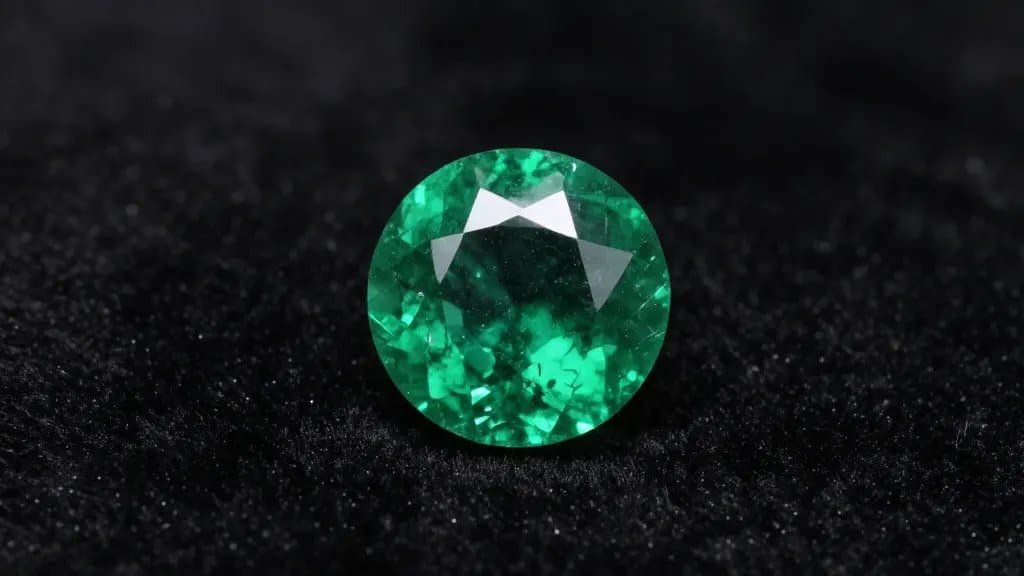
The beryl family carries a wide palette: emerald (green), aquamarine (blue), morganite (pink), heliodor (yellow). Emerald is the diva—intensely green from chromium and/or vanadium, usually included (“jardin”), and softer at 7.5–8 with distinct cleavage.
Origin and look: Colombia’s Muzo and Chivor mines yield saturated, slightly bluish greens with silky, leafy inclusions. Zambian emeralds often read a touch more bluish-green and cleaner; Afghan and Ethiopian finds are gaining momentum. Oil is often used to reduce visibility of surface-reaching fissures; it’s traditional and accepted if disclosed. Polymer filling is less favored and lowers value.
Alexandrite, the color-change cousin (variety of chrysoberyl, Mohs 8.5), shifts from green in daylight to red in warm indoor light. Russia’s Urals gave us the archetype: strong change and clarity. Brazilian and Sri Lankan sources produce stones with impressive change, though purity of green-to-red varies. Strong, dramatic change and good clarity send prices soaring; weak change leans more affordable.
Aquamarine looks like frozen seawater—crystal-clear blues, often large and beautifully cut. Untreated aqua tends to mild greenish-blue; gentle heat minimizes the green for a purer blue. It’s durable for most jewelry and a joy to facet thanks to high transparency and a vitreous polish.
Opal, Tourmaline, and the Colors That Won’t Sit Still
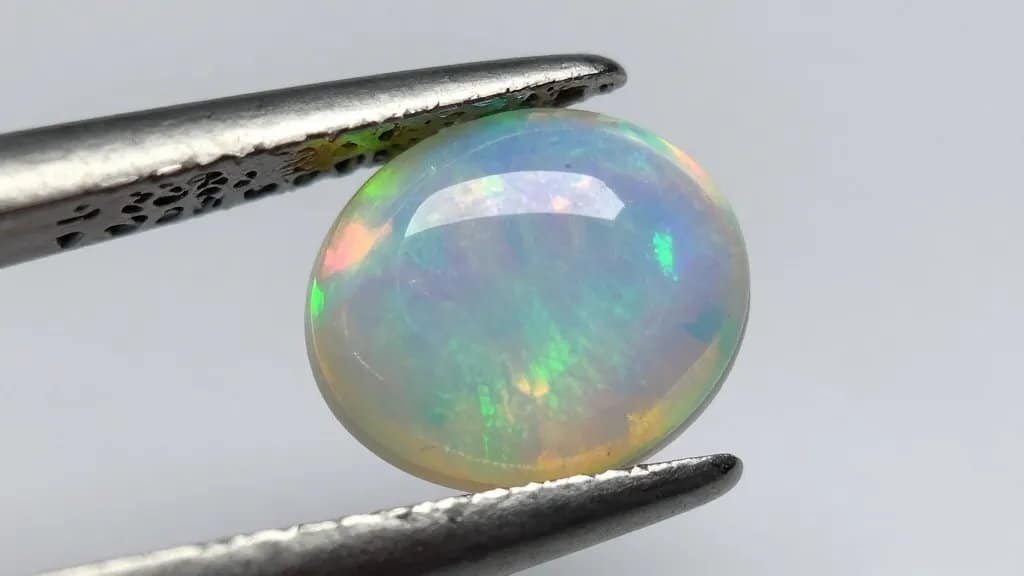
Opal is a kaleidoscope built from spheres of silica. The regularity of those spheres diffracts light into spectral fire. Precious opal (with play-of-color) contrasts with common opal (without it). Australia’s Lightning Ridge is prized for black opal—dark bodycolor that makes neon flashes explode. Ethiopian Welo opal often shows honeyed bodycolors with brilliant play; it’s hydrophane, meaning it can absorb water and briefly change appearance.
Care: Opal’s hardness sits around 5.5–6.5 and it’s sensitive to sudden temperature changes and prolonged dryness or soaking. Store opals separately, avoid ultrasonic cleaners, and prefer pendants or earrings for daily wear. Doublets and triplets—thin opal layers backed or capped—are more affordable but require extra care around moisture and heat.
Tourmaline is a gem chameleon. Elbaite gives us saturated greens, blues (indicolite), pinks and reds (rubellite), and the coveted “Paraíba” electric neon blue-green colored by copper. Brazil birthed the Paraíba phenomenon; Nigeria and Mozambique followed with similar chemistry. The finest Paraíba glows even in dim light—an almost self-lit quality. Bi-color and watermelon crystals display charming color zoning that cutters showcase in slices or step cuts.
Durability and treatments: Tourmaline is Mohs 7–7.5. Heat and mild irradiation are used to fine-tune color; reputable sellers disclose this. Rubellite should hold its red under various lights; brownish or unstable stones merit scrutiny.
Garnet, Spinel, and Underrated Royalty
Garnet isn’t a single stone but a family. Pyrope and almandine yield classic reds; spessartine blazes orange, from juicy tangerine to deep “Fanta” hues; grossular brings tsavorite (vivid green) and hessonite (cinnamon). Demantoid, a green andradite from Russia’s Urals and Namibia, has diamond-like dispersion that throws rainbow sparks. At Mohs 6.5–7.5, garnets vary in hardness but generally handle everyday life well in protected settings.
Value drivers: Saturation and brightness matter. Tsavorite competes with emerald for those who want vivid green without emerald’s fragility. Demantoid with horsetail inclusions is both diagnostic and desirable; well-cut stones under 2 carats can still command attention with their fiery scintillation.
Spinel has been the quiet understudy to ruby for centuries—several “rubies” in royal crowns are actually spinel. Modern buyers love it for crisp reds, cobalt blues, bubblegum pinks, and steely grays. Mohs 8 with no cleavage makes it a durable alternative for rings. Burmese and Tajik reds fetch premiums; Sri Lanka and Vietnam produce superb pastels and cobalt hues respectively. Untreated spinel is the norm, a refreshing note in a market where many stones see heat or fill.
Quartz, Feldspar, and the Everyday Wonders
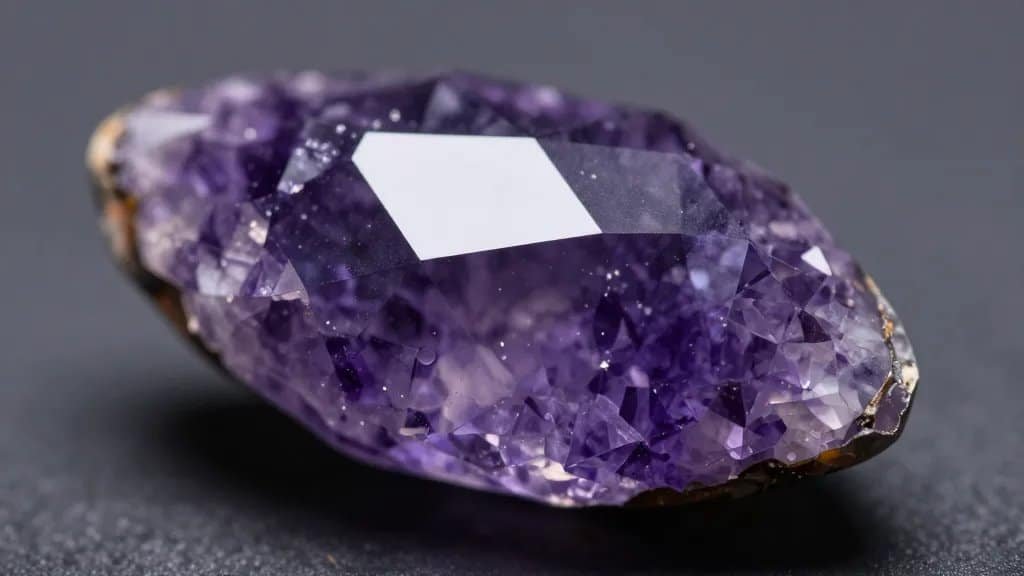
Quartz underpins much of the gem world at Mohs 7. Amethyst’s royal purple can show red and blue flashes; Uruguay and Zambia offer rich hues, while Brazil supplies large clean crystals. Citrine lends warm sunshine in golden to Madeira orange tones, sometimes produced by heating amethyst. Ametrine blends both in dramatic bicolor zoning from Bolivia.
Chalcedony varieties carry texture and pattern: agate banding, jasper’s earthy opacity, onyx’s stark layers. These are affordable gateways for new collectors and great study pieces for learning structure, luster, and fracture.
The feldspar clan gives us moonstone, labradorite, and sunstone. Moonstone’s adularescence—soft, floating light—pairs beautifully with rose gold. High-quality “blue sheen” moonstone from Sri Lanka is translucent with a glassy polish. Labradorite’s labradorescence is bolder: electric blues and greens flashing across a dark body. Oregon sunstone can show coppery aventurescence or even green-to-red pleochroism; clean stones with strong schiller are especially striking.
Diamonds and the Lure of Light
Diamond’s superpower is not just hardness (10) but how it handles light. A precise cut releases brilliance (white return), fire (rainbow dispersion), and scintillation (sparkle as the stone moves). Colorless diamonds graded D–F with excellent cut carry classic prestige, but fancy colors—natural pinks, blues, greens—form under unusual conditions and can be extraordinarily rare.
Origin stories add romance: Argyle in Australia transformed the pink diamond market before closing; Botswana and Canada produce responsibly sourced stones that many buyers seek. Lab-grown diamonds are chemically identical but traceable to a lab; they offer lower price points for size and clarity. For natural stones, a grading report is non-negotiable. Curious how hardness shapes wearability? Explore Gemstone Hardness for practical comparisons.
Locality Legends: Places That Shaped Gem Lore
Kashmir, India: Brief late-19th-century sapphire production left an outsized legacy—velvety blue with sleepy, captivating glow. Genuine Kashmir stones with documentation are museum-tier.
Mogok, Myanmar: “Valley of Rubies.” The combination of chromium-rich marble and complex metamorphism produces top-tier ruby and spinel with luminous fluorescence.
Colombia’s Emerald Belt: Hydrothermal fluids infiltrating black shales crafted the world’s most coveted greens. Each mine—Muzo, Chivor, Coscuez—has a reputation for subtle tonal differences.
Namibia and Russia’s Urals: Demantoid garnet with trademark horsetails, and vivid aquamarine and topaz from classic pegmatites. These locations shaped collector tastes for more than a century.
Madagascar: A modern treasure chest—sapphire in every shade, tourmaline, garnet varieties, and surprising clarity. Cutting has improved dramatically, turning rough into beautifully proportioned gems.
How to Tell Quality at a Glance
Train your eyes as much as your mind. Two-minute checks reveal a lot before any lab test:
- Brightness first: Tilt the stone. Does it “wake up” under low light? Fine stones look lively even in shade.
- Color purity: Look for clean, saturated hues without gray or brown masking. Pastels should be fresh, not washed-out.
- Cut proportions: Windows (see-through zones) drain color; excessive depth makes stones look small for their weight. Symmetry and crisp facet junctions signal care.
- Inclusions: Are they distracting or diagnostic? Needles in sapphire can produce charming silk; fingerprints in emerald are expected. Beware fractures reaching the girdle in rings.
- Treatment clues: Glass-filled ruby shows blue flashes and gas bubbles under magnification; diffusion sapphire may have concentrated color at facet junctions. When in doubt, ask for documentation.
If you want to compare similar stones side by side, our Gemstone Comparisons topic is a great next step to understand trade-offs between color, clarity, and durability.
Buying Smart: Value, Ethics, and Everyday Practicality
Value blends rarity, demand, aesthetics, and condition. Some quick, practical heuristics:
- Color leads: In ruby, sapphire, and emerald, top color often outweighs clarity. In aquamarine or spinel, clarity and cut can elevate lighter colors.
- Size leaps: Price per carat often jumps at “magic sizes” (1, 2, 5 cts). A well-cut 0.90 ct may look nearly identical to a 1.00 ct for less.
- Origin premiums: Kashmir sapphire, Burmese ruby, Colombian emerald—origins can multiply price. Buy the stone, not the story, unless a reputable report confirms it.
- Ethical sourcing: Many dealers offer traceability or partner with responsible miners. Ask about supply chain transparency and community benefits.
- Settings matter: Softer stones do best in protective bezels or halo designs for rings. Reserve prong-set rings for durable minerals or be prepared for mindful wear.
For a step-by-step checklist covering reports, treatments, and return policies, see our Gemstone Buying Guide.
Caring for Treasures: Cleaning and Longevity
Each gem wears differently. A few rules of thumb:
- Routine cleaning: Warm water, mild soap, soft brush. Rinse thoroughly and pat dry. Avoid steaming or ultrasonic cleaners unless you’re sure the gem and setting can take it.
- No ultrasonics for: Emerald (frequently oiled), opal, tanzanite, turquoise, lapis, porous or fracture-filled stones.
- Storage: Keep gems separated in soft pouches or compartments. Diamonds can scratch anything else nearby.
- Heat and light: Prolonged strong light can fade some kunzite or amethyst; sudden heat can damage opal or fracture-filled stones.
- Checkups: Prongs loosen with wear. A quick jeweler inspection each season saves heartbreak.
For deeper maintenance tips across materials and settings, bookmark our Gemstone Care guide.
Collector Corners: Oddities and Holy Grails
Beyond classics, a few stones stir collector pulses:
- Benitoite (California): Sapphire-blue with high dispersion; small but dazzling. Fluoresces bright blue under UV.
- Grandidierite (Madagascar): Teal, pleochroic, very rare in clean faceted gems.
- Poudretteite (Canada/Myanmar): Pastel pink, often tiny, scarce and charming to micro-facet fans.
- Jeremejevite (Namibia): Colorless to pale blue, exceptionally hard to source in fine cut stones.
- Clinohumite (Tajikistan): Honey to orange, a connoisseur’s piece linked to marble-hosted deposits.
For a treasure map of pieces like these, our Collector Gemstones and Rare Gemstones topics go deeper into availability and authentication.
Myths, Missteps, and Field Notes
Not everything you hear turns out true. A few quick clarifications:
- Myth: All emeralds should be perfectly clean. Fact: Most are included; a perfectly clean, richly colored emerald is exceedingly rare and valuable.
- Myth: Hardness equals toughness. Fact: Diamond resists scratching but can cleave; jadeite, though softer, is remarkably tough. Hardness and toughness measure different things.
- Myth: Opals are bad luck. Fact: Pure superstition. Opals simply need appropriate care.
- Common mistake: Chasing carat weight over cut. A poorly cut 2 ct can look dull beside a crisp 1.5 ct.
- Common mistake: Ignoring lighting. Always view stones in multiple lights—daylight, office LEDs, warm interior bulbs—to judge true personality.
FAQs
How do I quickly tell if a ruby is glass-filled?
Under a 10x loupe, look for blue flashes, gas bubbles, or a ropy appearance in fractures. Edges may show a glassy flow. Ask for a report if price seems too good.
What makes Paraíba tourmaline different from regular blue tourmaline?
Paraíba’s neon glow comes from copper and often manganese. Its vivid, electric saturation is unmistakable even in low light. Origin and chemistry determine value, not just “blue.”
Is Ethiopian opal safe for rings?
It can be, but hydrophane opal absorbs water, which may cause temporary transparency changes. Choose protective settings, avoid prolonged soaking, and remove during chores.
Why do some sapphires look better in shade than under bright LEDs?
LED spectra vary and can mute certain blues. Fine sapphires hold color across lighting, but testing in daylight and mixed indoor light provides a balanced assessment.
Can oil in emeralds dry out over time?
Yes, oil can diminish, making fractures more visible. Re-oiling by a skilled professional is common; always disclose treatments for resale or appraisal.
Should I buy based on origin or appearance?
Appearance first. Origin can add value, but a beautiful, well-cut stone without a marquee origin often gives better value per dollar.
What’s the best everyday gem for a ring besides diamond?
Sapphire and spinel balance hardness, toughness, and minimal treatment. They offer rich color and stand up well to daily wear.
Final Thoughts
Amazing rocks and minerals tell stories in color and crystal. Learn how they form, train your eye for cut and brightness, and match durability to how you’ll wear them. With sound buying habits and thoughtful care, each gem you choose will keep shining—quietly recording new chapters every time it catches the light.

Christian Grey is the creator of GemMeaning, where he shares simple insights about crystals, gemstone meanings, and spiritual guidance. His focus is on making complex ideas easy to understand and practical for everyday life.