Some gems are beautiful. A rare few are storytellers. Among them, rubies speak the loudest—glowing with a red so alive it feels warm to the eye. They have crowned emperors, sparked rivalries, crossed oceans, and fooled experts. A famous ruby is never just a stone; it’s a passport through time.
If you’ve ever wondered what separates a museum-worthy ruby from a pretty red gem, you’re in the right place. You’ll meet legendary stones, learn why certain rubies are prized beyond diamonds, and discover how origin, color, and history amplify value. Along the way, we’ll share tips on recognizing quality, caring for ruby jewelry, and avoiding the pitfalls that even seasoned collectors encounter.
By the end, you’ll see that each celebrated ruby sits at the crossroads of geology and human ambition. The world’s most famous examples—some authentic, some notorious impostors—show how brilliance, color, and provenance shape desire and worth.
Settle in. These scarlet legends have earned their fame for good reasons.
Why Rubies Captivate: Color, Rarity, and the Geology Behind the Glow
Rubies are the red variety of corundum, the same mineral family as sapphires. Trace chromium is the magic ingredient: it replaces a bit of aluminum in the crystal lattice and lights the gem with red. That same chromium also gives rubies their famous fluorescence under sunlight or UV, adding a subtle inner bloom that feels almost electric in top stones.
On the Mohs Scale, corundum ranks 9, making rubies tough enough for daily wear in rings and bracelets. Their durability and adamantine-like luster allow a high polish, so fine facets throw back crisp, bright flashes. The rarest color—often called “pigeon’s blood”—is a deep, pure red with a whisper of blue and velvety saturation. This shade performs beautifully under many lighting conditions, never collapsing into brown or pink.
Geologically, fine rubies form under precise conditions, especially in marble-hosted deposits like Mogok in Myanmar (Burma) and certain areas of Vietnam. Marble lacks iron, so chromium can sing without interference, producing that saturated, yet soft, ruby glow. That’s why origin can influence value almost as much as weight and clarity.
The Sunrise Ruby: A Modern Icon With Ancient Allure
Not all legends are centuries old. The Sunrise Ruby, a 25.59-carat Burmese stone set by Cartier, redefined modern ruby values when it sold for a staggering sum in 2015. Its color is the archetype of “pigeon’s blood”—a luminous red with that elusive fluorescent warmth that top Burmese material can show. Even under subdued light, the gem seems to radiate.
What sets it apart, besides color, is its balance of weight, clarity, and shape. In a ruby over 20 carats, inclusions are expected; yet the Sunrise exhibits striking transparency with only delicate silk and minute crystals, proof that nature often leaves a calling card. Its oval cut maximizes color and symmetry, ensuring light bounces without creating dead zones. The Cartier mounting, restrained and elegant, respects the gem’s authority rather than competing with it.
Collectors study the Sunrise Ruby because it’s a benchmark. It demonstrates how origin, hue, fluorescence, and a tasteful setting culminate in a gemstone that tells a modern chapter in an ancient story. For anyone exploring Collector Gemstones or a Gemstone Value Guide, the Sunrise is a masterclass in why the marketplace reveres top Burmese rubies.
The Rosser Reeves Star Ruby: A Celestial Beacon
Star rubies offer a different kind of theater. The Rosser Reeves, at 138.7 carats, is one of the finest star rubies known, famed for its sharp, centered six-rayed star that glides across the dome with a gentle sweep of light. This optical effect, called asterism, forms when microscopic rutile needles (silk) align in corundum, reflecting light as a star—best seen in a smoothly polished cabochon.
The color is a deep red, slightly purplish, with an even glow. In star rubies, a bit more silk is welcome because it sharpens the star. The Rosser Reeves shows the sweet spot: saturated color plus a crisp asterism. This piece now rests in the Smithsonian, where many gem lovers first learn how inclusions can be a blessing, not a flaw.
Practical note: If you’re drawn to star rubies for Gemstone Jewelry, look for a clean, well-centered star that remains visible under various lights. Shake the stone gently and confirm the star feels “anchored,” not smeared. That’s a sign of quality rutile alignment and good polish.
The Black Prince’s “Ruby”: A Fiery Impostor With a Noble Career
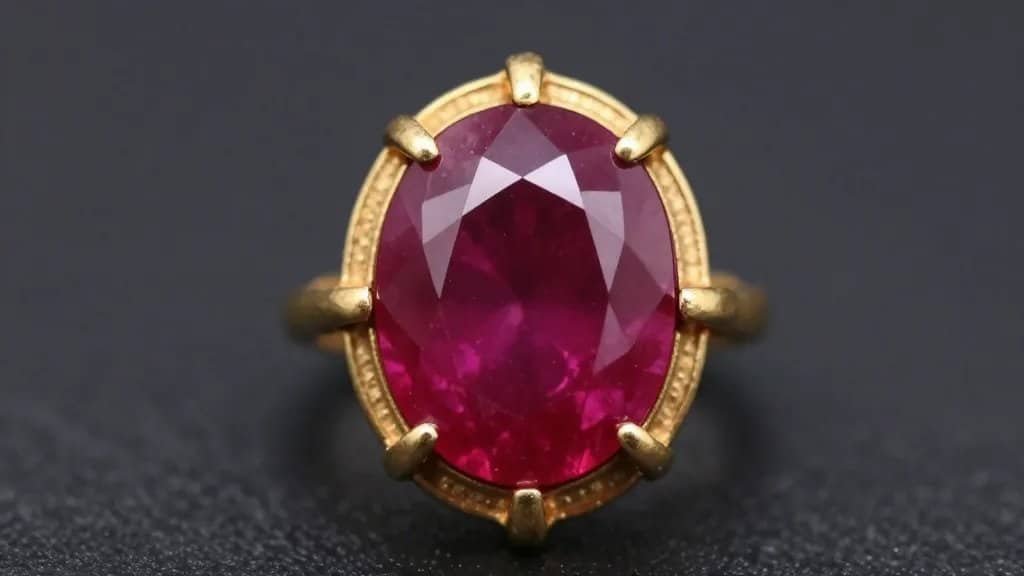
History keeps its own sense of humor. The Black Prince’s Ruby, set in the Imperial State Crown of Britain, has seen battlefields and coronations—yet it isn’t a ruby at all. It’s a red spinel, another gemstone altogether. In medieval Europe, rubies and red spinels often traded identities because the tools to distinguish them didn’t exist. Both are red, translucent to transparent, and can display remarkable brilliance.
This stone’s journey stretches back to the 14th century, when it was taken from the Moorish kingdom of Granada and eventually given to Edward, the Black Prince. It’s a piece of living history perched above the Cullinan II diamond in the crown. The lesson is simple: “Famous doesn’t always mean what you think.” For those interested in Gemstone Identification or Gemstone Myths, this spinel is a cautionary tale that helped push gemology toward scientific precision.
Modern labs can easily separate ruby from spinel using refractive index, spectroscopy, and trace-element analysis. If a dealer claims “old ruby with royal history,” ask for a report from a top laboratory. Provenance is powerful—but accuracy is priceless.
The Ruby of Mogok: Burma’s Scarlet Heartland
While not a single stone, the Mogok Stone Tract of Myanmar deserves its own chapter because so many famous rubies hail from its marble-hosted deposits. The region has produced stones with otherworldly saturation and silk that scatters light like the soft glow of a candle through crimson glass. Legendary gems—large, clean, and vividly red—are rare even here, but Mogok’s typical character is unmistakable once you’ve “seen the light.”
Collectors often describe high-end Burmese rubies as having a velvety texture. That’s not an illusion: microscopic inclusions and trace elements create a very fine diffusion that smooths the light. Clarity never looks sterile; it looks alive. This quality has set value records time and again, most famously with the Sunrise Ruby and other named stones that secured hall-of-fame prices.
For buyers, origin matters, but it’s not everything. Vietnamese rubies from Luc Yen and Mozambique rubies from Montepuez can show jaw-dropping color too. If you love Gemstone Comparisons, lining up Burmese, Mozambique, and Vietnamese stones side by side will teach your eyes more in five minutes than a hundred pages of reading.
The Liberty Bell Ruby and Other Storied American Rubies
Rubies aren’t only Old World treasures. The Liberty Bell Ruby—a massive sculpture carved from a single ruby crystal—captured headlines for its size and symbolism. Though not a faceted jewel, it illustrates how rubies inspire creativity beyond the jewelry case. Unfortunately, it was stolen in 2011 and remains missing, adding an unresolved chapter to ruby lore.
Other North American rubies, especially from North Carolina, tend to be smaller and more included, but they hold appeal for gem cutters and collectors who enjoy stones with a clear, local story. Their colors range from pinkish red to deeper crimson; under magnification, you’ll often find clouds, needles, or growth zoning—proof of natural formation. These gems show that “famous” isn’t always about perfection. Sometimes it’s about personality and place.
The DeLong Star Ruby: Glamour, Theft, and Redemption
Another star ruby with headline energy, the 100.32-carat DeLong once glittered in the American Museum of Natural History. In 1964, it was stolen during the infamous “jewel heist of the century” led by Jack Roland Murphy. After a ransom and recovery, the gem returned to public view—unchanged in body but richer in story.
The DeLong’s star is bold and its color intensely red, making it a textbook example for anyone curious about asterism. Compare it mentally to the Rosser Reeves: both are giants, but their star sharpness and color tones differ slightly. Such comparisons develop the critical eye a collector needs, whether evaluating Gemstone Rings with star cabochons or studying museum pieces for fun.
The Graff Ruby and the Art of Cutting for Color
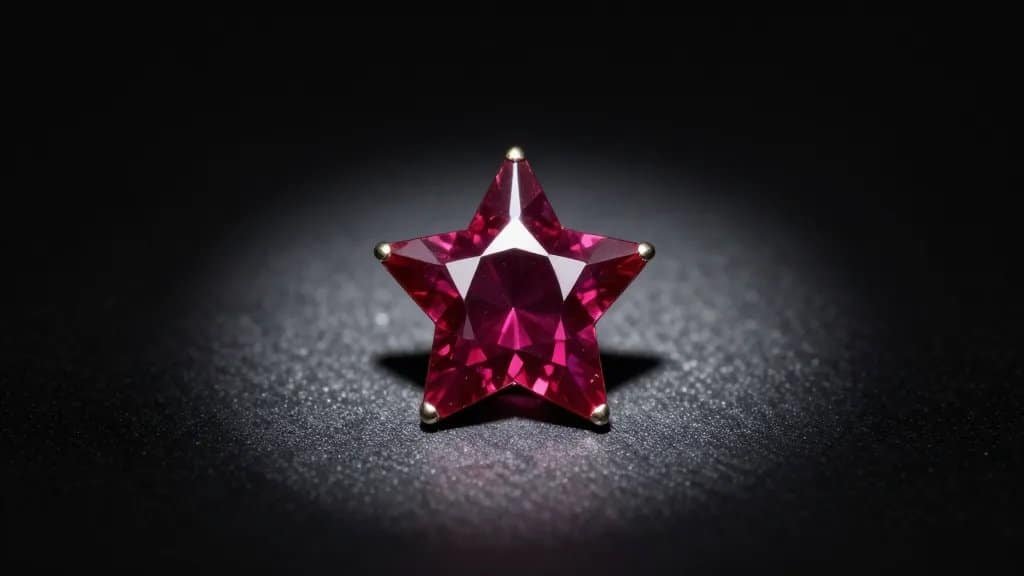
The Graff Ruby, around 8.62 carats, demonstrates how cut can elevate a stone from fine to unforgettable. Its cushion shape frames the color in a tight, symmetrical window. Every facet seems to funnel light into saturation, avoiding the “windowing” that can make the center of a ruby look watery or pale. This cut prioritizes face-up intensity over spread, a wise choice when your goal is a red that hits like a bell.
Buyers often underestimate the role of cutting in rubies. Because ruby crystals are typically tabular and can show zoning, cutters must orient facets carefully to maximize color uniformity. Inclusions that would disqualify a diamond may be perfectly acceptable in a ruby if the overall face-up impression is strong. When comparing Gemstone Cuts or Gemstone Shapes, remember that with rubies, color is king—cut is the crown that lets it rule.
The Burmese Crown Rubies: Power, Ritual, and Symbolism
Across Asia, rubies symbolized life force, protection, and authority. Burmese warriors once believed that inserting small rubies under the skin would make them invincible in battle. Royal regalia frequently featured rubies at the heart of crowns and scepters, not just for aesthetics but for what the color represented: the vitality of the kingdom.
Symbolism enhances fame. A fine ruby set in ceremonial jewelry carries the weight of tradition. That cultural context explains why rubies are often center stage in Precious Gemstones lore even when diamonds outshine them in carat-size sparkle. Red communicates instantly. It’s the color of courage, love, and the human pulse; no wonder it has anchored Gemstone History from India to Europe.
Treatments, Fakes, and Famous Pitfalls
Not every red stone is a natural, unaltered ruby. Treatments range from heat—often stable and acceptable—to lead-glass filling, which can artificially clarify fractures but leaves a brittle, lower-value product. High-temperature heat can slightly modify color and improve clarity; it’s common in the trade and typically disclosed. Lead-glass filling should be priced very differently and handled with care: household acids or ultrasonic cleaners can damage it.
Historical confusion between ruby and spinel isn’t the only trap. Synthetic rubies have been around since the early 1900s. They’re real corundum grown in a lab, often very clean and vividly colored. Under magnification, you might spot curved growth lines in flame-fusion synthetics or distinctive inclusions in flux-grown stones. A reputable lab report is your best safeguard—especially as prices for fine natural rubies have soared.
Buying tip: If a large ruby seems suspiciously clean and evenly red at a bargain price, pause. Compare with trusted stones in a well-lit store. Ask for documentation. For peace of mind, consult resources on Gemstone Buying Guide and Gemstone Identification to calibrate your expectations.
How Fame Influences Value—and How to Judge a Ruby Yourself
Provenance can send prices into orbit, but value always begins with the Four Cs, adapted for rubies: color, clarity, cut, and carat weight—plus origin. Here’s a practical lens:
- Color: Aim for saturated, pure red with minimal brown or orange. A slight blue undertone often enriches depth. Observe under daylight and warm indoor light to ensure the color holds.
- Clarity: Inclusions are normal; look for an overall clean face-up. Fine “silk” can enhance softness and color, but avoid large fractures that reach the surface.
- Cut: Symmetry and facet placement matter. Beware of windowing—a pale, see-through zone in the center. In cabochons, ensure domes are even and stars (if present) are centered and sharp.
- Carat: Size magnifies everything—beauty and flaws. Prices leap at certain thresholds (2, 5, 10 carats), especially for top color.
- Origin: Burmese (Myanmar) rubies command premiums for historic reasons and typical color profile, but superb stones also emerge from Mozambique, Vietnam, and Madagascar.
Remember durability: at 9 on the Mohs Scale, rubies are excellent for Gemstone Rings and Gemstone Necklaces meant for frequent wear. Their toughness, plus vibrant color, explains why they hold their own in Gemstone Jewelry next to diamonds and emeralds.
Caring for a Ruby With a Story
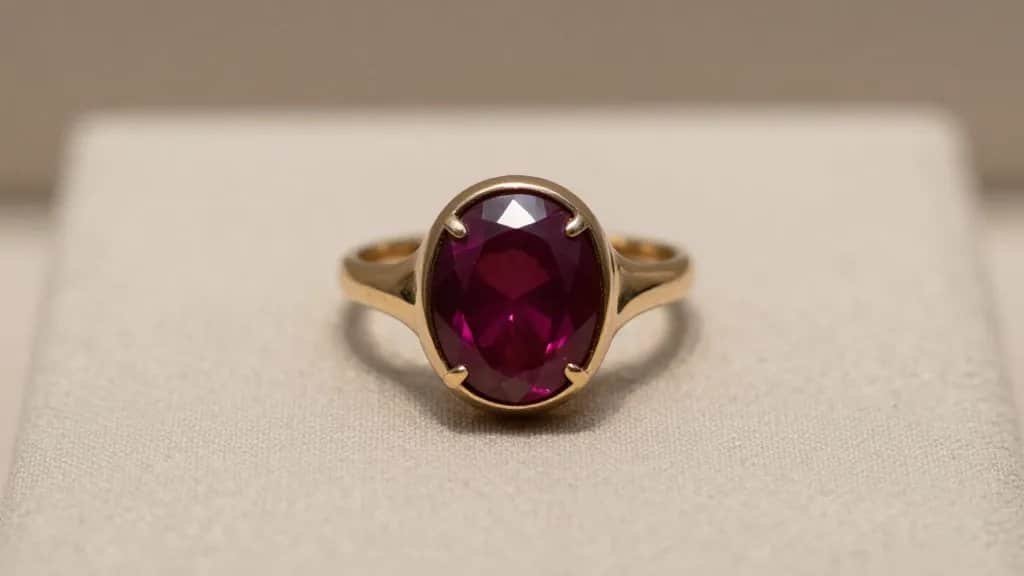
Routine care preserves shine and integrity. Clean natural, untreated or heat-only rubies with warm soapy water and a soft brush. Rinse thoroughly and pat dry. Ultransonics and steam are typically safe for untreated or heat-only stones, but avoid them if the ruby is fracture-filled or of uncertain treatment.
Store rubies separately in soft pouches to prevent scratching softer gems. They can scratch most Semi-Precious Stones and even nibble at emeralds. For mounted pieces, inspect prongs regularly; rubies are hard but not unbreakable, and a sharp blow along a cleavage-like direction can chip a facet.
If you’re curating a small collection of Collector Gemstones, keep documentation and lab reports together. A ruby’s paper trail—origin reports, treatment disclosure, notable ownership—can one day be part of its fame.
Quick Portraits of Other Notable Rubies
- Naing Hnin Pan Hla Rubies (Myanmar): Revered in local lore, these historical references underscore the deep cultural roots of Burmese stones, where poetry and gem-trade tradition intertwine.
- The Hope Ruby (Also Known as the “Pigeon Blood” Ruby, 32.08 cts): Not related to the Hope Diamond, this Burmese beauty has graced high-profile auctions, admired for its velvety color.
- The Carmen Lúcia Ruby (23.1 cts): Displayed at the Smithsonian, it is a sterling example of saturated red and excellent clarity, teaching visitors how color trumpets value even more than size.
What Famous Rubies Teach Us About All Rubies
The stars of the ruby world reveal patterns that help every buyer. The best stones show a stable, saturated red that glows in varying light. Their inclusions are part of the gem’s fingerprint, not a distraction. Their cuts honor color. Their origins tell a story, and their histories add a chapter.
If you’re exploring Gemstone Facts or planning a ruby as a Gemstone Gift, start by training your eye: view many stones, compare colors, move them between light sources, and trust your gut. The famous rubies became legends because they look remarkable before anyone tells you what they are.
FAQs
Why are Burmese rubies considered the most valuable?
Marble-hosted deposits in Myanmar often yield rubies with pure, saturated red and strong fluorescence, giving a velvety glow. Historic prestige and scarcity amplify demand, pushing prices to the top.
How can I tell a ruby from a red spinel?
To the naked eye, they can look similar. Gem labs use refractive index, spectroscopy, and trace-element analysis. For buyers, a trusted lab report is the most reliable distinction.
What does “pigeon’s blood” actually mean?
It refers to a vivid, pure red with a hint of blue and strong saturation, often with lively fluorescence. It’s a trade term, not a strict scientific definition, but top stones are unmistakable in person.
Are star rubies more valuable than faceted rubies?
It depends. Exceptional star rubies with sharp, centered stars and rich red color can be highly valuable. However, top faceted rubies in saturated red routinely command record prices.
Is heat treatment acceptable in rubies?
Yes. Gentle to moderate heat is common and usually stable, often improving color and clarity. Lead-glass filling is different and should be priced and cared for accordingly.
What’s the best cut for a ruby?
There’s no single best cut. Cushions and ovals are popular as they emphasize color. The key is minimizing windowing and maximizing face-up saturation and symmetry.
How should I clean my ruby ring at home?
Use warm water, mild dish soap, and a soft brush. Rinse and pat dry. Avoid ultrasonics and steam if the stone is fracture-filled or if you’re unsure of treatments.
A Final Word
Famous rubies endure because they balance nature’s fire with human history. Learn to read their color, respect their quirks, and appreciate their journeys. Whether you admire them in a museum or on your hand, the best rubies feel less like possessions and more like companions across time.

Christian Grey is the creator of GemMeaning, where he shares simple insights about crystals, gemstone meanings, and spiritual guidance. His focus is on making complex ideas easy to understand and practical for everyday life.