Some stones are more than beautiful—they’re witnesses. They carry whispers of royal intrigues, scientific breakthroughs, epic journeys, and the craftsmanship of generations. A gem can be small enough to hide in a pocket yet heavy with centuries of human drama.
Here you’ll meet storied diamonds, sapphires, and other treasures that shaped fashion, financed empires, sparked myths, and even inspired modern gemology. You’ll learn how to recognize their signature traits, what they mean to collectors, and why their legends endure.
Whether you love the sparkle, the science, or the scandal, these famous rocks reveal how geology and humanity entwine. By the end, you’ll read a gemstone not just by its color and cut, but by its footsteps through history.
Consider this your guided walk along a museum timeline, with a gem enthusiast at your elbow pointing out details that photos can’t capture—the silky inclusions, the telltale facet patterns, and the curious turns of fate that make these stones unforgettable.
The Hope Diamond: Blue Fire and a Cloud of Legends
If one gemstone owns the spotlight, it’s the Hope Diamond. This deep, velvety blue diamond—about 45.52 carats—glows with an almost oceanic saturation. Its color comes from trace amounts of boron that also make blue diamonds softly conductive, a neat lab test detail that delights gemologists.
Cut in a modified antique brilliant with a cushion outline, the Hope shows a broad, hypnotic face-up appearance. Under short-wave UV light, it famously emits a red phosphorescence for several seconds after the lamp is switched off—an eerie afterglow that fueled its reputation for mystery. On the Mohs scale, diamond is 10, the champion of durability, though its cleavages make careful setting essential.
Its story runs from the Golconda region of India to the French crown jewels, then through robberies, recuts, and tabloid-ready “curse” claims. The truth is more human: political turmoil, changing fortunes, and a media appetite for superstition. Today it rests at the Smithsonian, a magnet for crowds and a case study in how provenance influences value. For collectors, the Hope is a reminder that rarity isn’t just chemistry and crystal—it’s narrative.
The Cullinan Diamond: A Mountain of Light Split Into Royal Stars
Discovered in South Africa in 1905, the Cullinan weighed an astonishing 3,106 carats in the rough, making it the largest gem-quality diamond ever found. Imagine a chunk of glacially clear ice with pale steel-blue flashes—classic Type IIa diamond purity, with minimal nitrogen and superb transparency.
The master cleavers in Amsterdam turned this behemoth into nine principal stones and dozens of smaller cuts. The Cullinan I, or Great Star of Africa, is a 530.2-carat pear-shaped diamond set in the British sovereign’s scepter. The Cullinan II, a 317.4-carat cushion, resides in the Imperial State Crown. Their cuts favor broad flashes over quick twinkle—think rolling thunder, not sparkler fizz.
Value factors here go beyond size. It’s the combination of size, clarity, and pedigree. For anyone studying Gemstone Cuts or Gemstone Value Guide, the Cullinan suite is a living syllabus: how expert planning preserves weight while maximizing brilliance and how historical settings influence perceived worth.
The Star of India and the Silk of Sapphires
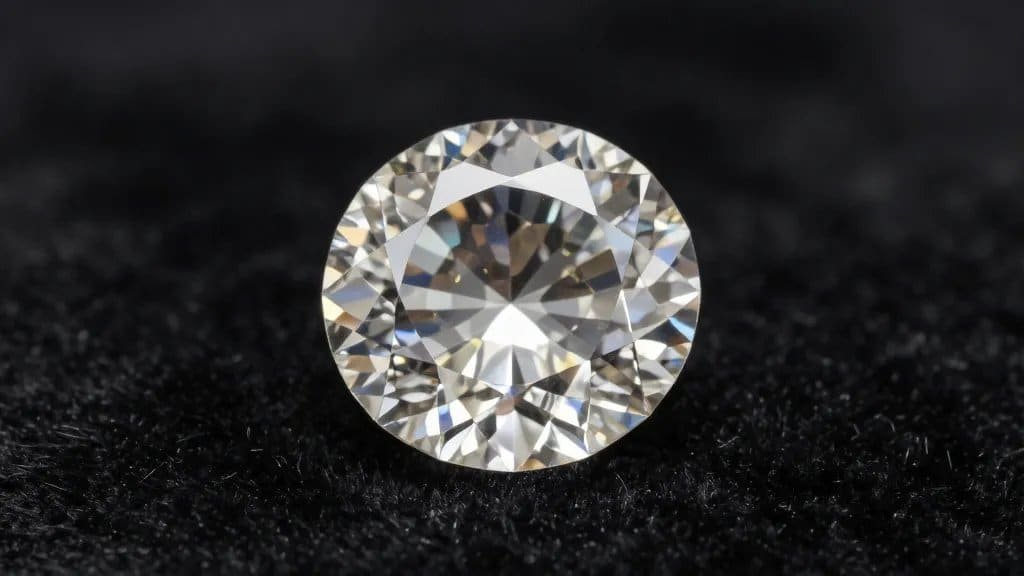
Star sapphires are corundum with a surprise. Needle-like rutile inclusions align in a hexagonal pattern, producing asterism—a star that glides across the dome as light moves. The Star of India, at roughly 563 carats, is one of the largest and most famous. It’s a translucent grayish-blue, a color that enhances the visibility of its six-rayed star on a high cabochon dome.
Mohs hardness 9 makes sapphire a resilient choice for jewelry, but star stones are typically set in protective mounts to shield that polished dome. Their charm lies not in scintillating facets but in a gentle, velvety glow and the mesmerizing star that shifts like a cat’s pupil.
The Star of India survived a notorious 1964 museum heist and returned to public view, ensuring its legend. Identification is straightforward for a gemologist: asterism, corundum’s characteristic 1.76–1.77 refractive index, and rutile “silk” visible under magnification. For enthusiasts curious about Gemstone Identification, stars are a masterclass in how inclusions can add beauty rather than detract.
The Black Orlov: A Twilight Diamond with a Tale
Black diamonds—polycrystalline gems filled with graphite and countless inclusions—don’t behave like their colorless cousins. They light up in a glittering peppery way rather than with broad rainbow flashes. The Black Orlov, hovering around 67 carats after recutting, impresses with its inky, metallic luster and brooding sophistication.
Legends claim temple origins and curses, but the science is captivating enough: natural-color black diamonds (carbonado) often show a granular structure and may have formed under peculiar conditions, possibly even hinting at extraterrestrial influences in their carbon source, though that remains debated. They’re still diamond-hard at Mohs 10, but their internal structure can make cutting tricky and risky.
For buyers, color uniformity and polish are key value points. Because of their structure, black diamonds are typically opaque; a high-quality even surface without pitting is prized. Set against white metals or pavé halos, they transform from curiosity to statement—especially in Gemstone Rings where contrast is king.
The Dresden Green Diamond: A Cool Breath of Spring
Natural green diamonds are among the rarest, and the Dresden Green is a benchmark. At roughly 41 carats, it displays a saturated apple-to-emerald green, more serene meadow than neon. The hue comes from natural radiation exposure that altered the diamond’s crystal lattice, confirmed by absorption spectra rather than guesswork.
Cut in an early brilliant style with historical facets, it has a softer sparkle compared to modern cutting, but that’s part of its charm. Its journey through European courts and wartime displacement left it with a gripping backstory. As an identification note, truly natural green color often concentrates on the surface; careful lab testing is essential to distinguish natural from treated color, making this stone a frequent topic in advanced Gemstone Myths versus lab-confirmed facts.
Collectors are drawn to its calm light and the way green diamonds challenge assumptions about diamond color chemistry. If you admire subtlety and science in equal measure, this stone is a quiet triumph.
The Koh‑i‑Noor: Light, Power, and Complicated Provenance
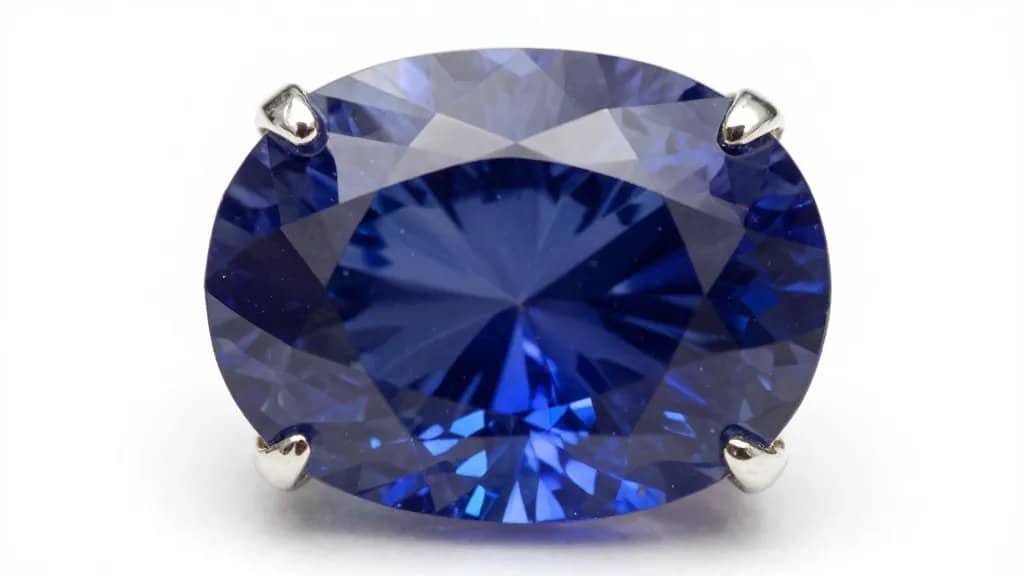
The Koh‑i‑Noor’s tale is tangled with conquest and ceremony. Originally much larger and likely from the Golconda region, it has been recut over the centuries to improve brilliance, currently around 105.6 carats. Early descriptions suggest a different shape and a more watery brightness—typical of old mine cuts—before a Victorian-era recut amped up the sparkle.
GIA would categorize it among Type IIa diamonds, famed for exceptional optical purity. Face-up, it presents a bright, clean white fire, but it’s the cultural weight that defines it. Ownership claims, shifting empires, and contested histories make it as much a diplomatic artifact as a gem.
For jewelry-watchers, the lesson is how personal and state identities get stitched into stones. For students of Gemstone History, the Koh‑i‑Noor is essential reading on how provenance can overshadow all other value factors.
The Star of Africa’s Cousins: Lesser-Known Marvels Worth Meeting
Not every legend is a headline act. Consider the Logan Sapphire, a Sri Lankan 423-carat royal blue cushion that proves saturation and size can dance gracefully. Its color rests in that sweet spot: rich but not inky, with a mild velvety texture that corundum lovers chase.
Or the La Peregrina Pearl—yes, pearls are organic gemstones, not rocks, but its saga belongs here. A drop-shaped natural pearl carried through Spanish royalty and later Elizabeth Taylor’s collection, it shows how luster—a soft, candlelit glow rolling over a smooth skin—can be as magnetic as any diamond’s fire.
Then there’s the Bahia Emerald, more a mineralogical giant than a jewelry stone—a massive cluster from Brazil that spawned lawsuits, rumors, and logistics nightmares. Its color is mossy to blue-green, with hexagonal prisms stacked like a crystalline city. It teaches a practical lesson from the world of Collector Gemstones: size can be a blessing and a burden. Display, storage, and ownership paperwork all become part of the “care” routine.
The Rosetta Stones of Gemology: How These Legends Teach the Craft
Famous stones aren’t just pretty—they’re textbooks. Here’s what they’ve taught generations of gem enthusiasts and professionals:
- Color mechanics: Boron in blue diamonds (Hope), radiation-green centers (Dresden), rutile silk in star sapphires (Star of India). Understanding trace elements and defects informs grading and authenticity.
- Cutting strategy: The Cullinan suite illustrates weight retention, symmetry compromises, and how facet architecture directs brilliance. Compare antique versus modern styles for a quick course in Gemstone Cuts and light return.
- Provenance literacy: Koh‑i‑Noor and high-profile museum pieces show how documentation, historical references, and chain of custody shape value as strongly as the 4Cs.
- Identification mindset: Legendary stones push rigorous testing—spectroscopy for color origin, phosphorescence behavior in blue diamonds, and microscopic inclusion mapping. This is where curiosity meets method, the heart of serious Gemstone Identification.
Real vs. Romanticized: Myths, Treatments, and Buyer Smarts
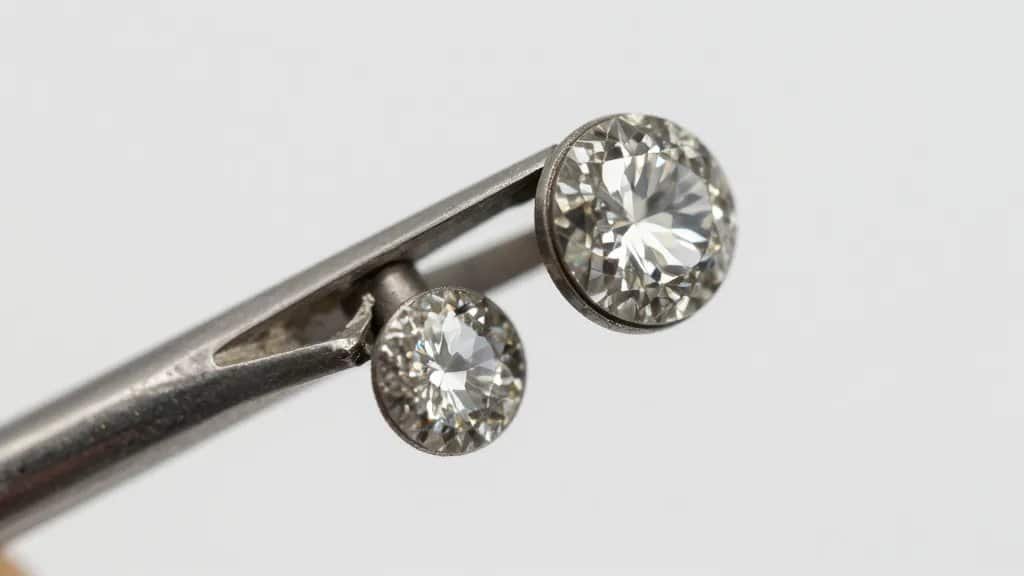
Stories are part of the charm, but they can also blur facts. A few practical guardrails:
- Curse narratives: They sell newspapers, not lab reports. Correlate any dramatic tale with documented events; beware of post hoc attributions used to sensationalize a sale.
- Color origin: Green diamonds are frequently treated by irradiation; only advanced lab testing confirms natural color. Blue diamonds can be HPHT-treated or lab-grown—conductivity tests and spectroscopy help sort them out.
- Star stones: Genuine asterism stems from rutile silk. Diffusion-treated sapphires may show surface-concentrated color; under magnification, look for color concentrations along facet junctions and inconsistent rutile networks.
- Big-name premiums: Pieces tied to royalty or museums carry intangible value. But craftsmanship, clarity, and structural integrity still matter—especially if you plan to wear the piece, not just display it.
If you’re building a collection inspired by these legends, study credible references, request lab reports from top-tier labs, and compare with examples in Gemstone Buying Guide resources. A story should enhance a stone, not replace its merits.
Care and Keeping of Legendary Looks
Even if you’ll never own a museum icon, you can care for your own gems like a pro:
- Diamonds (Mohs 10): Tough but not indestructible. Avoid clashes with other jewelry in storage—diamonds scratch everything. Clean with mild dish soap and a soft brush; ultrasonic cleaners are fine for unmounted, undamaged stones but avoid if settings are delicate or stones are fracture-filled.
- Sapphires and rubies (Mohs 9): Excellent for daily wear. Warm soapy water works; avoid striking star cabochons, which can abrade. Heat-treated stones are stable; fracture-filled or heavily included stones should avoid ultrasonics.
- Pearls (Mohs ~2.5–4.5): Soft and organic. Wipe after wearing; keep away from acids, hairspray, and ultrasonic cleaners. Restring necklaces periodically.
- Emeralds (Mohs 7.5–8): Often clarity-enhanced with oils or resins. Avoid ultrasonics and steam; use a soft cloth and mild soap only. Store away from hard stones.
For styling, consider context. A bold black diamond ring holds its own against sleek metals in modern Gemstone Jewelry, while a star sapphire shines best in simple bezels that let the asterism roam. In Gemstone Necklaces, a luminous pearl or emerald cabochon gives a vintage nod that still feels fresh.
Why These Stories Endure: Meaning, Symbolism, and the Human Spark
We project ourselves onto jewels. Blue diamonds gather calm and depth; green stones promise renewal; stars on sapphires feel like captured skies. Royal collections become national myths; museum pieces feel like public treasures. Even their flaws become endearing—an inclusion that looks like a feather, a nick smoothed by a recut, a color that shifts under lamplight like mood and memory.
For those exploring Gemstone Facts versus lore, these legendary stones are a reminder to enjoy both. The sparkle is physics; the story is us. When the two align—like in the Hope’s crimson afterglow or the Cullinan’s thunderous flashes—we get that rare feeling that something old just whispered something new.
FAQs
Are famous diamonds chemically different from ordinary diamonds?
Not fundamentally. Many are Type IIa (very pure) or contain trace elements like boron (blue diamonds). Their fame usually stems from size, clarity, provenance, and exceptional optical behavior.
How can I tell if a green diamond is natural or treated?
You can’t by sight alone. Advanced lab testing (spectroscopy, luminescence mapping) is needed to confirm natural radiation color versus artificial irradiation.
Do star sapphires sparkle like faceted gems?
No. They glow rather than sparkle. Their beauty lies in the moving star and velvety bodycolor, best displayed on a high, well-polished cabochon dome.
Is black diamond the same as carbonado?
Often, yes in natural stones. Carbonado is polycrystalline diamond with abundant inclusions, creating an opaque black appearance and a granular structure distinct from single-crystal diamonds.
Why do some antique diamonds look less “sparkly” than modern cuts?
Older facet designs favor broader, candlelight flashes and higher crowns. Modern cuts use precise angles for maximum brilliance under bright, diffuse lighting.
Do legendary gems appreciate faster than regular stones?
They can, due to rarity and historic demand, but prices hinge on market cycles, documentation, and cultural interest. Provenance must be airtight to command premiums.
Are museum gems ever worn?
Rarely. Most are permanently mounted for security and preservation. When they are set, it’s typically in historically significant pieces, not for everyday wear.
A Short Parting Thought
Famous rocks with amazing stories show that beauty and biography can share a facet. Learn the science, respect the history, and let your own collection—large or small—gather its stories with care and clarity.

Christian Grey is the creator of GemMeaning, where he shares simple insights about crystals, gemstone meanings, and spiritual guidance. His focus is on making complex ideas easy to understand and practical for everyday life.