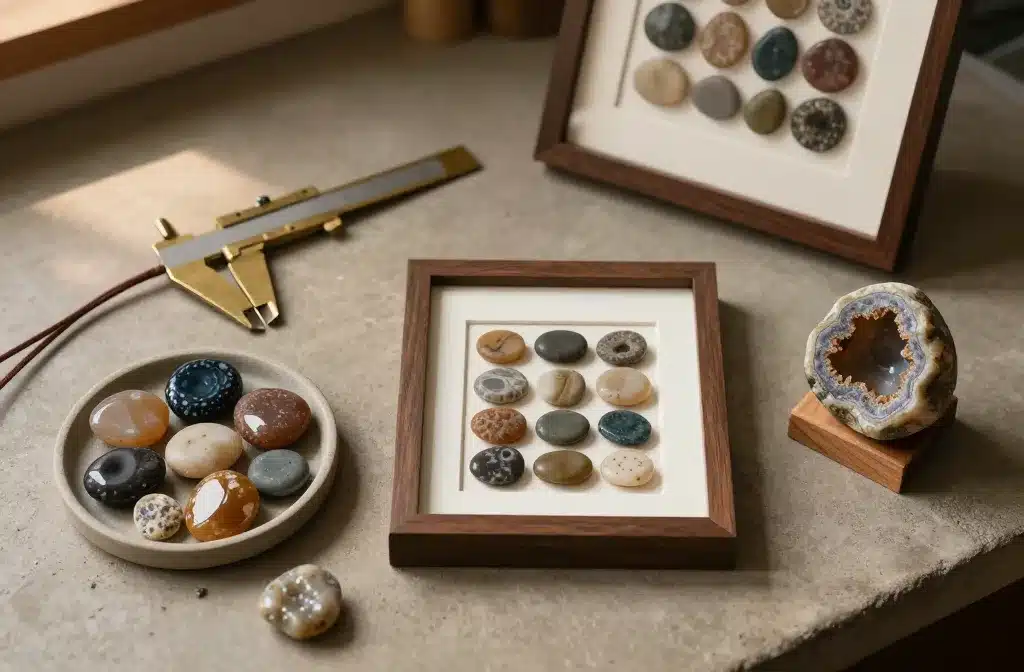
Rocks hold stories—volcanoes whispering through obsidian, oceans polishing agate, mountains compressing carbon into diamond. You don’t need a master’s workshop to turn those stories into something you can wear, display, or gift. With a curious eye and a few tools, common stones and semi-precious gems become objects that feel surprisingly personal.
Here you’ll find practical, project-ready ideas for crafting with rocks—everything from simple pebble art to polished gemstone pieces. I’ll share tips a gem enthusiast actually uses: choosing durable material, identifying varieties, understanding color and pattern, and finishing your work so it looks refined instead of “homework project.”
You’ll also learn how to tell if a stone can handle daily wear, how to clean it without stripping character, and how to let each stone’s natural beauty lead the design. Whether your stash comes from a creek bed or a local gem show, these ideas will help you make something worthy of a place you’ll see every day.
Reading the Stone: How to Choose the Right Rock for the Right Project
Start with the stone’s job. Will it be worn, handled often, or simply admired on a shelf? The Mohs hardness scale gives you guidance. Stones at 7 or above (quartz, amethyst, citrine, agate, jasper) resist scratching and are excellent for jewelry or keychains. Softer stones (calcite at 3, fluorite at 4) shine in display pieces or framed art where they won’t take abuse.
Look closely at texture and pattern. Fine-grained materials like agate and jasper take a high polish with mirror-like gleam; they’re ideal for cabochons and beads. Granite and basalt, with their speckled or matte surfaces, excel in garden projects or bookends where weight and structure matter more than gloss.
Color tells a story and sets the mood. Cool river pebbles in slate-gray and dove-white create tranquil, modern lines. Banded agates perform under light: translucent layers glow honey-amber and smoke-blue. Lepidolite, with lavender mica plates, brings gentle shimmer; tiger’s eye shows chatoyancy—a wink of silky light that moves as you turn it.
Consider origin and stability. Some stones are dyed or stabilized with resins to improve color and durability. That’s fine for decor, but for heirloom jewelry, seek natural or minimally treated stones and buy from a reputable source. A quick reference to Gemstone Identification or Gemstone Care can help confirm treatments and safe handling.
Polished Cabochons and Wire-Wrapped Pendants
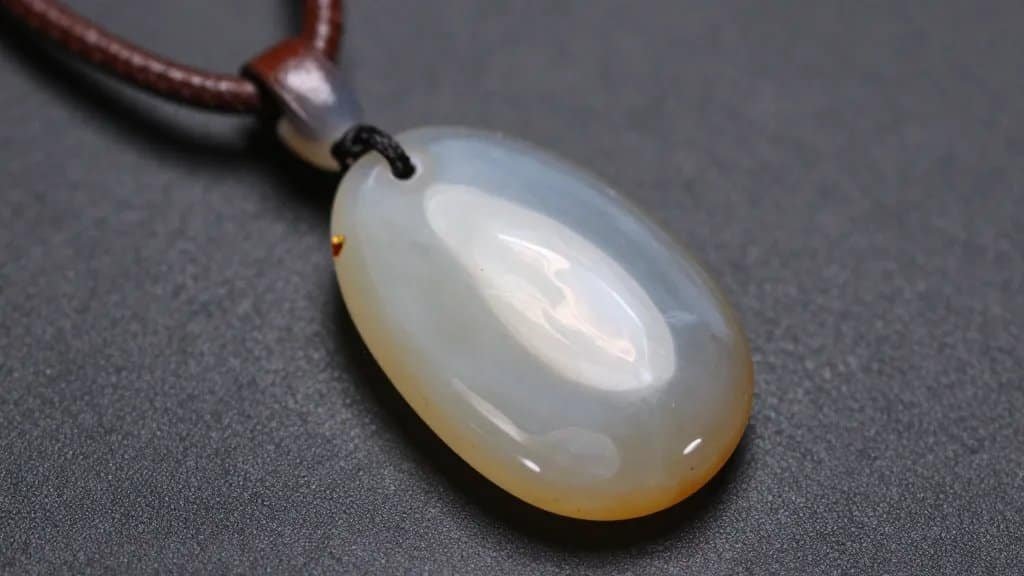
Transform a rough rock into a wearable story by shaping it into a cabochon—domed on top, flat on the back. Agate and jasper are classics: at Mohs 6.5–7, they take a durable polish and their patterns read beautifully at pendant scale. Picture jasper looks like tiny landscapes; moss agate suspends ferny inclusions in clear chalcedony.
Without cutting equipment, try wire-wrapping a naturally attractive pebble. Choose a stone with an appealing outline—oval or teardrop pebbles sit comfortably on the chest. Brass warms up green and brown stones; sterling brightens blues and purples. Let the wire hug the stone’s curves rather than cage it. The goal is tension and balance, not bulk.
Care tip: Clean with a soft brush and mild soap. Avoid ultrasonic cleaners for stones with fractures, druzy pockets, or any dyed/stabilized material. If you’re exploring Gemstone Jewelry or Gemstone Necklaces, remember that chain weight should match the stone; a heavy cab on a delicate chain looks and feels off.
Beaded Bracelets and Meaningful Mala Strands
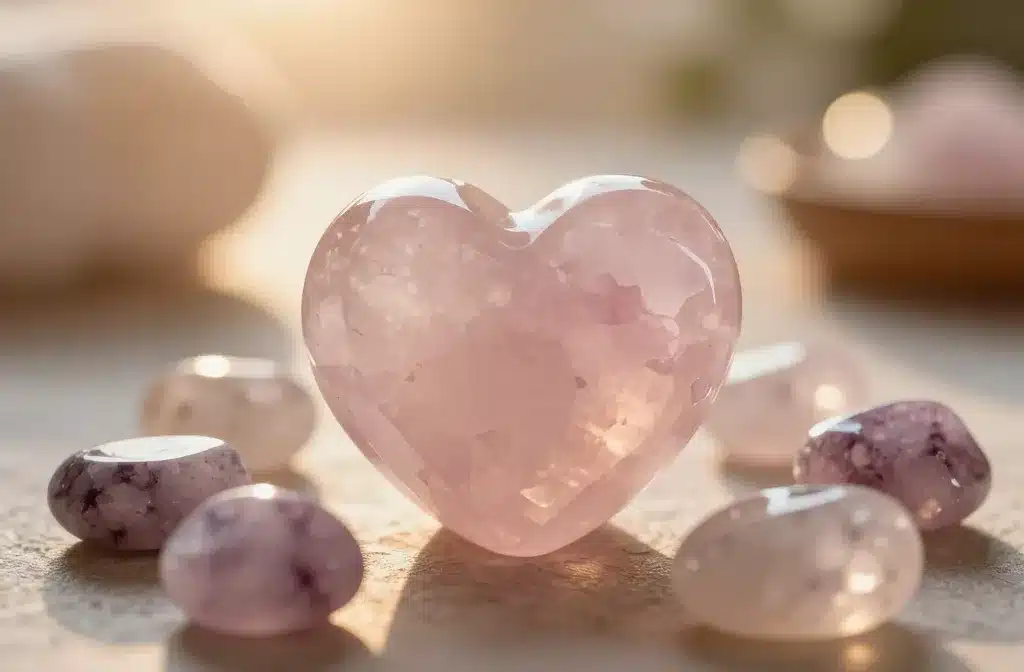
Round beads highlight a stone’s color and translucency. Quartz family gems—amethyst (violet), rose quartz (pastel pink), citrine (golden)—are resilient and straightforward to string. For an earthy palette, jasper offers endless varieties: red brecciated jasper, green kambaba, picture jasper with sand-and-sky stripes.
For stretch bracelets, use strong elastic and tuck knots into a larger-hole bead. For malas or meditation strands, alternate smooth beads with tactile markers like rough-cut pyrite or small metal spacers. Symbolism can guide your palette: onyx for grounded focus, aventurine for optimism, lapis lazuli for clarity. While meaning is personal, choosing stones with complementary hardness prevents uneven wear.
Sizing matters. Aim for a comfortable drape; load heavy stones like hematite sparingly to avoid fatigue. If you’re curious about durability, glance at Gemstone Hardness—bracelets encounter more knocks than necklaces, so prioritize 6.5–7 hardness and above for daily wear.
Desk and Home Accents: Bookends, Coasters, and Candle Stones
Some rocks want to anchor a space rather than travel. Bookends are a perfect use for hefty materials: petrified wood slices display wood grain fossilized into quartz, mixing organic form with gemstone stability. Geode halves—especially agate-lipped with crystal hearts—hold books while catching the light with a gentle sparkle.
Coasters and trivets work best in fine-grained stones cut as slices. Agate in particular shines as a thin slice: translucent bands glow under a drink glass, and the satin finish resists water marks. Seal edges lightly to keep color crisp; avoid highly porous stones like sandstone, which can darken with spills.
Candle platforms look refined in slate, basalt, or matte-finished granite. The low sheen diffuses candlelight, and the cool tones make flame appear warmer by contrast. For safety, always choose stones with good heat tolerance (most silicates are fine) and flat, stable bases. Avoid soft carbonates like calcite near high heat—they can etch with wax cleaners or acidic drips.
Garden Art: Pebble Mosaics, Markers, and Water Features
Outdoors, rocks weather into their best selves. Pebble mosaics set into mortar create walkways that massage the feet and pattern the ground with river-born geometry. Choose rounded, similarly sized pebbles for even footing; reserve flat, wide pieces for borders and focal motifs. Monochrome gray-and-ivory feels serene; add accents of red jasper or green serpentine for living color.
Plant markers made from smooth beach stones accept paint-pen lettering beautifully. For longevity, seal with a UV-stable clear coat. For herbs, a set of chalky-white pebbles with black script looks crisp; for cut-flower beds, bright lapidary scraps—tumbled quartz, agate chips—make cheerful, durable edging.
Small water features come alive with black basalt and smoky or clear quartz. In moving water, quartz catches sun like fish scales. If you have brown or iron-rich well water, avoid porous stones that can stain; quartz and polished granite shrug off mineral build-up more gracefully.
Druzy Delights and Geode Displays
Druzy refers to fine sugar-like crystals that line cavities in rocks. Quartz druzy shimmers with a soft, velvety sparkle—the kind that never looks flashy yet always catches the eye. Leave a natural edge and mount a druzy slice on a minimal stand for a gallery feel. Amethyst cathedrals—tall geodes with purple crystal interiors—can anchor a room like a living sculpture.
Color and origin matter to collectors. Brazilian amethyst often shows even royal-purple hues; Uruguayan material can run darker, with blue-violet depth. Quartz druzy may be naturally white, gray, or pale tan; brightly colored druzy is often dyed. For authenticity, look at the base: natural agate bands and consistent crystal habit suggest the real thing. Learning a few Gemstone Identification cues will save you from paying natural-stone prices for coated or synthetic pieces.
Handling tips: Druzy crystals are brittle. Dust gently with a soft brush. No ultrasonic cleaners, and keep perfumes and hairspray far away—they can cloud or dull the surface.
Functional Beauty: Stone Bowls, Spoons, and Utensils
Bowls carved from onyx or banded travertine glow from within, especially in warm honey and caramel tones. While sold as “onyx,” many are calcite-based and sit around Mohs 3—lovely, but soft. Use them for dry goods, jewelry catch-alls, or wrapped treats rather than acidic foods. Rinse with water only; acid etches calcium carbonate surfaces.
Granite mortar-and-pestle sets are a kitchen staple for good reason. Coarse-grained granite at Mohs ~6 holds up to grinding while developing a smooth patina. Soapstone utensils carve easily and feel silky, but they’re very soft—reserve them for gentle serving and avoid sharp knives in the same drawer.
If you’re gifting, tuck in a care card: no dishwasher for calcite-based bowls, dry thoroughly after washing, and avoid abrupt temperature shifts that can fracture thin-walled stone.
Simple Stone Rings and Statement Earrings
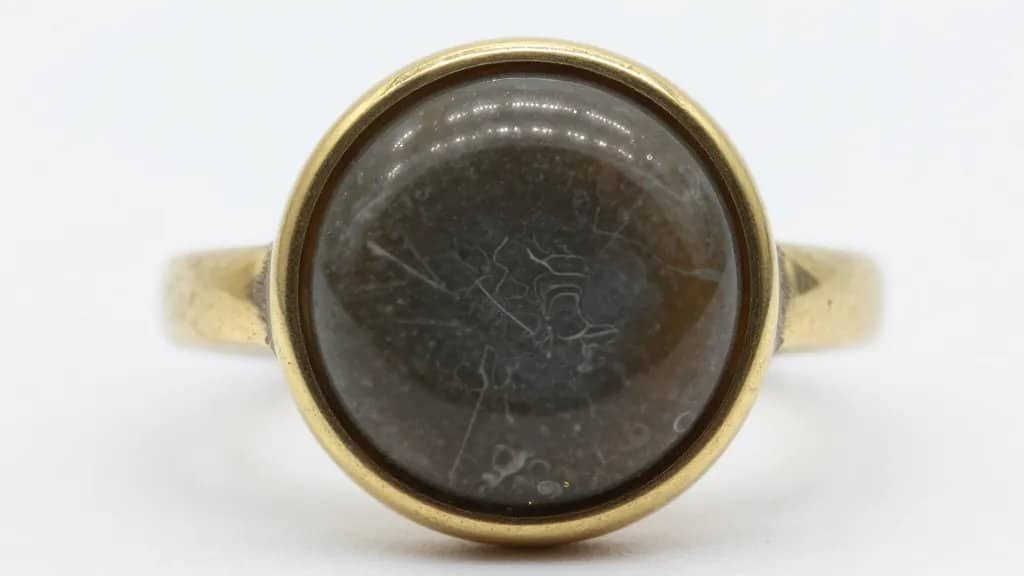
Rings test a stone’s toughness more than any other jewelry. Look for durable materials: sapphire and ruby (corundum, Mohs 9) are ideal but pricier; labradorite and moonstone (both feldspar, Mohs ~6–6.5) work in bezel settings when you accept some wear over time. Agate and jasper cabochons do beautifully in silver or steel; a low dome profile reduces chipping risk.
Earrings let you play with lighter, more delicate stones because they avoid knocks. Raw crystal points—smoky quartz, citrine—hang with architectural elegance. Thin slices of agate or chalcedony glow when backlit by sunlight. For sensitive ears, keep metals nickel-free. As you explore Gemstone Earrings or Gemstone Cuts, notice how different cuts change personality: a high dome amplifies color saturation; a thin slice enhances translucency.
Polish and finish separate refined from rustic. Tumble-polishing pebbles softens edges and adds shine; hand-sanding to 1200+ grit then buffing with oxide polishes yields a deep, gemstone-quality luster on agate or jasper.
Pebble Paintings and Inlaid Stone Art
Pebble art thrives on suggestion. A small oval for a bird’s body, a pointed gray for the beak, a pale disc for the moon—suddenly, a scene emerges. Choose a neutral background board and let the natural matte of the stones contrast with a smooth frame. Avoid heavy glue lines; a thin, clear epoxy or quality construction adhesive keeps the focus on shape and shadow.
If you enjoy precision, try stone inlay. Crushed turquoise, malachite, and lapis lazuli can fill carved wood channels, creating bright rivers of color. Stabilized turquoise is common for inlay—it resists crumbling. Press gently and seal with a clear finish. Value-wise, natural gem inlay commands more respect than synthetic, but there’s room for both depending on budget and intent.
For a meditative project, inlay thin agate slices into a tabletop under glass. Their banding becomes a quiet horizon you can sip coffee over for years.
Crystal Terrariums and Altar Stones
Arrange clusters of stones with succulents or air plants for a micro-landscape. Contrasts make it sing: matte lava rock with glossy tumbled quartz, leafy green against pale amethyst. Keep root zones separate from stones prone to leaching or discoloration. Quartz family stones are inert and plant-safe; avoid soft selenite near moisture—it can dissolve over time.
For personal spaces, many people select stones by symbolism: black tourmaline for protection, selenite (gypsum) for clarity, rose quartz for kindness. Whether you view these as metaphors or energies, arrangement matters. Place a grounding dark stone at the base, a translucent piece where light can pass, and a colored accent where your eye wants to rest. If you’re selecting stones as Gemstone Gifts, consider the recipient’s favorite colors and textures more than trends.
How to Tell If a Rock Will Polish Well
Look for tight grain and conchoidal fracture (shell-like breaks) in quartz-rich stones; they usually take a fine gloss. Rub a damp fingertip across a small area—the temporary darkening hints at how the color will pop when polished. Avoid materials with crumbly edges or visible pores if you want mirror shine; they’ll drink polish and stay dull.
A quick scratch test helps: try a steel nail (about Mohs 5.5). If the stone scratches easily, it may be better for display than wear. Clay-bound conglomerates and soft shales make great rustic pieces but won’t survive a tumbler. When in doubt, consult Gemstone Value Guide concepts: durability and finish strongly influence perceived quality, even for humble rocks.
Care, Cleaning, and Long-Term Display
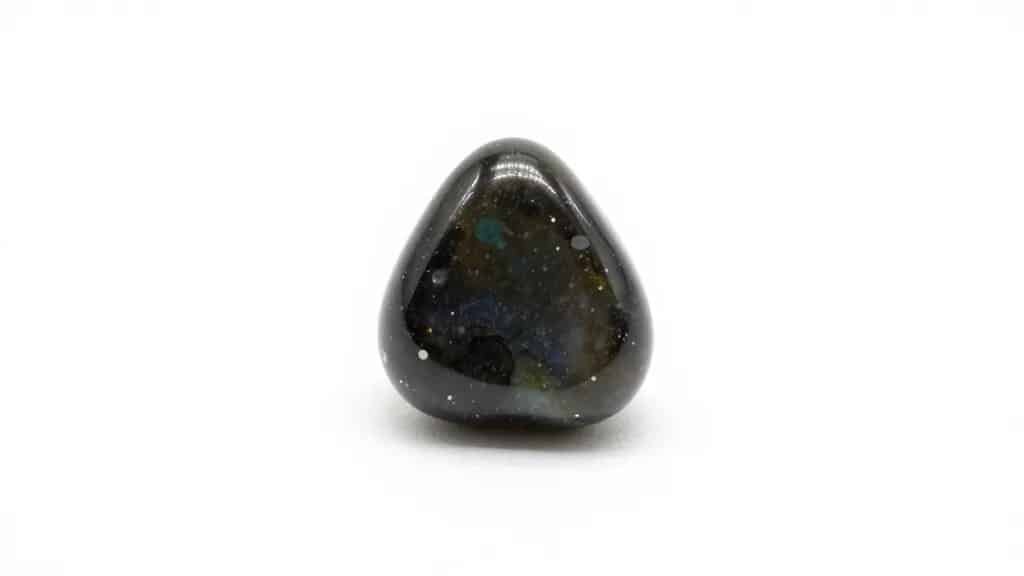
Dust and skin oils mute sparkle. Warm water, mild soap, and a soft brush restore most stones. Keep acids away from calcite, aragonite, and many onyx bowls. Avoid ultrasonic cleaners for anything with visible fractures, coatings, or druzy surfaces. Sunlight can fade some minerals—amethyst and rose quartz lighten with prolonged exposure—so rotate displays or place them out of direct sun.
For jewelry, store harder stones away from softer ones. Diamonds and sapphires will scratch quartz and feldspars if piled together. A small pouch or compartment keeps the peace. If you’re planning heirloom pieces, review Gemstone Care basics and confirm any treatments; for example, oiled emeralds should not meet steam cleaners.
Buying Stones for Making: Smart, Honest Sourcing
Good projects start with trustworthy material. At shows or shops, ask about origin and treatments. Stabilized turquoise, dyed agate, heat-treated amethyst—these are common and not inherently bad, but they should be disclosed and priced accordingly. Natural, untreated material often costs more but holds value and history.
Examine drill holes on beads: clean, centered holes suggest quality cutting; chipping or white halos on colored beads hint at dye or low-grade material. For rough rock, prefer pieces without deep cracks; a few surface pits are fine, but structural fractures complicate cutting and polishing. A glance at Gemstone Buying Guide principles—transparency, disclosure, return policy—applies just as much to rockhounding finds as to fine gems.
Common Mistakes to Avoid
- Ignoring hardness: soft stones in rings will scuff and chip quickly.
- Overwrapping with wire: heavy cages hide the stone’s personality and add weight.
- Using porous stones for coasters: they stain and look tired fast.
- Skipping sealing outdoors: mosaics need proper mortar and sealant to survive seasons.
- Cleaning with harsh chemicals: vinegar, bleach, and window sprays can etch or dull surfaces.
- Forgetting proportions: a large stone on a flimsy chain or tiny ear wire looks unbalanced.
FAQs
What beginner-friendly stones are easiest to polish at home?
Agate, jasper, and quartz pebbles perform well in hobby tumblers and by hand-sanding. They’re hard enough for a glossy finish and forgiving of minor mistakes.
How can I tell if a colored druzy is natural or dyed?
Look at the matrix. Intense, uniform colors (hot pink, cobalt) are usually dyed. Natural druzy tends toward white, gray, tan, or subtle pastels. Dye often pools in cracks and around the base.
Is wire-wrapping safe for softer stones like fluorite?
Yes, if you use gentle tension and a protective design. Choose a wide, smooth wire and avoid tight twists near edges. Consider a netted wrap that distributes pressure.
Can I put stones in planters without harming plants?
Quartz, agate, jasper, and granite are plant-safe. Avoid soft, soluble stones like selenite and those that may alter soil pH, like limestone, in sensitive setups.
Why did my onyx bowl develop dull spots?
Many “onyx” bowls are calcite-based and etch from acids (citrus, vinegar) or harsh cleaners. Use for dry items, wipe with water only, and avoid acidic foods.
What’s the best finish for outdoor pebble mosaics?
Set in mortar over a stable base and seal with a breathable, UV-stable stone sealer. Avoid glossy coatings that can turn slick and peel under sun and frost.
Are raw crystal earrings too fragile?
Not if worn thoughtfully. Quartz points hold up well; avoid knocking them against hard surfaces and store separately to prevent tip chipping.
Final Thoughts
Rocks reward attention. Choose materials that match the job, highlight each stone’s natural traits, and finish with care. The result—whether a quiet pebble mosaic or a pendant glowing with banded agate—feels timeless because it’s made by earth and guided by your eye. If you want to go deeper, explore topics like Gemstone Cuts, Gemstone Care, and Gemstone Jewelry to refine your craft and keep your creations looking beautiful for years.

Christian Grey is the creator of GemMeaning, where he shares simple insights about crystals, gemstone meanings, and spiritual guidance. His focus is on making complex ideas easy to understand and practical for everyday life.