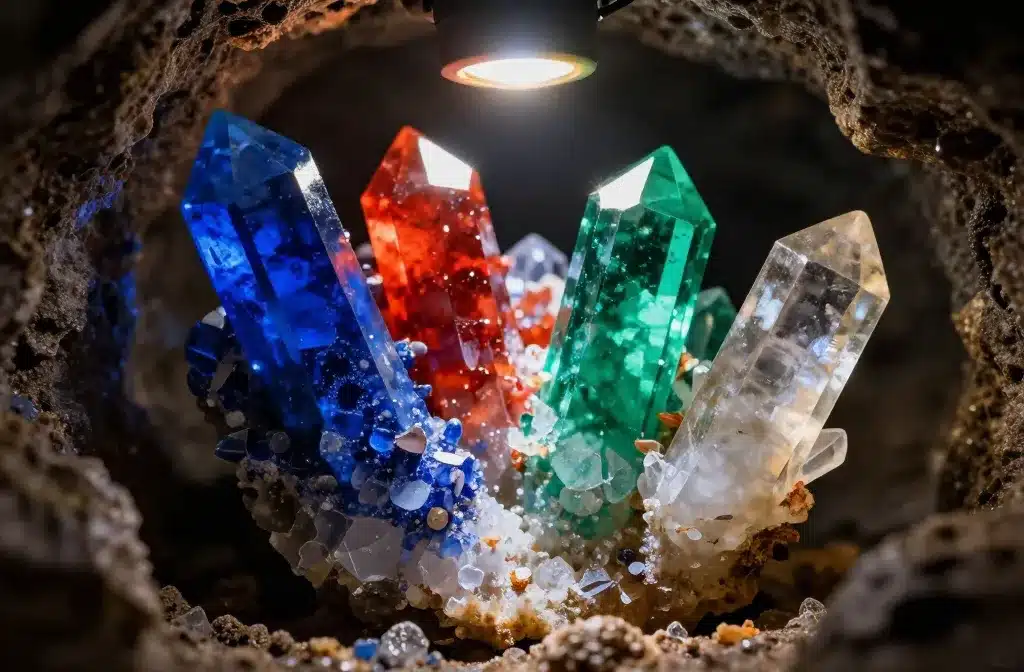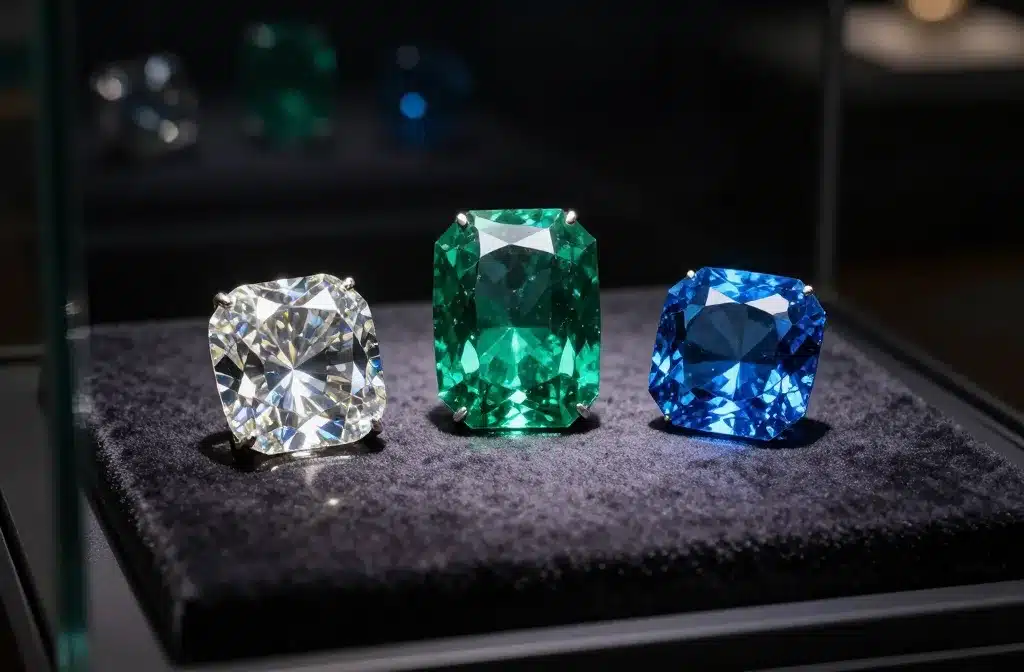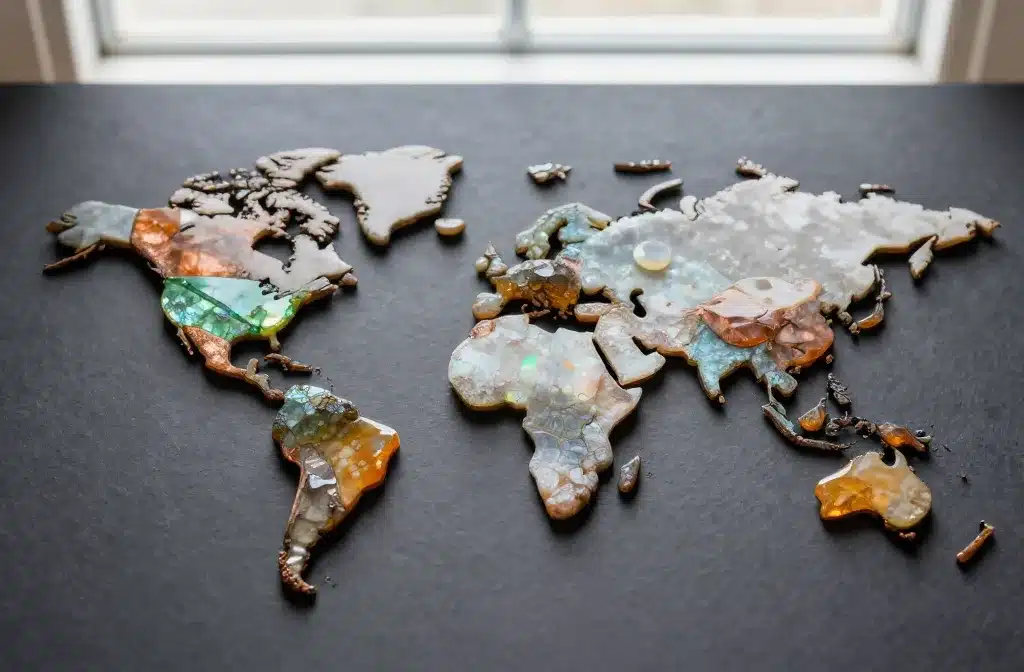
Open a gem tray and you’re really holding a pocket atlas. Each stone is a postcard from deep time—pressure, heat, and chemistry frozen into color. Travel through them and you meet rainforests, deserts, lava fields, and seabeds, all hiding their own palette.
This guide visits every continent to spotlight colorful rocks and gemstones worth knowing—some famous, others delightfully underappreciated. You’ll learn how they form, what makes them valuable, how to recognize them, and how to wear and care for them in real life.
Along the way, you’ll get practical pointers on durability and treatments, plus a few collector notes for those chasing rare varieties. If you like connecting place to color, consider this your passport.
North America: Fire, Ice, and Desert Color
North America’s geology is a mash-up: icy shield rocks, desert volcanics, and coastal sedimentary shelves. That diversity breeds confident color.
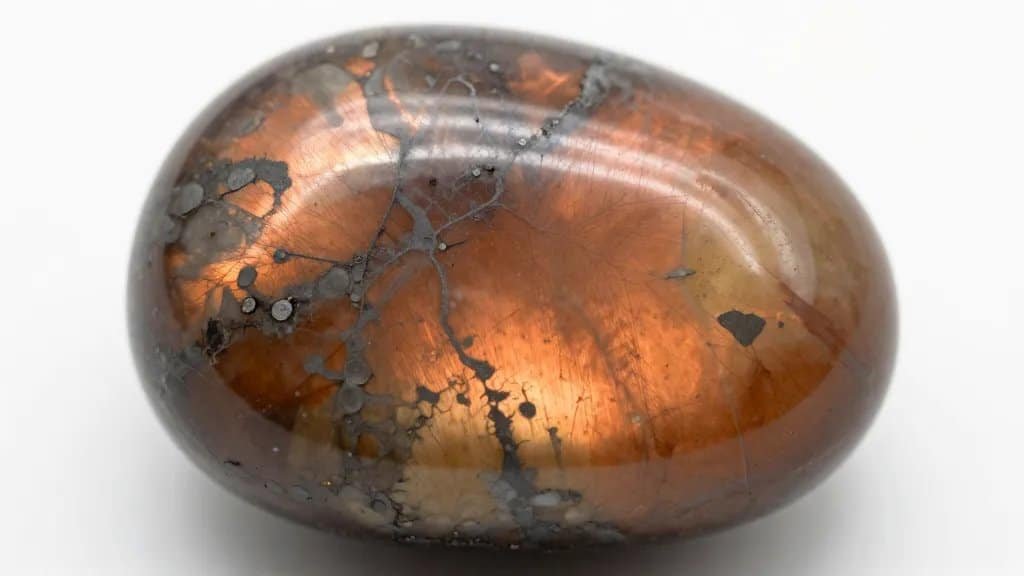
Oregon Sunstone (Feldspar, Mohs 6–6.5): Known for its coppery “schiller” glitter, Oregon’s state gemstone glows champagne to cherry with suspended copper platelets reflecting light like confetti. Untreated stones often show a warm, campfire glow. Value rises with intense red and clean transparency. Watch for diffusion-treated feldspars masquerading as Oregon sunstone; genuine stones carry a soft, metallic flash rather than an overly uniform color band.
Tourmaline from California and Maine (Mohs 7–7.5): From watermelon slices with green rinds and pink cores to neon greens, these pegmatite-born crystals make excellent gemstone rings and earrings. Look for well-cut stones with bright, even color; clarity is variable. Many are untreated, though gentle heating is common. Tourmaline takes daily wear well but avoid sharp blows across its natural cleavage.
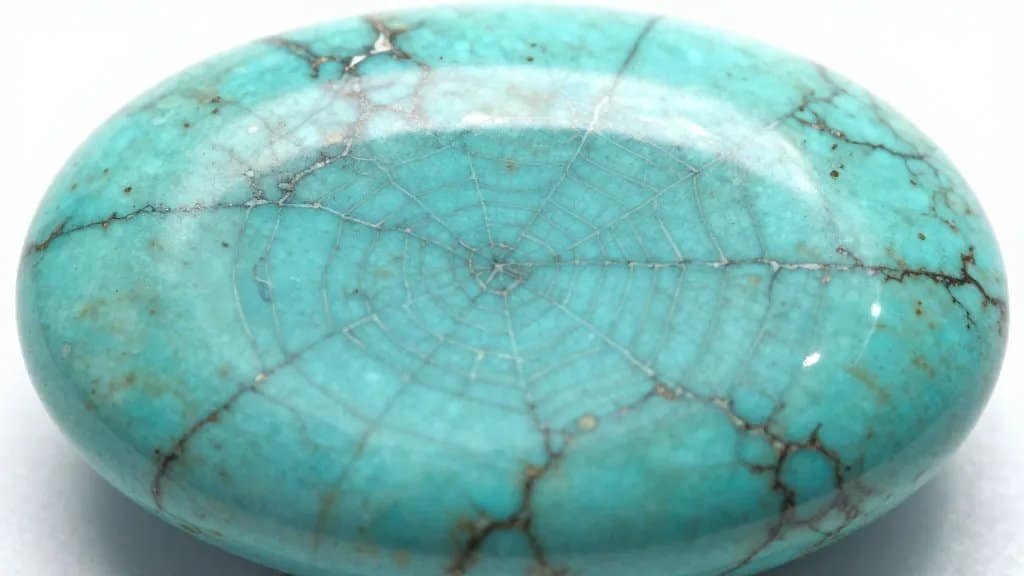
Nevada Variscite (Mohs ~4.5): A cousin of turquoise with apple-green to minty hues, often webbed with chocolate matrix. It’s softer, so polish it for pendants and gemstone necklaces rather than rings. Stabilization is common; disclosed treatments are fine for durability and value.
Arizona Peridot (Mohs 6.5–7): Born in basalt, this bright olive gem pops in sunlight, its double refraction giving a juicy, slightly double-edged sparkle. Most stones are eye-clean. Peridot’s color is natural; avoid harsh ultrasonic cleaning due to inclusions and potential fractures.
South America: Jungle Brights and High-Altitude Blues
South America’s pegmatites and metamorphic belts are treasure maps. Brazil alone could fill a museum case.
Brazilian Paraíba-Type Tourmaline (Mohs 7–7.5): Copper-bearing tourmaline glows electric neon blue-green—pure tropical water in a gem. Even small stones command high prices. Many are heated to optimize hue, which is acceptable when disclosed. Learn its look: a vivid, saturated “lit-from-within” color; lab reports help confirm copper content. For a deeper dive, see Rare Gemstones and Gemstone Value Guide.
Amethyst and Ametrine from Brazil and Bolivia (Mohs 7): Amethyst’s royal purple is ubiquitous but quality varies. Look for evenly saturated color without blackish zones. From the Bolivia-Brazil border, ametrine slices violet and golden citrine in one crystal, a natural result of temperature gradients during growth. Expect clean stones, often cut as step-cut gemstone earrings or geometric gemstone necklaces to showcase the bicolor zoning.
Colombian Emerald (Mohs 7.5–8): Technically in northern South America, Colombia’s emeralds set the global standard: rich green with fine inclusions—“jardin”—that create a velvety depth. Oil treatment is common and traditional, used to reduce surface-reaching fractures. Value rises with intense, pure green and high transparency; even stones with visible jardin can be exceptional if the color sings. Handle gently; emerald is hard but can be brittle, so protective settings are smart for gemstone rings.
Rhodochrosite from Argentina (Mohs 3.5–4): Banding of raspberry, rose, and white creates a dessert-like swirl. Cabochons and beads glow softly. It’s soft and loves gentle wear—pocket stones, pendants, and brooches over rings. Keep it away from acids and steam. Collectors prize stalactitic slices with concentric rings.
Europe: Old-World Classics with Subtle Drama
Europe’s ancient tectonics yield stones that feel refined—think historic mines and storied cuts.
Russian Demantoid Garnet (Mohs 6.5–7): From the Urals, this green garnet sparkles with diamond-like fire. Horsetail inclusions—wisps of fibrous byssolite—are not flaws; they’re a calling card that can increase value. Stones are small but lively; ideal for gemstone earrings and delicate gemstone bracelets. Most are untreated. Expect premium prices for vivid, slightly yellowish-green with crisp dispersion.
Lapis Lazuli from Italy’s Ancient Sources (Mohs ~5–5.5): While Afghanistan is the lapis capital, historical deposits in Italy colored Renaissance palettes. True lapis shows ultramarine blue with golden pyrite “stars.” Avoid dyed calcite impostors sold as “reconstituted” lapis. Real vs fake: rub a cotton swab with acetone on an inconspicuous spot—dye can lift; genuine lapis won’t bleed color.
Welsh Blue John (Fluorite, Mohs 4): Bands of violet, amber, and cream carved into vases and jewelry since the 18th century. It’s soft and demands respect—great for collectors and occasional-wear pendants. Keep away from heat and strong light, which can fade it.
Norwegian Thulite (Zoisite, Mohs ~6.5): A strawberry-pink ornamental stone with sugary texture, often cut en cabochon. Charming in boho gemstone necklaces. Durable enough for careful daily wear; avoid harsh knocks.
Africa: Vivid Hues from Rift Valleys and Ancient Cratons
Africa is color central: rift volcanics, archaean cratons, and alluvial rivers wash out brilliant surprises.
Tanzanite from Tanzania (Zoistite, Mohs 6–7): Pleochroic, showing blue, violet, and a hint of burgundy depending on angle. Most stones are heated to shift brownish tones to violet-blue—a standard and accepted treatment. Look for saturated, even color and good clarity; larger stones with strong blues lead value. Protect from sudden temperature changes and impacts.
Tsavorite Garnet from Kenya and Tanzania (Mohs 7–7.5): Chrome- and vanadium-rich, this garnet owns a crisp, grassy to emerald-green color with superb brilliance. No routine treatments. Tougher than emerald in practical wear and a favorite for gemstone rings. Inclusion-free stones above 2 carats are rare and pricey.
Namibian Pietersite (Mohs ~6.5–7): Sometimes called the “tempest stone,” it’s a brecciated cousin of tiger’s eye with swirling chatoyancy—blues, golds, and rust reds collide like storm clouds. Cabochons show silky movement as you tilt them. Great for bold pendants and statement gemstone bracelets.
Malachite from the Congo (Mohs 3.5–4): Saturated green with concentric banding and a velvety polish. It’s soft and sensitive to acids and heat—wipe clean only. Pairs beautifully with polished copper or yellow gold. Stabilized pieces are common for carvings; in jewelry, wear it thoughtfully.
Opal from Ethiopia (Mohs ~5.5–6.5): Hydrophane opal can absorb water and temporarily lose play-of-color, then dry back to normal. Its rolling flashes of neon green, orange, and red over honey or white bodycolors are mesmerizing. Avoid soaking; choose protective settings. For opal lore and practical care, see Gemstone Care and Gemstone Earrings for bezel-set ideas.
Asia: From Royal Blues to Candy-Colored Quartzes
Asia’s mineralogy spans Himalayan metamorphics to island arc volcanics. Expect prestige gems and affordable charmers.
Burmese Ruby (Corundum, Mohs 9): The “pigeon’s blood” ideal—vivid red with a whisper of blue—made Myanmar world-famous. Fine stones often show rutile silk under magnification; gentle heat treatment is common to improve color and clarity. Value is driven by hue purity, saturation, and minimal zoning. Corundum is durable and perfect for gemstone rings and heirloom gemstone jewelry.
Kashmir Sapphire and Sri Lankan Sapphire (Mohs 9): Kashmir’s fabled cornflower blue with velvety softness is a museum-level rarity. Sri Lankan stones range from sky blue to royal, plus fancy colors like padparadscha (sunset pink-orange). Heat is standard; unheated stones with certificates draw premiums. Look for brightness and lively return of light without windows in the center.
Jadeite from Myanmar (Mohs ~6.5–7): Imperial-green jadeite is the pinnacle: semi-transparent, glowing, saturated. Know your “Type” classifications: Type A is untreated (only waxed), Type B is bleached and polymer-impregnated, Type C is dyed. Buy with lab reports. Jade bracelets and cabochons feel cool and smooth; their quiet luster is part of the magic.
Chalcedony Varieties from Indonesia and India (Mohs ~6.5–7): Plume agate, crazy lace, and moss agate showcase botanical patterns locked in quartz—ferrous tendrils, cloudlike plumes, ribboning bands. Perfect for gemstone pendants with big personality at friendly prices. Stabilization or dyeing can occur; check edges and drill holes for suspicious color concentration.
Australia and Oceania: Water and Fire in the Southern Hemisphere
From desert opal fields to basalt-bound sapphires, Oceania serves drama with a sunburnt grin.
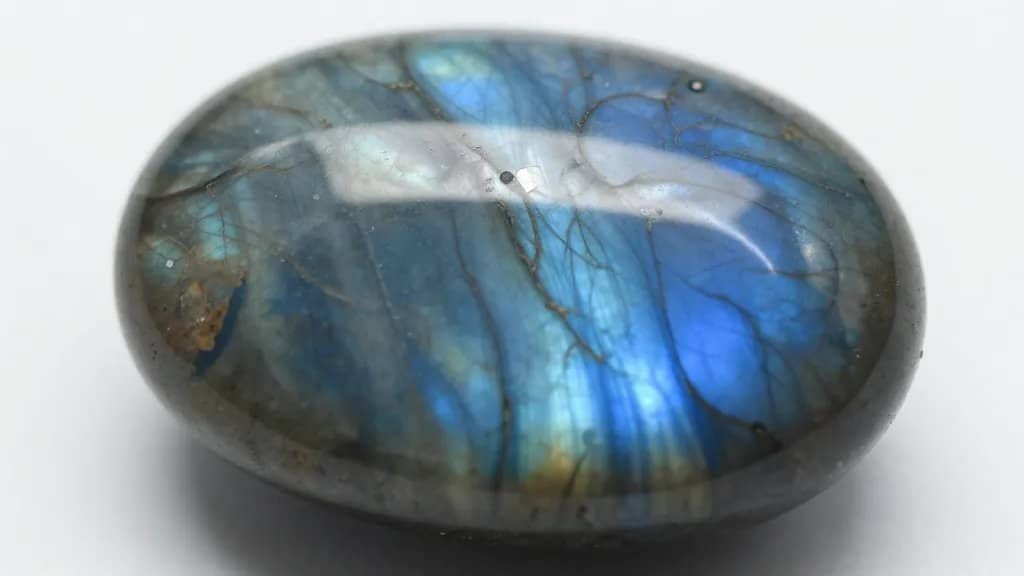
Lightning Ridge Black Opal (Mohs ~5.5–6.5): A dark bodycolor that makes neon play-of-color explode—electric greens, burning oranges, spectral reds rippling like oil on water. Value hinges on pattern (harlequin is coveted), brightness, and coverage. Many stones are solid; doublets and triplets sandwich thin opal layers for durability and budget. Avoid prolonged dryness or heat shock; store with a touch of ambient humidity.
Queensland Boulder Opal (Mohs ~5.5–6.5): Opal veins left in ironstone host create a natural frame—artistic and durable. Irregular shapes look great in artisanal gemstone necklaces. Care is similar to black opal: gentle cleaning, no ultrasonics.
Australian Sapphire (Mohs 9): Often deep blue to inky, with parti-color greens and yellows slicing through. Heat treatment is standard; diffusion exists—look for color concentrated along facet junctions to spot it. Excellent for daily-wear gemstone rings; choose cuts that keep the center bright.
New Zealand Pounamu (Nephrite Jade, Mohs 6–6.5): Revered in Māori culture, it ranges from milky to inky green, often with silky translucence. Smooth polish, tactile weight, and cultural significance make it a thoughtful gemstone gift. Avoid harsh chemicals; a soft cloth keeps the luster alive.
Antarctica: The Quiet Continent’s Hidden Color
Antarctica isn’t a commercial gem source, but its rocks tell a story. Expedition finds include garnets, spinels, and ancient metamorphic minerals. Even meteorites, dark with fusion crusts and metallic flecks, add austerely beautiful “space gems” to polar collections. For ethical and legal reasons, Antarctic materials rarely enter the market; consider them geological curiosities rather than jewelry options.
How Color Happens: The Geology Behind the Glow
Color is chemistry and structure in action. Trace elements replace atoms in a crystal lattice and twist light in specific ways.
- Chromium and vanadium push green (emerald, tsavorite) and red (ruby) by altering energy levels electrons can jump between.
- Iron and titanium blend to make blues (sapphire) or golden tones (citrine). Copper turns tourmaline neon.
- Inclusions scatter light: rutile needles create star effects in sapphires; copper platelets add glitter to sunstone; internal spheres in opal diffract rainbows.
- Structural quirks add personality: pleochroism shows different colors from different angles (tanzanite), while dispersion splits white light into fire (demantoid).
Understanding the origin helps with buying. Pegmatite gems (tourmaline, aquamarine) often grow large and clean. Metamorphic gems (ruby, sapphire) can show silk and color zoning. Volcanic gems (peridot, some sapphires) may show distinctive melt inclusions. If you enjoy comparing properties, Gemstone Identification and Gemstone Hardness are helpful next reads.
Durability, Treatments, and Real-World Wear
Hardness is only part of durability. Toughness (resistance to breaking) and stability (resistance to heat/chemicals) matter too.
- Everyday ring champs: Corundum (ruby, sapphire, Mohs 9) and spinel (Mohs 8) handle daily knocks. Tsavorite and most tourmalines perform well but avoid hard impacts.
- Occasional wear beauties: Opal, malachite, fluorite, rhodochrosite, and Ethiopian hydrophane opal prefer gentle handling. Ideal for gemstone necklaces and earrings.
- Common treatments: Heat (ruby, sapphire, tanzanite, amethyst) is standard. Oil/resin (emerald, some turquoise/variscite) fills fissures. Dye and polymer in jadeite or chalcedony require disclosure. Diffusion (some sapphires) concentrates color near the surface—ask for lab reports.
- Cleaning: Warm water, mild soap, soft brush—always safe. Avoid ultrasonic/steam for opal, emerald, and fracture-filled stones.
Match the gem to the job. A tsavorite engagement ring? Great with a protective setting. A malachite statement cuff? Fabulous, but treat it like silk rather than denim.
Spotting Fakes and Smart Buying
Nature leaves fingerprints. Learn them and you’ll shop confidently.
- Look for natural inclusions: Horsetails in demantoid, jardin in emerald, copper platelets in sunstone, growth tubes in tourmaline. Too perfect can be a warning sign.
- Check color distribution: Natural stones can show zoning; synthetic and diffusion-treated stones may have color concentrated near surfaces or facet edges.
- Know the price landscape: A “Paraíba” at a bargain isn’t a bargain. Compare with a Gemstone Buying Guide and Gemstone Value Guide before leaping.
- Ask for reports: For big-ticket stones (ruby, sapphire, emerald, jadeite, Paraíba-type tourmaline, tanzanite), request lab paperwork.
- Trust your eyes and the cut: A well-cut stone returns light evenly without dead centers. Windowing—seeing through the middle—lowers value and beauty.
If you enjoy side-by-side analysis, see Gemstone Comparisons and Gemstone Cuts for how shape and faceting influence color.
Collecting by Continent: A Curated Shortlist
If you like themes, build a collection with one colorful representative per continent:
- North America: Oregon sunstone or Arizona peridot for warm, natural sparkle.
- South America: Ametrine or Brazilian neon tourmaline for instant wow.
- Europe: Demantoid with horsetails for fire and provenance.
- Africa: Tsavorite for saturated green or Ethiopian opal for shifting color.
- Asia: Ruby or sapphire for timeless luxury; jadeite for cultural resonance.
- Oceania: Black or boulder opal for pattern and drama.
- Antarctica: A documented meteorite slice for the story, if you collect minerals as well as gems.
Store each in individual pouches, harder stones above softer ones, and keep notes on origin and treatments. Those details matter to future value and to the story you’ll tell.
Care and Styling Tips for Colorful Rocks
Color becomes personal in how you wear it. Here’s what tends to work:
- Contrast metal to hue: Yellow gold enriches green stones (peridot, tsavorite) and orange opals. White metals sharpen blues and violets (sapphire, tanzanite, amethyst).
- Let patterns breathe: Boulder opal, pietersite, and agates love open-back, minimal-prong settings that show the whole canvas.
- Think of light: Pleochroic stones benefit from cuts that orient the strongest color face-up. Ask your jeweler about axis orientation.
- Daily care: Wipe with a soft cloth after wear. Remove rings for gym, gardening, and dishwashing. Store opal and malachite away from heat sources.
- Match mood to color: Tsavorite for energetic mornings, amethyst for calm company dinners, lapis for a scholarly, grounded feel. Birthstone Jewelry can also guide sentimental choices.
FAQs
Which colorful rocks are best for daily-wear rings?
Ruby, sapphire, spinel, tsavorite, and well-cut tourmaline hold up well. Avoid daily wear for opal, malachite, fluorite, and rhodochrosite.
How can I tell if an opal is a doublet or triplet?
View from the side: you’ll see a dark backing (doublet) and sometimes a clear cap (triplet). The dome may look unusually glassy on triplets.
Do all emeralds have oil treatment?
Not all, but many do. Oil is traditional and acceptable when disclosed. Resin-filled stones require extra care and should be priced accordingly.
Is “Paraíba” a location or a color?
Both historically and descriptively. Originally from Paraíba, Brazil, the term now often refers to copper-bearing tourmaline with neon blue-green color, including African sources—verify with a lab report.
Can Ethiopian opal get wet?
Hydrophane opal absorbs water and may go cloudy temporarily. It usually returns to normal after drying, but repeated soaking isn’t recommended.
What’s a safe first purchase for new collectors?
Amethyst or garnet—reliable, affordable, and attractive. Move to tsavorite or tourmaline as your eye develops.
Which cuts show off color best?
For saturated stones, brilliant and mixed cuts maximize sparkle. For bicolors like ametrine, emerald and step cuts showcase zoning. See Gemstone Shapes for style ideas.
A Color Map You Can Wear
Every continent has a signature hue, and gems let you carry those landscapes on your skin. Choose stones that fit your lifestyle, ask the right questions about treatment and origin, and enjoy the textures—silky opal, crisp tsavorite sparkle, plush emerald glow. Build a collection that feels like you, one bright mile at a time.

Christian Grey is the creator of GemMeaning, where he shares simple insights about crystals, gemstone meanings, and spiritual guidance. His focus is on making complex ideas easy to understand and practical for everyday life.