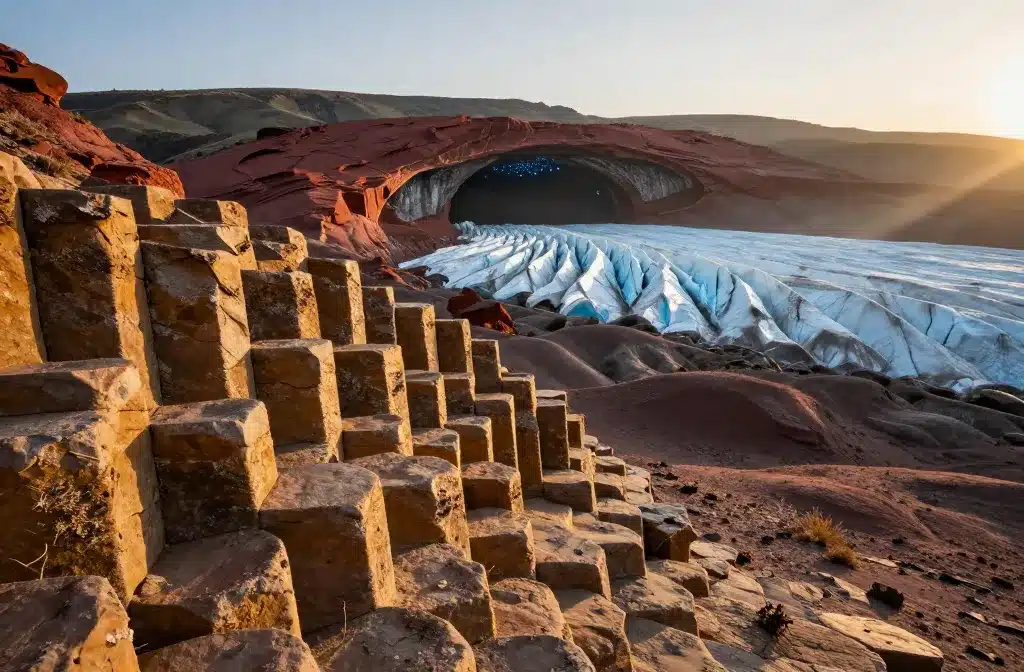
Some rock formations feel like open-air museums curated by the planet itself. They whisper of molten beginnings, long-lost seas, and the patient hand of time. For anyone who loves gemstones, these landscapes are more than scenery—they’re the source of every crystal, color, and sparkle that finds its way into our collections and jewelry boxes.
Here, you’ll travel from sapphire-tinted glaciers to rust-red deserts, from basalt shelves to quartz-salted caves. Along the way, you’ll learn how different stone landscapes form, what they reveal about the gems they produce, and how to read outdoor textures the way a gemologist reads inclusions under magnification.
Expect a mix of geology and gemstone lore: formation stories, visual cues, durability insights, and practical notes for collectors. You’ll also find tips that connect what you see outdoors to the gemstones you might buy later—from value hints to care advice that respects a stone’s origins.
If you’ve ever held a polished gem and wondered about the wild place it came from, consider this your field guide—no hiking boots required.
Basalt Plateaus and the Birthplace of Blue: Volcanic Hosts for Sapphires
When ancient lava cools into broad basalt plateaus, it sometimes traps pockets where corundum—sapphires and rubies—can crystallize. Basalt is dark, fine-grained, and dense; it weathers into soils that quietly cradle gem-bearing gravels. In parts of Australia, Thailand, and Rwanda, sapphire nodules weather out of basalt and roll into nearby riverbeds, a natural pre-screening that rounds edges but preserves their saturated blues and parti-color flashes.
Appearance and colors: Basalt-hosted sapphires range from royal blue to inky midnight, with occasional green-blue pleochroism. You may see hexagonal prisms with matte skins and silky interiors. Tiny rutile needles—“silk”—can scatter light into soft velvety hues or, if aligned, create asterism in star sapphires.
Hardness and durability: At 9 on the Mohs scale, sapphire is tough enough for daily jewelry. Basaltic origins don’t change that, but stones weathered in alluvial gravels often have fewer surface-reaching fractures than those pried directly from fresh lava flows.
Value and ID tips: Basaltic sapphires can be highly magnetic due to trace iron; a strong rare-earth magnet sometimes nudges them. In the trade, geographic origin matters, but color consistency and clarity rule value. Heat treatment is common to improve color and clarity—disclose and expect it unless testing proves otherwise. For deeper context, see Gemstone Identification and Gemstone Value Guide.
Granite Domes and Pegmatite Gardens: Where Tourmaline, Beryl, and Quartz Thrive
Granite may look stoic at first glance, but its late-stage cousins—pegmatites—are mineral playgrounds. Picture a coarse-grained rock shot through with meter-long feldspar crystals, glittering quartz pods, and fluid-rich pockets called miarolitic cavities. In these spaces, tourmaline sprays, aquamarine prisms, morganite peaches, and topaz crystals stretch out with showy translucency.
Appearance and colors: Pegmatites are where color gets exuberant. Elbaite tourmaline paints in watermelon gradients—pink to green, sometimes with clear rims. Aquamarine shows icy blue hexagons with glassy terminations; morganite leans blush to salmon. Smoky quartz anchors the palette with tea-brown transparency.
Formation and symbolism: These crystals form from slow-cooling, water-rich magmas that concentrate rare elements like lithium, boron, beryllium, and fluorine. Symbolically, pegmatite gems carry a “clarity and calm” reputation, likely borrowed from their clean faces and cool tones.
Hardness and care: Beryl (aquamarine, morganite) sits at 7.5–8 Mohs and tolerates daily wear, though sharp knocks can chip corners. Tourmaline at 7–7.5 is durable but hates thermal shock—avoid sudden heat changes. Clean with warm, soapy water; skip ultrasonic cleaners for included stones.
Collector note: Pocket-fresh crystals often show striations and frosted growth hillocks. Natural etch marks and fluid inclusions are normal. If you love unusual cuts, pegmatite stones take fancy Gemstone Cuts well, from step-cut aquas to scissor-cut tourmalines.
Limestone Cathedrals and Karst Caves: Crystal Drips, Calcite Dreams, and Hidden Aragonite
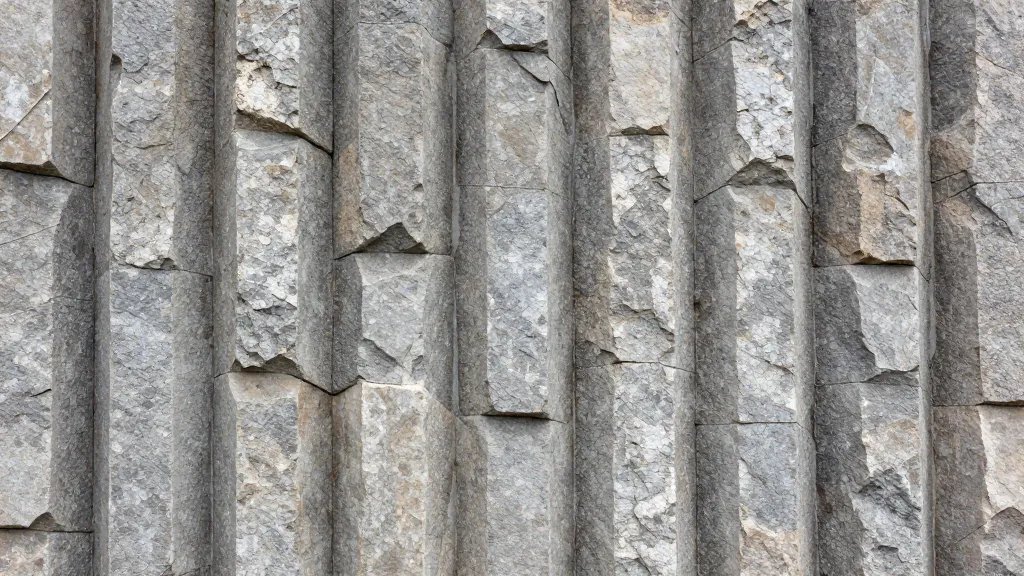
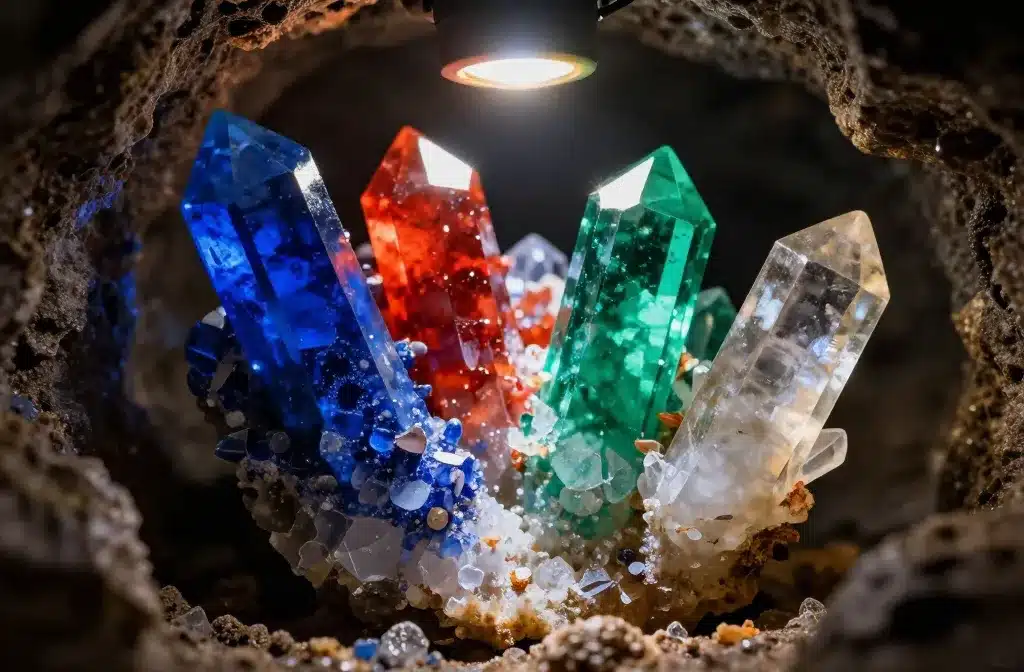
In wet climates, limestone landscapes dissolve into sinkholes, fissures, and caverns—karst topography. Inside, mineral-laden water grows stalactites and stalagmites layer by layer, building calcite sculptures that glow like ivory under lamplight. Here and there, delicate aragonite formations bristle like coral reefs turned to frost.
Appearance and colors: Calcite is chameleon-like—milky white, honey, or soft pink—with vitreous to pearly luster. Transparent dog-tooth calcite crystals can be sharp and glassy. Fluorescence is common; under UV, some calcite varieties flash red or orange.
Durability and care: Calcite and aragonite are soft (3–3.5 Mohs) and reactive to acids, including household vinegar and citrus. They’re not jewelry workhorses. Keep them in display cases, dust gently, and avoid water-heavy cleaning. Symbolically, they’re associated with patience—appropriate for drip-by-drip creation.
Value and collecting: These aren’t precious gemstones but are cherished by mineral collectors for aesthetic clusters and crystal habits. Watch for repair lines and dyed pieces marketed as exotic. For jewelry-minded readers, save your budget for harder stones; consult Gemstone Hardness and Gemstone Jewelry for wearable alternatives in similar hues.
Sandstone Arches and Desert Varnish: The Palette of Iron, Wind, and Time
In desert basins and plateaus, wind sculpts sandstone into arches, fins, and softly carved amphitheaters. Thin films of manganese and iron oxides—“desert varnish”—paint surfaces with inky blacks and warm umbers. These landscapes don’t birth classic gemstones, but they reveal how iron colors our mineral world, from ochre jaspers to cinnamon sunstones.
Color and meaning: Iron is the quiet artist behind reds and browns across many stones. Carnelian owes its ember glow to iron; some garnets wear wine and claret for the same reason. Sunstone’s glittering aventurescence arises from copper platelets, yet iron often adds warmth to its body color.
Durability notes: Microcrystalline quartzes like jasper and agate (both 6.5–7 Mohs) make rugged jewelry—great for rings and bracelets. Their desert kinship shows through in pattern: banded, brecciated, landscape-like scenes that look like miniature mesas in a cabochon.
Buying advice: Ask if porosity was stabilized in opaque stones. Dyes are common in agate; real vs. fake often hinges on overly neon colors or perfectly uniform bands. A white paper test under strong light can reveal suspicious saturation. For additional pointers, see Gemstone Buying Guide and Gemstone Myths.
Metamorphic Marbles and Serpentine Valleys: Pressure-Cooked Beauty
Where mountains rise, rocks transform. Limestone recrystallizes into marble with sugary sparkle; ultramafic rocks alter into green-black serpentine that polishes like leather made of stone. These terrains feel alive with motion, and many treasured materials trace their lineage here.
Appearance and colors: Marble can host verdant veins of malachite, subtle gray webs, or startling blue lazurite (lapis) in select locales. Serpentine ranges from olive to deep jade green, sometimes with cream veins or magnetite flecks. In some belts, high-pressure metamorphism yields garnet schists—think cherry garnets embedded in silvery mica.
Hardness and wearability: Marble and serpentine are relatively soft (3–4 and 3–6 Mohs respectively). They excel as beads, pendants, and statement necklaces, but rings require protective settings. Garnet, a metamorphic star, is 6.5–7.5 and better for everyday jewelry.
Symbolism and care: Marble suggests purity and endurance; serpentine is linked to renewal. Clean gently with mild soap and water; avoid acids and ultrasonic cleaners. Beware of reconstituted “serpentine jade”—pressed stone powder sold as solid. That’s a common real vs fake tripwire worth knowing.
Glacial Fjords and Alpine Quartz: Ice as a Master Sculptor
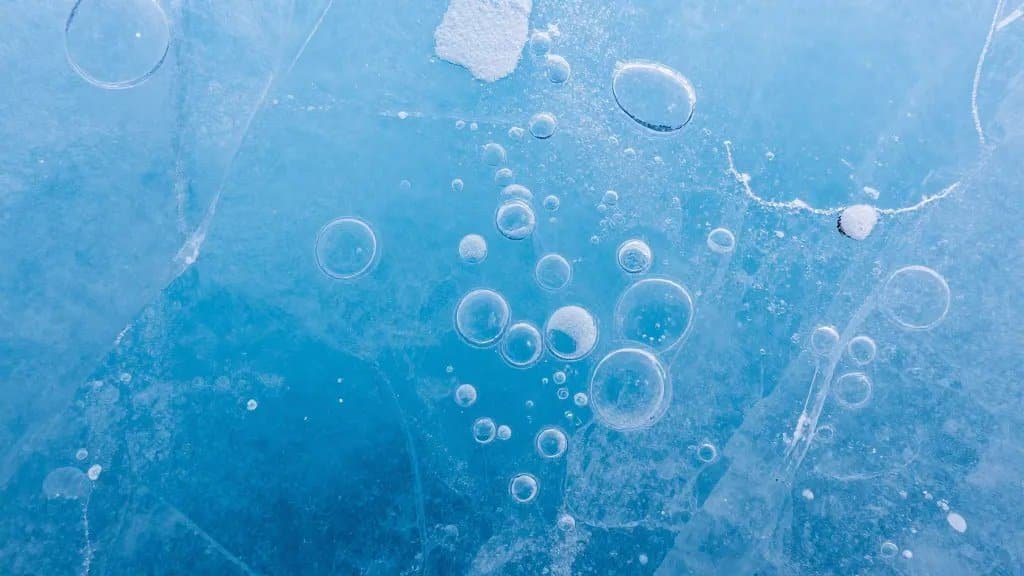
Glaciers crush mountains to flour and polish bedrock into sweeping U-shaped valleys. As ice retreats, it leaves behind talus fields where quartz crystals wink from crevices like frost persisting past winter. Alpine clefts—high-altitude fractures—foster slow-growing quartz, smoky quartz, and occasional chlorite-included “phantoms.”
Appearance and inclusions: Alpine quartz is prized for razor clarity and elegant growth zoning. Smoky varieties wear a tea-to-espresso tint, caused by natural irradiation of aluminum-bearing quartz. Chlorite inclusions look like misty green clouds, adding intrigue without muddying transparency.
Durability and jewelry: Quartz is 7 Mohs—reliable and affordable. Clean with soapy water and a soft brush. Well-cut quartz can deliver brilliant sparkle in briolettes, earrings, and cocktail rings. If you’re crafting a Gemstone Necklace collection, high-clarity quartz offers generous size without jeopardizing daily wear.
Collector note: Look for sharp terminations, minimal internal veils, and crisp phantoms. Beware of irradiated smoky quartz that looks overly uniform and opaque; natural pieces show gentle gradients and subtle zoning.
Symbolic thread: Glaciers teach patience; quartz echoes that in layers, phantoms, and the slow perfection of clean crystal faces.
Tropical Laterite and Bauxite Hills: The Aluminum Story Behind Rubies and Spinel
In tropical climates, intense weathering leaches away silica and concentrates aluminum-rich residues—laterites and bauxites. Over geologic timescales, aluminum mobility and metamorphism can set the stage for corundum (ruby and sapphire) and spinel formation, especially where limestones and shales mingle with magnesium-rich rocks.
Appearance and colors: Ruby and spinel share a red that seems lit from within. Spinel also blossoms into cobalt blues, bubblegum pinks, and steely grays. Rubies can carry bluish undertones or vibrant, pure crimson. Inclusions vary: ruby may show rutile silk and hexagonal zoning; spinel often features octahedral crystals and “octa” growth lines under the loupe.
Hardness and durability: Corundum is a stalwart at 9 Mohs. Spinel, at 8, is equally comfortable in daily-wear rings. Both respond beautifully to precision cutting, returning crisp flashes and a buoyant glow.
Value and identification: Spinel is often mistaken for ruby historically; modern testing uses RI, spectroscopy, and fluorescence to set them apart. Untreated, vivid spinel—especially cobalt blue—commands collector attention. Ruby value hinges on color purity and saturation; “pigeon’s blood” is a romantic trade term for a specific vivid red with slight fluorescence. For comparison tools, see Gemstone Comparisons and Gemstone Value Guide.
Hydrothermal Veins and Geodes: The Secret Life of Silica-Rich Waters
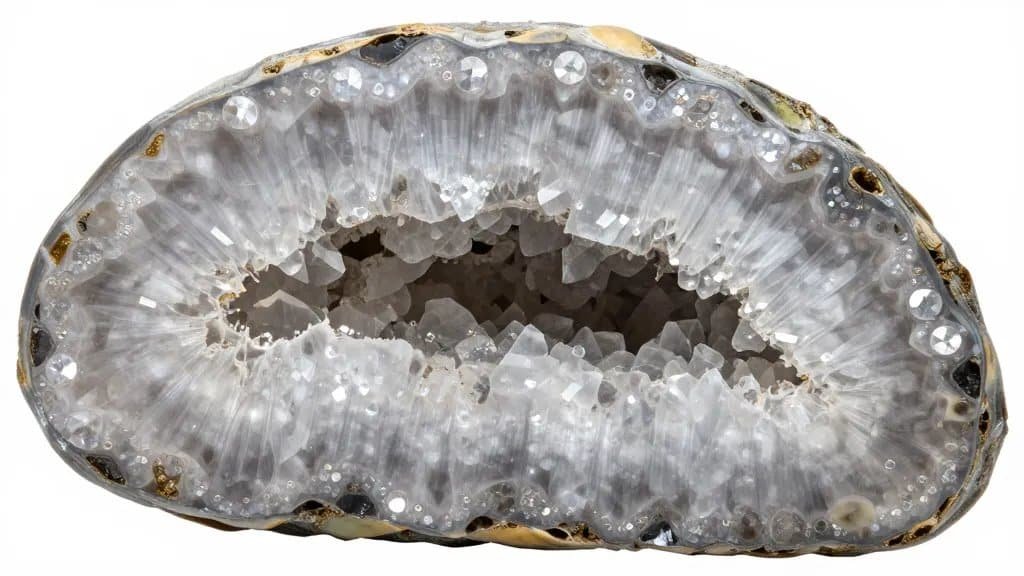
Hydrothermal fluids snake through fractures, leaving behind quartz veins, opal seams, and pockets that bloom into geodes. Crack one open and the interior is a miniature cavern lined with druzy points, amethyst cathedrals, or agate bands that read like time-lapse paintings.
Appearance and colors: Amethyst ranges from lilac to regal purple; finest stones show rich color zoning with flashes of grape and magenta. Agate bands can be mocha, cream, and smoke, or wildly colored if dyed. Fire agate shows iridescent “scales” of iron oxide trapped beneath chalcedony, like embers seen through glass.
Durability and treatments: Quartz-family gems are tough at ~7 Mohs. Heat and irradiation can modify amethyst to citrine or green quartz; disclosure is standard. Opal from hydrothermal or low-temperature environments needs gentle care—avoid heat and dehydration. Clean all with mild soap; avoid harsh chemicals and steam.
Buying and display: Choose amethyst with even saturation and lively brilliance; too-dark stones can look inky indoors. For agate, prefer natural palettes unless you enjoy artful dye jobs. If collecting geodes, cut faces should be well-polished without orange-peel texture, indicating rushed work.
Coastal Basalts and Peridot Beaches: Green Gems from the Mantle
In a few special places—Hawai‘i is the poster child—olivine (peridot) grains weather out of basalt and gather along beaches, tinting the shoreline olive green. These grains originated deep in the mantle before riding magma to the surface.
Appearance: Peridot glows an apple to lime green, sometimes with golden flashes. Under magnification, you might see lily pad inclusions—disk-like features around crystals or bubbles. Face-up, well-cut stones sparkle with a bright, open color that refuses to look dark even in low light.
Hardness and wear: At 6.5–7 Mohs, peridot is safe for pendants and earrings; rings should be worn thoughtfully to prevent abrasions. Avoid ultrasonics and sudden temperature swings.
Symbolism and value: Long associated with light and renewal, peridot’s vividness feels like bottled sunshine. Value favors clean stones over 5 carats with lively, not oversaturated color. Nickel-rich green-gold settings complement its hue beautifully, as do sleek Gemstone Earrings where movement showcases its sparkle.
Reading Landscapes Like a Gemologist: Practical Field-to-Jewelry Tips
Stone landscapes teach you to anticipate what gems prefer. Volcanoes and basalts point to corundum and olivine; granites and pegmatites suggest tourmaline, beryl, topaz; marbles hint at spinel and ruby; desert and sedimentary realms feed the agate and jasper family.
- Texture tells a story: Coarse, blocky pegmatite hints at larger crystals. Fine-grained basalt often means crystals formed in pockets or transported to alluvials.
- Color cues: Iron-stained outcrops foreshadow warm color palettes—reds, oranges, browns—in jaspers and garnets. Pale, clean granites pair with cool blues and greens in beryl and tourmaline.
- Durability mapping: Soft stones from carbonate terrains (calcite, aragonite) stay in cabinets; silicates from igneous and metamorphic hosts usually graduate to daily-wear jewelry. For deeper study, explore Gemstone Hardness and Gemstone Care.
- Treatment expectations: Basaltic sapphires and amethyst-to-citrine transformations are common and accepted with disclosure. If a color seems too perfect, ask for documentation and consider independent testing.
- Cut and shape choices: Long prismatic crystals (tourmaline, beryl) love emerald and baguette cuts; equant crystals (spinel, garnet) excel in rounds and cushions. For ideas, browse Gemstone Cuts and Gemstone Shapes.
Common Myths vs. Field Realities
Myth: All rubies come from marble. Reality: Many fine rubies do form in marble, but basaltic and metamorphic terrains also produce superb stones.
Myth: Desert jaspers are always natural-colored. Reality: Dyes enhance paler agates and jaspers; vivid neon hues warrant skepticism.
Myth: Bigger crystals mean better gems. Reality: Large crystals often carry zoning, inclusions, and stress features. Smart cutting, not size, drives beauty and value.
Myth: Origin alone dictates price. Reality: Origin can add a premium, but color, clarity, cut, and overall appeal remain the primary value factors. Consult the Gemstone Value Guide for balanced assessment.
FAQs
Which stone landscapes are most likely to produce blue gemstones?
Basaltic terrains for sapphire and pegmatitic granites for aquamarine are top contenders; metamorphic marbles can also yield blue spinel and, rarely, blue sapphires.
How can I tell if an agate’s color is natural or dyed?
Look for unnaturally uniform neon hues and color concentrated along cracks. A cotton swab with acetone on an unpolished edge may lift dye; natural colors are typically earthy and varied.
Are cave-grown crystals suitable for everyday jewelry?
Usually not. Calcite and aragonite are soft and acid-sensitive. They’re best as display minerals rather than rings or bracelets.
Does a gemstone’s host rock affect its care?
Indirectly. Host rock hints at composition and inclusions. For example, tourmaline from pegmatites often has fluid inclusions—avoid thermal shock during cleaning.
What gemstone cuts best highlight pegmatite crystals?
Emerald, baguette, and step cuts flatter prismatic beryl and tourmaline, preserving color zoning elegantly and showcasing long, clean facets.
Is heat treatment acceptable for sapphires from basaltic deposits?
Yes, industry-standard heat treatment is widely accepted with disclosure. Unheated stones with fine color command premiums.
What’s a good starter gemstone from these landscapes for daily wear?
Quartz (amethyst, smoky), spinel, sapphire, and garnet offer durability and value. Choose sturdy settings and consult Gemstone Jewelry for style ideas.
Final Thoughts
Earth’s stone landscapes aren’t just beautiful—they’re a roadmap to understanding gemstones. Learn the moods of basalt, granite, marble, and desert sands, and you’ll recognize the stories each gem carries. That insight leads to wiser purchases, better care, and a deeper appreciation every time a stone catches the light.

Christian Grey is the creator of GemMeaning, where he shares simple insights about crystals, gemstone meanings, and spiritual guidance. His focus is on making complex ideas easy to understand and practical for everyday life.