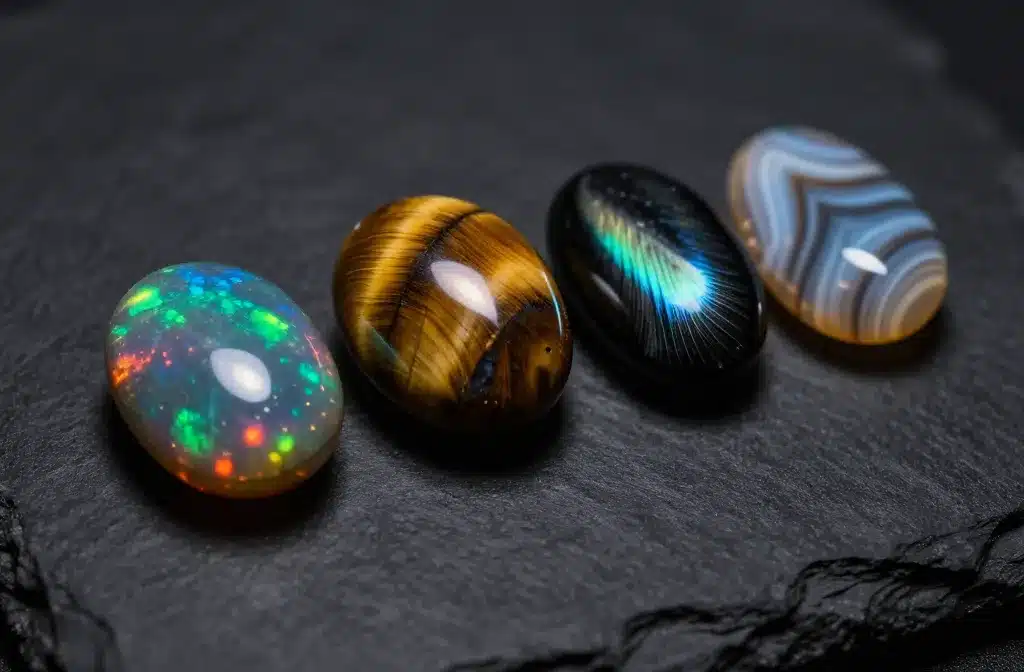
Every so often, a stone crosses your palm and your brain pauses. Is this a trick? Did someone paint this? Some gems and minerals look so uncanny that they feel like special effects—swirls that rival oil paint, colors that flip like a mood ring, or patterns so perfect they seem cut by a machine.
This article explores those rocks that don’t look real and why they form. You’ll learn how to recognize them, how they’re valued, where they come from, and what to watch for if you’re buying. I’ll sprinkle in care tips and practical jewelry advice, too.
Expect surprises: a rainbow that lives in frosted glassy stone, a gem that stares back like a cat’s eye, and a volcanic glass that shimmers like a raven’s wing. If you’ve ever questioned a specimen at a show or on your screen, this guide will help you see the science—and the magic—behind the illusion.
Ready to meet the impostors that are very, very real?
Opal: A Rainbow That Shouldn’t Fit Inside a Stone
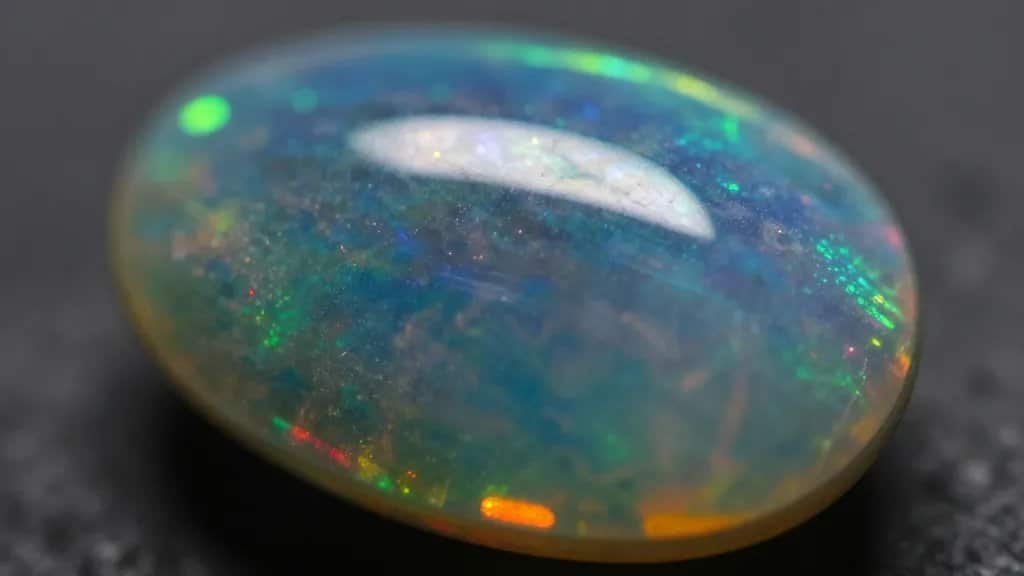
Precious opal never looks believable at first glance. Its color isn’t pigment; it’s physics. Stacks of microscopic silica spheres act like a diffraction grating, splitting light into a mosaic of neon greens, electric blues, firey oranges, and that elusive cherry red. Turn the stone and the colors jump—what cutters call play-of-color.
Appearance and colors: Fine opal has a milk-glass to clear base, with pinfire sparkles or broad, painterly flashes. Black opal (from Lightning Ridge, Australia) carries color on a dark body tone, making the spectacle look saturated and unreal. Crystal opal can appear like color suspended in clear jelly. Ethiopian hydrophane opal goes further—its body can absorb water and temporarily turn transparent, deepening the hues.
Hardness and durability: Opal sits at 5.5–6.5 on the Mohs Scale. It’s comparatively soft and contains water, so sudden drying or heat can craze the surface. Rings need protective settings; pendants and earrings are safer daily choices.
Value factors: Pattern and brightness rule. Broad flash and rare red commands more. A solid field without dead patches, few cracks, and a pleasing cut increase value. Australian black opal is the top-tier prize in many collections.
Identification tips: Look for shifting color that moves with the light, not with your viewpoint only. Under magnification, synthetic opals can show snakeskin or lizard-skin patterning—highly regular patches. Doublets and triplets have visible layering at the side; a thin slice of color backed with black material reads as a sharp line.
Buying advice: Ask for disclosure on doublets/triplets and stabilizations. Store opal away from extremes. A soft cloth and mild soapy water are fine; no ultrasonic cleaners. If you’re building an opal wardrobe, explore our Gemstone Care and Gemstone Jewelry sections for setting ideas and maintenance.
Labradorite and Spectrolite: Metal-Winged Color in a Dark Stone
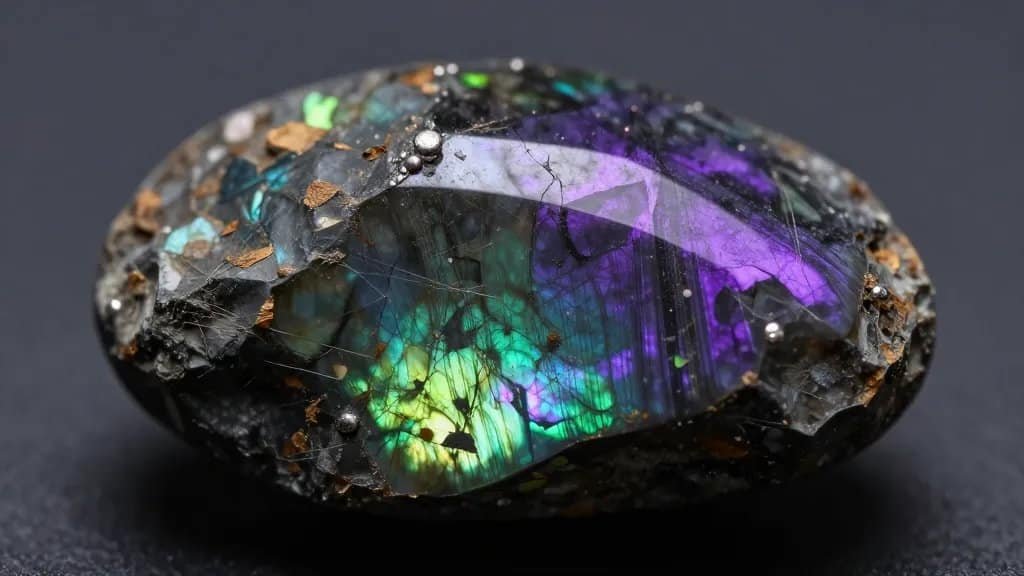
Labradorite looks like a dull gray rock until it tilts—then it erupts in sheets of blue, green, gold, sometimes magenta. This shimmering effect, labradorescence, comes from light bouncing between microscopic layers within the feldspar. Under the right cut, those layers align and the stone flashes like a polished butterfly wing.
Appearance: Body color is charcoal to smoky, often included. The best stones display large, clean windows of color that glide as the stone moves. Spectrolite, from Finland, is the superstar, offering full-spectrum flashes and crisp contrast.
Hardness and use: At 6–6.5, labradorite handles pendants and statement rings with some care. Cabochon cuts are typical to maximize sheen. Surface pits aren’t uncommon; choose a stone with a clean polish in the flash area.
Symbolism and meaning: Associated with intuition and transformation, labradorite is a favorite “mystic’s stone.” Whether you connect to that or not, it certainly feels otherworldly.
Identification tips: The flash is directional. Rotate the stone; a genuine piece will have zones where the color disappears and others where it roars to life. Glass imitations show more uniform, glittery effects and lack the structured lamellar sheen.
Chatoyancy and Asterism: Eyes and Stars That Follow You
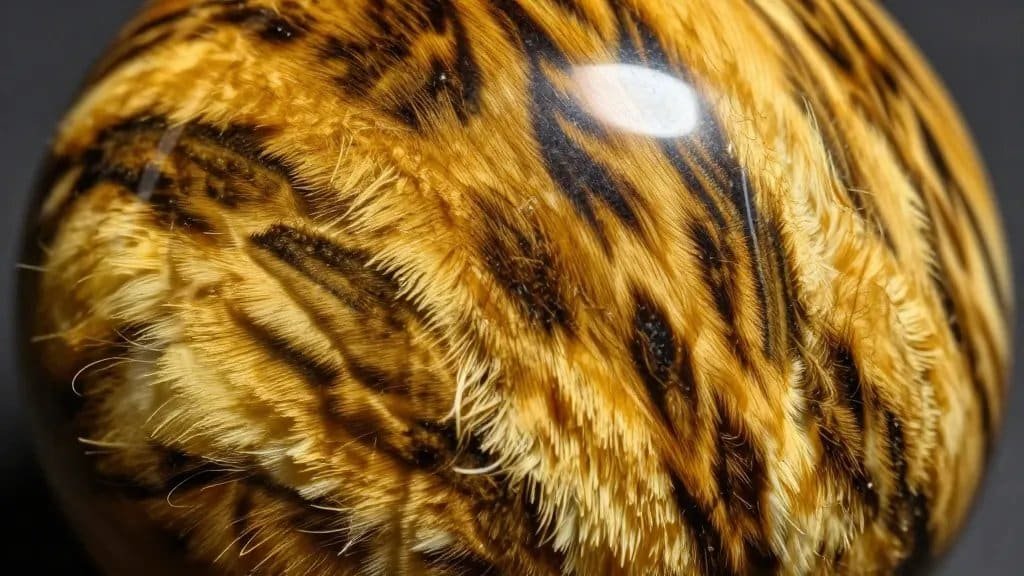
Some gems carry their own spotlight. Chatoyancy—the cat’s-eye effect—comes from parallel inclusions, usually needle-like or fibrous, that focus light into a moving line across the stone. Asterism—the star effect—creates intersecting rays, often 4, 6, or 12 points, under a direct light source.
Classic examples: Chrysoberyl cat’s-eye is the benchmark with a sharp, centered slit of light and a “milk-and-honey” flip as you rock it. Tiger’s eye quartz shows golden-brown bands rippling like silk. Star sapphire and star ruby, rich with rutile needles, display a fine star best in cabochon cuts.
Hardness and wear: Chrysoberyl is tough (8.5 Mohs), excellent for daily rings. Corundum (ruby/sapphire) at 9 is famously durable. Tiger’s eye, a quartz at 7, holds up to bracelets and casual rings.
Value factors: Sharp, centered eyes or stars with strong contrast and symmetry raise prices. Off-center, blurred, or broken lines drop value. Body color matters—a deep blue star sapphire or a honey-rich cat’s-eye chrysoberyl is more desirable than a pale counterpart.
Spotting imitations: Synthetic star sapphires exist; their stars can look too perfect and too bright across the entire surface. Under magnification you may see gas bubbles or curved growth lines in synthetics. Glass cat’s-eye has a smeary, wide band rather than a crisp line.
Jewelry tip: Keep the dome of a cabochon clean and free of scratches; even hairline scuffs soften the phenomenon. A gentle polish by a professional can revive a tired star.
Agates and Jaspers: Patterns So Precise They Seem Painted
If you’ve ever suspected a stone was marbled with a brush, you probably had an agate or jasper in hand. These quartz family members trap ancient flow patterns, mineral stains, and growth rhythms in agate’s translucent bands or jasper’s opaque scenes.
Types that challenge belief: Botswana agate with uniform, nested bands. Laguna agate, all tight concentric rings and candy colors. Crazy lace agate that looks like aerial maps. Ocean jasper sprinkled with perfect little orbs. Picture jasper that mimics desert landscapes, horizon and all.
Formation: Silica-rich solutions seep into cavities and fracture networks, laying down layers as they cool or as chemistry shifts. Iron, manganese, and other trace elements tint the palette. Over eons, voids fill and harden.
Hardness and polish: Around 6.5–7 Mohs, they take a durable, glossy finish. That’s why they shine in Gemstone Necklaces and Gemstone Bracelets where daily bumps are likely.
Real vs enhanced: Many agates take dye well. Black, electric blue, and hot pink slabs may be dyed. Natural banding remains, but color can look too even. A quick cue: examine drill holes and fractures for color concentration.
Collector notes: Locality matters. High-end Laguna or rare ocean jasper patterns fetch premiums. Seek sharp contrast, fine banding, and a clean polish. For enthusiasts building a display, explore our Collector Gemstones and Gemstone Facts resources to compare varieties.
Obsidian and Hematite: Mirror-Smooth Stones That Behave Like Metal
Obsidian is volcanic glass, cooled so quickly that crystals never form. Polished, it looks inky and impossibly smooth, like poured black lacquer. Then it gets stranger: rainbow obsidian ripples with iridescent rings, and sheen obsidian wafts silver or gold like smoke under the surface. Snowflake obsidian adds frosty splotches—tiny cristobalite crystals that budded in the glass.
Hematite, an iron oxide, can masquerade as liquid metal when polished. It reflects cleanly enough to catch your face. Hold it and you’ll feel the density; it’s heavier than you expect for its size.
Durability: Obsidian registers about 5–5.5 Mohs and chips easily along sharp glassy edges. Hematite runs 5–6. Both can show wear in rings. Save them for pendants or earrings if you’re hard on your hands.
Imitations and tells: “Hematine” or “hemalyke” is often a synthetic magnetic material, not natural hematite. Natural hematite is usually weakly magnetic at best. For obsidian, watch for perfectly uniform glitter in glass imitations; real rainbow obsidian’s color zones are subtle and layered, not sparkly.
Caring for the shine: Wipe with a soft cloth; avoid abrasives that haze the surface. Store separately to prevent friction scratches that dull the mirror.
Ammolite and Iridescent Shell: Fossil Fire That Looks Computer-Generated
Ammolite is the gem layer of fossilized ammonite shells, primarily from Alberta, Canada. Its colors rival the boldest opal but come from aragonite plates stacked and buckled over geologic time. The result is a shifting checkerboard of neon green, crimson, gold, and rare cobalt blue.
Appearance: Surface texture can be crackled—called “dragonskin.” High-grade pieces show broad, interference colors with strong directionality. Unlike opal’s pinfire, ammolite often presents mosaic blocks of color.
Hardness and construction: Natural ammolite is thin and fragile (about 3.5–4 Mohs), so it’s commonly capped with a protective layer like quartz or spinel as a triplet. That’s standard and should be disclosed.
Value: Rarity of color drives price, with blue and purple being the scarcest. Vibrancy, evenness, and minimal dead zones matter. Larger undamaged panels fetch serious collector interest.
Care: Avoid heat, chemicals, and ultrasonic cleaners. A soft cloth and gentle storage keep the surface bright. Ask vendors about cap material and backing if you’re comparing pieces in a Gemstone Buying Guide context.
Fluorite and Bicolor Tourmaline: Colors That Change Their Mind
Fluorite can look like a candy store in crystal form—bands of violet, mint, teal, and smoky yellow. It cleaves easily and scratches at 4 Mohs, which is why spectacular specimens live in cabinets and not on hands. Under UV, many fluorites fluoresce with eerie blue-violet light, adding to the “this can’t be real” impression.
Bicolor and watermelon tourmaline serve another mind-bender: a single crystal that fades from one color to another or rims a pink heart with a green rind. The zoning is natural, reflecting chemistry changes during growth. In gem form, slices display a crisp ring around a translucent center that looks so perfect it’s often mistaken for dye.
Use and setting: Fluorite is best for earrings and pendants or as a collector specimen. Tourmaline, at 7–7.5 Mohs, is more rugged and works well in rings, though protect long, narrow cuts from knocks.
Identification: Tourmaline’s pleochroism means you may see different intensities from different angles—another hint it’s genuine. Dyed quartz won’t show that behavior and may pool color in fractures.
Chrysocolla, Malachite, and Azurite: Blues and Greens So Vivid They Look Painted
Copper minerals love theater. Chrysocolla often shows Caribbean blues pooling in black matrix, sometimes with a glassy chrysocolla-chalcedony mix called “gem silica”—a luminous, highly prized material. Malachite draws swirling, bullseye rings of rich, velvety green. Azurite pushes deep royal blue that can grade into malachite, creating breathtaking teal collages.
Formation: Near-surface copper deposits meet carbonates and silicates, precipitating these minerals in cracks and cavities. That slow drip-work writes in concentric layers and color fields that look too deliberate to be natural.
Hardness and treatment: Pure chrysocolla is soft (2–4 Mohs), but gem silica is much harder (6.5–7) and takes a glossy polish. Malachite sits around 3.5–4 and scratches easily but polishes like green satin. Stabilization with resin is common for softer material; ask sellers for disclosure.
Care: Keep malachite away from acids and ammonia-based cleaners; it can etch or discolor. Wipe gently with a dry cloth. Reserve malachite for earrings, pendants, or special-occasion rings.
Buying tip: Look for crisp banding in malachite and even, bright color in gem silica. Composite materials that glue colorful slices together can look too perfect; check side profiles for seams.
Moissanite and CZ: Too Much Sparkle to Be Believed
Not every “unreal” stone is rare. Lab-created moissanite and cubic zirconia steal the show with dramatic brilliance. Moissanite, with a refractive index higher than diamond and strong dispersion, can throw rainbow flashes so intense they seem theatrical under LED lighting.
Appearance: Moissanite’s fire leans overtly prismatic; diamond’s sparkle is more white-light focused with balanced rainbow. CZ is often flawless to the eye with a glasslike luster and hefty weight for its size.
Hardness and wear: Moissanite is 9.25 Mohs and durable for rings. CZ is softer (around 8–8.5) and can abrade over time, softening its brilliance.
Identification: Through a jeweler’s loupe, moissanite shows doubled facets from birefringence, especially at the girdle or pavilion. Diamond testers often read moissanite as diamond by conductivity, so a specialized tester is needed. For shoppers comparing Gemstone Rings, understanding these cues helps you choose sparkle that fits your expectations and budget.
Real vs. Fake: How to Trust Your Eyes Without Being Fooled
That “too perfect” feeling is a helpful instinct, but it needs backup. Here are practical checks when a rock doesn’t look real:
- Look for structure, not uniformity. Natural phenomena—play-of-color, chatoyancy, zoning—move and shift. Imitations often look flat, glittery, or the same from every angle.
- Check the sides and back. Layered triplets, dyed agate, or assembled stones reveal seams, color-concentrated fractures, or backing materials.
- Use light wisely. A single point light brings out stars and eyes; diffuse light reveals opal’s broad flash. If a star looks perfect under any light and any angle, be cautious.
- Mind the Mohs Scale. Unreal looks in soft stones (fluorite, malachite, opal) come with care requirements. If a vendor claims “indestructible” malachite, walk away.
- Ask about treatments. Stabilization, dye, oil, coatings, and caps aren’t deal-breakers if disclosed and priced correctly.
- Compare across types. Our Gemstone Identification and Gemstone Comparisons guides can help you pit lookalikes against each other before you buy.
Care and Cleaning for These Unbelievable Beauties
Stones that look magical often have quirks. Here’s a quick, safe routine:
- Gentle clean: Lukewarm water, a drop of mild soap, and a soft brush. Rinse and pat dry. Avoid soaking hydrophane opal and composite stones.
- No extremes: Keep heat, steam, and ultrasonic cleaners away from opal, malachite, ammolite, dyed or stabilized materials, and any stone with fractures.
- Protective storage: Separate pouches or compartments prevent harder stones from scuffing softer ones. Opal appreciates a stable humidity environment.
- Mind the setting: Bezel or halo settings protect softer cabochons like opal, ammolite, and malachite. Channel-set or tension rings are better suited to harder gems.
Buying and Collecting: Where Wonder Meets Wisdom
Unreal-looking stones invite impulse buys. Balance impulse with a few grounded habits:
- Seek provenance. A miner or lapidary story adds trust—Lightning Ridge black opal, Finnish spectrolite, Alberta ammolite.
- Request paperwork when appropriate. Lab memos are valuable for high-end opal, star sapphires, and cat’s-eye chrysoberyl.
- Price sanity check. If the star is razor-sharp, the body color is vivid, and the price is suspiciously low, assume synthetic or heavily treated.
- Match gem to lifestyle. Daily ring? Choose durable options like corundum or chrysoberyl. Showpiece pendant? Opal or ammolite shines with less risk.
- Explore related learning. Our Gemstone Value Guide and Gemstone Cuts articles can help you understand how pattern, orientation, and polish translate to price and presence.
FAQs
Why does opal show different colors in different directions?
Opal’s silica spheres form tiny grids. Light diffracts differently as the angle changes, so color patches appear and disappear with movement. Sphere size and order dictate which colors you see.
Can I wear malachite every day?
It’s not ideal. At 3.5–4 Mohs and sensitive to acids, malachite scratches and etches. Save it for pendants or occasional rings and clean with a dry cloth only.
How can I tell if a cat’s-eye is real chrysoberyl?
Look for a sharp, centered line that splits the stone into light and dark halves when rotated. A jeweler can confirm with refractive index and specific gravity tests; glass imitations have a soft, smeared band.
Is rainbow obsidian dyed?
No. The color bands come from tiny variations in composition and microscopic inclusions within the volcanic glass. Dyed glass tends to show uniform color, not layered sheen.
Are all ammolite pieces triplets?
Not all, but many. Ammolite layers are thin and fragile, so protective caps are common. High-grade solids exist but are rarer and command higher prices.
Does moissanite lose sparkle over time?
Moissanite’s brilliance doesn’t fade, but oils and dirt can dull the surface temporarily. A quick clean restores the fire. It’s harder than most wear-and-tear, so it holds up well.
Do agates that look neon always mean they’re dyed?
Not always, but vivid, uniform bright blues and pinks are commonly dyed. Check for concentrated color in cracks or drill holes and ask for disclosure.
The Takeaway
Rocks that don’t look real are often the most authentic wonders in the gem world—physics, chemistry, and time doing their most theatrical work. Learn the cues, respect their strengths and weaknesses, and choose settings that let them perform. With a bit of savvy and a lot of curiosity, you can build a collection that makes people ask, “Is that even real?”—and smile when you answer, “Yes.”

Christian Grey is the creator of GemMeaning, where he shares simple insights about crystals, gemstone meanings, and spiritual guidance. His focus is on making complex ideas easy to understand and practical for everyday life.