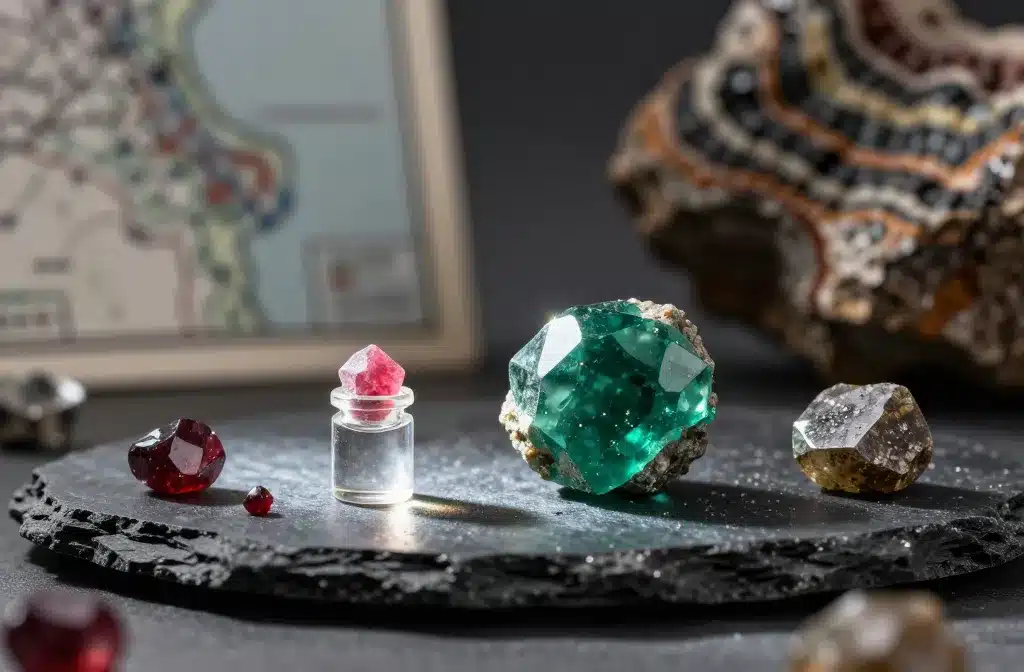
Hold a very old gemstone in your hand and you’re cradling more than a pretty spark—you’re holding a witness to the Earth’s earliest chapters. Some of these minerals are older than the Moon’s familiar craters and formed when our planet was still a fiery experiment. That sense of deep time is what makes ancient gems so compelling to collectors, scientists, and anyone who loves the quiet authority of something that endures.
In this guide, you’ll meet the true elders of the gem world: where they’re found, how they formed, and what sets them apart from the colorful stones in most jewelry cases. You’ll also learn how age affects value, the quirks of identifying ancient minerals, and which pieces actually make sense to wear.
Expect surprises. Some “oldest” gems are tiny grains that barely glint, yet their stories are enormous. Others are majestic, jewelry-ready crystals that took shape inside dinosaur-time rocks. By the end, you’ll know which gems genuinely deserve the title and how to appreciate them with both eyes open.
Let’s trace the clock back billions of years.
What Counts as “Oldest” in the Gem World?
Age in gemstones can mean a few different things, and the distinctions matter:
- Crystallization age: When the crystal lattice first formed. This is the strict geologist’s clock.
- Host rock age: How old the rock is that contains the gem. A gem could recrystallize later, making the crystal younger than its host.
- Use as a gemstone: When humans first recognized and used the mineral as a gem. This is cultural, not geological.
For “the oldest gemstones ever discovered,” we’ll focus primarily on crystallization age confirmed through radiometric dating. That’s the domain of uranium-lead clocks in zircons, samarium-neodymium in garnets, and other isotope systems that allow scientists to measure time in hundreds of millions to billions of years.
The Zircon That Beat the World: 4.4–4.37 Billion Years
If there’s a crown holder, it’s zircon from the Jack Hills region of Western Australia. Single zircon grains found in ancient sandstones have been dated to roughly 4.37–4.40 billion years old—just a few hundred million years after Earth formed. These grains are microscopic, often honey-brown to pale gray, with a glassy luster and stubborn durability that helped them survive multiple cycles of weathering and transport.
Why zircon lasts: Its crystal structure tightly locks in uranium and excludes lead, making it ideal for uranium-lead dating. It also resists heat and chemical attack. Even after metamorphism, zircon often preserves older cores inside younger overgrowths, like tree rings.
Appearance and jewelry use: Gem-quality zircon can be brilliant and fiery, ranging from colorless to blue, cinnamon, and golden hues, with high refractive index and strong dispersion. However, the oldest zircons are too tiny and included for jewelry. When buyers look for zircon jewelry today, they’re usually choosing younger material from Cambodia, Sri Lanka, or Tanzania. Zircon ranks 6–7.5 on the Mohs Scale, with brittle edges; it’s lovely in earrings or pendants but needs mindful wear in rings.
Collector angle: Jack Hills zircons are more a scientific trophy than a jewelry stone. Authentic grains with verified ages belong in labs and museums. If you see “4.4-billion-year zircon jewelry,” assume it’s a romantic claim rather than a documented specimen.
Ancient Garnets: Deep-Time Red with a Geological Twist
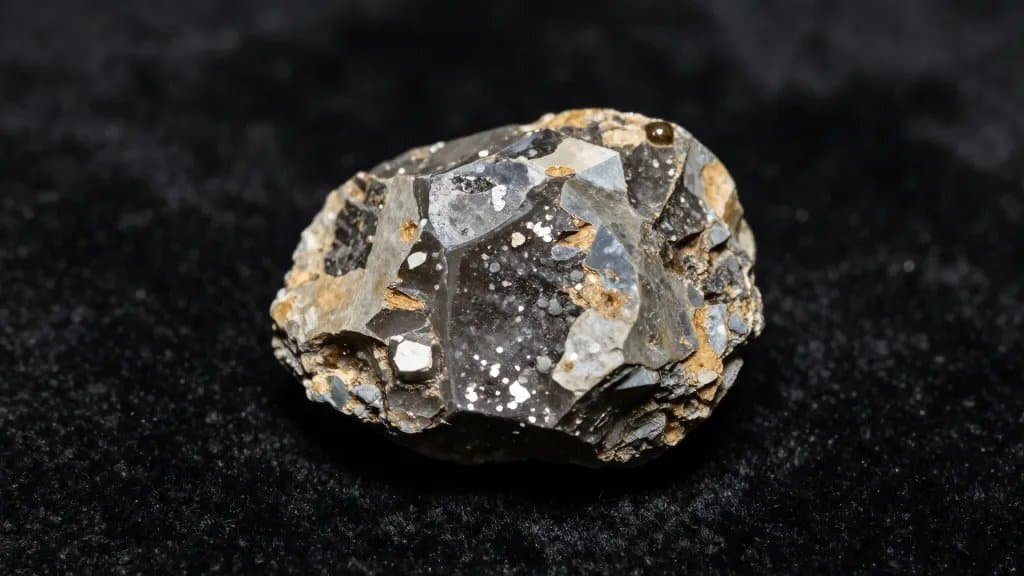
Garnet often conjures images of January birthstone jewelry, yet garnet crystals can also serve as time capsules from Earth’s Archean Eon. Certain almandine-pyrope garnets from high-grade metamorphic terranes date to 3.0–3.2 billion years via Sm-Nd or Lu-Hf methods. These garnets typically grew during deep crustal metamorphism, locking in isotope ratios that let geologists reconstruct tectonic histories.
Appearance: Deep red to wine hues predominate for almandine, while pyrope leans toward crimson with a touch of violet. In high-grade rocks, garnet often shows dodecahedral faces and silky or granular inclusions of quartz, rutile, or graphite. Polished, they can display a plush, velvety glow rather than flashy brilliance.
Durability and wear: Garnet averages 6.5–7.5 Mohs and takes a fine polish. Many ancient garnets are embedded in tough metamorphic hosts and aren’t cut for jewelry. Commercial garnet gems from Mozambique, Madagascar, and India are geologically younger but still durable enough for everyday rings.
Value factors: With ancient garnet, provenance and scientific data trump size. A small, well-documented Archean garnet slice can thrill a collector of Gemstone History, even if it won’t set the auction rooms buzzing like a designer tsavorite. If your passion tilts toward geology, these are meditative stones—quiet, weighty, and honest.
Oldest Diamonds: Ancient Carbon, Younger Spark
Diamonds are romanticized as forever, and many truly are ancient. The oldest dated diamonds formed deep in Earth’s mantle as far back as 3.0–3.5 billion years ago, ferried to the surface by kimberlite or lamproite eruptions much later. Not every diamond is that old—some are “only” hundreds of millions of years—but the record holders carry inclusions that pin down their antiquity.
Inclusions that tell time: Tiny trapped minerals like coesite, ferropericlase, or sulfides within diamond act as pressure-temperature and isotope messengers. Sm-Nd and Re-Os systems in inclusions can reveal when the diamond formed. If you hear about a “3-billion-year-old diamond,” the proof usually sits inside it.
Appearance: Old doesn’t mean dull. Diamonds, regardless of age, share the same adamantine luster and top-tier brilliance if well cut. Most antique-age stones in the market look like any fine diamond—colorless to faintly tinted, or fancy colors if defects and irradiation were involved during growth. On the Mohs Scale, diamond is 10, the hardest natural material, though cleavage makes it chip if struck just right.
Buying realities: Few retail diamonds come with scientific papers tying them to Archean formation. Labs focus on color, clarity, and cut. If age is your goal, look for specimens with documented mantle inclusions and peer-reviewed provenance. For everyday buyers, age doesn’t affect price like color and clarity do—unless the piece carries a compelling story vetted by science.
Other Ancient Contenders: Sapphires, Spinel, and Tourmaline
Not all gemstones compete in the 3–4-billion-year range, but several beloved species regularly clock ages of hundreds of millions to over a billion years, especially when formed in stable, old cratons.
- Corundum (Ruby and Sapphire): Some metamorphic corundum from Madagascar, Sri Lanka, and East Africa formed over 500 million to 1 billion years ago. Fine blue sapphires show tight hexagonal prisms, high luster, and silk (rutile) that can create star effects. Ruby and sapphire sit at 9 Mohs, making them excellent for Gemstone Rings and Gemstone Earrings. Age does not generally influence corundum pricing; color, clarity, size, and lack of treatment do.
- Spinel: This magnesium-aluminum oxide often develops in marbles alongside ruby and sapphire. Some deposits are Proterozoic in age (more than half a billion years). Spinel’s crisp octahedral crystals and juicy reds, pinks, and blues have charmed collectors, and its 8 Mohs hardness suits daily wear. Untreated, vivid stones command premiums.
- Tourmaline: Pegmatite-grown tourmalines from Mozambique, Brazil, and Afghanistan can be very old—commonly hundreds of millions of years—though rarely in the multi-billion bracket. Their prismatic crystals may show color zoning and a vitreous polish. Durability is 7–7.5 Mohs, ideal for pendants and bracelets.
These stones aren’t record breakers, but they carry the gravitas of deep time and remain highly wearable—especially appealing if you want history on your hand, not only in a display case.
How Scientists Date the Oldest Gemstones
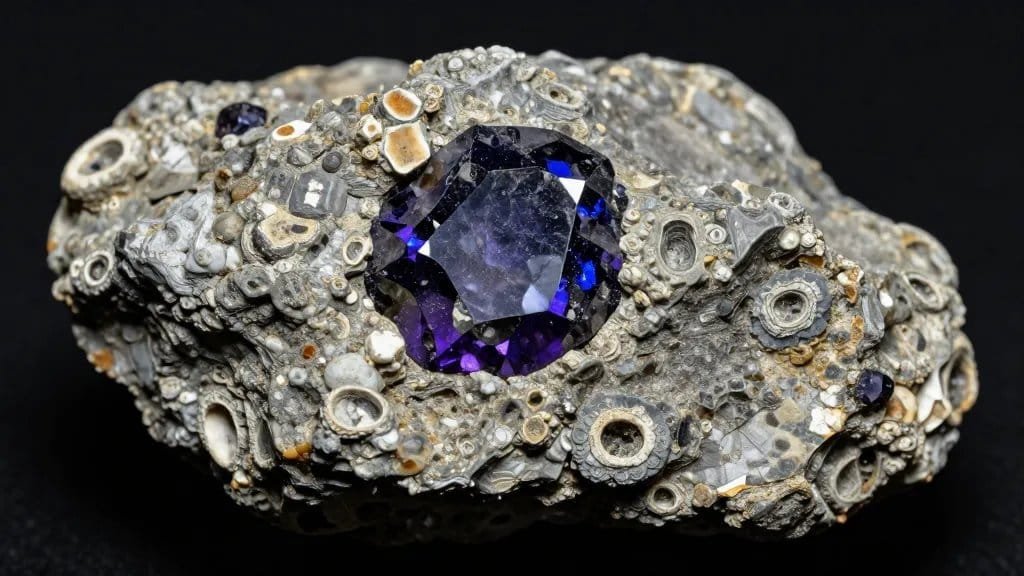
Age claims should rest on data, not romance. Here’s how the clocks are read:
- Uranium–Lead (U–Pb) in Zircon: Zircon incorporates uranium but little lead when it forms, so any lead measured later is radiogenic. Analysts use ion microprobes or laser ablation ICP-MS to target zones within a crystal. Concordant ages—where different U–Pb decay schemes agree—bolster confidence.
- Samarium–Neodymium (Sm–Nd) and Lutetium–Hafnium (Lu–Hf) in Garnet: As garnet grows during metamorphism, it sets isochrons with surrounding minerals. The slope of the isochron gives an age, often corresponding to a metamorphic event.
- Rhenium–Osmium (Re–Os) in Diamond Inclusions: Sulfide inclusions preserve mantle signatures and time of encapsulation, which often matches diamond growth.
- Cross-checking with Textures: Cathodoluminescence imaging reveals zircon cores and rims; inclusion trails and healed fractures can show growth episodes. A single gem can record multiple events across billions of years.
If you’re building a collection anchored in antiquity, ask for lab methods, uncertainties, and whether the date reflects initial growth or later metamorphism. A clear answer here separates genuine Gemstone Facts from marketing fog.
Ancient Beauty Versus Daily Wear: Practical Advice
Many of the oldest specimens are scientifically precious but not suited to everyday jewelry. Here’s how to balance age with utility:
- For true deep-time bragging rights: Seek documented zircon grains or slices of Archean garnet-bearing rock. Display them with a short note on age and locality. These make outstanding Collector Gemstones.
- For jewelry that’s genuinely old geologically: Choose sapphire, ruby, or spinel from well-known ancient terranes. A Sri Lankan sapphire or Mogok spinel may be hundreds of millions of years old and will stand up to frequent wear.
- For rings that last: Prioritize durability. Diamond, corundum, and spinel are safest for daily Gemstone Rings. Zircon, while brilliant, needs more care, and its age rarely correlates with retail stones.
- Settings that protect: Use bezels or protective prongs for moderately hard stones. Avoid open-back settings that expose a brittle girdle to knocks.
Remember: “ancient” doesn’t guarantee toughness. It only guarantees time survived—often in a rock, not on a finger.
How Age Influences Value (And How It Doesn’t)
In mainstream jewelry markets, age alone seldom sets the price. Value still tracks with recognized criteria: color, clarity, cut, size, and scarcity within the type. Yet for certain buyers, documentation of age and origin adds intangible weight.
- Where age matters: Museum-grade specimens, scientifically dated zircons, diamonds with mantle inclusion papers, and historical artifacts (e.g., gems used in ancient cultures) attract collectors.
- Where it doesn’t: Retail sapphires, rubies, and spinels rarely come with formation ages. Sellers focus on enhancements, origin, and visual quality. That’s where a solid Gemstone Buying Guide and Gemstone Value Guide help more than a lab-determined birthday.
- Provenance: A stone paired with a specific mine or district known for ancient geology carries contextual charm. Think Jack Hills for zircon, Kaapvaal and Pilbara cratons for diamonds and garnets, Mogok for spinel and ruby.
Bottom line: buy with your eyes and your heart, then let age be the poetry layered on top—provided the science is sound.
Real vs. Romantic: Spotting Overstated Claims
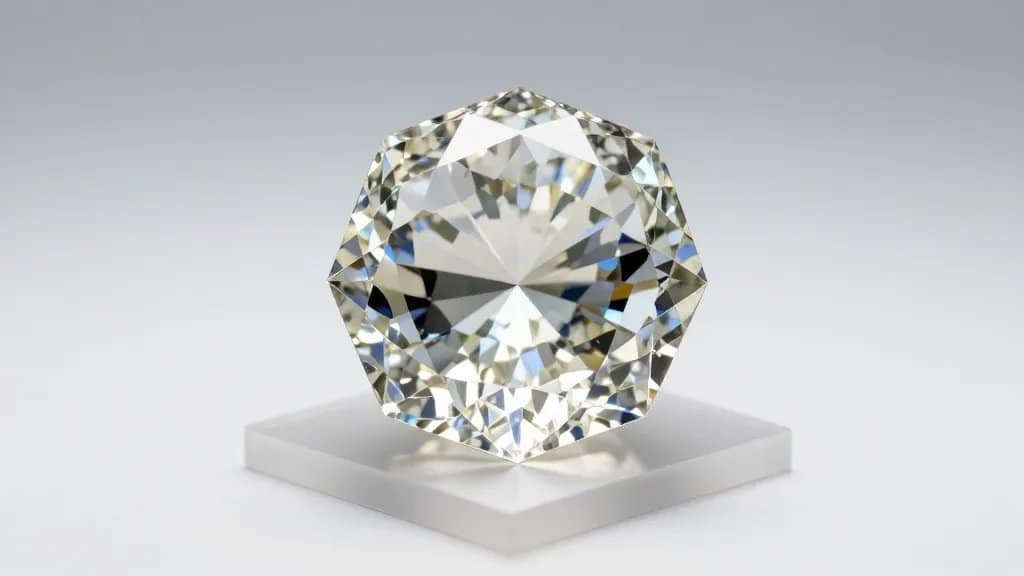
Marketing loves a big number. Here’s how to keep the story honest:
- Ask for the dating method: If a seller claims “4-billion-year-old gem,” request the lab report, technique (U–Pb, Sm–Nd, etc.), and analytical uncertainty.
- Beware of conflating host rock and crystal age: A gem inside an ancient rock might have recrystallized later. That’s still interesting, but not the same as primordial.
- Trade names vs. species: “Jargoon” and “starlite” refer to zircon varieties; “black diamond” can be polycrystalline carbonado, which has a debated origin. Clarify what you’re actually getting.
- Treatments: Heat-treated zircon (especially blue) is common and perfectly legitimate; just know the enhancement doesn’t change the formation age claim, which is almost never provided for jewelry zircons.
If you enjoy comparing characteristics, a brief stop in Gemstone Identification and Gemstone Comparisons topics will sharpen your eye for the difference between a storied stone and a stretched story.
Caring for Ancient and Heirloom-Worthy Stones
Age deserves respect at the bench and at home. Sensible care preserves both beauty and data:
- Cleaning: For durable stones like diamond, sapphire, and spinel, warm soapy water and a soft brush work well. Ultrasonics are usually fine unless the stone has inclusions or fractures. Avoid ultrasonics and steam on zircon and heavily included specimens.
- Storage: Keep harder stones separate to avoid scratching softer ones. Diamond can scratch everything; sapphire and spinel can scratch most things; zircon needs padding.
- Repairs and resets: Communicate with your jeweler. If a piece contains a scientifically important specimen, consider a protective mount and low-heat techniques. For especially delicate or significant stones, work with someone familiar with Gemstone Care.
Think of it this way: you’re not only preserving a gem; you’re safeguarding a page of Earth’s diary.
Myths and Misconceptions About the Oldest Gemstones
- Myth: The oldest gemstones are always the most expensive. Fact: Market value follows beauty, rarity within the trade, and demand. Scientific age can enhance collector interest but doesn’t replace color and clarity.
- Myth: All diamonds are billions of years old. Fact: Many are ancient, but not all. Some formed in more recent geologic epochs; lab-grown diamonds are, of course, brand new.
- Myth: Blue zircon’s color proves extreme age. Fact: Blue zircon is typically heat-treated brown zircon. Its age is unrelated to its hue in the marketplace.
- Myth: A gem from an old mine must be an old crystal. Fact: Mines can host multiple generations of mineral growth. Dating requires analytical evidence.
Frequently Asked Questions
What is the single oldest gemstone ever found?
Tiny zircon grains from Jack Hills, Western Australia, dated around 4.37–4.40 billion years, hold the record. They’re scientific specimens, not jewelry stones.
Can I buy a gemstone that’s billions of years old?
Yes, but not typically with proof attached. Diamonds and some garnets can be that old, yet retail stones rarely include formation-age documentation. Museum-grade pieces with data are possible but niche.
Do older gemstones look different from younger ones?
Not necessarily. Visual traits depend on species, growth environment, and cutting. An ancient diamond can look identical to a “younger” natural diamond of the same quality.
Is zircon the same as cubic zirconia?
No. Zircon is a natural mineral (ZrSiO4). Cubic zirconia is a synthetic diamond simulant (ZrO2). They differ in structure, properties, and value.
Does gemstone age affect durability?
Durability depends on composition and structure, not age. Diamond is hard whether it’s 100 million or 3 billion years old; zircon is still relatively brittle even if ancient.
Which ancient gems are best for daily wear?
Diamond, sapphire, and spinel are reliable choices due to high hardness and toughness. They often formed in deep time and handle everyday life well.
How do I verify age claims for a gemstone?
Request laboratory documentation specifying the dating method and sample context. Without that, treat age claims as storytelling rather than science.
Conclusion
The oldest gemstones aren’t just adornments—they’re timestamps from a restless planet. Zircon writes the prologue, garnet and diamond carry the plot forward, and durable classics like sapphire and spinel let you wear a chapter on your sleeve. Whether you collect framed slices of Earth’s memory or prefer the bright confidence of a ring, let curiosity lead the way. Know the science, enjoy the beauty, and choose pieces that make both your eyes and your mind light up.

Christian Grey is the creator of GemMeaning, where he shares simple insights about crystals, gemstone meanings, and spiritual guidance. His focus is on making complex ideas easy to understand and practical for everyday life.