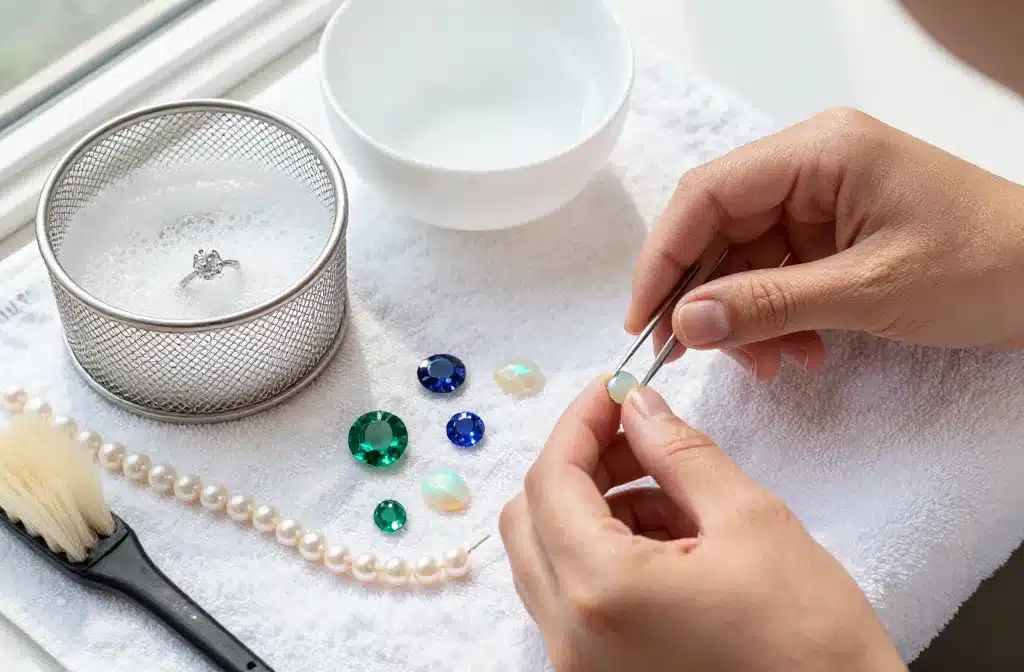
A gemstone can look a little sleepy after months of wear—hand lotions cloud the surface, dust dulls the facets, and daily life leaves a film even on the toughest stones. The right cleaning method can wake that color and brilliance right back up. The wrong one can permanently frost a surface, loosen a setting, or even crack a gem that looked perfectly fine.
Here you’ll learn which gemstones love a simple soap bath, which need extra care, and which should never meet an ultrasonic cleaner. I’ll break down safe cleaning methods by gem type, explain why certain stones are sensitive, and share hands-on tips I use at the bench and at home.
We’ll also touch on common treatments, how to spot them, and how they affect cleaning. If you’ve ever wondered why emeralds are fussy or why pearls hate chemicals, you’ll get clear answers and a routine you can trust.
By the end, you’ll know exactly how to refresh a diamond ring, perk up an opal pendant, or gently revive a strand of pearls—without risking the beauty or value of your jewelry.
How Gem Properties Affect Cleaning
Safe cleaning methods start with understanding what you’re holding. Hardness, toughness, porosity, and treatments determine what a gemstone can handle.
- Hardness (Mohs Scale): Diamond is a 10, sapphire and ruby 9, quartz 7, turquoise and opal much softer. Harder stones resist scratching but aren’t invincible to heat or chemicals.
- Toughness: Some gems are hard yet brittle. Emeralds and tanzanites, for instance, can chip or cleave if stressed or vibrated in an ultrasonic.
- Porosity: Opal, turquoise, and pearls absorb liquids. Oils and dyes may seep in; heat or strong detergents can draw moisture out, causing cracks or discoloration.
- Treatments: Oiling in emeralds, fracture filling in diamonds and sapphires, resin stabilization in turquoise, and heat or diffusion treatments in corundum change cleaning rules. Always assume a stone may be treated unless paperwork says otherwise.
Knowing these traits helps you decide between a gentle soap bath, a soft brush, an ultrasonic cleaner, or a trip to a jeweler. If you like exploring technical aspects, our Gemstone Hardness and Gemstone Identification overviews connect these properties to everyday care.
Universal Tools and Techniques That Are Always Gentle
Before we get specific, let’s set up a safe baseline that works for most gems most of the time.
- Warm water and mild dish soap: A small bowl of lukewarm water with a drop of gentle soap lifts oils without harsh chemicals.
- Soft brush: Use a baby-soft toothbrush or a jeweler’s brush. Work from behind the stone where grime hides under prongs.
- Lint-free cloth: Microfiber or a clean cotton cloth prevents residual fibers from snagging on prongs or pearls.
- Rinse and dry well: Rinse in a fine-mesh strainer so your treasure doesn’t slip down the drain. Pat dry; avoid heat.
- Avoid: Bleach, chlorine, acetone, and abrasive powders. Keep jewelry away from harsh bathroom cleaners and hot water.
This simple routine is safe for diamond, sapphire, ruby, garnet, spinel, chrysoberyl, topaz, and most quartz-family gems—unless they have special treatments, cracks, or are set in delicate antique settings.
Sturdy Sparkle: Diamonds, Sapphires, Rubies, and Spinels
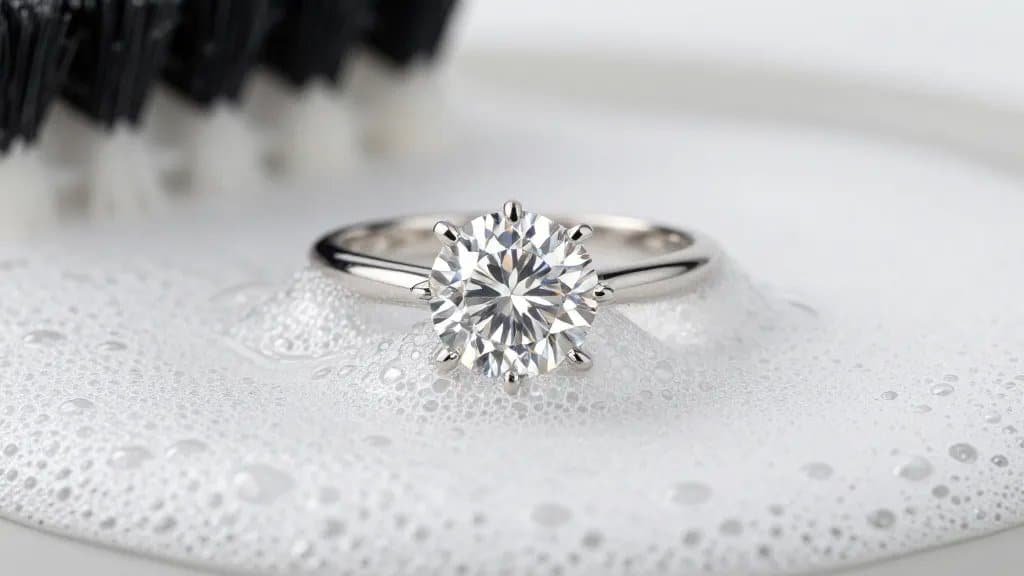
These stones are famous for their brightness and durability, which makes cleaning straightforward. They resist scratching and generally tolerate a bit more vigor, but there are caveats.
- Diamonds (Mohs 10): Grease magnet. Oils cling to diamond surfaces, muting fire and scintillation. Safe method: warm soapy water and a soft brush, focusing on the pavilion (the underside). Ultrasonics and steam are generally fine for untreated diamonds, but avoid for fracture-filled stones—look for a slightly “glassy” flash in fractures as a clue to filling.
- Sapphires and Rubies (Corundum, Mohs 9): Durable, often heat-treated (that’s fine), sometimes fracture-filled or diffusion-treated (more sensitive). Safe method: soap bath and soft brush. Ultrasonic is fine for most heated stones but risky for fracture-filled or very included gems. If you see surface-reaching fissures with a rainbowish flash, skip the ultrasonic.
- Spinel (Mohs 8): Underrated and tough with lively sparkle. Usually untreated. Safe method: soap and brush; ultrasonics typically safe unless the stone is heavily included.
Check the setting before any aggressive method. Loose prongs plus an ultrasonic equals a missing stone. When in doubt, the sink-side bowl and brush will revive that crisp brilliance beautifully.
Colorful Classics: Quartz Family, Topaz, Beryl, and Feldspars
This group spans household names from amethyst to aquamarine. They’re generally sturdy enough for regular wear but need measured care to preserve color and clarity.
- Quartz (Amethyst, Citrine, Smoky, Rose, Rock Crystal) – Mohs 7: Safe method: warm soapy water, soft brush, rinse thoroughly. Avoid very hot water and sudden temperature changes; color centers in some quartz can be heat-sensitive. Ultrasonic is usually fine for clean, untreated quartz, but avoid if the stone has many inclusions or fractures, or is dyed (common in agate and some chalcedony).
- Topaz – Mohs 8 but perfect cleavage: Hard yet prone to splitting with sharp impact or thermal shock. Safe method: gentle soap bath and light brushing. Skip steam and be cautious with ultrasonics, especially for coated “mystic” topaz where a thin film creates rainbow iridescence—abrasives or harsh chemicals can strip the coating.
- Beryl (Aquamarine, Morganite, Heliodor) – Mohs 7.5–8: Usually heat-treated to enhance color; that’s stable. Safe method: soapy water and soft brush. Ultrasonic can be used on clean stones, but be cautious with heavily included beryl or antique settings. Emerald is the exception and gets its own section.
- Feldspars (Moonstone, Labradorite, Sunstone) – Mohs ~6–6.5: These gems show shimmering adularescence or aventurescence from fine internal layers or platelets. Safe method: gentle soap bath, very soft brush, no steam or ultrasonic. The internal structures can be delicate; abrasives will dull the soft glow.
Visual cue: if the stone shows a soft sheen (moonstone) or dramatic peacock flashes (labradorite) under shifting light, keep cleaning gentle to preserve that optical effect.
The Fussy Beauties: Emeralds, Opals, Pearls, and Porous Gems
Some gemstones are loved for qualities that also make them vulnerable. These need specific, careful routines.
- Emerald – Mohs 7.5–8 but frequently included and often oiled: Most emeralds are treated with oil or resin to minimize visible fissures. Ultrasonic and steam can push filler out or worsen fractures. Safe method: barely warm water with a tiny drop of mild soap; wipe gently with a soft cloth or the barest brushing around settings. Rinse quickly and pat dry. If the gem looks dull or cloudy afterward, a jeweler can re-oil professionally.
- Opal – Mohs 5.5–6.5, hydrated and heat sensitive: Solid opals contain water; sudden heat, dehydration, or harsh chemicals can craze the surface. Doublets and triplets have layered construction that can separate. Safe method: tepid soapy water and a soft cloth. No soaking for long periods, no ultrasonic, no steam, and avoid prolonged dry heat or bright sunlight. Store away from desiccants; a normal humidity environment is ideal.
- Pearls – Mohs ~2.5–4.5, organic and porous: Pearl nacre has a delicate luster that acids, perfumes, and sweat can etch. Safe method: after wearing, wipe with a soft, slightly damp cloth. For deeper cleaning, use lukewarm water with a tiny bit of mild soap, then rinse on a damp cloth and lay flat to dry. Never soak a strung necklace; water weakens silk thread. Keep them away from ultrasonic cleaners and never use abrasive cloths.
- Turquoise, Lapis Lazuli, Malachite – porous, often dyed or stabilized: These absorb liquids and are sensitive to acids and even household soaps. Safe method: wipe with a clean, slightly damp cloth and dry immediately. Avoid soaking, steam, and ultrasonic. Stabilized turquoise is more durable but still dislikes chemicals.
- Amber, Jet, Coral – organic gems: Very soft and easily scratched. Clean with a dry or slightly damp soft cloth. Keep away from heat, alcohol, hairspray, and perfume.
If a gem’s color appears uneven or it shows a waxy surface, treat it as porous and keep cleaning minimal. For deeper grime, consult a professional jeweler with experience in Gemstone Care.
Red Flags for Ultrasonic and Steam Cleaning
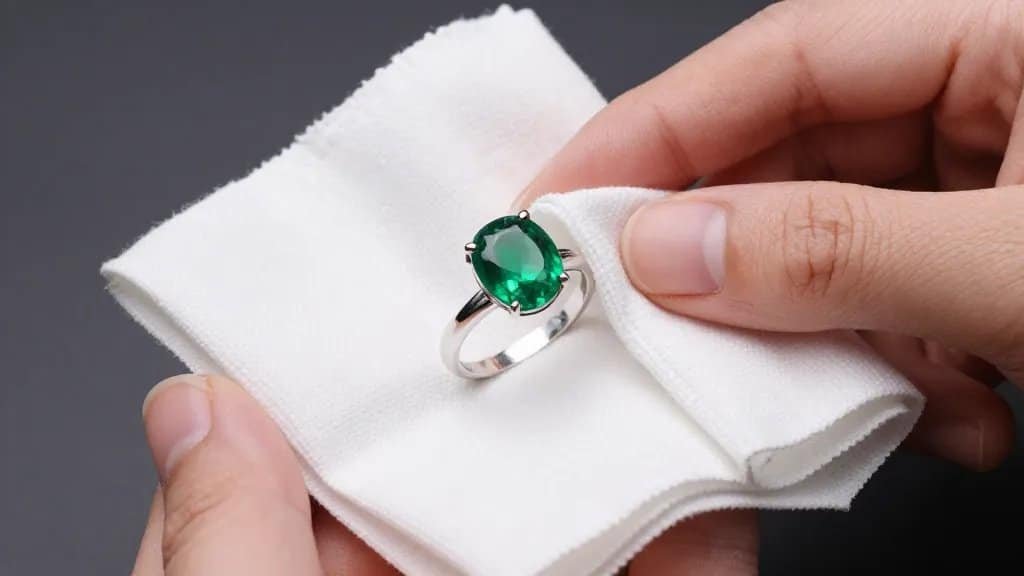
Ultrasonic and steam cleaners save time, but they’re not one-size-fits-all. Think of them as power tools—great in capable hands, risky if used blindly.
- Generally safe: Untreated diamonds, sapphire, ruby, spinel, chrysoberyl, and clean garnet.
- Caution or avoid: Emeralds (oiled), opals, pearls, tanzanite, topaz (especially coated), feldspars, turquoise, lapis, malachite, onyx with dye, fracture-filled stones of any kind, and heavily included gems.
- Settings to watch: Micro-pavé, delicate antique prongs, and invisible settings can loosen under vibration. Always inspect for movement with a gentle toothpick test before and after.
If you can’t confirm a gem is untreated and sturdy, don’t use ultrasonic or steam. Soap, water, and patience will get you most of the sparkle with none of the risk.
Metal Matters: Cleaning the Mounting Without Harming the Stone
Sometimes the dullness you see is trapped in the setting—under the stone, around the prongs, or inside gallery work. Cleaning metal safely matters as much as cleaning the gem.
- Gold and Platinum: Handle regular build-up with warm soapy water and a soft brush. For stubborn grime, let the piece sit in soapy water for 10–15 minutes, then brush gently. Avoid harsh polishes on settings holding soft stones.
- Silver: Tarnish needs a different approach. Use a non-abrasive silver polish paste on a cloth, keeping it away from porous or delicate gems. Rinse the cloth before touching the stone again. Silver dips can damage porous stones—if the piece includes turquoise, opal, or pearls, skip dips entirely.
- Rhodium-Plated White Gold: Gentle soap cleaning only. Abrasive cloths will wear plating faster.
As you work, check prongs and bezels for snags or movement. A bright gem in a weak setting is an accident waiting to happen, especially for Gemstone Rings that take daily knocks.
Telling Treatments: Why They Change Cleaning Rules
Treatments can transform appearance and value, and some are invisible to the untrained eye. They also change how you clean.
- Oiling/Resin (Emerald): Improves clarity by filling fissures. Ultrasonic and solvents may remove fillers or create a patchy look.
- Fracture Filling (Diamond, Sapphire, Ruby): Glassy material fills cracks to improve transparency. Heat and ultrasonics can damage the fill. Look for a subtle rainbow flash along surface-reaching lines.
- Diffusion (Sapphire): Color-altering elements diffused near the surface. Normal cleaning is fine, but deep repolishing can change appearance.
- Dye (Agate, Lapis, Onyx): Intense, uniform color can indicate dye. Soaking and harsh soaps may leach color.
- Coatings (Topaz, Quartz, Some Diamonds): Thin films create iridescence or color. Abrasives and ammonia can strip or scratch coatings.
If you suspect a treatment, default to the gentlest cleaning. For buying or collecting decisions, our Gemstone Buying Guide and Gemstone Value Guide explain how treatments impact price and care requirements.
Real-World Cleaning Routines by Gem Type
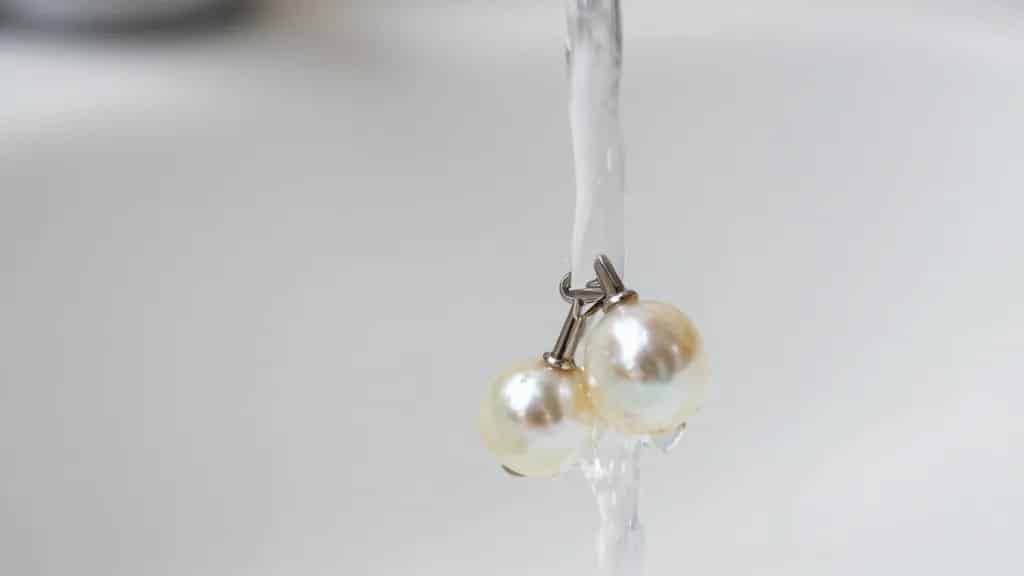
Here are step-by-step methods you can follow at home for common stones. Adjust if your jewelry is antique, fragile, or shows heavy inclusions.
- Diamond Solitaire Ring: Mix lukewarm water and a drop of dish soap. Soak 10 minutes. Brush under the setting from the pavilion side. Rinse in a strainer. Pat dry. For grease build-up, repeat or use a tiny bit of non-ammonia glass cleaner on a cloth—avoid contact with porous gems if they share the setting.
- Sapphire or Ruby Pendant: Short soak in soapy water. Soft brush around the bale and back of the bezel. Rinse and dry. If the stone shows fingerprints of fracture filling (rainbow flashes), skip any ultrasonic ideas you might have had.
- Amethyst Earrings: Wipe dust first to avoid micro-scratches. Wash gently in soapy water and brush lightly around prongs. Rinse and dry. Keep away from prolonged heat sources that can fade color.
- Opal Cabochon Ring: Lightly damp cloth with a touch of mild soap. Wipe the surface and setting. Quick rinse with a damp cloth only; avoid running water over the stone. Dry at room temperature. Store away from strong sunlight.
- Pearl Strand: Lay on a towel. Wipe each pearl with a soft, barely damp cloth. Let fully dry flat before storing. If the strand looks grimy or loose between knots, have a jeweler clean and re-string. Pearls should be the last thing you put on and the first thing you take off.
- Turquoise Silver Bracelet: Clean the silver with a polishing cloth, carefully avoiding the stones. If needed, use a damp cloth for the turquoise only, then dry immediately. Never use silver dip.
- Topaz or Morganite Ring: Soapy water and gentle brushing. Avoid sudden temperature changes. Skip steam; use ultrasonics only if you are certain the stone is untreated and secure.
These routines keep the gemstone’s natural color and luster intact while freshening the metalwork so the whole piece looks crisp.
Storage, Preventive Care, and Wear Tips
Smart habits reduce how often you need deep cleaning and protect the polish that makes gems sing.
- Separate storage: Diamonds and sapphires can scratch softer stones. Use individual pouches or compartments. For mixed sets in a jewelry box, keep pearls and opals in their own spaces.
- Last on, first off: Cosmetics, sunscreen, hair products, and perfume leave films or cause chemical damage, especially on pearls and porous stones.
- Avoid harsh environments: Remove rings for cleaning, swimming, gardening, weightlifting, and hot tubs. Chlorine can pit alloys and dull some stones.
- Routine checkups: Twice a year, have a jeweler inspect prongs and settings, especially on Gemstone Rings and bracelets that take hits.
- Humidity sense: Keep opals and pearls away from extreme dryness or heat; average home humidity suits them well.
These small habits keep luster longer and make your occasional soap-and-brush sessions more effective.
How to Spot a Stone That Needs Professional Attention
Some pieces benefit from a bench jeweler’s tools and experience rather than a home routine.
- Loose stones or bent prongs: You’ll feel a faint click if you tap the stone gently with a wooden toothpick.
- Heavily soiled antique pieces: Old grime can act like glue; aggressive at-home cleaning risks loosening stones.
- Suspicious treatments: Glass-filled diamonds, oiled emeralds needing refresh, or coated gems with scuffs—better handled professionally.
- Cracks and chips: Cleaning can make damage worse. A jeweler can advise on repolishing or protective settings.
If you enjoy learning more about the nuances of value and condition, our Gemstone History and Collector Gemstones topics offer perspective on preservation and restoration choices.
FAQs
Can I use toothpaste to clean my gemstone jewelry?
No. Toothpaste is abrasive and will micro-scratch many stones and metals, dulling polish and reducing sparkle.
Is ammonia safe for cleaning diamonds?
Very dilute ammonia can cut grease on untreated diamonds, but avoid it around porous or treated gems and in mixed-stone pieces. Soap and warm water are safer universally.
How often should I clean my jewelry at home?
Pieces worn daily benefit from a quick soap bath every two to three weeks. Wipe pearls after each wear. Schedule a professional checkup twice a year.
What’s the safest way to clean a ring with multiple gem types?
Follow the rules for the most delicate stone in the piece. When in doubt, use lukewarm soapy water, a soft brush, and gentle rinsing.
Can ultrasonic cleaning loosen my stones?
Yes. Vibrations can reveal or worsen loose settings, especially micro-pavé or antique mounts. Always test prongs before and after.
Do opals need special storage?
Yes. Keep opals away from extreme dryness and heat. Store them in a padded box at normal room humidity, separate from harder gems.
Will professional rhodium plating or polishing harm my gemstones?
It can if improperly masked. Jewelers usually remove sensitive stones or carefully shield them. Always tell the jeweler exactly what stones are present.
Final Thoughts
Clean gemstones glow not because they’re scrubbed hard, but because they’re treated in harmony with their nature. A bowl of warm soapy water, a soft brush, and patience will safely brighten most stones; reserving ultrasonics, steam, and chemicals for the few that can handle them keeps the rest safe. Match the method to the gem, and your jewelry will reward you with color and sparkle that feel brand new.

Christian Grey is the creator of GemMeaning, where he shares simple insights about crystals, gemstone meanings, and spiritual guidance. His focus is on making complex ideas easy to understand and practical for everyday life.