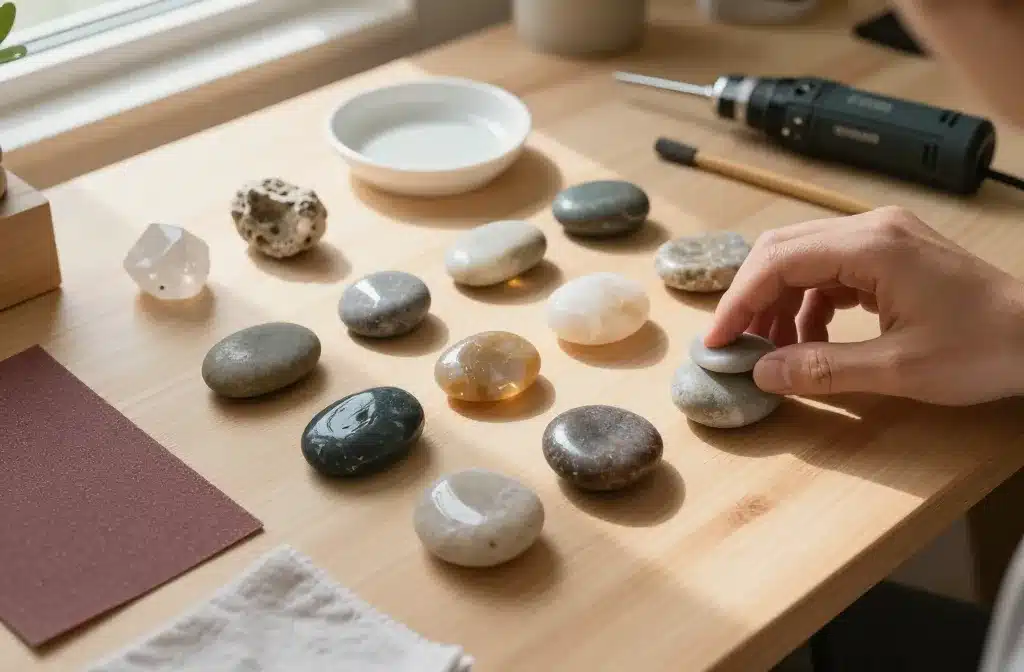
Rocks have a way of anchoring a space—literally and emotionally. They’re tactile, varied, and quietly glamorous when you give them a little polish. As a gemologist, I’ve watched simple river pebbles and rough quartz turn into pieces that people reach out to touch. That’s the real magic: small transformations you can complete in a weekend.
Here you’ll learn which stones to choose for fast projects, how to shape and finish them safely, and a handful of approachable ideas that don’t require a full lapidary workshop. I’ll cover durability, color, and texture so you can match the right rock to the right project. I’ll also share practical tips to avoid common mishaps—cracks, dull finishes, and wobbly settings.
Expect friendly, field-tested guidance. We’ll borrow just enough from the worlds of lapidary and jewelry-making to keep your results beautiful, functional, and long-lasting. By Sunday night, you’ll have something you’ll want to keep—and you’ll know how to care for it.
If you’re curious about wider gem topics while planning your projects, you may enjoy exploring Gemstone Hardness, Gemstone Care, and Gemstone Jewelry as you go.
Choosing the Right Rocks for Fast, Satisfying Results
Weekend projects do best with stones that shape and polish without a long tumbling cycle. Aim for minerals in the Mohs hardness 4–7 range: firm enough to take a polish, but not so hard they fight every tool.
- Easy shapers (Mohs 3–5.5): calcite, fluorite, apatite, sodalite, obsidian (volcanic glass, technically). These cut and sand quickly, though they scratch more easily.
- Balanced performers (Mohs 6–7): quartz varieties (amethyst, smoky, rose), agate, jasper, aventurine. These take a bright polish and hold up to daily use.
- Tough but time-consuming (Mohs 7.5+): topaz, corundum, some garnets. Gorgeous, but you’ll need diamond tools and patience.
For texture and color, think about how light plays on each stone. Agate reveals silky bands once polished; jasper shows earthy reds and forest greens; quartz can gleam icy-clear or blush pale pink; basalt and slate stay matte and architectural; beach pebbles often shine like rain-soaked charcoal after oiling or sealing. If you’re into sparkle, druzy-coated geodes add a sugar-crystal shimmer that feels instantly luxe.
Source ethically when you can. Look for local rock shops, lapidary clubs, and rockhound groups. Riverbeds and public beaches can be great—just follow local collecting rules. For anything rare, read up on Gemstone Buying Guide basics: ask about provenance, treatments, and whether a stone has been dyed or stabilized.
Tools and Safety: The Minimal Kit You’ll Actually Use
You don’t need a full studio. A lean kit keeps you nimble and safe:
- Essentials: safety glasses, dust mask or respirator (N95 or better), nitrile gloves, water container, towels.
- Shaping and finishing: silicon carbide wet/dry sandpaper (400, 800, 1200, 2000 grit), a diamond hand file, a small diamond hole saw set (if you plan to drill), and a rotary tool with diamond burrs (optional but efficient).
- Adhesives and findings: two-part epoxy (clear, 5–30 minute set), strong jewelry-grade glue, cord ends, jump rings, bails, and earring hooks.
- Finishing touches: microcrystalline wax or stone sealer for porous rocks; polishing compound for quartz/agate.
Always work wet when cutting, drilling, or sanding. Water tames dust and heat, both enemies of stone. Hold the piece steady and let the abrasive do the work—forcing tools leads to cracks and burned surfaces. Wipe grit often so you can actually see what you’re shaping.
Project 1: Polished Pocket Stones With Meaning
Simple, soothing, and giftable, pocket stones are a great warm-up. Choose thumb-sized pebbles—quartz for a glassy finish, jasper for rich earthy patterns, or fluorite for banded greens and purples. Look for pieces with a natural dome and minimal pits.
- Shape lightly: use a diamond file to round any sharp edges. Keep the stone and file wet.
- Sand in stages: 400 grit to remove scratches, then 800, 1200, and 2000. Rinse between grits. The surface should look evenly satin-matte before moving up.
- Polish: rub with a felt pad and a tiny dab of polishing compound, or burnish with microcrystalline wax for a soft glow.
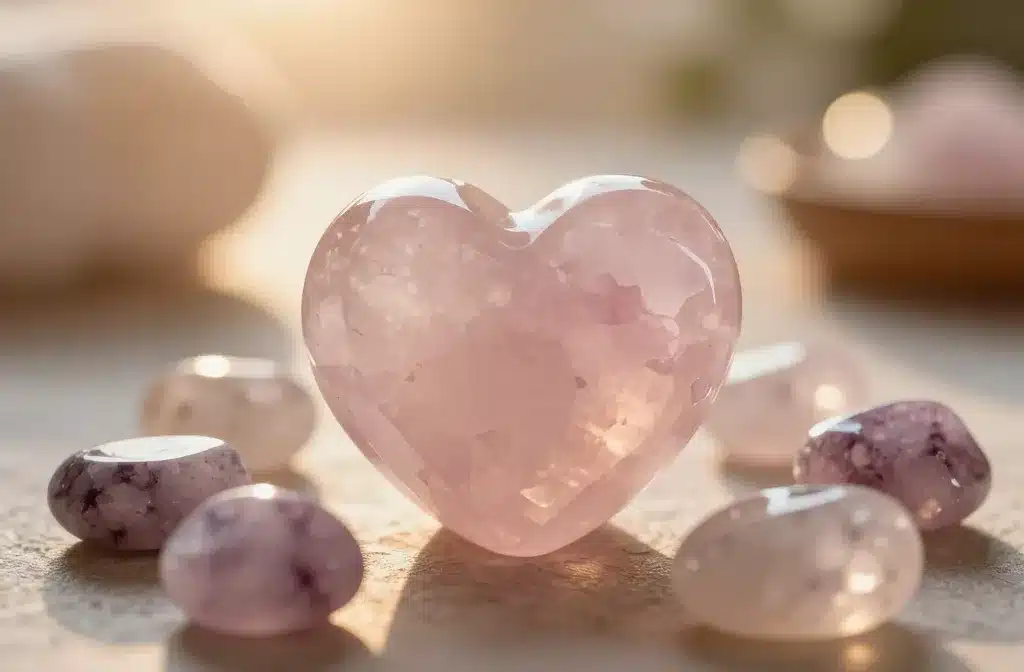
Meaning adds charm. Rose quartz suggests tenderness; smoky quartz feels grounding; green aventurine is tied to luck in modern lore; red jasper carries a steady, rooted energy. While meanings are cultural rather than scientific, they can make a pocket stone feel personal. If you’re curious about distinctions between stones, see Gemstone Identification or Gemstone Myths for context.
Project 2: Stone Garden Markers That Age Gracefully
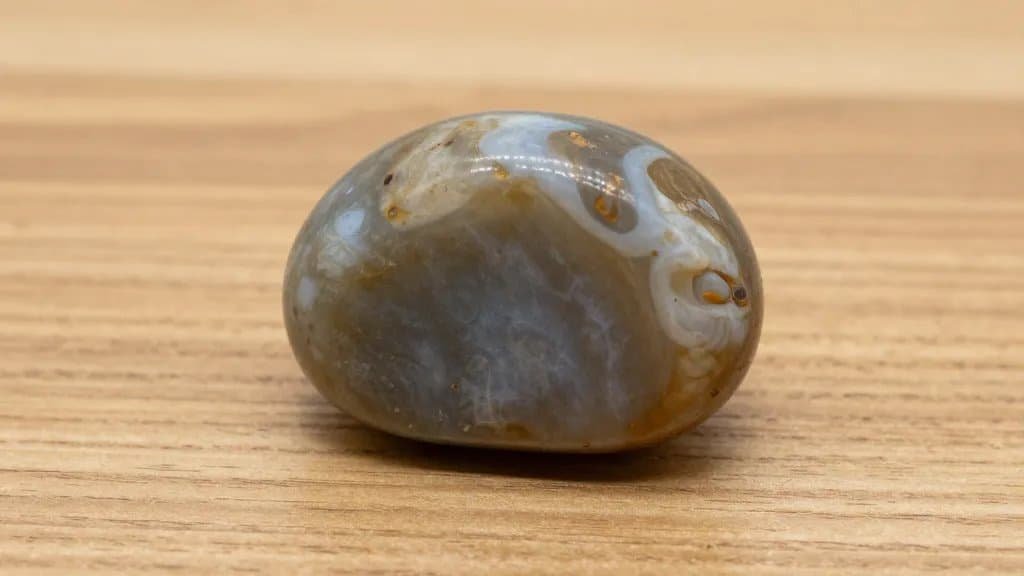
Flat river rocks make handsome plant markers. Slate fragments work beautifully, too, with a deep charcoal that contrasts painted or engraved names.
- Prep the surface: scrub the stone clean and let it dry. If it’s very porous, seal lightly and let cure so paint sits on top rather than bleeding.
- Lettering options: paint with a fine brush and outdoor acrylic; use a paint pen; or lightly engrave with a rotary tool, then darken the grooves with paint.
- Finish: wipe excess paint and seal with a UV-resistant stone sealer. Expect a matte-to-satin sheen that deepens color.
For durability, choose stones with a tight grain—granite, basalt, and dense quartzites resist flaking. Softer stones like limestone can weather charmingly but may need resealing each spring. These markers develop that coveted “lived here forever” look after a season of sun and rain.
Project 3: Geode Coasters With Natural Sparkle
Thin-sliced agate and halved small geodes turn into coasters that look like geological cross-sections of time. Agate slices, often dyed but still beautiful, show concentric bands; natural pieces range from smoky grays to honey browns and pale blues.
- Flatten edges: lightly sand any rough spots on the underside so the piece sits stable.
- Protect the surface: stick on clear silicone feet to prevent scratches, or glue a thin cork round.
- Seal if needed: a micro-thin sealer brings out color, but avoid heavy coatings that feel plastic. If you plan to set cups on druzy, keep the crystal side as the “display” and the flat side functional. Crystals can snag fabric and are harder to clean.
Note on heat: agate handles a warm mug, but avoid direct heat from kettles or pans. If you’re interested in dyed vs natural, look at the color concentration at edges; intense neon hues often indicate dye. You can explore Gemstone Colors and Gemstone Value Guide for how natural color affects desirability.
Project 4: Pebble Art and Stone Mosaics
Nothing beats a pebble mosaic for transforming a small patio or tray table top. The trick is color grouping and consistent thickness.
- Collect with intention: choose a palette—charcoal basalts, creamy limestones, russet jaspers, and occasional quartz “highlights.” Sort by thickness so the finished surface feels even under the hand.
- Layout: sketch a spiral, wave, or simple stripes. Try dry-fitting on a piece of plywood or a cement stepping stone mold.
- Set: for outdoor pieces, use a sand-and-cement mix or polymeric sand over compacted base. For trays or indoor panels, a strong tile adhesive works well.
- Grout: choose a color that harmonizes with your stones. Wipe gently so you don’t “frost” the pebbles. Seal for easy cleaning.
A neat variation is an “inlay line” of tumbled glass or tiny agate chips that catch the light like a stream. Keep lines slightly irregular; perfection looks machine-made, while a soft wobble reads human and intentional.
Project 5: Wire-Wrapped Stone Pendants Without a Lapidary Wheel
Wire wrapping lets you turn a found treasure into wearable art with minimal equipment. Tumbled pebbles, small beach stones with natural holes, or rough crystals all work. Quartz, jasper, and agate are durable choices for daily wear.
- Stone selection: choose a piece that sits comfortably against the chest—no sharp edges or heavy points that flip the pendant forward.
- Wire choice: 20–22 gauge for structural wraps, 24–26 gauge for detail. Copper is forgiving; silver-filled or sterling adds polish. Keep the wire finish consistent with your chain.
- Wrap structure: build a simple harness—a pair of wires crossing behind the stone and rising to a looped bail. Avoid squeezing; tension creates cracks along natural planes, especially in fluorite and obsidian.
- Finish: burnish the wire with a nylon plier to smooth tool marks. For matte stones, a brushed metal finish keeps the look cohesive. For glossy agate, polished silver sings.
Care is straightforward: wipe with a soft cloth after wearing. Avoid ultrasonic cleaners on any stone with cracks, coatings, or porous surfaces. For more jewelry ideas, you might browse Gemstone Necklaces, Gemstone Earrings, and Birthstone Jewelry for design inspiration and pairing suggestions.
Project 6: Drilled Stone Beads and Wind Chimes
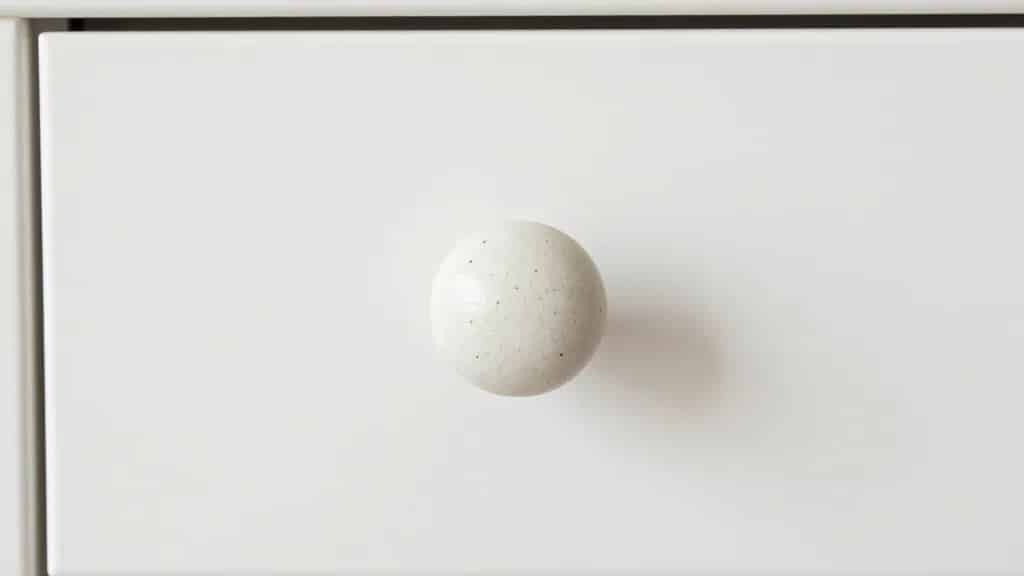
A gentle weekend drill session can turn pebbles into beads or sound-making elements. The key is patience and water.
- Mark the hole: a wax pencil dot helps you keep your aim. For beads, measure equal spacing. For chimes, vary placement to change the tone and swing.
- Clamp and cushion: nest the stone in a damp sponge on a small tray. This stabilizes and cools the work.
- Drill slow: use a diamond hole saw or burr, medium speed, very light pressure. Dip often to flush grit. Start with a pilot dimple at a shallow angle, then straighten the drill. For a clean hole, drill halfway from one side, then flip and meet in the middle.
- Finish: deburr with a finer bit, then run a small piece of 1200–2000 grit paper through the hole for a smooth cord path.
String with waxed linen or leather for an earthy look. For outdoor chimes, nylon-coated steel beading wire resists weather. Quartz and agate give a bright, bell-like clack; smoother basalts tap softly. Avoid very brittle stones—opal, some schists, and anything with visible fractures—unless you accept a high break rate.
Project 7: Magnetic Stone Knobs and Fridge Clips
Turn small, flat pebbles into tactile cabinet pulls or strong fridge clips. Look for stones about the size of a silver dollar with a flat back. Dark jaspers and veined marbles look intentional against wood and metal.
- Knobs: epoxy a threaded insert or a short wood screw into a shallow drilled recess; then attach to a cabinet with a standard machine screw. Test alignment before gluing so the stone sits upright.
- Magnets: glue a neodymium magnet to the back. If the stone is heavy, use two magnets side-by-side. Add a thin felt pad around the magnet to prevent scratching.
Weight matters—quartz and agate are denser than pumice-like tuffs. For small drawers and paper holding, go slimmer and denser; for statement pulls, be sure the door hinges can handle it.
Quick Guide: Matching Stone Properties to Projects
- Kitchen coasters and knobs: favor agate, jasper, granite (hard, takes polish, resists stains). Seal periodically.
- Wearable pendants and beads: quartz, jasper, some garnets. Obsidian looks sleek but chips if knocked; reserve for gentle wear.
- Garden markers and mosaics: basalt, slate, quartzite, granite. Limestone writes easily but weathers faster.
- Pocket stones: fluorite for color, quartz for brightness, jasper for grounding heft.
If you’d like a deeper understanding of toughness versus hardness, the Gemstone Hardness and Gemstone Comparisons topics can help you plan for longevity and everyday use.
Finishing Touches: From Matte to Mirror
Finish transforms a humble rock into something refined. Choose based on the stone’s structure and your project’s use.
- Matte/satin: suits porous stones and modern decor. Achieve with 800–1200 grit sanding and a whisper of wax. Excellent for pebbles you handle often—fingerprints vanish.
- High polish: for cryptocrystalline quartz (agate/jasper) and clear quartz. Progress through 2000 grit, then cerium oxide or diamond paste on felt. You’ll see reflections sharpen and colors deepen.
- Selective shine: leave natural skin on the sides and polish only the face. This contrast highlights growth patterns and banding, like a window into the rock.
- Sealers: use sparingly. They can enrich color in basalt or slate but may look plastic if overdone. Always test on the underside.
A good polish is about patience more than pressure. If you still see scratches, you haven’t finished the previous grit. Step back one stage and even the surface before moving on.
Real vs. Fake: A Quick Sanity Check for Store-Bought Slices
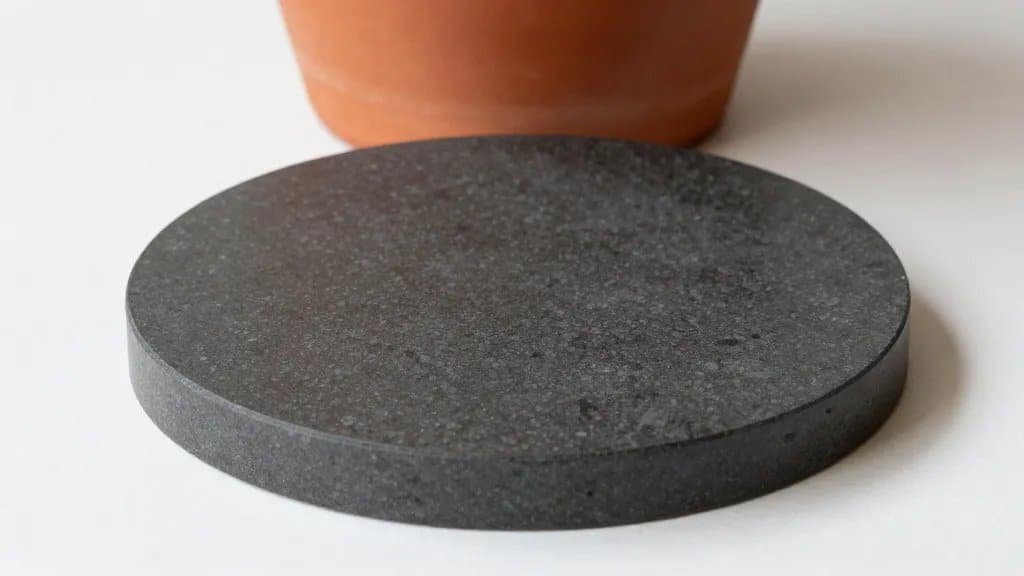
If you’re buying stones for projects, you’ll encounter imitations. These can still be useful, but it helps to know what you’re working with.
- Dyed agate: vivid neon blues or hot pinks usually indicate dye. Look for pooled color at edges or in cracks. Dyed pieces are fine for coasters and decor, but colors may fade in sun.
- Resin “geodes”: lightweight, flawless, uniform crystal textures. Real geodes vary in crystal size and show mineral zoning. Resin is ideal for craft experiments but heat-sensitive.
- “Sea glass” vs tumbled glass: authentic sea glass has a frosty, pitted skin and softened edges; tumbled craft glass is smoother and more uniform in color.
- Composite stones: thin stone veneer on a backing. Good for weight-sensitive projects, but edges can chip; seal the join.
If identification fascinates you, take a look at Gemstone Identification and Gemstone Facts. Even a simple loupe can reveal inclusions, banding, and grain that tell the story of a rock’s formation.
Care and Cleaning for DIY Stone Creations
Stone is durable, but it appreciates gentle care:
- Routine: wipe with a damp, soft cloth. Skip harsh cleaners, which can etch calcite and dull sealers.
- Temperature: avoid sudden heat changes—setting a boiling pot on a cold agate coaster can shock it.
- Sunlight: prolonged UV can fade dyes and some natural colors (amethyst, rose quartz). For window displays, rotate pieces occasionally.
- Storage: wrap jewelry separately to prevent harder stones scratching softer ones. On the Mohs scale, quartz will mark calcite easily.
- Repairs: small chips can be eased with 1200–2000 grit paper and re-waxed. For a cracked drilled bead, re-drill only if the fracture is stable and perpendicular to stress.
Common Mistakes and How to Avoid Them
- Overheating while drilling: creates white burn rings and microfractures. Keep a slow speed and steady water flow.
- Skipping grits: leaves deep scratches that “telegraph” through the polish. Move up only when the surface is evenly matte.
- Using the wrong glue: hot glue fails on stone. Choose epoxy or specialty stone adhesive and allow full cure time.
- Forcing brittle stones into wire wraps: fluorite, opal, and obsidian need gentle tension and protective prongs or harnesses rather than tight cages.
- Unsealed outdoor pieces: freeze-thaw cycles exploit pores. Seal porous stones in climates with harsh winters.
Where These Rocks Come From: A Quick Geological Peek
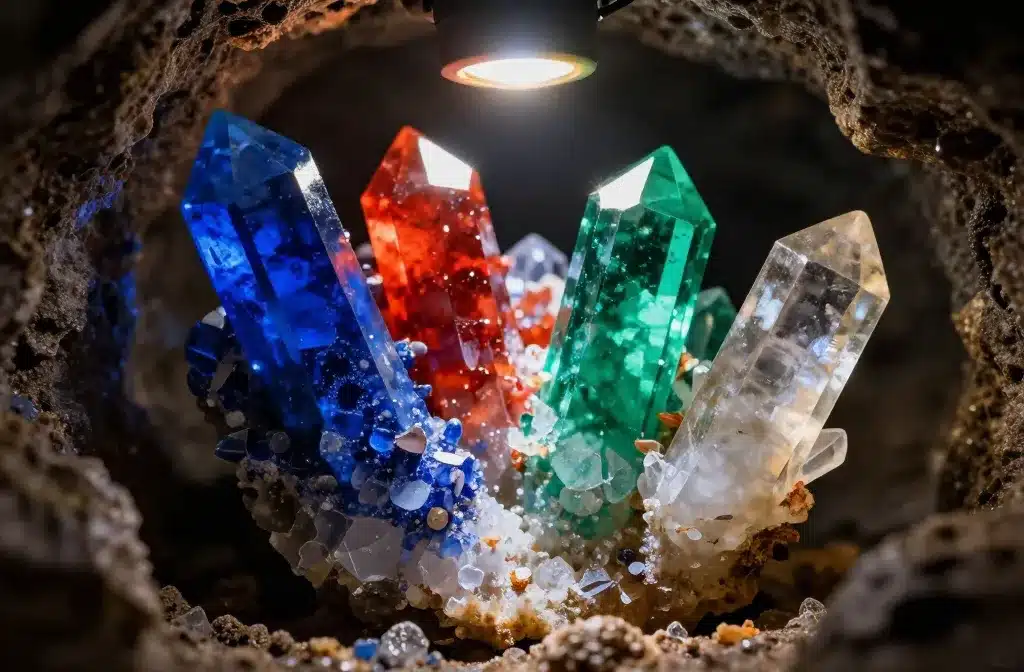
Part of the charm is knowing what you’re holding. Agate and jasper are both microcrystalline quartz that filled cavities or replaced earlier rock; their bands and swirls are ancient mineral rhythms captured in stone. Basalt is cooled lava—fine-grained, dark, and full of tiny crystals you can’t quite see, which is why it reads as a smooth, solid color. Slate, pressed from clay under pressure, splits into flat sheets perfect for writing. Quartz crystals grow in hydrothermal pockets; give them a polish and they transmit light with watery clarity, revealing wisps, veils, and those telltale silky inclusions.
Understanding these origins helps you predict behavior. Layered slates split if you pry against the grain, while massive jaspers hold an edge. Knowing your stone’s story is like reading the care label before you sew.
FAQ
Can I polish stones without power tools?
Yes. Hand-sanding with wet/dry papers through 2000 grit and finishing with a felt pad or wax gives a satisfying satin to semi-gloss polish. It takes longer, but you control every curve.
What’s the safest stone for kids’ projects?
Rounded quartz or jasper pebbles. They’re hard enough to resist chipping, smooth to handle, and non-toxic when simply washed. Skip drilling and stick to painting or gluing magnets.
How do I prevent a stone pendant from flipping forward?
Place the bail over the stone’s center of mass. A slightly higher, rear-set bail or adding a small counterweight bead near the clasp can keep the pendant lying flat.
Are dyed agate slices okay for coasters?
They’re fine for light use. Seal the surface, avoid prolonged sun, and expect some color shift over years. If you want timeless color, choose natural neutrals or honey-brown agate.
Which stones shouldn’t go outdoors?
Soft, porous, or laminated stones: chalky limestones, some schists, and anything with visible cleavage planes. They weather fast and can delaminate. Basalt, granite, and quartzites thrive outside.
How do I drill a hole without cracking the stone?
Use a diamond bit, light pressure, constant water, and drill halfway from each side to meet in the middle. Avoid edges and existing fracture lines.
What cord or chain pairs best with stone pendants?
Leather or waxed linen suits rustic pebbles; sterling or stainless complements glossy agate and quartz. Match the metal tone to the stone’s dominant hue for a cohesive look.
Final Thoughts
Rocks reward patience and simple care, turning a spare afternoon into something tactile and lasting. Start with a stone that speaks to you, choose a finish that suits its character, and let the material lead. The small victories—an even curve, a clean hole, a gloss that catches evening light—are what keep gem lovers coming back to the bench.

Christian Grey is the creator of GemMeaning, where he shares simple insights about crystals, gemstone meanings, and spiritual guidance. His focus is on making complex ideas easy to understand and practical for everyday life.